LANGUAGE AND LONGEVITY – 2

Dictionary makers and journalists are breathlessly – if not desperately – publicising the latest online language – but do they really understand it?

One week on, I spoke to Chloe MacDowell of the UK Guardian newspaper, then to Marni McFall of the US Newsweek magazine on the topic of TikTok language and the online messaging mannerisms of Influencers and GenZ. Chloe was interested in one particular trending TikTok catchphrase, Marni in the whole panoply of 2024’s viral innovations.

Once authentic conversations and personal interactions (previously happening in private spaces or local communities) began to feature on the internet and in messaging and on microblogging platforms,  language novelties, slang and faddish usages crossed over from a private realm into the global public domain. The latest slang and new language was visible, audible and immediately available to share. Obscure or exotic terms might quickly catch on and become viral favourites, spreading in some cases across the anglosphere more rapidly than print, broadcast or word-of-mouth transmission had ever been to achieve in the past.

Words and phrases began to function like memes, taking on sometimes a ‘multimodal’ aspect whereby sound and image could reinforce the purely verbal expressions that people chose to exchange and promote. Pre-internet there had always been catchphrases, what linguists call ‘vogue words’, slogans and soundbites, and keywords that somehow seemed to evoke or encapsulate some special aspect of the ‘zeitgeist’. What we have now is a much more knowing, deliberate intention (on the part of trend-setters, influencers, ‘thought-leaders’) to create new language to celebrate new identities and to promote new attitudes and lifestyle innovations to the widest possible audience.

Subcultures like surfers, valley girls, fanboys and girls, hip hop aficionados had always invented striking, expressive language and this is still true, but instead of niche culture we have ‘meganiches’, instead of subcultures we are dealing with globalised communities.

The fashionable language of TikTok and GenZ in particular is part of their wider obsession with vibes, aesthetics and microtrends, many of which arise and are discarded in rapid succession. The prevalent style is exhibitionist, self-promoting, allusive and often ironic, increasingly even absurdist, making it hard for outsiders to grasp the nuances in play. Older commentators and dictionary publishers struggle to keep pace, often misunderstand and record the terms in desperation (in their searches for ‘word of the year’ for example) just as they fall out of use.

The use of this language as an identity marker in an intensely competitive digital ecosystem means that the Gen Alpha cohort now ridicule GenZ usages as being out-of date, while GenZ is still deriding millennials for their old-fashioned ‘cringe’ vocabulary. At the same time would-be influencers practise bragging, ‘manifesting’ and other forms of self-congratulation in a search for clicks and clout.

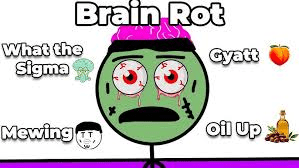
One of the latest features of online wordplay is the elevating of an older concept or cliche into a teasing provocation or pretence at new insights, as we have seen with ‘delulu’, ‘demure’ and ‘mindful’, ‘rizz’ and ‘brat’. The current rash of declarations of ‘being privileged’ – a new version of ‘humblebragging’ or ‘virtue-signalling’ – is another example. In parallel is the ironic celebration of the incoherence or absurdity of much online discourse and of low-quality ‘slop’ by embracing a culture of ‘brainrot’ – nonsense memes such as ‘skibidi’ and vacuous, contagious content.

Most of the innovation in online language and image still emanates from the US and even though a global audience can access it instantly, its tropes (think ‘goblin-mode’ – ‘goblin’ doesn’t have the same associations for Brits) don’t always translate for other speakers of English. In parallel, poses, gestures and looks as well as music-related modes are increasingly generated from non-English cultural zones such as Japan and Korea. It will be interesting to see if other parts of the globe begin to play a part in the evolving online theatre of signs and behaviours, but this doesn’t seem to have happened yet.

Chloe’s piece is here…

https://www.theguardian.com/media/2024/nov/02/what-a-privilege-trend-catches-on-as-gratitude-makes-social-media-comeback?CMP=share_btn_url

And the Newsweek article is here…

https://www.newsweek.com/2024-most-popular-internet-slang-words-revealed-1978732

On the first of November Collins Dictionaries, ahead of the pack, had already announced their choice of word of the year for 2024, and their candidates illustrated the same, in my opinion mistaken, concentration exclusively on terms from a very narrow range of sources. While postings on social media are performances designed to attract attention, there is an even wider domain in which discourse demands analysis: the crises in the Middle East and Ukraine and the surreal spectacle of the US presidential campaigns, for example, are also highlighting keywords and generating new formulations or reworkings of language – data that mainstream media and lexicographers seem to think unworthy of their attention…

https://twitter.com/CollinsDict/status/1852139743112208794

LANGUAGE AND LONGEVITY -1

Digital media enables language change and innovation – of course, but how much and for how long?

I spoke to Caitlin Talbot, Culture Researcher for the Economist magazine, who asked me about the effect of TikTok talk and the slang, catchphrases and viral puns invented by Gen Z. Caitlin wondered how many new terms were actually being added to the global conversation each year, and whether these novelties would last.

My own solo attempts to record new language and to understand and comment on its sources rely on fairly haphazard, old-fashioned techniques, so it’s not possible for me to quantify the lexical items, locutions, expressions and longer elements of discourse that I come across. The major dictionary publishers do have access to powerful and sophisticated electronic methods of scanning, scraping (‘aggregating’ as it should more properly be termed) raw linguistic data from across the internet. This material can be categorised to a certain extent and entered into giant databanks from which lexicographers can select the terms they periodically admit into published dictionaries.

Attempts to amass and analyse examples of language in use are nonetheless hampered by several considerations: the language in question is primarily in the form of text, rather than authentic speech, and the texts in question are largely recoverable from published sources and media platforms, only to a limited extent from personal messages. Tracking their use over time is possible, and the popularity of some usages can be subjected to frequency counts and represented on timelines, but private use and communications by local and specialist communities is far harder to assess. One of the more interesting challenges to the lexicographer is to predict which novel terms may become embedded in the national conversation and which drop out of use – some almost immediately and others over time. In fact my experience (since I began to collect slang in the 1980s) proves that it’s impossible to predict, let alone to speculate as to why this happens.

Caitlin’s article, with useful links, is here…(if it is paywalled for you, go to here *)

TikTok is changing how Gen Z speaks

In speculating about the number of new terms generated (and the playful, sometimes absurdist tendencies featuring on social media involve not only inventing new terms but reworking and re-purposing existing language like ‘demure’, ‘babygirl’, ‘millennial pause’, etc.) we can only fall back on subjective, anecdotal, incomplete accounts, even if these may be interesting and informative in their way…

TikTok Slang: The Exclusive Language of Gen Z (Study)

TikTok is full of made-up slang and trendbait | Vox

* TikTok is changing how Gen Z speaks

On social media new words spread far and fast

The illustration shows a playful evolution of speech bubble characters, progressing from a small, four-legged figure to a larger one riding a skateboard, against a bold red background
Illustration: Mark Long

Oct 21st 2024SavedShareGive

THE WORD “demure” is old—it describes the sort of modest lady Victorians esteemed—but it is freshly fashionable. There are some 800,000 posts on TikTok with the tag #demure. Youngsters today are using the word with lashings of irony, invoking it to describe everything from Saturn to sunset to New York City’s bin service.

TikTok is changing how young people talk. Other fusty words, such as “coquette”, are fashionable again. Colloquialisms are on the rise: members of Gen Z say “yapping” instead of “talking” and trim “delusional” to “delulu”. New words have also become popular. Take “skibidi”, a term popularised by a meme of an animated head singing in a toilet; it means “cool”, “bad” or “very”, depending on the context.

On social media words spread far and fast. At least 100 English words are produced, or given new meaning, on TikTok a year, reckons Tony Thorne, director of the Slang and New Language Archive at King’s College London. Some linguists think the platform is changing not just what youngsters are saying, but how they are saying it. A “TikTok accent”, which includes “uptalk”, an intonation that rises at the end of sentences, may be spreading.

The platform’s versatility encourages experimentation. Users can combine audio, text and video in a single post. That means words that sound especially satisfying can go viral, as well as those that are memorable in written form. Linguistic code has emerged, dubbed “algospeak”, to dodge content-moderation algorithms. It includes euphemisms (sex workers are called “accountants”), and misspellings (“seggs” instead of sex).

The mutation of language on TikTok is also due, in large part, to the age of its users. Most are 18-34 years old. That matters because “Young people are language innovators,” says Christian Ilbury, a linguist at the University of Edinburgh. For decades youngsters have created words to distinguish themselves from adults. On social media such neologisms find a big audience. Mr Ilbury describes this as “linguistic identity work”; parents have long called it attention-seeking.

The platform brings together fan groups and communities, from #kpopfans (people who like Korean pop music) to #booktokers (people who love reading). These groups create their own slang, says Adam Aleksic, a linguist and influencer. Some of it leaks into the mainstream. Other slang comes from specific groups: black people have innovated and spread hundreds of English words over the years, from “cool” to “tea” (gossip). Journalists and screenwriters popularise such words; now TikTokers do, too.

*For help in understanding the language and online mannerisms of TikTok and GenZ, I’m grateful to my daughter, Daisy Thorne Mrak*

THE ART OF GIBBERISH

Creative incoherence – human and penguin

Twenty years ago I wrote about the intriguing imaginary ‘language’ spoken by the much loved cartoon character Pingu, a charming animated penguin. In August 2024, in a short but comprehensive video documentary, France Culture reviewed almost the entire history of the creative use of gibberish (in French ‘charabia‘), also known as ‘Grammelot’ or ‘Macaronic Language’, in performances on stage, in public, in poetry and on film and video. Producer Alexis Magnaval asked me to contribute and the result is here…

L’art du charabia, de la Commedia dell’Arte à Pingu (youtube.com)

My original article is here…

Pingu’s Lingo, or How to Get By in Penguinese

Tony Thorne

Pingu the penguin, his baby sister Pinga and the rest of the creatures who share his TV adventures also share a very special way of communicating with each other and with us. They talk in ‘Penguinese’, a wonderfully expressive and mysterious language which captivates kids and fascinates grown-ups, too. It’s partly due to this Pingu-talk that the tiny cult figure has established a worldwide following – some of Pingu’s many teenage and student fans even use Penguinese in their own conversations.

Other kids’ favourites like Sooty’s companion Sweep, Bill and Ben the Flowerpot Men, the Clangers and the Teletubbies, all have their own very different ways of ‘speaking’, but charming as they are none of these really amounts to a language. From a linguist’s point of view Sweep’s squeaks imitate the main syllables of just a few key words, while Bill and Bens’ conversation, officially dubbed ‘oddle-poddle’, but known to kids by their trademark cry of ‘flobadob’, consists of sequences of burbling which occasionally throw up a mangled but recognisable English phrase. The Clangers’ whistles disguised a script which their creator Oliver Postgate admitted was full of swearing, and the Teletubbies imitate the limited range of almost-words of very young children. Of all the languages created for children’s characters, one stands out from the rest – and of course that one is Penguinese.

Carlo Bonomi, the Italian character actor who originally created Pingu’s voice says that ever since he was a child he has been entertaining himself by inventing make-believe languages and experimenting with amusing noises. In other words Bonomi has a lifetime of practice behind him which helps explain the gift that he is now so modest about. According to Bonomi there is also a long tradition in France and Italy of clowns and travelling players using nonsense language, and their special technique for suggesting character through abstract noises, called Gramelot, from an old French word for muttering or murmuring, has also influenced him in creating Penguinese. Carlo claims that any trained actor could do what he does, but this plainly isn’t true. It’s actually almost impossible to speak for long in a made-up language – try it yourself! What usually happens when you attempt to improvise is that after a few seconds you either lapse into real speech or you begin to repeat the same sounds at regular intervals. The next voice artist to take on the Pingu challenge has got an extremely hard act to follow.

It’s a feature of the most sophisticated imaginary languages that when you listen to them, you think you hear words you recognise. Everyone has an opinion on where Pingu’s language comes from: at various times it has been claimed that it contains bits of Icelandic, Finnish or Italian. Knowing that the series originated in Switzerland has led some people to assume that it’s Swiss-German dialect that he’s using. Many self-styled experts will assure you that its sounds are clearly based on the rhythms of European languages – one of the few identifiable words,’ca-ca’, for ‘poo’, is part of baby-talk in most countries in Europe – but Pingu fans in Japan are convinced that he is speaking their language at least some of the time, and one website for Pingu fans announced recently that the secret is out – Penguinese is based on Swahili! It isn’t. The truth is that it is a language all its own, and for that reason it is able to cross all language barriers and to appeal to everyone.

Critics used to complain that ‘gobbledygook’ languages would damage children’s own speech development, but experts now think that this is false (after all, imitating Donald Duck never did anyone any lasting harm). Language specialists today think that hearing strange languages stimulates children, who soon come to understand how voices are used for comic effect and learn to appreciate the emotional resonance of sounds. In the case of Penguinese the very fact that the ‘speech’ is made up of abstract noises helps young viewers to concentrate on action and feeling.

The study of sounds is known as phonology, and analysing the sounds Pingu makes reveals why he is such a good communicator. Penguinese has a complex intonation pattern – intonation is the ‘music’ of speech with its changes of pitch and tone, its rise and fall. It seems to mimic not just the languages of human beings, but the sounds that animals – and birds of course – make, too. Other features which testify to its authentic effects are the fact that longer stretches of dialogue speed up and slow down just as they do in the real world, and pauses and hesitations mark out the meaning-sequences that are represented by sentences in nearly all languages.

Linguists have long understood that total communication is not only about noise, but also involves facial expression, gesture and movement; all the subtle and not-so-subtle methods we have for getting across a message are used together. Pingu’s speech is so rich because it consists not only of a wide range of different sounds, but of the body language that goes with them.

The structure of real language is made up of syntax – the stringing together of parts of speech, nouns, verbs, adjectives, etc. in a particular order, and lexis, our vocabulary, or the stock of words we choose from. Even though we can’t be sure that we can identify all the details, we can sense that there is a similar pattern to Pingu’s language, in which some key features recur. Pingu’s fans have collected lists of some of his favourite sounds and gestures, foremost among them the flipper-flapping, wide eyes and squeaking sound that when they are combined indicate alarm, or the trumpet-shaped beak and the ‘meck-meck’ which he uses to announce his arrival. There is also the flipper over the beak and the ‘hoo-hoo’ sound of evil sniggering which is associated with misbehaving. Other characteristic noises include whining, laughing, murmuring agreement, whistling with boredom, impatient snorting and more bizarrely, yodelling.

For language-buffs even Pingu’s name is intriguing. Although real-life penguins come from the Antarctic, in the Southern Hemisphere, Pingu and his family live in an Igloo, an ice-house found only in the Arctic. By a strange coincidence the Inuits (Eskimos) who invented the igloo have the word pingu in their language. It means a conical mound or bank of ice. Far more likely of course that our hero’s name is inspired by ‘penguin’, or its equivalents in German, Pinguin, or Italian, pinguino. Nobody has yet suggested that Pingu is Welsh, but penguin was, it is claimed, originally pen gwyn, Welsh for ‘white top’, referring originally not to penguins at all but to the snow-capped islands where auks -another species of seabird -used to live.

Perhaps the last word on Pingu’s unique language should go to a Japanese fan who recently wrote on the Internet that in a world whose media is dominated by big powerful languages like American English and Japanese, it’s the fact that Pingu doesn’t speak those languages that allows everyone everywhere to feel that he belongs to them. The fan went further, ‘the heartfelt voices of Pingu and the other characters have a magical power, communicating true feelings and friendship’.


Tony Thorne is Director of the Language Centre at King’s College, University of London. He speaks four languages well, another six badly, and is only a beginner in Penguinese.

© Copyright Tony Thorne 2004

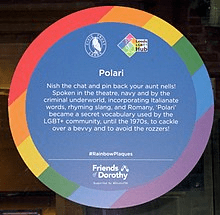
In August I also contributed to another article describing a colourful and playful secret language of evasion, complicity and mockery. This time the underground gay and theatrical code polari, analysed here for Geo France – in French – by Eva Mordacq

https://www.geo.fr/histoire/combattre-loppression-en-polari-lhistoire-linguistique-dune-resistance-lgbtqia-anglaise-221473

SLANG AT THE END OF SUMMER

Teen talk continues to baffle older cohorts, but as autumn approaches the vibes shift – and Tiktok identities evolve…

In mid-August I talked to Mary McCarthy about the ever-changing patterns of youth language, and, with her kind permission, Mary’s article for the Irish Independent follows…

No cap, sigma and rizz? You’ll need more than Google Translate for teen talk now

Parents are supposed to be bemused by the slang words their children use, but the new summer vocab in our house has me totally flummoxed. This is particularly so with the younger two lads – eight and 11 – who walk around saying nonsense words like “sigma”, “no cap” “Skibidi Toilet” and “gyat” all the time.

I don’t mind them having in-jokes, and it’s nice to see them falling around laughing – I’ll take that over sullen moods any day. But what are they laughing about?

Are they being kind? I can see the pleasure of getting the giggles over absurd stuff. I used to have this thing with a school friend where we would say repeatedly “The dog is dead” in a Northern Ireland accent – no idea why. But there is so much coming at them now online. How can I know they won’t soak up the wrong messages? The Andrew Tate alpha-male rubbish, for example.

This week I hired my Gen Z 16-year-old to help me decode what his brothers were saying, and he pocketed his €5 before unhelpfully telling me that “it’s just little kids saying random, mental stuff”.

“It’s the internet, it’s TikTok language,” he said. But they don’t have TikTok, I reminded him. YouTube shorts are the same and they have a lot of that, he told me darkly.

So I asked the lads themselves, and they were fairly keen to enlighten me, which was reassur­ing. “No cap” means no lying, “sigma” just means cool (no Andrew Tate alpha-male link, thank goodness) and rizz is “charisma”.

My 11-year-old elaborated. “So, this would be a chat-up line like, ‘Are you from Tennessee? Because you’re the only ten I see’.” I’m unsure what to say. They refused to explain “gyat”, so I looked it up later.

It mostly seems fine. They’re getting it from pals and YouTube shorts, which I will limit more now. But what I’m most baffled about is the Skibidi Toilet YouTube show, and why they call everything Skibidi for no reason.

The show has amassed over 65 billion views over the last year, and I can’t see any pull factor. It’s about toilets with human heads engaged in a war with people who have CCTV cameras for heads, all set in a dystopian landscape. Apparently, there will be a TV show and a movie. I had a headache watching it after 30 seconds.

Youth slang can spread very quickly these days via online platforms and messaging

It’s everywhere. We were on holiday in Kerry a few weeks ago and had a few hours to kill in Kenmare, so we visited the Kenmare Stone Circle, which was erected some time between 2000 and 500 BC. If you clip a wish at the Hawthorn Fairy Tree, it comes true. That’s according to the man working there, who handed us a piece of paper and a pen.

Being my nosy self, I immediately started reading other people’s wishes, and among the pleas for health, happiness and planning permission there were lots of Skibidi.

“Sigma, sigma on the wall, who is the Skibiest of them all?” one card read.

“Desidere che i cani diventine Skibidy Toilet,” read another, which Google translate told me was “Wish that dogs become Skibidy toilets” in Italian. So it’s not just my children larking around. I’m sure it’s all just a silly phase, perhaps the same as my own “the dog is dead”.

Tony Thorne, director of the Slang and New Language Archive at King’s College London, said young people have always created their own language to keep outsiders like parents and teachers out. It just happens that there’s more around today.

“This language innovation, as linguists call it, used to take place in private spaces and only sometimes spread further – if, for example, the language was used in music or movies or TV comedies,” he said.

“Youth slang can spread very quickly these days via online platforms and messaging and so can become global. Terms often coined in the US rapidly move into the Anglosphere. We see that in the huge network of English speakers who converse excitedly in ‘mid-Atlantic’ accents.”

Thorne recommends the guide to teenage slang on the Gabb.com website. I soon discovered that “gyat” is a way to express admiration, usually for a woman’s backside. So I nipped that one in the bud.

It is a habit for parents and the older generation to laugh at teenagers for speaking in a frivolous way

Once you start researching the origins of these words, it gets interesting. According to a recent Forbes article on how Gen Z language is changing the workplace, to “slay” – which is something my 13-year-old daughter says, as in “You slayed that lasagne, Mammy” – means “high praise” and originated in black and LGBTQ+ communities before gaining popularity on TikTok.

I can’t remember using much slang as a teen, apart from the many violent descriptions we had for being drunk, among them flutered, slaughtered, battered and trollied.

My cousin would visit from Canada, and she loved hearing those terms. Today, though, there’s no difference between what a 15-year-old in Dublin and a 15-year-old in Toronto is exposed to, and they’re the more creative for this. After all, the way we learn to speak is from listening to other people, so we probably don’t really need to worry much about the slang.

Kevin Barry, former professor of English at the University of Galway, said that while adults can see it as foolish, there’s a wisdom to the newly minted words and phrases.

“It is a habit for parents and the older generation to laugh at teenagers for speaking in a frivolous way – to the adults it makes no sense. What they are seeing is the frontier of language change, which is a creative Wild West,” he said.

There’s no point trying to keep up. New slang will be coined as fast as I learn. We can’t police it. The only thing to do is role-model IRL (in real life) what it is to be a nice person. To not shout, to be kind, to make time for the children. To let them know you have high expectations for their behaviour by having high expectations for your own – no cap.

The dominance of memes and viral posts from the USA celebrating a brat summer was challenged in late August by a TikTok injunction to ‘be demure and mindful‘ in all one’s actions and representations. Alternative and mainstream media jumped quickly aboard the accelerating bandwagon – and Ellie Bramley of the Guardian asked me to comment…

Demure‘ is a seemingly prim and dated adjective, used recently only by rueful babyboomers and tabloid journalists, for whom it is code for ‘not completely undressed’ when describing female celebrities attending film festivals, tottering along red carpets and catwalks. In drag queen and ‘ballroom LGBT‘ circles, though, it has long featured as a self-mocking keyword when urging the outrageous, usually ironically and teasingly, to behave with modesty and decorum. It is in this spirit that ‘fierce divas’ and other influencers have relaunched the term, along with ‘mindful‘ in its older sense (before the advent of self-seeking ‘mindfulness’) of considerate, respectful and cautious. The Guardian piece is here…

It’s very easy to dismiss GenZ and TikTok fads as shallow, ephemeral provocations, unworthy of the attention of rational adults. Easy, too, to deride aged babyboomers like me who record them and attempt to analyse the thinking behind them. But as Ellie herself remarked, a keyword like ‘demure’, inasfar as it isn’t just an absurdist gesture, can not only signify a genuine shift in self-awareness on the part of a few influential online individuals, but can prompt reflection and even changes in behaviour among a much larger segment of the population.

With that in mind, from Laura Pitcher, here’s Dazed‘s perceptive take on the word of the moment…

https://www.dazeddigital.com/life-culture/article/64378/1/demure-mindful-tiktok-owns-an-internet-buzzword

In September I was interviewed by Mary Ugbodaga about a slang acronym in use in Nigeria…

WSG meaning: what does the acronym mean and how to respond – Legit.ng


SLANGS IN CONTENTION

Chronocentric confusion as youth cohorts clash

It’s my responsibility, despite my very advanced age and despite the linguistic distractions from war crimes abroad and political meltdown at home, to try to keep track of the latest slang. For some time Gen Z, the population group born between 1997 and 2010, has been torchbearer for the zeitgeist, via TikTok, Instagram and YouTube, promoting such novelties as influencer-talk and its accelerated succession of fads and looks known as aesthetics or vibes (search this site with those keywords for more on all of these).

Now, in early May, help arrives in the form of a diatribe by 21 year-old LA-based singer-songwriter Allegra Miles, calling out aging millennials for their use of dated terminology and urging them to update themselves with Gen Z’s newest catchphrases and slogans. Allegra’s translations attracted the attention of the mainstream media in Australia and the UK and you can read them here…

https://www.dailymail.co.uk/femail/real-life/article-13386193/Gen-Z-woman-tells-millennials-stop-saying-old-phrases-slang-vibe-game-slay-YOLO.html

But Allegra’s generation are no longer the youngest on the block, and I’m curious as to how Gen Alpha – those born between 2010 and 2024 – will modify existing language and generate their own novelties. Tiktok influencer Nicole Pellegrino comments here…

Unfortunately, attempts by parents and teachers to get to grips with their students’ new ways of expressing themselves are embarrassingly inept, if well-meaning. Witness this glossary of terms, one of several ‘guides’ published this year, that is actually a ragbag of well-worn language items favoured by younger millennials and Gen Z…

https://www.classpoint.io/blog/gen-alpha-slang-for-teachers

I’ll continue, from my distant vantage point, to investigate, but my post is, then, an appeal, to any members of Gen Alpha (or their siblings, classmates, neighbours) who bother with online blogs or antique social media platforms, to send me samples of their favourite expressions. I’ll add these to my databases and write about them in due course.

In fairness, I should also list one of several similar articles published recently, again by the Daily Mail in this case, but whose source (the Curry’s electronic retail group) is perhaps not exactly representative of the age-group it describes…

https://www.dailymail.co.uk/femail/article-13341497/slang-makes-old.html

*For help in understanding the language and online mannerisms of TikTok and GenZ and Gen Alpha, I’m especially grateful to my daughter, Daisy Thorne Mrak*

OF THE EASTER EGG: ANECDOTES AND ETYMOLOGIES

Once a ‘heathen’ token of fertility and (re)birth (or so we are told – speculations by the Venerable Bede in the 8th century or Jacob Grimm in the 19th, now taken as gospel, may indeed be no more than speculation) appropriated by Christianity as a symbol of resurrection, nothing could be more familiar than an egg at Easter-time. More obscure are the early history of egg-giving and the very ancient origins of the word itself… 

Image result for little girls painting eggs

Long ago it was a custom in northern England and Scotland to give decorated hardboiled eggs as presents for Easter, just as folk still do in Catholic and Orthodox Europe and elsewhere. These little gifts, typically hand-painted in vivid colours, were known variously as ‘paste-eggs’, ‘pace-eggs’ or ‘past-eggs’, the first component being a corruption of Latin paschalis, relating to Passover or Easter, rendered in earlier Englishes by the  adjectives ‘paschal’ or ‘pasch’. The terms might alternatively have been borrowed from just across the channel, perhaps from Dutch paasche eyren or Frisian peaske aaien. Dyeing or painting eggs, however, is a custom that predates ‘western’ or Christian practice. Very ancient traditions from many parts of the world involve the communal decoration of eggs at different times of the year, in Persia for example at the Nowruz (‘new day’) festival, marking the spring equinox and celebrated for the last two thousand years.

Image result for Nowruz painted eggs

Old Easter traditions, some true, some perhaps true and many almost certainly embellished (pun intended), were described by John Brand in his Popular Antiquity of 1841:

https://books.google.co.uk/books?id=WJM9AAAAcAAJ&pg=PA97&lpg=PA97&dq=brands+popular+antiquity+easter+eggs&source=bl&ots=ya4uX85_0D&sig=MSw3N9LT_uN5LoSNPcf8-8U4MzQ&hl=en&sa=X&ved=0ahUKEwjhnqigmYraAhVJ6xQKHedmACkQ6AEIRjAH#v=onepage&q=brands%20popular%20antiquity%20easter%20eggs&f=false

The first reference specifically to ‘Easter eggs’ is by John Knox in his 1572 History of the Reformation in Scotland. This tells of ‘gifts’ bestowed in a very different sense, when in Edinburgh a Catholic priest was captured and tormented: ‘Himself fast tyed to the said Crosse, where he tarried the space of one hour; During which time, the boyes served him [i.e pelted him] with his Easter egges.’

We can perfectly understand the word Knox uses, but students of the history of the English language will be familiar with another anecdote, recounted by the printer William Caxton in his Eneydos (a translation of Virgil’s Aeneids) of 1490. He described a group of northern English merchants en route to Holland whose ship was becalmed on the Thames.  One of them went ashore to buy a meal from a local woman: ‘And specially he aksyed after eggys. And the good wyf answerde that she coude speke no frenshe. And the marchaunt was angry for he also coude speke no frenshe but wold haue hadde egges and she understood hym not. And thenne at laste a nother sayd that he wolde haue ‘eyren’. Then the good wyf sayd that she understood hym well.’

163top

Northern English dialect had adopted the word egges from Old Norse, while southern and eastern dialects used Old English eyren. Both are descendants of the Proto-Germanic *ajją which itself comes from Proto-IndoEuropean*h₂ōwyóm. This may be formed from a root-word for bird,*awi-, so settling once and for all the question of which came first. It is of course also the ancestor of Latin ovum and its derivations in Italian (uovo), Spanish (huevo) and French (oeuf) as well as in Greek ōión, Old Church Slavonic aja, Russian jajco, Breton ui and Welsh wy. Our modern egg is cognate with modern Icelandic and Norwegian egg, Swedish ägg and Danish æg. Modern German ei is closer to the Old English version.

Amusingly, there have been folk etymologies (that is, fake etymologies) for egg put forward by mischievous or deluded ‘experts’ in the past. One silly claim is that our word is related to ‘ego’ – and that this is somehow a theory endorsed by Sigmund Freud. The dramatist John Lyly in his Galatea comedy of 1588 plays with the notion that eggs are enticingly golden in colour and are ‘tried in the fire’ just like gold, for which they could be a symbol or synonym. Like gold, too, they are incentives ‘to frolic’ as they ‘are a thing that doth egg on’.

That jaunty phrase to ‘egg someone on’ (first attested in1566) in the sense of urging someone to do something, especially something risky or offensive, in fact has a different history, deriving from the Middle English verb eggen, from Old Norse eggja (to incite). The base is again a noun, egg, but this time meaning the edge, of, for example a blade or a cliff, from Proto-Germanic *agjō, from Proto-IndoEuropean *h₂eḱ- (sharp, pointed), so the goading or provoking here involves pushing someone nearer or over a boundary (though some think it’s pushing with the figurative or literal edge of a sword). Lexicographers all insist that the expression ‘over-egg the pudding’ comes from this sense, supposedly referring to excessive mixing or beating, rather than – more logically – from the idea of adding too many eggs to the mixture and ruining its texture.

In the 18th and 19th centuries darning eggs (made of stone or wood and used to fill out a garment being mended) and egg-shaped trinket or needle boxes for adults became popular; the egg-shaped toy containers which were given to children at Easter were usually made of tin, sometimes of cardboard covered with velvet and satin, and filled with miniature gifts or sweets. The first chocolate Easter eggs were created in France and Germany in the early 19th century and were solid, as the technology required for hollow shells was not yet in place. The first (dark) chocolate egg produced in the UK was sold by J.S Fry of Bristol in 1873: John Cadbury followed in 1875 and by 1905 was mass-producing hollow milk chocolate eggs, often filled with sugared almonds. In a reversal in 2017 The Solid Chocolate Company boasted – erroneously – that they had produced the world’s very first solid (Belgian) chocolate egg, weighing 750gm and retailing at £24.99.

31 Fry's Chocolate ideas | chocolate, vintage ads, vintage advertisements

For more European translations of ‘egg’ and their etymologies:

https://www.reddit.com/r/etymologymaps/comments/5umohl/etymology_map_for_the_word_egg_in_european/

Long January

First language updates from 2024

I have written several times on this site about new language and novel forms of expression generated by Generation Z and about how evolving attitudes, fashions and social behaviour among younger cohorts translate into a multimodal mix of verbal and visual on platforms such as TikTok. I have argued that older generations should not ignore or deride the unfamiliar and often baffling messaging practised by ‘the youth’, but try to understand and engage with it. During the slow, fraught, trying first weeks of 2024 the UK’s mainstream media has for the first time begun to pay some attention to the new language appearing online and on the street.

Earlier in the month my friend, Financial Times journalist Emma Jacobs, wrote about intergenerational language differences and resulting misunderstandings in the workplace. Her article, which quotes me, is here…

https://www.ft.com/content/b73d81c0-b4b8-40f9-b0e4-8f97a1701d0b

More recently the BBC focused on the changes in accents and vocal affectations associated with online influencers and new media platforms…

https://www.bbc.com/future/article/20240123-what-tiktok-voice-sounds-like-internet-influencer

Dr Christian Ilbury, quoted in that article, added this caveat subsequently: “it’s just HRTs + memetic discourse styles which keep the audience engaged (linked to platform capitalism) not a *new accent*”. Christian had previously helped to explain the latest incarnations of the once taboo c-word

For Dazed magazine Jess Bacon looked back at the many successive incarnations of the ‘girl’ featuring on media platforms during 2023…

2023: The year of the girl | Dazed

The Guardian meanwhile valiantly attempted to help its readers interpret the latest catchphrases and slang…

https://www.theguardian.com/lifeandstyle/2024/jan/24/so-babygirl-its-the-new-gen-z-term-of-endearment-but-what-does-it-mean?CMP=share_btn_tw

While the Daily Mail sent its reporters on to the streets to discover whether well-established slang terms were understood by members of the public…

https://www.dailymail.co.uk/news/article-12994057/So-Gen-Z-slang-know-MailOnline-visits-streets-London-Solihull-Sunderland-ask-millennials-boomers-know-real-meaning-terms-like-peng-bare-beef.html

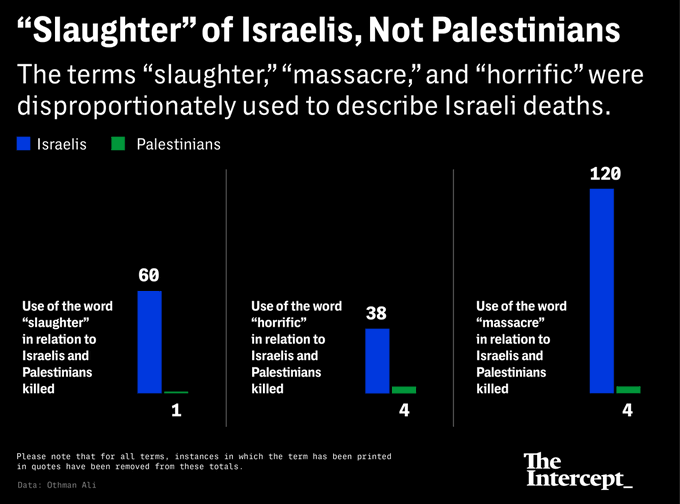
In distressing contrast, the news cycle has been dominated throughout the month of January, in fact since October last year, by far less frivolous concerns. The Israeli-Palestinian conflict in a very different way has generated language (‘administrative detention’, ‘the other team’, ‘educide’, ‘nakba 2’) – or recycled older terminology (‘ethnic cleansing’, ‘demilitarization’, ‘collateral’) – which is controversial and which demands analysis. While recording the language of Donald Trump, of Brexit and of the Covid pandemic, and once again, while tracking the atrocities taking place today, I have been conscious of distortion, untruths, avoidance and manipulations practised both by the participants in the conflict, by their allies or sponsors, and by those who should be reporting on it objectively and, where possible, impartially. It is by scrutinising their language and treating public and media discourse critically, by exposing bad faith and countering falsehood that linguists can make some small contribution to the global conversation taking place.

Linguists have begun to discuss the ways in which facts and opinions are being presented to the public and to unpack the assumptions and covert intentions of those controlling, or attempting to control the narratives in question…

https://newlinesmag.com/argument/language-is-a-powerful-weapon-in-the-israel-palestine-conflict/

For my part I am collecting new examples of contentious language relating to the middle eastern crises and adding them to my existing glossary of weaponised words and toxic terminology on this website. I would be very grateful for contributions from readers and will acknowledge these in upcoming posts.

After language?

The latest multimodalities examined

During October I relished the chance to talk to the editors of DazedDigital, Serena Smith and Gunseli Yalcinkaya, and they told me about the most recent developments in online and digital communication and the new language varieties trending on social media. I have tried to make sense of a much younger generation’s performances and interactions and the notes I made follow here…

 Language and the way we use it is now for the first time truly globalised. This means for example that new accents and intonations and vocal affectations take place across several cultures almost simultaneously. This gives us pronunciation and intonation novelties like Youtuber or Influencer accent, TikTok voice, etc. These are fluid, evolving and can blend more than one traditional source (UK and US linguistic styles and usages for example). The phenomenon is not new – the mid-Atlantic accent dates back many decades and both Valley Girls and users of Multiethnic London English – MLE – have played with new ways of pronouncing, but the platforms and apps of the 2020s – TikTok in particular – highlight these…

Obviously the way we consume and exploit media has changed radically with the internet and mobile technology and determines the kinds of messages we exchange and the words, sounds and visuals we actually use. Short attention-spans mean that messages need to be accelerated, brief and telling: the constraints of apps and platforms make for compressed and dense information packages.  At the same time the imperative for innovation​ (something that has always been part of language evolution, but used to happen very gradually) – novelty, neologisms, new and more liberated attitudes to formality and informality and style in general – is integral to changing fashions, aesthetics, vibes. Even such basics as whether messages have to make sense have been destabilised by Gen Z‘s playful surrealism and absurdism and TikTok’s creative conventions.

One major change is the way that the distinction between written and spoken language has broken down since people began to type conversations and exchange rapid interactions electronically. Also Pre-existing words and expressions are hijacked, reversed, toxified, appropriated and modified as never before. And we all​ now have the power to do this via electronic media – we don’t need permission to publish and exchange our ideas and indulge our playful, mischievous or creative new usages.

Gunceli asked, There are so many memes joking about how we’ve ‘progressed past the need for language’. Obviously worth taking with a pinch of salt, but do you think there’s any truth to this? 

We won’t evolve ‘beyond language’ since language is simply a label for human interaction and communicative practices, but the specifics of that language will continue to adapt and mutate along with our social needs and our technologies. Linguists do talk increasingly in terms of multimodality whereby both online and offline communication involves much more than speech or writing – ‘language’ as we have known it. The buzzword multimodality can refer to how IRL we blend all sorts of semiotics often simultaneously: stance and posture, facial expression, gesture, writing, speaking and using a communication device, but also refers to how online and app messages employ abbreviations, acronyms, audio, video, symbols, memes as well as or instead of words (…soon probably touch and smell as well!)

The NPC streamers phenomenon highlighted by Dazed is another example of what I described as GenZ and TikTokers’ minimalist, surrealist or absurdist treatment of language. NPC stands for ‘non-playable character(s)’, the digital background entities with a limited repertoire of utterances and repetitive actions encountered in video games, and the streaming is an online activity, primarily on the TikTok platform, whereby creators imitate these characters by livestreaming themselves, and viewers reward them with in-app gifts for doing it.

The new primacy of image (and audio) over simply text and conversation has resulted in a human imitation of cartoon sounds and seemingly meaningless bits of language that only followers and enthusiasts will recognise and be positively triggered by. Playing with identities by way of words, slogans, soundbites and catchphrases is as much influenced by the poses of cosplayers or Furries and the behaviour of video-gamers as it is by ‘traditional’ ways of using verbal and visual language.

How do you think the mainstreaming of emerging tech like AI is changing the way we communicate verbally with one another?

Algorithms being used for automated reasoning and the generating of persuasive messaging or content are already operating at sophisticated levels, but the linguistic aspect is just as much prey to error and detectable failures as, for example, deepfake images and impersonations of artistic productions. If we are digitally literate and managing to keep up, we can often see through the deception, and this is probably reassuring. AI has some interesting potential: for example, to allow us to communicate with people whose language we don’t share. But I think the limitations of AI(-its difficulties in interpreting or reproducing human nuance, implication, indirectness, etc) will lead to – is already leading to – new forms of incoherence and misunderstanding. I suspect we will soon be able to recognise a particular ‘AI style’ so that artificially generated messages can be recognised as such in some cases – at least I hope so! Translators and teachers are already grappling with potential of AI to assist, supplement or replace their work – and its limitations in doing so. More alarmingly AI is already inventing and using languages that we humans can’t understand: https://www.fastcompany.com/90132632/ai-is-inventing-its-own-perfect-languages-should-we-let-it

Gunceli’s fascinating review of all these themes and more is here…

Serena Smith spoke to me about the latest version of familect, the intimate, informal, often comical language invented in private domestic spaces, about which I’ve written before on this site. Her excellent account of TikTok’s #MarriageLanguage is here…

X-COMMUNICATION

…OR X-TERMINATION?

Twitter – a space I value greatly and make use of to keep abreast of cultural, social, political controversies, to exchange facetious remarks and gossip, and, above all, to keep in touch with linguists, writers, influencers, anonymous wits across the virtual globe, has of course been a-buzz with the news that its owner, would-be tech-bro, multi-billionaire Elon Musk, has rebranded the platform as ‘X’.

In ‘linguistic’ terms the X sign is already overburdened with signification – in other words it has an ‘excess’ of potential meanings, so is a very odd choice for a brand in that many of those meanings have negative connotations or connotations of absence, erasure, taboo, cancellation, prohibition, etc, etc. Among the only well-known positive ones are kisses, the marking of the spot on a treasure map and the Christian chi-ro symbol ( ⳩).

Although it can evoke mystery or anonymity, the many meanings of ‘X’ veer strongly towards the antipathetic: the cancellation mark, X-rated, unknown values, in superstition and mysticism death, danger, endings. In branding(!), as it depicts a generic version of the product being promoted—as in “Brand X”—the unidentified product deprecated as inferior to the named brand; it can serve like the asterix in replacing key letters in taboo words, in demographics Generation X is the ill-defined, cohort, adrift and stranded between boomers and millennials. It can suggest the scene of the crime, the sniper’s crosshairs, if multiplied it can describe the strength of strong liquor or moonshine, it can imitate crossed fingers or a puckered or defiant closed mouth. All these and more potential senses of the sign make it both risky and confusing as a solo identifier. Musk’s declared notion that the sign will also remind us of our ‘imperfections’ is putting it very mildly indeed (and who wishes to be reminded of their imperfections every time they log on?). Geeks, nerds, ‘edgelords’ and tech-bros (and nepo-/man-babies too), as we have seen in the case of other dominant brands, have their own , touchingly ingenuous ideas of what is mysterious, evocative, triggering or inspiring. They also have the means to inflict these insights on the wider, often more engaged, more discerning online community…

I spoke to Clare Thorp of BBC Culture about the linguistic implications of the rebranding and Clare’s article is here…

https://www.bbc.com/culture/article/20230728-twitters-rebrand-why-x-could-be-the-most-powerful-letter-in-english

The reaction of the World Wildlife Fund: the German text reads ‘Protect our wildlife before it is too late’

The reactions to the imposition of the new symbol by tweeters/tweeple/the twitterati (what should we call them now?), at least those who inhabit my corner of the platform, has been overwhelmingly negative, hostile and dismissive. Just a very few tech-bros, would-be influencers, crypto-enthusiasts have sympathised with Musk’s declared attempt to re-present the site as a multi-purpose, multimodal platform including new facilities such as banking, investment, dating(?). I have put together a checklist of articles commenting on all aspects of the venture, focusing especially on the symbolism and semiotics of the X itself. A small selection is here..

https://www.theweek.in/news/biz-tech/2023/07/24/a-brief-history-of-twitter-logo-and-xcom-as-musk-gears-up-to-free-the-bird.html

https://www.theguardian.com/commentisfree/2023/jul/29/will-rebranding-twitter-give-elon-musk-the-x-factor-i-wouldnt-bank-on-it?CMP=share_btn_tw

https://apnews.com/article/twitter-tweet-elon-musk-x-c1c3871e9bef60aa0a4c1a40129c155a

https://www.theguardian.com/commentisfree/2023/jul/28/the-guardian-view-on-twitters-rebranding-x-marks-an-everything-or-nothing-gamble?CMP=share_btn_tw

https://www.wionews.com/technology/explained-why-is-elon-musk-so-obsessed-with-the-letter-x-619050

On 30 July came news of a tagline or slogan designed to accompany ex-Twitter’s new visual identity. The phrase being promoted is ‘Blaze Your Glory’. @SmoothDunk’s response to this was a visual one:

…Other users of the site are fighting back, finding ways to delete or mask the ‘X’ trademark and restore their cherished bird symbol:

I talked to Jim Mora at Radio New Zealand on the same subject on August 4th:

https://www.rnz.co.nz/national/programmes/sunday/audio/2018901451/tony-thorne-what-to-make-of-the-letter-x

…And, as if to confirm my misgivings about the choice of letter, the Guardian reported on August 8th: ‘Ministers have opened a new vaccine research centre in the UK where scientists will work on preparing for “disease X”, the next potential pandemic pathogen.’

NAMED AND SHAMED

When proper names become slurs – and Karen, Ben and Chad can rest assured, it’s nothing new

I spoke last week to Ellie Muir of the Independent about the way in which certain given names have recently been appropriated in popular culture and the media for use as labels, catch-all stereotypes – or slurs. One focus of Ellie’s piece is the use of the name Karen on social media and as a meme to evoke an over-assertive, unreasonably demanding or hypercritical white woman (memorably epitomised as ‘an antivaxxer soccer mom with speak-to-the-manager hair’). Karen is a Danish version of Katherine dating from the Middle Ages and adopted by English speakers from the 1940s. Originally a Black US nickname for a stereotypical white woman perceived as overbearing and entitled, Karen was most popular as a baby name in 1965 in the US, so would typically denote a Generation X female, it went viral in 2017.

Ellie’s article is here…

https://www.independent.co.uk/life-style/ben-stage-karen-meme-b2284528.html

In the USA in the early 80s Valley Girls and college students used to refer to their sporty, macho ‘jock’ contemporaries as biftads, inspired by the fact that many of them were nicknamed ‘Biff’ or ‘Tad’. Much more recently the online incel community of frustrated, embittered, uncharismatic males has used Chad to denote a successful alpha male who is popular with women (his black counterpart would be Tyrone).

In the UK names like Sharon, Tracy and Mandy were earlier employed to evoke stereotypical working class, vulgar females or chavs (notably in the sitcom Birds of a Feather and in Viz comic), while from the 70s through to the early 90s, Rupert, Tarquin and Nigel were used to mock supposed toffs or ‘posho’ males and are sometimes still heard today. Kevins or Kevs were uncouth, uncultured young British males from the end of the 70s until the end of the 90s, causing much amusement when the same name became cool and fashionable in the US and France in the 80s. Wayne was used in the same way. Around the same time London youths looking for dates referred to girls as Becks (this was pre ‘Posh and Becks’ as nicknames of a Spice Girl and her footballer escort by the way) because so many North London Jewish girls were called Rebecca or Becky. In the mid-2000s teenage girls thought to be too earnest, awkward or just unpopular were dismissed as Megs, the name possibly inspired by the daughter of the same name in the TV animated comedy Family Guy. Some older London males nicknamed middle-aged females, especially if deemed to be frumpish or charmless, Noras or Dorises.

A footnote: in June 2025 a UK judge confirmed what we all knew. ‘Karen’ can be pejorative…

https://www.theguardian.com/uk-news/2025/jun/28/calling-someone-a-karen-is-borderline-racist-sexist-and-ageist-tribunal-says