A research portal for scholars, the press and the public
The Slang and New Language Archive was created in 1994 while I was Director of the Language Centre at King’s College London. The archive, consisting of a small library of books and periodicals and a number of databases and sub-directories, was designed as a repository for the collection, storage and dissemination of new language, in particular examples of nonstandard varieties of English such as slang, jargon and buzzwords. The archive was later expanded to take in examples of media language, political language, linguistic curiosities and etymologies. It remains a resource, unique in the UK and not-for-profit, assisting researchers, students, teachers and journalists, as well as non-specialists, in accessing information about aspects of contemporary language that are under-represented in traditional dictionaries and reference works.
This link will take you to the Archive webpage at King’s College, where there are further links to relevant articles and published sources…
Glossaries from the archive may be accessed on this site by entering keywords, such as slang, jargon, MLE (Multiethnic London English), familect (highly colloquial language used in the home), coronaspeak (language related to the COVID-19 pandemic) and weaponised words (the contentious language of Brexit, populism and biased reporting) and slurs (racist and misogynist terms) in the search box. Once you have accessed a post of interest, check the tags and categories at the foot of the page for other articles or glossaries on the same topic.
Two of the larger archive datafiles have now been revised and updated. You can access the glossary of current youth slang here…
To access the glossary of UK street slang, rap music and gang terminology please email me at tony.thorne@kcl.ac.uk to request a link.*
Please note that the King’s archive focuses principally on contemporary language, that is terms used from the twentieth century to the present day. If you are interested in historical slang, I strongly recommend the monumental work by my associate, the British lexicographer Jonathon Green. His dictionary, now generously freely available online, lists current and historical slang terms with timelines and citations illustrating their usage and development…
For more information, for queries, or to donate examples of language, contact me via this website or via the King’s College webpage. I’m on Twitter as @tonythorne007 and on Bluesky as @tonythorne007.bsky.social too.
In terms of new slang and nonstandard language there are few reliable resources online. In February 2025, however, US publisher Merriam-Webster launched their own slang dictionary. You can find it here…
Among the many more informal glossaries and wordlists of slang posted on the internet in 2025, this review of slang in English schools is unusually comprehensive and accurate…
Researching and tracking the latest slang can now draw upon statistical analysis of online data.
As 2024 draws to its end and talk among lexicographers, culture journalists and language buffs turns to ‘words of the year’, I’m immensely grateful to Randoh Sallihall of Unscramblerer for providing me with his datasets showing lookups (Google searches) for the most popular recent slang expressions…
Most searched for slang words in United Kingdom:
1. Gaslighting (170 000 searches) – a type of manipulation that makes you doubt your memories and feelings. The person doing it may lie and deny things.
2. Skibidi (125 000 searches) – refers to a viral internet trend featuring surreal, animated videos of singing toilets and dancing heads, popularized on platforms like TikTok for its bizarre humor.
3. Pookie (47 000 searches) – to show endearment and affection. Used for a close friend, partner or family member. A playful way to say someone is special.
4. Hawk tuah (40 000 searches) – imitative of a spitting sound. The catchphrase originates from a viral street interview conducted in June 2024 with Haliey Welch, who stated that her signature move for making a man ‘go crazy’ in bed was to ‘give him that hawk tuah and spit on that thang’.
5. Sigma (37 000 searches) – refers to an independent, self-reliant person who operates outside traditional social hierarchies, often described as a ‘lone wolf.’
6. SMH (31 000 searches) – internet slang for ‘shaking my head’. Used to express disapproval or disappointment.
7. Demure (26 000 searches) – reserved, modest or shy in manner or appearance. The TikTok user Jools Lebron made a series of viral videos using the phrase “very demure”. This trend gave the word a playful slang meaning. She uses it to assess appropriate makeup and fashion choices in various settings.
8. Rizz (25 000 searches) – style, charm or attractiveness. The ability to attract a romantic partner and make others like you.
9. Dei (17 000 searches) – diversity, equity, inclusion. A family friendly way of saying woke.
10. Aura (13 000 searches) – the vibe someone gives off. When used by tweens and teens it is likely a reference to how badass someone is. Aura points make you cooler. So you definitely want to earn more aura points instead of losing them.
We can compare this list with Randoh’s equivalent for the USA, used in the Newsweek article posted previously to which I contributed, and reproduced here with his explanatory comments…
Analysis of Google search data for 2024 reveals the most searched for slang words in America:
1. Demure (260 000 searches) – reserved, modest or shy in manner or appearance. The TikTok user Jools Lebron made a series of viral videos using the phrase “very demure”. This trend gave the word a playful slang meaning. She uses it to assess appropriate makeup and fashion choices in various settings.
2. Sigma (220 000 searches) – refers to an independent, self-reliant person who operates outside traditional social hierarchies, often described as a ‘lone wolf.’
3. Skibidi (205 000 searches) – refers to a viral internet trend featuring surreal, animated videos of singing toilets and dancing heads, popularized on platforms like TikTok for its bizarre humor.
4. Hawk tuah (180 000 searches) – imitative of a spitting sound. The catchphrase originates from a viral street interview conducted in June 2024 with Haliey Welch, who stated that her signature move for making a man ‘go crazy’ in bed was to ‘give him that hawk tuah and spit on that thang’.
5. Sobriquet (105 000 searches) – a nickname or descriptive name given to a person or thing. Borrowed from French sobriquet (nickname).
6. Schmaltz (65 000 searches) – refers to excessive sentimentality or melodrama. Often used for art, movies, music or storytelling if there is too much sappiness.
7. Sen (50 000 searches) – slang for self.
8. Katz (34 000 searches) – a term for anything enjoyable, fun or pleasing. It can also mean ‘yes’.
9. Oeuvre (25 000 searches) – refers to the complete works produced by an artist, writer or composer. A word used by literature professors to express superiority.
10. Preen (20 000 searches) – slang for a child who tries to act like a teenager(wears teen clothes or makeup).
A spokesperson for Unscramblerer.com commented on the findings: “The English language is ever changing. Every year new slang words are created. Many slang words are born through trending topics and viral videos on social media. However only few manage to stick around long enough to be added to the dictionary and remain in daily use. Slang words are a normal and fun evolution of language. We encourage everyone to learn some new words and surprise their children by using them.”
Research was conducted by word-finding experts at Unscramblerer.com.
We analyzed 01.01.2024 -25.10.2024 search data from Google Trends for terms related to slang words.
Methodology: We used Google Trends to discover the top trending slang terms and Ahrefs to find the number of searches. Americas most popular slang terms can be discovered in Google Trends through the keyword ‘meaning’. People will hear or read slang terms and search for the meaning of the term (example ‘demure meaning’). Ahrefs shows many variations of meaning searches like ‘slang’ or ‘trend’ (example ‘demure slang’) and similar keyword combinations (example ‘what does demure mean’). We added up 150 search variations of top slang terms.
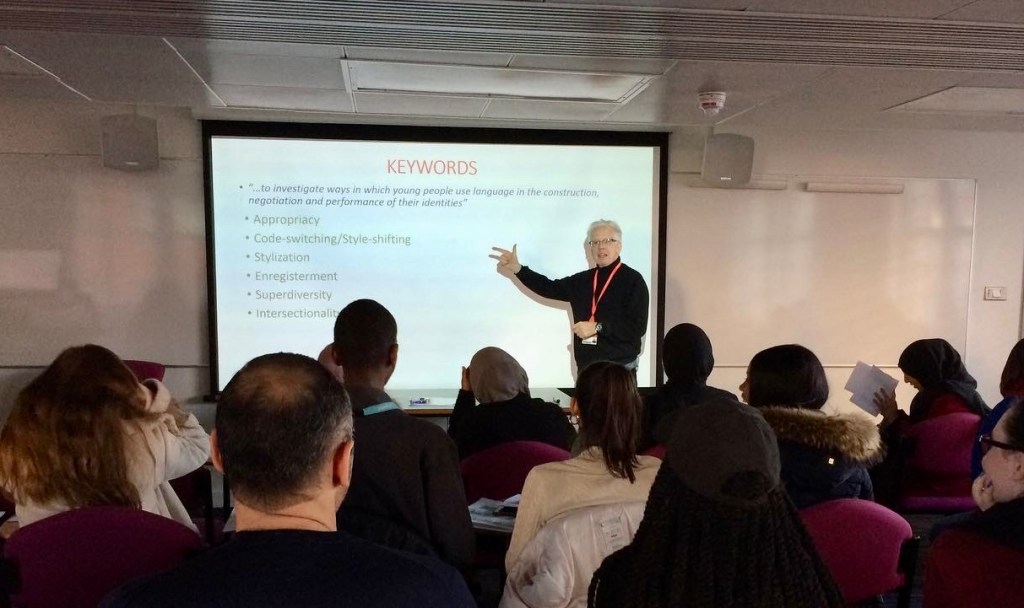
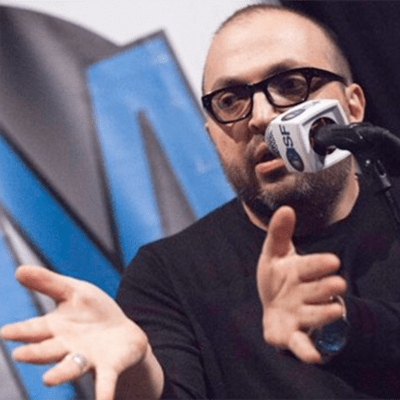
A few days after Randoh’s findings were published, I was asked by Robert Milazzo* to take part in the masterclass on new slang and youth language that he convened at Virginia Commonwealth University. The whole lively one-hour event was recorded and can be accessed here…
Robert’s class was particularly illuminating, allowing as it did for contributions from young slang users themselves and from puzzled old-timers too. Bear in mind that the samples handled by data analysts are taken solely from online usage and not from authentic speech. Nearly all the slang used on TikTok, YouTube, Instagram, etc. originates in the USA whereas the slang terms used by British youth in their IRL conversations will differ considerably from their North American counterparts, showing much greater influence from African Caribbean rather than African American sources.
Dictionary makers and journalists are breathlessly – if not desperately – publicising the latest online language – but do they really understand it?
One week on, I spoke to Chloe MacDowell of the UK Guardian newspaper, then to Marni McFall of the US Newsweek magazine on the topic of TikTok language and the online messaging mannerisms of Influencers and GenZ. Chloe was interested in one particular trending TikTok catchphrase, Marni in the whole panoply of 2024’s viral innovations.
Once authentic conversations and personal interactions (previously happening in private spaces or local communities) began to feature on the internet and in messaging and on microblogging platforms, language novelties, slang and faddish usages crossed over from a private realm into the global public domain. The latest slang and new language was visible, audible and immediately available to share. Obscure or exotic terms might quickly catch on and become viral favourites, spreading in some cases across the anglosphere more rapidly than print, broadcast or word-of-mouth transmission had ever been to achieve in the past.
Words and phrases began to function like memes, taking on sometimes a ‘multimodal’ aspect whereby sound and image could reinforce the purely verbal expressions that people chose to exchange and promote. Pre-internet there had always been catchphrases, what linguists call ‘vogue words’, slogans and soundbites, and keywords that somehow seemed to evoke or encapsulate some special aspect of the ‘zeitgeist’. What we have now is a much more knowing, deliberate intention (on the part of trend-setters, influencers, ‘thought-leaders’) to create new language to celebrate new identities and to promote new attitudes and lifestyle innovations to the widest possible audience.
Subcultures like surfers, valley girls, fanboys and girls, hip hop aficionados had always invented striking, expressive language and this is still true, but instead of niche culture we have ‘meganiches’, instead of subcultures we are dealing with globalised communities.
The fashionable language of TikTok and GenZ in particular is part of their wider obsession with vibes, aesthetics and microtrends, many of which arise and are discarded in rapid succession. The prevalent style is exhibitionist, self-promoting, allusive and often ironic, increasingly even absurdist, making it hard for outsiders to grasp the nuances in play. Older commentators and dictionary publishers struggle to keep pace, often misunderstand and record the terms in desperation (in their searches for ‘word of the year’ for example) just as they fall out of use.
The use of this language as an identity marker in an intensely competitive digital ecosystem means that the Gen Alpha cohort now ridicule GenZ usages as being out-of date, while GenZ is still deriding millennials for their old-fashioned ‘cringe’ vocabulary. At the same time would-be influencers practise bragging, ‘manifesting’ and other forms of self-congratulation in a search for clicks and clout.
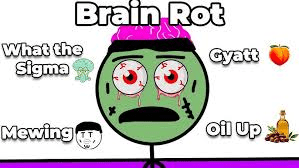
One of the latest features of online wordplay is the elevating of an older concept or cliche into a teasing provocation or pretence at new insights, as we have seen with ‘delulu’, ‘demure’ and ‘mindful’, ‘rizz’ and ‘brat’. The current rash of declarations of ‘being privileged’ – a new version of ‘humblebragging’ or ‘virtue-signalling’ – is another example. In parallel is the ironic celebration of the incoherence or absurdity of much online discourse and of low-quality ‘slop’ by embracing a culture of ‘brainrot’ – nonsense memes such as ‘skibidi’ and vacuous, contagious content.
Most of the innovation in online language and image still emanates from the US and even though a global audience can access it instantly, its tropes (think ‘goblin-mode’ – ‘goblin’ doesn’t have the same associations for Brits) don’t always translate for other speakers of English. In parallel, poses, gestures and looks as well as music-related modes are increasingly generated from non-English cultural zones such as Japan and Korea. It will be interesting to see if other parts of the globe begin to play a part in the evolving online theatre of signs and behaviours, but this doesn’t seem to have happened yet.
On the first of November Collins Dictionaries, ahead of the pack, had already announced their choice of word of the year for 2024, and their candidates illustrated the same, in my opinion mistaken, concentration exclusively on terms from a very narrow range of sources. While postings on social media are performances designed to attract attention, there is an even wider domain in which discourse demands analysis: the crises in the Middle East and Ukraine and the surreal spectacle of the US presidential campaigns, for example, are also highlighting keywords and generating new formulations or reworkings of language – data that mainstream media and lexicographers seem to think unworthy of their attention…
Digital media enables language change and innovation – of course, but how much and for how long?
I spoke to Caitlin Talbot, Culture Researcher for the Economist magazine, who asked me about the effect of TikTok talk and the slang, catchphrases and viral puns invented by Gen Z. Caitlin wondered how many new terms were actually being added to the global conversation each year, and whether these novelties would last.
My own solo attempts to record new language and to understand and comment on its sources rely on fairly haphazard, old-fashioned techniques, so it’s not possible for me to quantify the lexical items, locutions, expressions and longer elements of discourse that I come across. The major dictionary publishers do have access to powerful and sophisticated electronic methods of scanning, scraping (‘aggregating’ as it should more properly be termed) raw linguistic data from across the internet. This material can be categorised to a certain extent and entered into giant databanks from which lexicographers can select the terms they periodically admit into published dictionaries.
Attempts to amass and analyse examples of language in use are nonetheless hampered by several considerations: the language in question is primarily in the form of text, rather than authentic speech, and the texts in question are largely recoverable from published sources and media platforms, only to a limited extent from personal messages. Tracking their use over time is possible, and the popularity of some usages can be subjected to frequency counts and represented on timelines, but private use and communications by local and specialist communities is far harder to assess. One of the more interesting challenges to the lexicographer is to predict which novel terms may become embedded in the national conversation and which drop out of use – some almost immediately and others over time. In fact my experience (since I began to collect slang in the 1980s) proves that it’s impossible to predict, let alone to speculate as to why this happens.
Caitlin’s article, with useful links, is here…(if it is paywalled for you, go to here *)
In speculating about the number of new terms generated (and the playful, sometimes absurdist tendencies featuring on social media involve not only inventing new terms but reworking and re-purposing existing language like ‘demure’, ‘babygirl’, ‘millennial pause’, etc.) we can only fall back on subjective, anecdotal, incomplete accounts, even if these may be interesting and informative in their way…
THE WORD “demure” is old—it describes the sort of modest lady Victorians esteemed—but it is freshly fashionable. There are some 800,000 posts on TikTok with the tag #demure. Youngsters today are using the word with lashings of irony, invoking it to describe everything from Saturn to sunset to New York City’s bin service.
TikTok is changing how young people talk. Other fusty words, such as “coquette”, are fashionable again. Colloquialisms are on the rise: members of Gen Z say “yapping” instead of “talking” and trim “delusional” to “delulu”. New words have also become popular. Take “skibidi”, a term popularised by a meme of an animated head singing in a toilet; it means “cool”, “bad” or “very”, depending on the context.
On social media words spread far and fast. At least 100 English words are produced, or given new meaning, on TikTok a year, reckons Tony Thorne, director of the Slang and New Language Archive at King’s College London. Some linguists think the platform is changing not just what youngsters are saying, but how they are saying it. A “TikTok accent”, which includes “uptalk”, an intonation that rises at the end of sentences, may be spreading.
The platform’s versatility encourages experimentation. Users can combine audio, text and video in a single post. That means words that sound especially satisfying can go viral, as well as those that are memorable in written form. Linguistic code has emerged, dubbed “algospeak”, to dodge content-moderation algorithms. It includes euphemisms (sex workers are called “accountants”), and misspellings (“seggs” instead of sex).
The mutation of language on TikTok is also due, in large part, to the age of its users. Most are 18-34 years old. That matters because “Young people are language innovators,” says Christian Ilbury, a linguist at the University of Edinburgh. For decades youngsters have created words to distinguish themselves from adults. On social media such neologisms find a big audience. Mr Ilbury describes this as “linguistic identity work”; parents have long called it attention-seeking.
The platform brings together fan groups and communities, from #kpopfans (people who like Korean pop music) to #booktokers (people who love reading). These groups create their own slang, says Adam Aleksic, a linguist and influencer. Some of it leaks into the mainstream. Other slang comes from specific groups: black people have innovated and spread hundreds of English words over the years, from “cool” to “tea” (gossip). Journalists and screenwriters popularise such words; now TikTokers do, too.
*For help in understanding the language and online mannerisms of TikTok and GenZ, I’m grateful to my daughter, Daisy Thorne Mrak*
Teen talk continues to baffle older cohorts, but as autumn approaches the vibes shift – and Tiktok identities evolve…
In mid-August I talked to Mary McCarthy about the ever-changing patterns of youth language, and, with her kind permission, Mary’s article for the Irish Independent follows…
No cap, sigma and rizz? You’ll need more than Google Translate for teen talk now
Parents are supposed to be bemused by the slang words their children use, but the new summer vocab in our house has me totally flummoxed. This is particularly so with the younger two lads – eight and 11 – who walk around saying nonsense words like “sigma”, “no cap” “Skibidi Toilet” and “gyat” all the time.
I don’t mind them having in-jokes, and it’s nice to see them falling around laughing – I’ll take that over sullen moods any day. But what are they laughing about?
Are they being kind? I can see the pleasure of getting the giggles over absurd stuff. I used to have this thing with a school friend where we would say repeatedly “The dog is dead” in a Northern Ireland accent – no idea why. But there is so much coming at them now online. How can I know they won’t soak up the wrong messages? The Andrew Tate alpha-male rubbish, for example.
This week I hired my Gen Z 16-year-old to help me decode what his brothers were saying, and he pocketed his €5 before unhelpfully telling me that “it’s just little kids saying random, mental stuff”.
“It’s the internet, it’s TikTok language,” he said. But they don’t have TikTok, I reminded him. YouTube shorts are the same and they have a lot of that, he told me darkly.
So I asked the lads themselves, and they were fairly keen to enlighten me, which was reassuring. “No cap” means no lying, “sigma” just means cool (no Andrew Tate alpha-male link, thank goodness) and rizz is “charisma”.
My 11-year-old elaborated. “So, this would be a chat-up line like, ‘Are you from Tennessee? Because you’re the only ten I see’.” I’m unsure what to say. They refused to explain “gyat”, so I looked it up later.
It mostly seems fine. They’re getting it from pals and YouTube shorts, which I will limit more now. But what I’m most baffled about is the Skibidi Toilet YouTube show, and why they call everything Skibidi for no reason.
The show has amassed over 65 billion views over the last year, and I can’t see any pull factor. It’s about toilets with human heads engaged in a war with people who have CCTV cameras for heads, all set in a dystopian landscape. Apparently, there will be a TV show and a movie. I had a headache watching it after 30 seconds.
Youth slang can spread very quickly these days via online platforms and messaging
It’s everywhere. We were on holiday in Kerry a few weeks ago and had a few hours to kill in Kenmare, so we visited the Kenmare Stone Circle, which was erected some time between 2000 and 500 BC. If you clip a wish at the Hawthorn Fairy Tree, it comes true. That’s according to the man working there, who handed us a piece of paper and a pen.
Being my nosy self, I immediately started reading other people’s wishes, and among the pleas for health, happiness and planning permission there were lots of Skibidi.
“Sigma, sigma on the wall, who is the Skibiest of them all?” one card read.
“Desidere che i cani diventine Skibidy Toilet,” read another, which Google translate told me was “Wish that dogs become Skibidy toilets” in Italian. So it’s not just my children larking around. I’m sure it’s all just a silly phase, perhaps the same as my own “the dog is dead”.
Tony Thorne, director of the Slang and New Language Archive at King’s College London, said young people have always created their own language to keep outsiders like parents and teachers out. It just happens that there’s more around today.
“This language innovation, as linguists call it, used to take place in private spaces and only sometimes spread further – if, for example, the language was used in music or movies or TV comedies,” he said.
“Youth slang can spread very quickly these days via online platforms and messaging and so can become global. Terms often coined in the US rapidly move into the Anglosphere. We see that in the huge network of English speakers who converse excitedly in ‘mid-Atlantic’ accents.”
Thorne recommends the guide to teenage slang on the Gabb.com website. I soon discovered that “gyat” is a way to express admiration, usually for a woman’s backside. So I nipped that one in the bud.
It is a habit for parents and the older generation to laugh at teenagers for speaking in a frivolous way
Once you start researching the origins of these words, it gets interesting. According to a recent Forbes article on how Gen Z language is changing the workplace, to “slay” – which is something my 13-year-old daughter says, as in “You slayed that lasagne, Mammy” – means “high praise” and originated in black and LGBTQ+ communities before gaining popularity on TikTok.
I can’t remember using much slang as a teen, apart from the many violent descriptions we had for being drunk, among them flutered, slaughtered, battered and trollied.
My cousin would visit from Canada, and she loved hearing those terms. Today, though, there’s no difference between what a 15-year-old in Dublin and a 15-year-old in Toronto is exposed to, and they’re the more creative for this. After all, the way we learn to speak is from listening to other people, so we probably don’t really need to worry much about the slang.
Kevin Barry, former professor of English at the University of Galway, said that while adults can see it as foolish, there’s a wisdom to the newly minted words and phrases.
“It is a habit for parents and the older generation to laugh at teenagers for speaking in a frivolous way – to the adults it makes no sense. What they are seeing is the frontier of language change, which is a creative Wild West,” he said.
There’s no point trying to keep up. New slang will be coined as fast as I learn. We can’t police it. The only thing to do is role-model IRL (in real life) what it is to be a nice person. To not shout, to be kind, to make time for the children. To let them know you have high expectations for their behaviour by having high expectations for your own – no cap.
The dominance of memes and viral posts from the USA celebrating a brat summer was challenged in late August by a TikTok injunction to ‘be demure and mindful‘ in all one’s actions and representations. Alternative and mainstream media jumped quickly aboard the accelerating bandwagon – and Ellie Bramley of the Guardian asked me to comment…
‘Demure‘ is a seemingly prim and dated adjective, used recently only by rueful babyboomers and tabloid journalists, for whom it is code for ‘not completely undressed’ when describing female celebrities attending film festivals, tottering along red carpets and catwalks. In drag queen and ‘ballroom LGBT‘ circles, though, it has long featured as a self-mocking keyword when urging the outrageous, usually ironically and teasingly, to behave with modesty and decorum. It is in this spirit that ‘fierce divas’ and other influencers have relaunched the term, along with ‘mindful‘ in its older sense (before the advent of self-seeking ‘mindfulness’) of considerate, respectful and cautious. The Guardian piece is here…
It’s very easy to dismiss GenZ and TikTok fads as shallow, ephemeral provocations, unworthy of the attention of rational adults. Easy, too, to deride aged babyboomers like me who record them and attempt to analyse the thinking behind them. But as Ellie herself remarked, a keyword like ‘demure’, inasfar as it isn’t just an absurdist gesture, can not only signify a genuine shift in self-awareness on the part of a few influential online individuals, but can prompt reflection and even changes in behaviour among a much larger segment of the population.
With that in mind, from Laura Pitcher, here’s Dazed‘s perceptive take on the word of the moment…
I thought it might be interesting, even informative, to look back from our post-Brexit, post-COVID vantage point in early 2023 to a time before a culture of impunity had become embedded, a time when there still seemed to be a consensus across political persuasions that competence was a first requirement of whoever was elected to govern Britain, (but a time, too, in which there was a feeling among many that profound changes were overdue). In 1997 I made a series of programmes for BBC World Service Radio, looking at how emerging words and phrases seemed to embody novel attitudes on the part of the British. The broadcasts were aimed at listeners outside the UK, although at that time also accessible inside the territory.
The first in a series of short programmes looked at the language of New Labour, at perceptions of a closer relationship between its politicians and what is now called the mainstream media and at the role of the spin doctors (one of the very new formulations heard in those days) responsible for what is now called comms and messaging and for negotiating that rapprochement.
I was fortunate to be able to draw upon insights from Derek Draper, at that time one of New Labour’s highest placed political advisors and lobbyists, journalist and columnist Julia Hobsbawm and writer and critic Peter Bradshaw. Our conclusions were at that time revealing, I think, even if now the notions and the behaviour we were looking at and the terminology that accompanied them have become commonplace.
These recordings were lost for many years, and I am very grateful, both to my then-producer Colin Babb for recovering some of them, and to Urban Mrak who has managed to restore and re-record a small selection of the damaged tapes. The first of them can be accessed here, although the first few seconds during which we listened in the studio to reiterations of the ‘New Labour, New Britain’ mantra are missing…
In the following days I will add two more of these short recordings, dealing, respectively, with the idea that late-90s Britain was experiencing an upsurge in aggressive, selfish behaviour, typified by the new concept of ‘road rage‘, and an increase in female assertiveness caricatured as ‘girl power‘.
I posted this in January 2023, but now – in May of the following year – it seems timely to update and repost the article and the links, given the fact that the snappy genners were right and a UK genny lec has been announced for July 4…
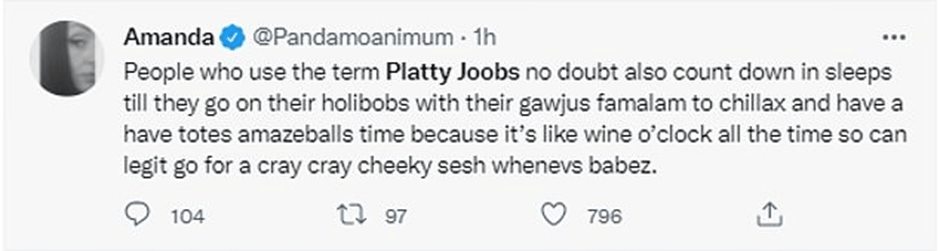
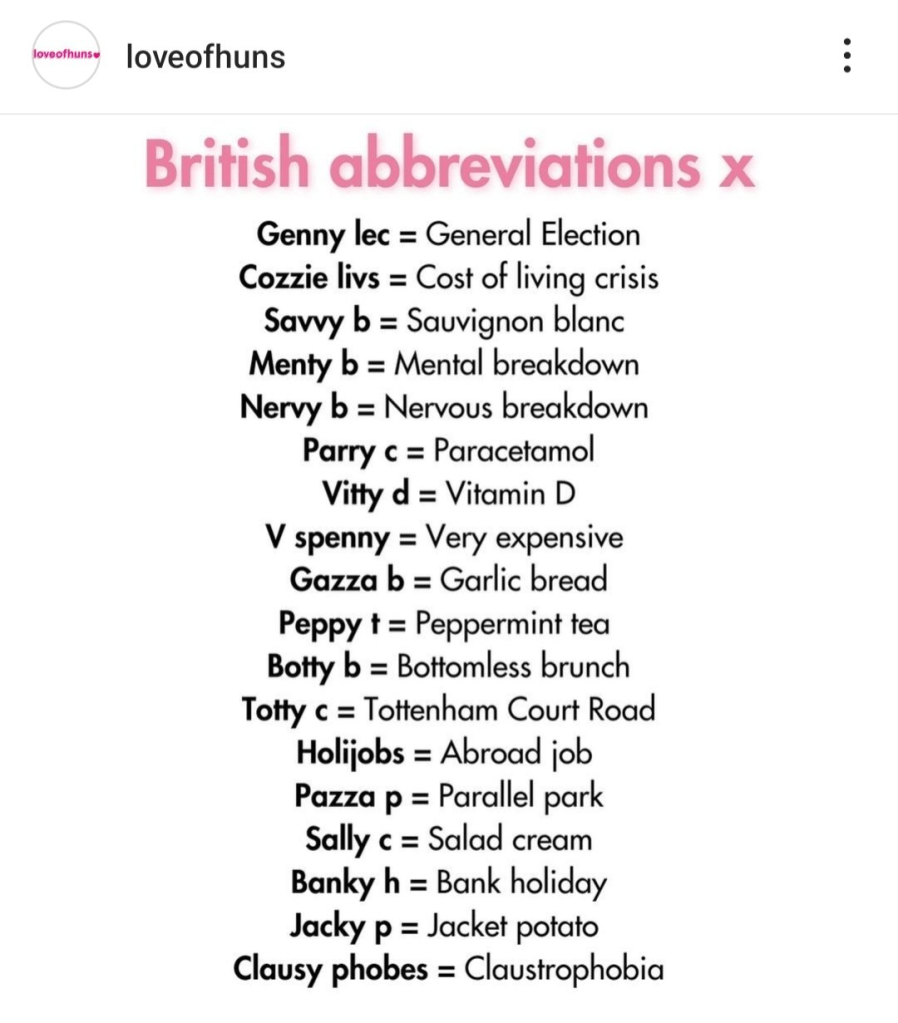
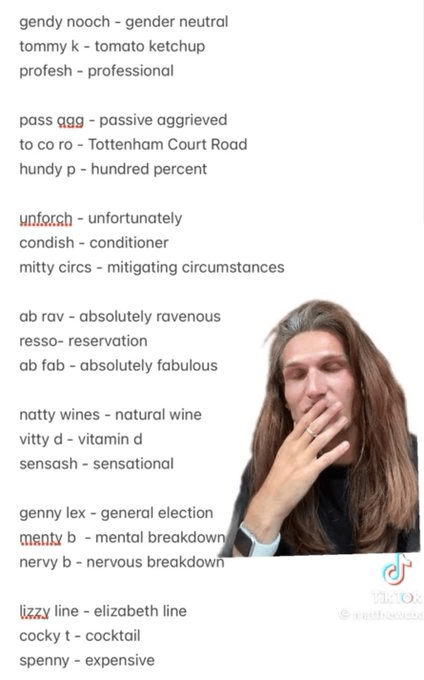
We are halfway through January now. The Holibobs are over and we have come to the end of Chrimbo Limbo – that uncertain period between Christmas and New Year. Dishy Rishi is still in number 10 and, despite unprecedented crises in the health services (though the Panny-D seems to have subsided and Locky-D is just a memory) and family finances (in meltdown due to the Cozzi-Liv), we will have to wait until next year for a Genny-Lec (and perhaps the predicted Labby-Maj once the votes have been counted). In the midst of adversity, on social media (on Facey-B, Insta-G, and even Linky-D) the usual barrage of banter, badinage and bonhomie continues unabated nevertheless. As my Twitter friend Amanda comments…
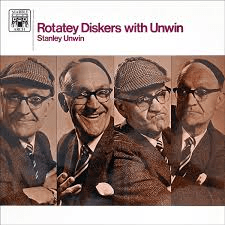
‘Platty Joobs’ (for Platinum Jubilee in case you missed it) and ‘famalam’ have a Professor Stanley Unwin feel, for me and possibly others of my advanced years. Unwin was an eccentric old chap who used to perform monologues on the radio in the 1950s in which he mangled words and phrases and challenged listeners to interpret what he was saying. ‘Unwinese’ added nonsense syllables, reversed syllables, jumbled parts of sentences – like children’s nonsense stories and nursery and baby talk does. Exaltation of childhood by way of whimsy and nonsense (as in the works of Lewis Carroll, Edward Lear) has been an enduring feature of Britishliterary and popular culture – perhaps a tactic by which we try to play down the dark side of life, smooth over social inequalities and make light of the blunders of our ruling class: deploying non-stop facetiousness, irony, cheek and irreverence in all everyday communications.
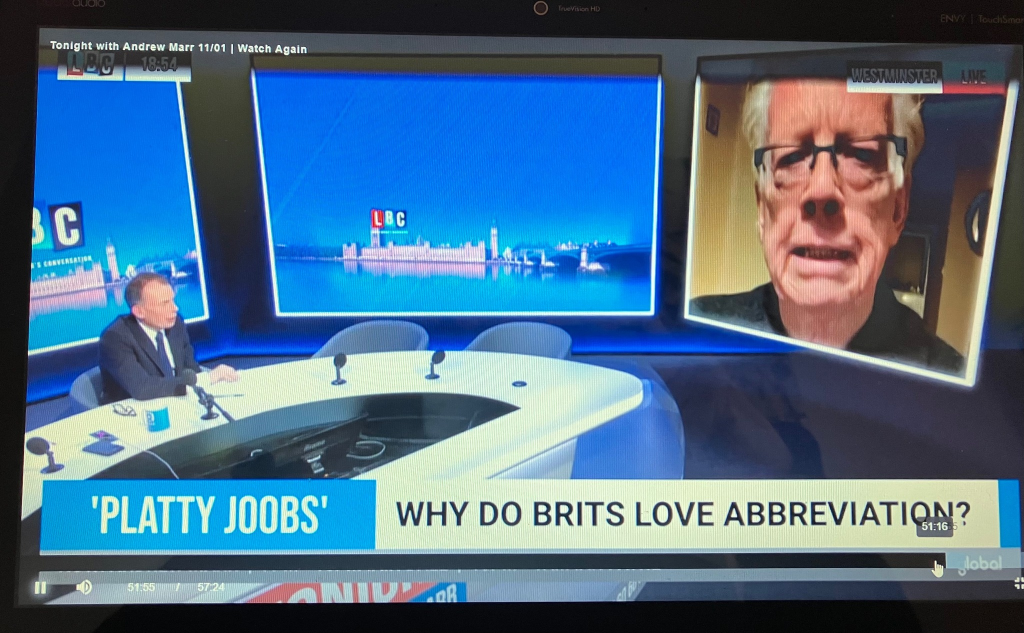
I spoke to Serena Smith, editor at Dazed Digital, about the sassy, cutesy – or cringe-inducing – humour involved in abbreviating, coining nicknames, dismantling and reassembling words and phrases in a particularly British manner, then a few days later answered questions on the same subject from Andrew Marr on LBC Radio. Serena’s article is here…
It’s heartening that, despite the seeming indifference of older commentators and experts, some, mainly younger academic linguists are beginning to study these developments, applying statistical techniques to tracking the spread of new terms and analysing specifics of their users. Dr Christian Ilbury of Edinburgh University, with whom I’ve exchanged ideas, has been doing this for some time and writes here of the online personas created and celebrated by new labels, catchphrases and in-jokes…
Earlier in May I talked to Dillon Thompson of Yahoo News about slang and its online incarnations. Dillon was exploring the ways in which slang and new language both affect the way we interact in an accelerated digital age, and the way in which digital environments such as TikTok and Instagram and Twitter and the internet-based rituals, gestures and poses embraced by Generation Z in turn might influence the sort of language we – or some of us – are creating, adopting and using.
Dillon’s article, with new insights and with contributions by me and from US linguists Sunn m’Cheaux and Daniel Hieber is here…
In 2016 I wrote about so-called familect, the ‘microdialect’ originating in the home*. Also known as ‘family slang’ and ‘kitchen table lingo’, this is one of those underappreciated, under-researched varieties of ‘in-group’ language which, like slang and jargon, make use of the same techniques (metaphor, irony, analogy – alliteration, rhyme, assonance, reduplication) as poetry and literature and at the same time offer a window into the private worlds of ordinary people: their preoccupations, pleasures and ways of bonding. Familect can also be a sharing ritual within the household whereby humour and creativity and inventiveness are enjoyed across generations. Kids are adept in creating new words from an early age and at playing with existing language to create new and colourful expressions, while older family members have their own ways of coining expressions and recycling or reworking the language of their youth, so the home is also a laboratory in which to cultivate new literacies.
Just recently the cApStAn Translation Team reviewed the topic and provided a useful link-fest and bibliography…
Familect can provide a useful subject for research and field work as part of exploring word creation and language innovation for school or college projects. Its users can be encouraged to look more carefully at the words and phrases they have invented themselves or shared or just heard, and asked to consider…
Why was the expression invented? (usually because the object, idea or feeling described is precious or important or super-familiar. Sometimes because there isn’t an existing word or a memorable word to describe it in standard English)
What is it that makes these words funny, understandable, memorable? Is it that they sound like something else, remind you of something already familiar? Or is it the spelling and sound of them itself that makes them amusing?
In fact the school itself may be a source of similar novelties, as Tabitha McIntosh wrote in the TES this summer…
On Burnout, Decompression, Re-entry Syndrome– and Calling It a Day
Still mulling over the words of Dr Mike Ryan of the World Health Organisation, who described plans by the UK Government for a general relaxation of COVID-protection policies in ten days time as ‘moral emptiness and epidemiological stupidity’, I was invited to join a discussion on London’s Voice of Islam radio station about the notion of ‘Pandemic Fatigue’ and its implications.
The full discussion is here, with my contribution beginning at 44 minutes…
We can see then, that ‘pandemic fatigue’ can sometimes be a useful, neutral, technical designation, and this is how the WHO itself presented it in 2020…
We can become aware, too, that ‘pandemic fatigue’ is a very conflicted term: although used by the WHO and by ‘ordinary’ people to describe their very real exhaustion, it has also been used, like ‘compliance fatigue’ by authorities to blame the public for disobeying…
Despite being locked down myself, in exile for the moment, this was another busy day, with long, mainly heated and indignant discussions taking place on Twitter of what ‘indigenous’ might mean in the context of the UK, triggered by the assertion by Tory MP Andrew Bridgen that the ‘indigenous’ population of the UK will not tolerate immigration. The offending word is an ambiguous and context-dependent term currently. Recent examples have referred to Canada’s First Nations in the harrowing context of deaths in schools where indigenous children were confined. I don’t think it has been used by any reputable specialists in or about the UK, and its use at a time when an England football team of very mixed origins is being celebrated seems crass and provocative. (We don’t know who the ‘original’ inhabitants of the British Isles were, because there was no written record until 55 BCE, but they certainly immigrated, or invaded and colonised as did all the subsequent settler groups.)
On BBC Radio Bristol I once again answered listeners’ queries on the the etymology of popular expressions. This time, perhaps aptly in present circumstances, the phrase was ‘call it a day.’ First recorded in 1838 by US writer Joseph C Nolan in hisCharcoal Sketches – A Study in the Humor of the Old Northeast, it was in the form ‘call it half a day’ and seems to have reflected the mixed feelings of weariness and resistance on the part of workers from the Philadelphia slums, deciding to knock off early or to award themselves a half-day holiday. By 1919, as the USA wearily emerged from war, the usage had mutated into ‘call it a day’: in 1938 ‘call it a night’ was first recorded.
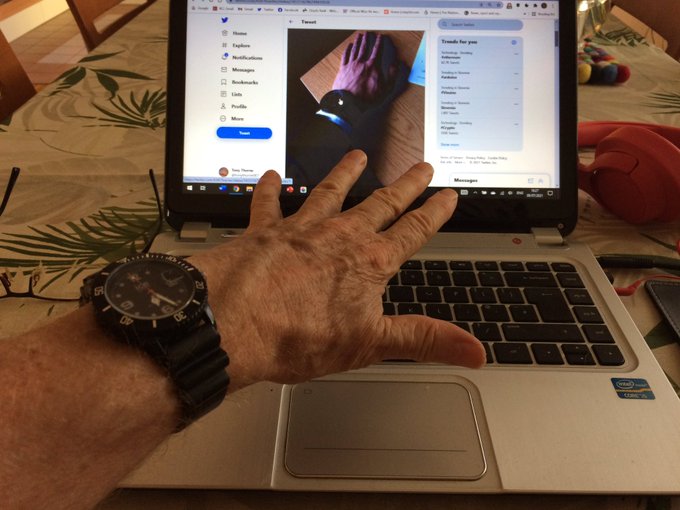
I called it a day myself, at nine o’clock on a warm evening, pleased to have been awarded nine out of ten in a facetious Twitter competition for a photo of my hand, and recalling the louche philosopher Gurdjieff’s realisation that he had progressed from drinking from glasses to drinking from “what are called ‘tumblers'”…















 tony thorne