GOING VIRAL, GOING GLOBAL

youth slang crosses world englishes

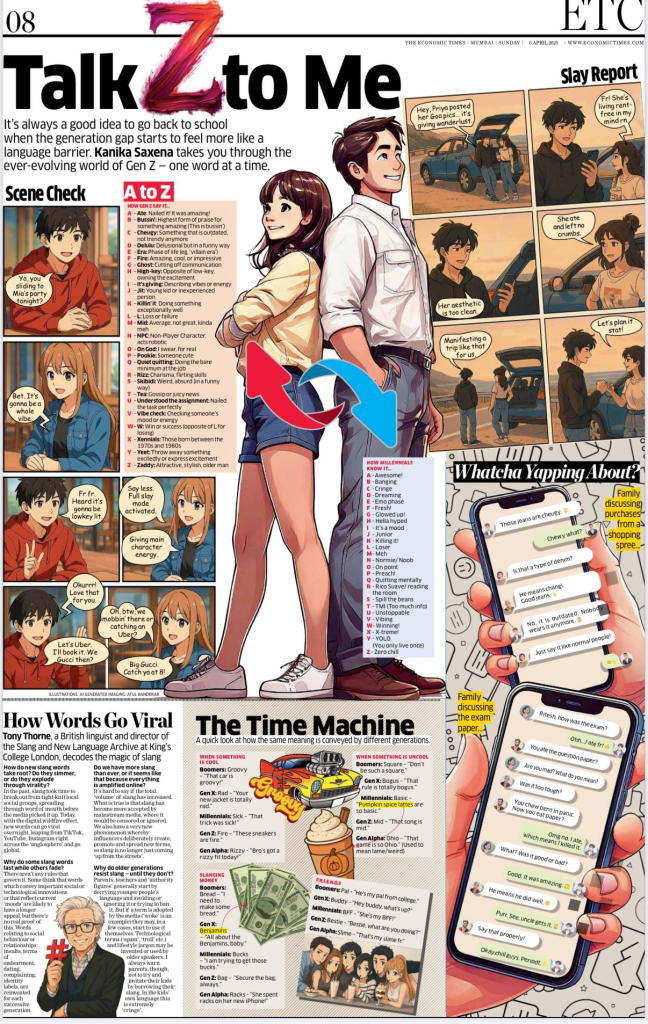
Last week I was interviewed by two young journalists about the pervasive slang generated by Gen Z and Gen Alpha. Interestingly both journalists are operating outside the US/UK matrix from which much of this language variety emanates. Interestingly too, both journalists asked similar questions about the latest linguistic novelties and how we might respond to them. Kanika Saxena‘s piece appeared in the Economic Times of India, and my contribution is here…

1. How do new slang words take root in a generation? Do they slowly build momentum, or does one viral moment suddenly put them everywhere?

In the past it could take some time for slang to escape from the local social group (‘in-group’ or ‘peer group’: a group of friends, a gang, fellow workers, etc.) where it originates into the outside world, then to spread by word of mouth into other parts of society, finally perhaps being picked up by the entertainment or print media. Nowadays this process has been massively speeded up by messaging and the internet, so that a novel term can go viral and reach beyond its original community almost instantaneously. New expressions can spread via social media and platforms like TikTok, Youtube, InstaGram right across the ‘anglosphere’ and go global.

2. Some words stick around for decades, while others vanish overnight. What makes certain slang words stand the test of time?

Linguists have tried to analyse why some terms become briefly fashionable and then disappear while others endure. There don’t seem to be any rules that govern why this happens. Some experts think that words which convey important social or technological innovations or that reflect current ‘moods’ or preoccupations are likely to have a longer appeal, but there’s no real proof of this. It could also be because a word relates to important social behaviour or relationships: insults, terms of endearment, ‘dating’ language, complaining, identity labels, for example, have to be reinvented for each successive generation, then persist until their users mature or grow older.

3. With social media throwing new words at us daily, are we actually creating more slang than before, or does it just feel that way because everything is amplified online?

It’s hard to say if the total ‘volume’ of slang has increased because, in the past at least, it was impossible to quantify it. What is definitely true is that slang has for some time become more accepted by mainstream media whereas it used to be censored or ignored. We also have the very new phenomenon whereby influencers, TikTok stars and content creators are using online resources to consciously, deliberately create, promote and spread new terms, so slang is no longer just coming ‘up from the streets’ (or spread via music, TV and movies) but is a commodity exchanged and pushed to gain prestige or sell oneself.

4. Older generations always seem skeptical of new slang—until, of course, they start using it too. What’s the secret to a word crossing generational lines?

Parents, teachers and ‘authority figures’ generally start by decrying younger people’s language and avoiding or ignoring it or trying to ban it. (This isn’t really justified by the way: slang may be seen as socially marginal but is not technically deficient or defective language and uses the same techniques as poetry or literature) But if a term is adopted by the media (‘woke’ is an example) they may in a few cases start to use it themselves. Technological terms (‘spam’, ‘troll’ etc.) and lifestyle jargon may be invented or used by older speakers. I always warn parents, though, not to try and imitate their kids by borrowing their slang. In the kids’ own language this is extremely ‘cringe’.
My second interview was with Austėja Zokaitė who is based in Lithuania and it appears in the online magazine Bored Panda, an arresting and anarchic daily roundup of the latest viral images, memes and commentary on internet culture. The whole report is here, with my comments interspersed with the succession of visual elements…

This IG Page Shares “Hard” Images, And Here’s 30 Of The Most Unhinged

Two weeks later I took part in a podcast on the subject of Slang, hosted by US students Sophie Xie and Andrea Lee. Our discussion is here…

Dang, What’s That Slang? by Andrea Lee

X-COMMUNICATION

…OR X-TERMINATION?

Twitter – a space I value greatly and make use of to keep abreast of cultural, social, political controversies, to exchange facetious remarks and gossip, and, above all, to keep in touch with linguists, writers, influencers, anonymous wits across the virtual globe, has of course been a-buzz with the news that its owner, would-be tech-bro, multi-billionaire Elon Musk, has rebranded the platform as ‘X’.

In ‘linguistic’ terms the X sign is already overburdened with signification – in other words it has an ‘excess’ of potential meanings, so is a very odd choice for a brand in that many of those meanings have negative connotations or connotations of absence, erasure, taboo, cancellation, prohibition, etc, etc. Among the only well-known positive ones are kisses, the marking of the spot on a treasure map and the Christian chi-ro symbol ( ⳩).

Although it can evoke mystery or anonymity, the many meanings of ‘X’ veer strongly towards the antipathetic: the cancellation mark, X-rated, unknown values, in superstition and mysticism death, danger, endings. In branding(!), as it depicts a generic version of the product being promoted—as in “Brand X”—the unidentified product deprecated as inferior to the named brand; it can serve like the asterix in replacing key letters in taboo words, in demographics Generation X is the ill-defined, cohort, adrift and stranded between boomers and millennials. It can suggest the scene of the crime, the sniper’s crosshairs, if multiplied it can describe the strength of strong liquor or moonshine, it can imitate crossed fingers or a puckered or defiant closed mouth. All these and more potential senses of the sign make it both risky and confusing as a solo identifier. Musk’s declared notion that the sign will also remind us of our ‘imperfections’ is putting it very mildly indeed (and who wishes to be reminded of their imperfections every time they log on?). Geeks, nerds, ‘edgelords’ and tech-bros (and nepo-/man-babies too), as we have seen in the case of other dominant brands, have their own , touchingly ingenuous ideas of what is mysterious, evocative, triggering or inspiring. They also have the means to inflict these insights on the wider, often more engaged, more discerning online community…

I spoke to Clare Thorp of BBC Culture about the linguistic implications of the rebranding and Clare’s article is here…

https://www.bbc.com/culture/article/20230728-twitters-rebrand-why-x-could-be-the-most-powerful-letter-in-english

The reaction of the World Wildlife Fund: the German text reads ‘Protect our wildlife before it is too late’

The reactions to the imposition of the new symbol by tweeters/tweeple/the twitterati (what should we call them now?), at least those who inhabit my corner of the platform, has been overwhelmingly negative, hostile and dismissive. Just a very few tech-bros, would-be influencers, crypto-enthusiasts have sympathised with Musk’s declared attempt to re-present the site as a multi-purpose, multimodal platform including new facilities such as banking, investment, dating(?). I have put together a checklist of articles commenting on all aspects of the venture, focusing especially on the symbolism and semiotics of the X itself. A small selection is here..

https://www.theweek.in/news/biz-tech/2023/07/24/a-brief-history-of-twitter-logo-and-xcom-as-musk-gears-up-to-free-the-bird.html

https://www.theguardian.com/commentisfree/2023/jul/29/will-rebranding-twitter-give-elon-musk-the-x-factor-i-wouldnt-bank-on-it?CMP=share_btn_tw

https://apnews.com/article/twitter-tweet-elon-musk-x-c1c3871e9bef60aa0a4c1a40129c155a

https://www.theguardian.com/commentisfree/2023/jul/28/the-guardian-view-on-twitters-rebranding-x-marks-an-everything-or-nothing-gamble?CMP=share_btn_tw

https://www.wionews.com/technology/explained-why-is-elon-musk-so-obsessed-with-the-letter-x-619050

On 30 July came news of a tagline or slogan designed to accompany ex-Twitter’s new visual identity. The phrase being promoted is ‘Blaze Your Glory’. @SmoothDunk’s response to this was a visual one:

…Other users of the site are fighting back, finding ways to delete or mask the ‘X’ trademark and restore their cherished bird symbol:

I talked to Jim Mora at Radio New Zealand on the same subject on August 4th:

https://www.rnz.co.nz/national/programmes/sunday/audio/2018901451/tony-thorne-what-to-make-of-the-letter-x

…And, as if to confirm my misgivings about the choice of letter, the Guardian reported on August 8th: ‘Ministers have opened a new vaccine research centre in the UK where scientists will work on preparing for “disease X”, the next potential pandemic pathogen.’

A ‘PUERILE’ RACE?

‘Expert commentary’ on a volatile, contentious process

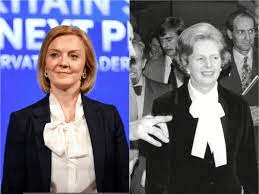
I was somewhat bemused to be asked, as a linguist and someone who has written about government communications and messaging, to comment recently, this time on the self-presentation of the candidates vying for leadership of the Conservative Party, hence also for the role of Prime Minister of the UK (in a series of back-and-forth slurs and clumsily staged photo-opportunities characterised today by Cabinet Office Minister Johnny Mercer as ‘puerile’). My first observations concerned Foreign Secretary Liz Truss’s identification with an earlier political icon.*

These were my comments in answer to the Daily Mail‘s questions on the performance of Lizz Truss and Rishi Sunak in the latest and final stages of the contest…

  1. Both candidates seem to me to be reaching for very simple and basic images and messages – not complex or ‘deeper’ concepts and as a linguist I suspect that they are both trying to avoid having to demonstrate the ‘oratorical’ skills that Boris Johnson’s supporters claimed for him. In other words they are going for visual over verbal as neither of them is renowned as an inspiring public speaker.  
  2. In terms of oratorical skills or lack of them Liz Truss has been gaffe-prone and can come across as hesitant while Rishi Sunak, though articulate, has to avoid the impression of an over-eager schoolboy in his attempts to convince.
  3. In  terms of the core messages, Rishi Sunak is very obviously trying to counter the sense of him as someone removed from the concerns of ordinary people because of his privileged upbringing and his great wealth. Thus he emphasises the (quite authentic) role of the family man, devoted to wife and children, at the same time countering Truss’s projection of herself as an assertive ‘lone’ female – the image Margaret Thatcher conveyed in her exercising dominance over male colleagues. Thatcher also kept husband and children in the background and emphasised her own gravitas and steeliness above all else.
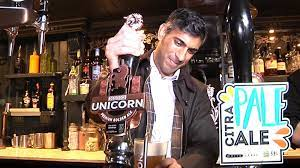
  4. Pulling pints is another attempt by Sunak to demonstrate that he is not wholly out of touch with the ‘common man’, but this sort of posing does risk backfiring as when he fumbled in his attempts to use a bank debit card to buy fuel for a humble, borrowed car.
  5. I’m surprised that Sunak does not more strongly emphasise his financial background and expertise gained as a financier/fund manager (the sort of professional experience that Liz Truss would have trouble competing with), but he may rightly sense that public perceptions of hedge fund manipulators are far from entirely positive.

Both candidates are attempting to focus, as they must, on the universally understandable issues of taxation and immigration/refugee management, subjects on which those entitled to vote for them (a very small number of key individuals incidentally) are already likely to have very firm views.

I added the following…

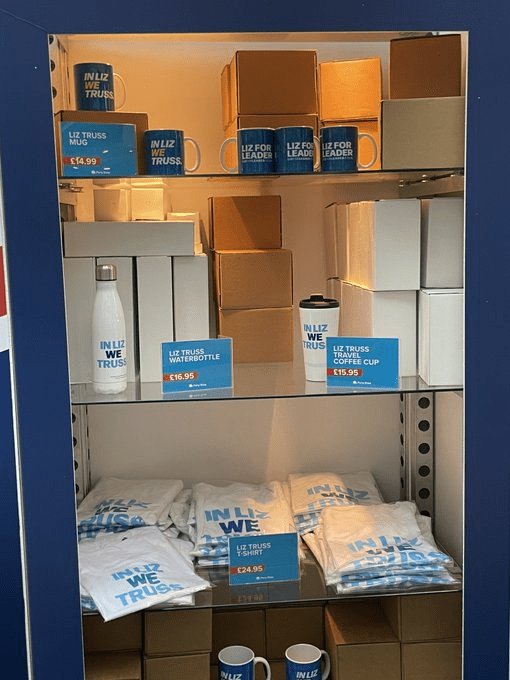
I don’t wish to seem contentious or uncharitable, but their messaging – in both cases – really does leave much to be desired, beginning with the campaign slogans, ‘Ready for Rishi!’ and ‘Liz for Leader.’

On Rishi Sunak’s part, his public postures belie the fact that he is, among many other things, a teetotaller…

And as for Ms Truss…

Which approach, I was asked, was likely to play out better with the 1600 party members entitled to vote in the leadership contest?

I think it’s very difficult to predict: I suspect that many Tories will still instinctively prefer the certainty and strength of purpose that Margaret Thatcher represented – the steely glare rather than the eager-to-please smile. But perhaps on reflection they may come to decide that someone at ease with financial manipulations (public or private!), and someone who is not really encumbered with ideological baggage could be more convincing in the long run and a safer pair of hands? It’s perhaps reassuring and worth noting that those two ancient bugbears of British political life, ethnicity and gender, probably are no longer barriers to advancement.

This is how my remarks were incorporated into the Mail’s front page of July 25 2022…

https://www.dailymail.co.uk/news/article-11045839/Nigel-Farage-blasts-teetotal-Rishi-Sunak-copycat-man-pub-routine.html

More evidence if you need it…

*https://www.dailymail.co.uk/news/article-10828621/Now-Liz-Truss-SOUNDS-like-Margaret-Thatcher-Speech-expert-says.html

At the Conservative party conference in October…

Looking back at my comments while awaiting the general election in July 2024, it’s clear that I was too kind to both the then leadership candidates. This was in part because I can’t pose as a political expert, partly as I don’t think the Daily Mail would have printed my comments if they had been much harsher. Liz Truss went on to perform surreally badly as shortlived PM, then, in more recent comments, to astonish many by her seeming intellectual confusion and lack of self-awareness. Rishi Sunak, in my strictly personal view, has shown above all an astonishing immaturity, in his parliamentary and media performances and his interactions with the public. His and his party’s communications strategies, despite the complicity of most of the the UK’s mainstream media, have been clumsy and inept. The press and the opposition equally have failed to hold him to account, focusing on his role as member of a hedge fund that helped trigger the 2008 financial crash only in the run-up to the coming election.

https://www.mirror.co.uk/news/politics/rishi-sunak-tv-debate-coach-32952402