A GLOSSARY OF WEAPONISED* WORDS, BREXITSPEAK and THE TOXIC TERMINOLOGY OF POPULISM

In 2018 I began collecting new and controversial language generated by the rise of conservative populism in the US and the UK, by pro- and anti-Trump sentiment in the US and by the divisions resulting from the UK’s Brexit vote. This is still a work in progress: the list of terms as it stands is below. An ideal glossary or lexicon would include detailed definitions and comments (for example, the second word in the list is my own invention, intended to describe a statement, act or policy showing effrontery, and itself a deliberate affront to a section of the population), dates of first use where traceable and a ‘lexical’ categorisation (into ‘jargon’, ‘slang, ‘catchphrase’, cliché, for instance). This more exhaustive treatment is beyond my resources for now, but googling the term in question will throw up examples which may be accompanied by dates and useful commentary.

In January 2024 I began to add words and phrases used by combatants and commentators in connection with the continuing ‘conflict’ in Israel, Palestine and Lebanon. Exactly one year later the ‘coup’, as some described it, enacted in the USA by Donald Trump and Elon Musk, featured new examples of distortion, euphemism and the language of rancour.

***Please do contact me with new examples, with comments and with criticism, which will be gratefully acknowledged and credited.***

Accelerationist

Accommodationist

Administrative detention

Affrontery

Agitators

Airfix patriotism

Alpha

Alt-centre

Alt-right

Amalek

Anglosphere

Annexationist

Anticipatory compliance/obedience

Antifa

Anti-growth coalition

Anywheres

Armed intervention

Asset

Astroturfing

Asylum shopping

Attitudinarian

Australia-style deal

Autohagiography

Backstop

Bad actors

Based

Bed-wetting

Beta

Beyond satire

Bike-shedding

Birtherism

Bitterites

Black hole

Black ops

The Blob

Blowback

Body count

Bot

Both-sidesism

Breadcrumbs

Brectum

Bregressive

Bregret(s)

Bremain

Brengland

Brexiles

Brexit dividend

Brexiteer

Brexit means Brexit

Brexit ultras

Brexmageddon

Brexmas

Brexodus

Brexomertà

Brexpats

Brexshit

Brextension

BRINO

Britain deserves better

Bubble

Butthurt

Cakeism

Calling out

Canada plus plus plus

Cancel culture

Candour deficit

Canzuk union

Casino capitalism

Centrist dad

Cherry-picking

Children of light

Chilling

Chumocracy

Churnalism

Civics

Civilian Security teams

Civility

Classist

Cliff-edge

Clown car

Clown country/state

Clusterbùrach

Coerced migration

Coercive diplomacy

Cognitive elite

Cognitive warfare

Collateral

Collective narcissism

Combative

Combat propaganda operative

Compassion deficit

Competing narratives

Concern(ed)

Concierge class

Confected fury

Conflicting accounts

Consequence culture

Copaganda

Cosmopolitan

Corbynista

Corporatocracy

Coup

Coup Klux Klan

Courtier journalists

Crash out

Cronyvirus

Crowdstrike

Crybaby

Cuck

Culturalism

Cultural marxist

Culturally coherent

Culture warrior

Dark forces

Datagrab

Dead cat strategy

Death cult

Deepfake

Deep state

Defund

DEI (Diversity, Equity, Inclusion)

DEI items

Delegitimizer

Demilitarization

Democide

Deplorables

Detained

DEXEU

‘Dies’

Disappeared

Disaster capitalism

Discourse engineering

Disinformation

Divorce bill

Do-gooder

Dogpile

Dog-whistle

Doom loop

Double down

Doxxing

Drain the swamp

DREAMer

Dumpster fire

Echo-chamber

Economic nationalism

Economically inactive

Educide

Elite

Empty chair

Enablers

Enemies of the people

English exceptionalism

Ergo decedo

Establishment

Ethnics

Ethnonationalist

Ethno-state

Exchange of fire

Expert

Factuality

Fake news

Fall off a cliff

False flag operation

Fash-adjacent

Fashy

Fauxlanthropist

FBPE

Feminazi

Fifth column

Finger-sniffer

Firehosing

Flextension

Flooding the zone

FluTruxKlan

Fractionate

Fratriarchy

Frictionless

Frit

Frontlash

FUD

Gammon

Gammonista

Gangster state

Genocide Joe

Get it done

Getting the barnacles off the boat

Gimmegrant

Girly swot

Global Britain

Globalist

GNU

Grievance studies

Grumpy retiree

Guardianista

Hard Brexit

Hate goblin

Hatriot

Headroom

Headwinds

Henry VIII powers

Heterophobic

High-vis nazis

Hobbit

Homonationalism

Hopepunk

Hose it down

Humanitarian bridge

Hybrid threats

Identitarian

Idiocracy

Illuminati

Incel

Indications

Indicative vote

Individual-1

Intentional explosion

Intifada

Irrational exuberance

Jambon jaunes

Jexodus

Kayfabe

Keirmacht

Kicking the can down the road

Kindercoup

King baby

Kipper

Kipper moment

Kleptofascist

Kompromat

Lamestream media

Lawfare

Leave means leave

Leftwaffe

Legitimate concerns

Lentil-weaving

Lesser mortals

Lethal aid

Level up

Lexit

Libertarian

Libtard

Loss of life

“Lost their lives”

Limited ground operation

Limp-wristed

Little Englander

Lolcow

Londongrad

Londonistan

Long Corbyn

Long coup

Low-energy

Luftwaffle

MAGA

Magic Grandpa

Magic money tree

Majoritarian

Man-baby

Mangina

Manosphere

Manufactured consent

Masculinist

Matrixed

Maybot

Meaningful vote

Meat wave(s)

Mediaeval methods

Melt

Meninist

Mercurial

Metropolitan

Microaggression

Militarised nostalgia

Milkshake(d)

Mindless compassion

Ming vase

Mischievous

Mishap

Missing

Momtifa

Moral clarity

Moral emptiness

Moral grandstanding

MSM

Nakba 2

Nanny state

Nativist

Necrocapitalism

Necropolitics

Neglexit

Neon nazis

Nerd Reich

Neurotic elite

Neutrollization

No-deal

No-platforming

Normie

Nudgism

Obey in advance

Offence archaeology

Operational matter

Operation Red Meat

Operation Save Big Dog

Optics

Ordeals

Ostentatious meekness

Oven-ready

Over-briefed

Overly purist

Overton window

Palaeoconservative

Partygate

Pearl-clutching

Penumbral jobs

People’s vote

Performative allyship

Performative cruelty

Pile on

Political correctness

Political gospel

Polycrisis

Post apocalyptic warlord

Post-liberal

Postmodern

Posttext

Post-truth

Poverty porn

Prebunking

Pre-emptive strike

Price cap

Project Fear

Protesters

Prozac leadership

Pugnacious

Punchy

Purity of arms

Push (BBC euphemism for armed incursion, invasion)

Pushback

Put/stick that on the side of a bus

QAnon

Quitlings

Rabble

Race to the bottom

Rage bait

Rage farming

Rampdown

Red lines

Red pill

Red wall

Regrexit

Rejoiner

Re-leaver

Relocate

Remainiacs

Remain plus

Remigration

Remoanathon

Remoaner

Remove kebab

Replacement theory

Reply deboosting

Reputation laundering

Resistance

Restorative nostalgia

Retconning

Revoker

Roll back

Rootless

Row back

Russian asset

Saboteur

Sadopopulism

Safe space

Scumbag centrism

#ScumMedia

Sealioning

Sensitivity reader

Shadow blocking

Shallowfake

Shill

Shire

Shitposting

Shitshow

Showboating

Shylock

Sick-note culture

Singapore-on-Thames

SJW social justice warrior

Skilling up

Skunked term**

Slave populace

Sleaze

Snowflake

Sobersides

Sockpuppet

Soft border

Soft Brexit

Somewheres

Sovereignty

Soy-boy

Spartan phalanx

Spiv

Star Chamber

Starmergeddon

Stenographer

Sticking point

Strategic self-abasement

Stunning proposal

Sunlit uplands

Supermajority

Surgical strike

Svengali

SWERF

TACO

Taking back control

Tankie

Targeted individual

Targeted strike

Technofeudalism

Tender-age shelter

“Tensions rise”

Terf

Terminability

The other team

Throw under the bus

#tfg, ‘the former guy’

Tick tock

Tigger

Tofu-eating

Tone deaf

Tone policing

Tory scum

Toxic positivity

Transactional

Transition period

Trexit

Triangulation

Tribal(ism)

Trickle-down pathology

Troll farm/factory

Trumpcession

Trump slump

Truth-squadding

Tufton Street

Tu quoque

Two-tier policing

Unconfirmed reports

Unicorns

Unpopulism

Unrest

Unspin

Urban

Values voter

Vassal state

Verbal incontinence

Vice-signalling

Vigilante journalism

Village idiot

Virtue-signalling

Voluntary emigration

Walk back

War cabinet

War of extraordinary civilian casualties (Guardian euphemism for genocide)

Watch-list

Weaponised*

Wedge issues

West(s)plaining

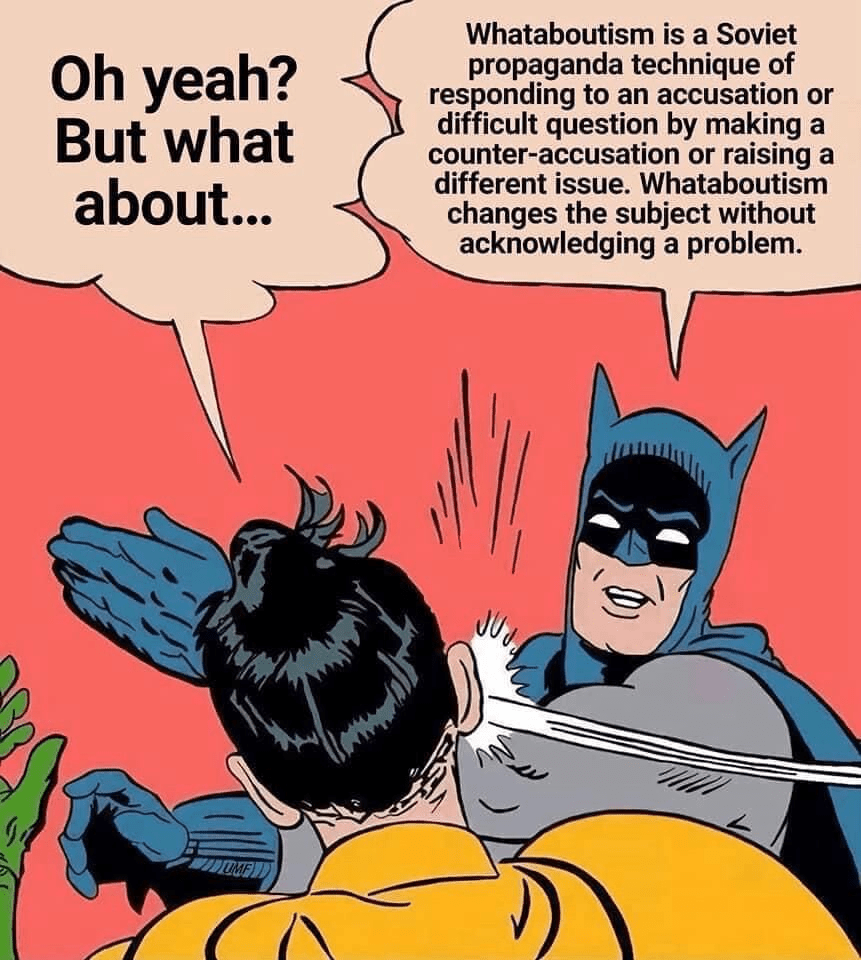
Whataboutery
White supremacist

Will of the people

With a heavy heart

Woke

Woke mind virus

Wokerati

Wokescold

Woketard

Woke warriors

Woke-washing

Womp womp

Workington man

Yoghurt-knitting

Zealot

I’m grateful especially to the many contacts on Twitter who have already contributed to this modest project, particularly Duncan Reynolds @duncanr2, and will credit them all by name/handle when a final version is published.

I’m also very grateful to Rob Booth and the Guardian who, in October 2019, wrote about the glossary and its topicality in increasingly conflicted times:

https://www.theguardian.com/politics/2019/oct/05/brexitspeak-brexit-vocabulary-growing-too-fast-public-keep-up

And to Carlos Fresneda for this piece in El Mundo:

https://www.elmundo.es/internacional/2019/10/17/5da765cf21efa0eb618b4680.html

Artist Simon Roberts has kindly shared with me his artworks based on his own lexicon of Brexit language:

Between the Acts, Part II – The Brexit Lexicon

For readers, students, and researchers interested in or working with this topic here are some of the other articles and sources to consider…

In February 2017 The New European published its own very useful lexicon, from which I have drawn, gratefully but without permission :

https://www.theneweuropean.co.uk/culture/the-new-lexicon-of-hate-a-disturbing-a-z-of-alt-right-language-1-4894833

And the BBC listed many of the technical – and some less technical – terms associated with Brexit earlier this year:

https://www.bbc.com/news/uk-43470987

Last year Karl McDonald discussed the language used by Labour party leftists in the i newspaper:

https://inews.co.uk/news/politics/slugs-melts-inside-language-culture-corbynite-left/

And here’s Helen Lewis in the New Statesman on incivility in the UK:

https://www.newstatesman.com/politics/uk/2018/08/how-britain-political-conversation-turned-toxic

And Philip Seargeant on ‘fake news’:

In November 2018 The Guardian published a useful ‘jargon-buster’ guide to the terms being used at this late stage of (or impasse in, if you prefer) UK-EU negotiations:

https://www.theguardian.com/politics/2017/jun/19/brexit-phrasebook-a-guide-to-the-talks-key-terms

Here Renee DiResta describes the ongoing ‘Information War(s)’ of which the manipulation of language is one component:

The Digital Maginot Line

I have only just come across this perceptive essay from 2017, by Otto English on his Pinprick blog, in which he coins the terms Ladybird libertarian and Ronseal academic:

Ladybird Libertarians: Dan Hannan, Paddington and the pernicious impact of 1970s children’s literature on Brexit thinking

In January 2019 James Tapper contributed this very perceptive assessment of Brexit metaphors:

And in March, more from the BBC:

http://www.bbc.com/culture/story/20190314-how-brexit-changed-the-english-language

In July 2019 the FT ran an interesting review of Boris Johnson’s press articles as precursors of ‘fake news’:

https://www.ft.com/content/ad141e8a-976d-11e9-9573-ee5cbb98ed36

And in October of the same year David Shariatmadari and Veronika Koller considered Brexit metaphors:

Brexit and the weaponisation of metaphor

*The progressive weaponisation of language is discussed here by Justin Strawhand:

https://www.huffpost.com/entry/weaponized-language_b_1380788

In an update from November 2023 New Lines Magazine addressed the distorted, conflicted language employed in describing Israel’s response to Hamas:

https://newlinesmag.com/argument/language-is-a-powerful-weapon-in-the-israel-palestine-conflict/

**’Skunked terms’ are words or expressions undergoing a controversial change in meaning. Examples are ‘liberal’ and ‘libertarian’ which have transitioned from referring to leftist, progressive or centrist positions to denote neo-conservative or alt-right affiliations. Nearly two years on from my original post the useful designation ‘anglosphere’, describing English-speaking nations with shared cultural features, has been co-opted by far-right nativists in the UK to promote a supremacist ideology.
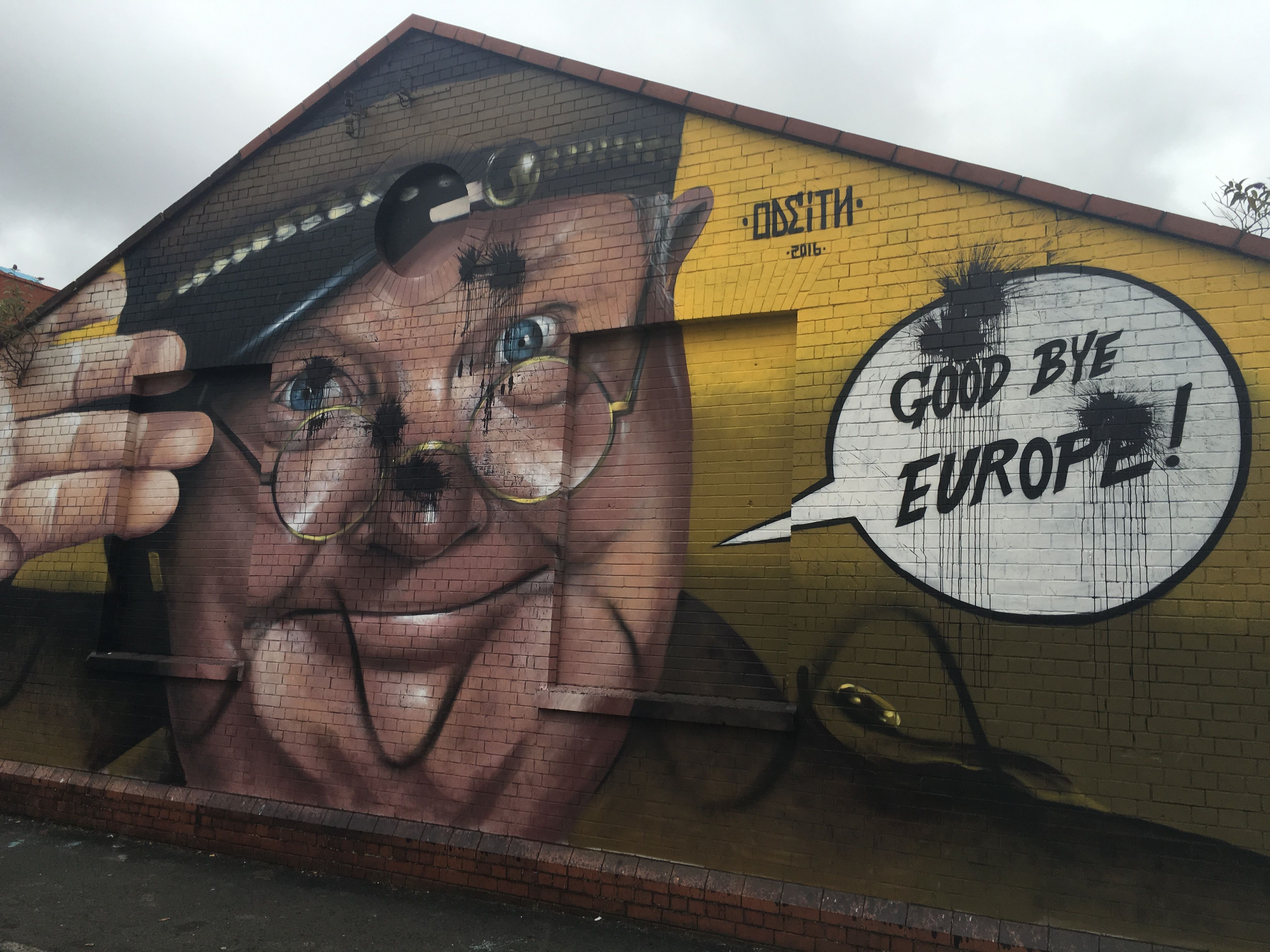
Image result for Brexit graffiti

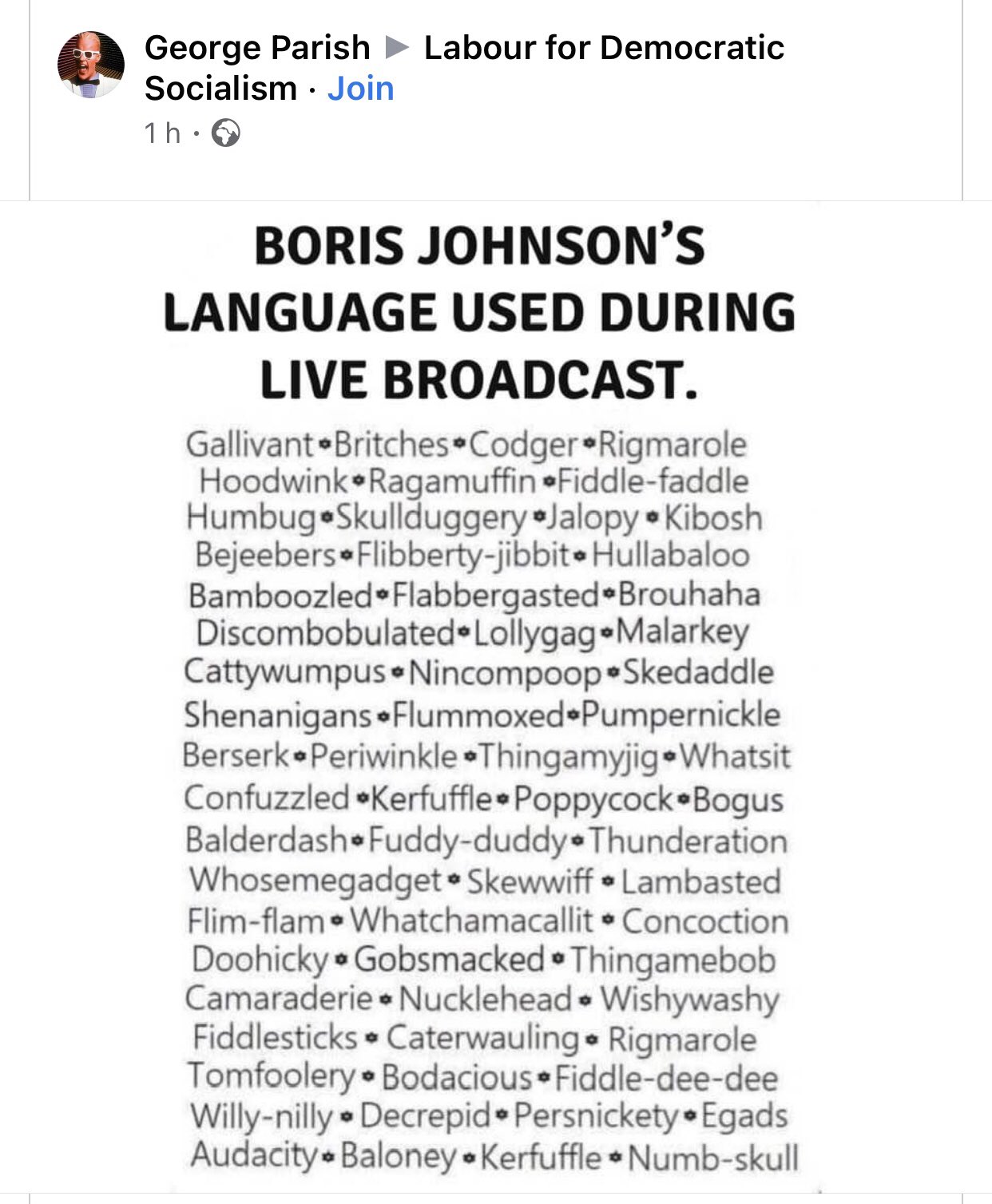
As a further footnote, this from Twitter in November 2020 (thanks to Alan Pulverness), a reminder that weaponised words may also be frivolous – even puerile:
Image

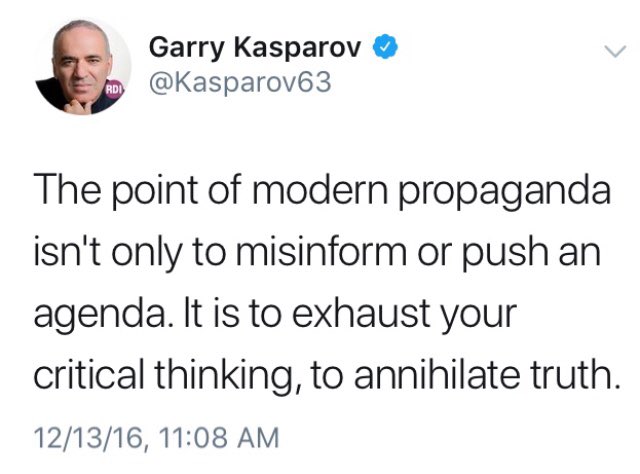
Looking back to 2016, a prescient tweet by Gary Kasparov:
Image

At the end of 2022 my friend and collaborator Dan Clayton wrote, for Byline Times, about the latest iteration of toxic terminology and rhetoric: the demonising of refugees and migrants:

In early 2024 I belatedly learned of an interestingly tendentious and sententious glossary purporting to list and explain the words used by the ‘woke’. This, compiled by Dr James Lindsay, critically examines key terms relating to gender studies, critical race theory and identity politics in the US context:

And in May 2024 Amanda Montell described in The Guardian how politicians and influencers deploy cliches in online discourses:

https://www.theguardian.com/books/article/2024/may/20/the-big-idea-the-simple-trick-that-can-sabotage-your-critical-thinking?CMP=share_btn_url

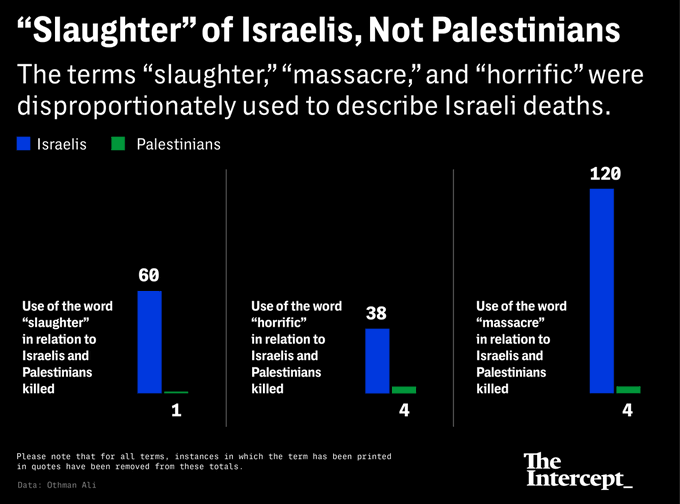
In June 2025 the Centre for Media Monitoring published its analysis of the BBC‘s coverage of the devastation of Gaza:

Later in June, as Israel and Iran exchanged fire, Assal Rad noted the double standards employed in reports of the conflict:

The language of manufacturing consent:

🇮🇱

: Preemptive strikes

🇮🇷

: Escalation

🇮🇱

: Warns

🇮🇷

: Threatens

🇮🇱

: Targets

🇮🇷

: Attacks

🇮🇱

: Government

🇮🇷

: Regime

🇮🇱

: Right to self-defense

🇮🇷

: Condemnations

🇮🇱

: Sophisticated military (has nukes)

🇮🇷

: Nuclear threat (has no nukes)

THE SLANG AND NEW LANGUAGE ARCHIVE

A research portal for scholars, the press and the public

The Slang and New Language Archive was created in 1994 while I was Director of the Language Centre at King’s College London. The archive, consisting of a small library of books and periodicals and a number of databases and sub-directories, was designed as a repository for the collection, storage and dissemination of new language, in particular examples of nonstandard varieties of English such as slang, jargon and buzzwords. The archive was later expanded to take in examples of media language, political language, linguistic curiosities and etymologies. It remains a resource, unique in the UK and not-for-profit, assisting researchers, students, teachers and journalists, as well as non-specialists, in accessing information about aspects of contemporary language that are under-represented in traditional dictionaries and reference works.

This link will take you to the Archive webpage at King’s College, where there are further links to relevant articles and published sources…

https://www.kcl.ac.uk/research/slang-and-new-language

Glossaries from the archive may be accessed on this site by entering keywords, such as slang, jargon, MLE (Multiethnic London English), familect (highly colloquial language used in the home), coronaspeak (language related to the COVID-19 pandemic) and weaponised words (the contentious language of Brexit, populism and biased reporting) and slurs (racist and misogynist terms) in the search box. Once you have accessed a post of interest, check the tags and categories at the foot of the page for other articles or glossaries on the same topic.

Two of the larger archive datafiles are hosted on Aston University’s Institute of Forensic Linguistics Databank site. These are a glossary of current youth slang

https://fold.aston.ac.uk/handle/123456789/4

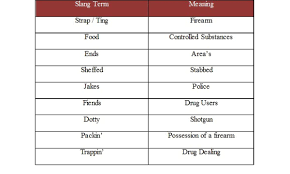
And a glossary of UK street slang, rap music and gang terminology

https://fold.aston.ac.uk/handle/123456789/5

Please note that the King’s archive focuses principally on contemporary language, that is terms used from the twentieth century to the present day. If you are interested in historical slang, I strongly recommend the monumental work by my associate, the British lexicographer Jonathon Green. His dictionary, now generously freely available online, lists current and historical slang terms with timelines and citations illustrating their usage and development…

https://greensdictofslang.com/

For more information, for queries, or to donate examples of language, contact me via this website or via the King’s College webpage. I’m on Twitter as @tonythorne007 too.

In terms of new slang and nonstandard language there are few reliable resources online. In February 2025, however, US publisher Merriam-Webster launched their own slang dictionary. You can find it here…

https://www.merriam-webster.com/slang

Among the many more informal glossaries and wordlists of slang posted on the internet in 2025, this review of slang in English schools is unusually comprehensive and accurate…

https://teachertapp.com/uk/articles/down-with-the-kids-slang-in-british-classrooms-2025/

Long January

First language updates from 2024

I have written several times on this site about new language and novel forms of expression generated by Generation Z and about how evolving attitudes, fashions and social behaviour among younger cohorts translate into a multimodal mix of verbal and visual on platforms such as TikTok. I have argued that older generations should not ignore or deride the unfamiliar and often baffling messaging practised by ‘the youth’, but try to understand and engage with it. During the slow, fraught, trying first weeks of 2024 the UK’s mainstream media has for the first time begun to pay some attention to the new language appearing online and on the street.

Earlier in the month my friend, Financial Times journalist Emma Jacobs, wrote about intergenerational language differences and resulting misunderstandings in the workplace. Her article, which quotes me, is here…

https://www.ft.com/content/b73d81c0-b4b8-40f9-b0e4-8f97a1701d0b

More recently the BBC focused on the changes in accents and vocal affectations associated with online influencers and new media platforms…

https://www.bbc.com/future/article/20240123-what-tiktok-voice-sounds-like-internet-influencer

Dr Christian Ilbury, quoted in that article, added this caveat subsequently: “it’s just HRTs + memetic discourse styles which keep the audience engaged (linked to platform capitalism) not a *new accent*”. Christian had previously helped to explain the latest incarnations of the once taboo c-word

For Dazed magazine Jess Bacon looked back at the many successive incarnations of the ‘girl’ featuring on media platforms during 2023…

2023: The year of the girl | Dazed

The Guardian meanwhile valiantly attempted to help its readers interpret the latest catchphrases and slang…

https://www.theguardian.com/lifeandstyle/2024/jan/24/so-babygirl-its-the-new-gen-z-term-of-endearment-but-what-does-it-mean?CMP=share_btn_tw

While the Daily Mail sent its reporters on to the streets to discover whether well-established slang terms were understood by members of the public…

https://www.dailymail.co.uk/news/article-12994057/So-Gen-Z-slang-know-MailOnline-visits-streets-London-Solihull-Sunderland-ask-millennials-boomers-know-real-meaning-terms-like-peng-bare-beef.html

In distressing contrast, the news cycle has been dominated throughout the month of January, in fact since October last year, by far less frivolous concerns. The Israeli-Palestinian conflict in a very different way has generated language (‘administrative detention’, ‘the other team’, ‘educide’, ‘nakba 2’) – or recycled older terminology (‘ethnic cleansing’, ‘demilitarization’, ‘collateral’) – which is controversial and which demands analysis. While recording the language of Donald Trump, of Brexit and of the Covid pandemic, and once again, while tracking the atrocities taking place today, I have been conscious of distortion, untruths, avoidance and manipulations practised both by the participants in the conflict, by their allies or sponsors, and by those who should be reporting on it objectively and, where possible, impartially. It is by scrutinising their language and treating public and media discourse critically, by exposing bad faith and countering falsehood that linguists can make some small contribution to the global conversation taking place.

Linguists have begun to discuss the ways in which facts and opinions are being presented to the public and to unpack the assumptions and covert intentions of those controlling, or attempting to control the narratives in question…

https://newlinesmag.com/argument/language-is-a-powerful-weapon-in-the-israel-palestine-conflict/

For my part I am collecting new examples of contentious language relating to the middle eastern crises and adding them to my existing glossary of weaponised words and toxic terminology on this website. I would be very grateful for contributions from readers and will acknowledge these in upcoming posts.

X-COMMUNICATION

…OR X-TERMINATION?

Twitter – a space I value greatly and make use of to keep abreast of cultural, social, political controversies, to exchange facetious remarks and gossip, and, above all, to keep in touch with linguists, writers, influencers, anonymous wits across the virtual globe, has of course been a-buzz with the news that its owner, would-be tech-bro, multi-billionaire Elon Musk, has rebranded the platform as ‘X’.

In ‘linguistic’ terms the X sign is already overburdened with signification – in other words it has an ‘excess’ of potential meanings, so is a very odd choice for a brand in that many of those meanings have negative connotations or connotations of absence, erasure, taboo, cancellation, prohibition, etc, etc. Among the only well-known positive ones are kisses, the marking of the spot on a treasure map and the Christian chi-ro symbol ( ⳩).

Although it can evoke mystery or anonymity, the many meanings of ‘X’ veer strongly towards the antipathetic: the cancellation mark, X-rated, unknown values, in superstition and mysticism death, danger, endings. In branding(!), as it depicts a generic version of the product being promoted—as in “Brand X”—the unidentified product deprecated as inferior to the named brand; it can serve like the asterix in replacing key letters in taboo words, in demographics Generation X is the ill-defined, cohort, adrift and stranded between boomers and millennials. It can suggest the scene of the crime, the sniper’s crosshairs, if multiplied it can describe the strength of strong liquor or moonshine, it can imitate crossed fingers or a puckered or defiant closed mouth. All these and more potential senses of the sign make it both risky and confusing as a solo identifier. Musk’s declared notion that the sign will also remind us of our ‘imperfections’ is putting it very mildly indeed (and who wishes to be reminded of their imperfections every time they log on?). Geeks, nerds, ‘edgelords’ and tech-bros (and nepo-/man-babies too), as we have seen in the case of other dominant brands, have their own , touchingly ingenuous ideas of what is mysterious, evocative, triggering or inspiring. They also have the means to inflict these insights on the wider, often more engaged, more discerning online community…

I spoke to Clare Thorp of BBC Culture about the linguistic implications of the rebranding and Clare’s article is here…

https://www.bbc.com/culture/article/20230728-twitters-rebrand-why-x-could-be-the-most-powerful-letter-in-english

The reaction of the World Wildlife Fund: the German text reads ‘Protect our wildlife before it is too late’

The reactions to the imposition of the new symbol by tweeters/tweeple/the twitterati (what should we call them now?), at least those who inhabit my corner of the platform, has been overwhelmingly negative, hostile and dismissive. Just a very few tech-bros, would-be influencers, crypto-enthusiasts have sympathised with Musk’s declared attempt to re-present the site as a multi-purpose, multimodal platform including new facilities such as banking, investment, dating(?). I have put together a checklist of articles commenting on all aspects of the venture, focusing especially on the symbolism and semiotics of the X itself. A small selection is here..

https://www.theweek.in/news/biz-tech/2023/07/24/a-brief-history-of-twitter-logo-and-xcom-as-musk-gears-up-to-free-the-bird.html

https://www.theguardian.com/commentisfree/2023/jul/29/will-rebranding-twitter-give-elon-musk-the-x-factor-i-wouldnt-bank-on-it?CMP=share_btn_tw

https://apnews.com/article/twitter-tweet-elon-musk-x-c1c3871e9bef60aa0a4c1a40129c155a

https://www.theguardian.com/commentisfree/2023/jul/28/the-guardian-view-on-twitters-rebranding-x-marks-an-everything-or-nothing-gamble?CMP=share_btn_tw

https://www.wionews.com/technology/explained-why-is-elon-musk-so-obsessed-with-the-letter-x-619050

On 30 July came news of a tagline or slogan designed to accompany ex-Twitter’s new visual identity. The phrase being promoted is ‘Blaze Your Glory’. @SmoothDunk’s response to this was a visual one:

…Other users of the site are fighting back, finding ways to delete or mask the ‘X’ trademark and restore their cherished bird symbol:

I talked to Jim Mora at Radio New Zealand on the same subject on August 4th:

https://www.rnz.co.nz/national/programmes/sunday/audio/2018901451/tony-thorne-what-to-make-of-the-letter-x

…And, as if to confirm my misgivings about the choice of letter, the Guardian reported on August 8th: ‘Ministers have opened a new vaccine research centre in the UK where scientists will work on preparing for “disease X”, the next potential pandemic pathogen.’

The Word(s) on the Street(s)

GANG CULTURE, RAP MUSIC, STREET SLANG AND POLICING

I have written elsewhere on this site about my own unusual forays into forensic linguistics, whereby I have helped legal defence teams, police forces and other interested parties in decoding, interpreting and assessing the slang used by gang members, an authentic urban language variety which is shared with rap music genres, particularly Drill music.

The citing of rap lyrics in the context of criminal trials and attempts to ban Drill lyrics is very controversial and some academic linguists, musicologists and criminologists argue that they should never in any circumstances be admitted in evidence – a stance I sympathise with, but feel is mistaken.*

One London Met Police officer with whom I have worked has written about his own recent activities at the intersection of music, youth culture and youth violence. The article offers a very rare professional insider’s perspective on the issues in contention, and with Michael Railton‘s permission I have linked to it here…

https://www.college.police.uk/article/analysing-gang-related-music-linked-serious-violence

*journalist Will Pritchard and I have debated the value of such evidence in court. Here he puts the case against in The Face

https://theface.com/music/rap-lyrics-used-in-court-young-thug-gunna-racist-stereotypes-rap-music

In June 2023 another piece by Will Pritchard ran in the Guardian

https://www.theguardian.com/music/2023/jun/21/behind-bars-how-rap-lyrics-are-being-used-to-convict-black-british-men

CALIFORNIFICATION

Royal accents in the news again

Just over a year since I defended Meghan Markle‘s speaking style*, the Daily Mail returned to the subject with the latest interview given in his new US home by Prince Harry, in which, along with dropping several ‘truth bombs,’ he was perceived to be modifying his natural accent to sound more American. I once again pointed out that what linguists call ‘accommodation’** or ‘convergence’, the phenomenon whereby participants in a conversation alter their pronunciation and intonation to sound more like their interlocutors, is something quite natural and unsurprising. I have found my own natural rhythms and tones subtly changing when spending time with speakers of Australian or North American English, and the posh-sounding Brit who morphs into a cockney or northerner when the plumber or builder visits is a stock target of mockery on social media. In the case of the royal family, wits remarked long ago that Prince Charles and Princess Diana‘s incompatibility could have been predicted by listening to their differing accents – the former’s clipped, tense, military-sounding while his bride attempted a more muted, classless diction with glottal stops and ‘Estuary English’ vowels.

The Mail’s article, in which they mercifully didn’t distort what I told them (though ‘new wave’ should read New Age), is here…

https://www.dailymail.co.uk/news/article-10736025/Language-expert-says-Prince-Harry-adopted-Americanisms-sound-approachable-US.html

*https://language-and-innovation.com/2021/03/09/a-duchess-speaks-and-endures-trial-by-tabloid/

** https://www.thoughtco.com/what-is-accommodation-speech-1688964

2022 – THE STORY SO FAR

The themes of the year so far can perhaps be summarised by my hasty posts in passing, on Twitter and elsewhere, in which I considered the keywords trending in the UK’s political and media discourse during the last days of January and the first days of February…

Scurrilous

Rather late to the party – sorry, ‘gathering’ – today’s word is ‘scurrilous.’ Defined by Dr Samuel Johnson as ‘using such language as only the licence of a buffoon could warrant.’ In her resignation letter yesterday Downing Street Policy Chief Munira Mirza accused Boris Johnson of ‘scurrilous’ behaviour when he falsely linked Keir Starmer to the failure to bring paedophile Jimmy Savile to justice. The word first appeared in English in the early 1500s in the form ‘scurrile’, coarsely joking, from the Latin ‘scurrilis’, buffoonlike, itself from the noun ‘scurra’ denoting a fashionable loafer, idler, buffoon, said to be a loan word from Etruscan.

Glee

On 2/2/22, as #BorisJohnson and #jimmysavile jointly trended for the second day, the word ‘glee’ was ascribed to both. It denotes barely repressed mirth/hardly concealed febrile joy and I think describes the desperate glint of triumph in the eyes of the abuser who once again goes unpunished. ‘Glee’ was Old English ‘gliu’, ‘gliw’, ‘gleow’ – entertainment, jest, play, also music and mockery – probably from Proto-Germanic ‘*gleujam’ but its only close relation was the rare Old Norse word ‘gly’ joy. All these are related to Old Germanic ‘gl-‘ words with senses of shining, smooth, radiant, joyful and Celtic cognates such as welsh ‘gloywa’, shining. Dictionary definitions of ‘glee’ note another nuance or connotation (more technically ‘semantic component’) which is often present: ‘exultation deriving from one’s own good fortune or another’s misfortune.’

Image

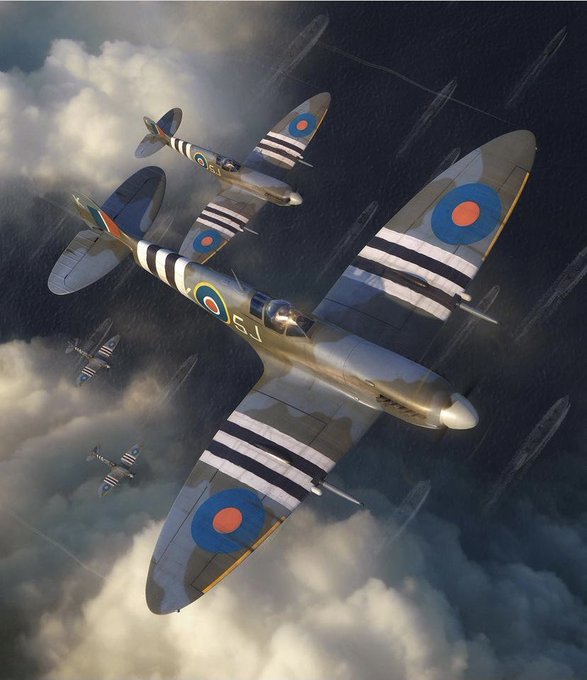
Airfix nostalgia

As Airfix promoted their 2022 calendar (cover picture above), I was asked again to explain the notion of ‘Airfix nostalgia’, an expression which mocks the delusion whereby nativists, patriots and bigots, most of them under the age of 50, like to imagine that they were personally involved in WWII or the British Imperial project. The reference is to the Airfix plastic modelling kits of fighter planes and warships bought by parents and children in the 50s and assembled at home.

Fib

In among rancorous ongoing denunciations of lying by those in public office (see elsewhere on this site and in this list by Peter Oborne*) came a passing invocation of – or attempt at disculpation by reference to – the lesser offence of ‘fibbing’. A fib is a ‘trifling lie’ or ‘white lie’, so I’m not sure it’s quite the right term in the current context, but it’s from the 1580s, the verb from 100 years later. Its exact origin and first use are uncertain, but it probably began as a jocular version of ‘fable’, perhaps reduplicated as ‘fibble-fable’ and then abbreviated to its modern form.

Rhubarb

When accused of being complicit in the authorising of an airlift of dogs from Afghanistan, PM Boris Johnson described the allegation as ‘total rhubarb’. The colloquial borrowing of the word to mean incomprehensible chatter or nonsense may have its origin in theatrical circles (as noted by Mark Peters in 2015**): it is again a telling choice of words: dated, euphemistic (like ‘mince’ as a euphemism for sh**t which seems similarly to be part of Tory groupspeak), obscure in the sense of being class/age-sensitive, hence condescending.

Endemicity

A new and tendentious, contentious example of #coronaspeak was added to my glossaries on this site in January 2022. The seemingly neutral, technical term was in fact employed in attempts to convince the public that the pandemic was subsiding and the coronavirus morphing into a less lethal presence in the community. Epidemiologist Deepti Gurdasani noted perceptively that ‘Endemicity’ is the rebranding of ‘herd immunity’ by the same people who were repeatedly wrong about how close we’ve been to achieving herd immunity. They’re now moving to claiming we’ve reached endemicity, regardless of what the term actually means – just like they did before.’

Lawfare/lethal aid

As the promoter of Brexit Arron Banks sued investigative journalist Carole Cadwalladr and the US sent the first aid packages to Ukraine I added two key terms to the #weaponisedwords glossary on this site: #Lawfare, referring to vexatious litigation by a nation or individual, and ‘lethal aid’, a euphemism or (as lexicographer Jeremy Butterfield pointed out to me) a dysphemism for military assistance.

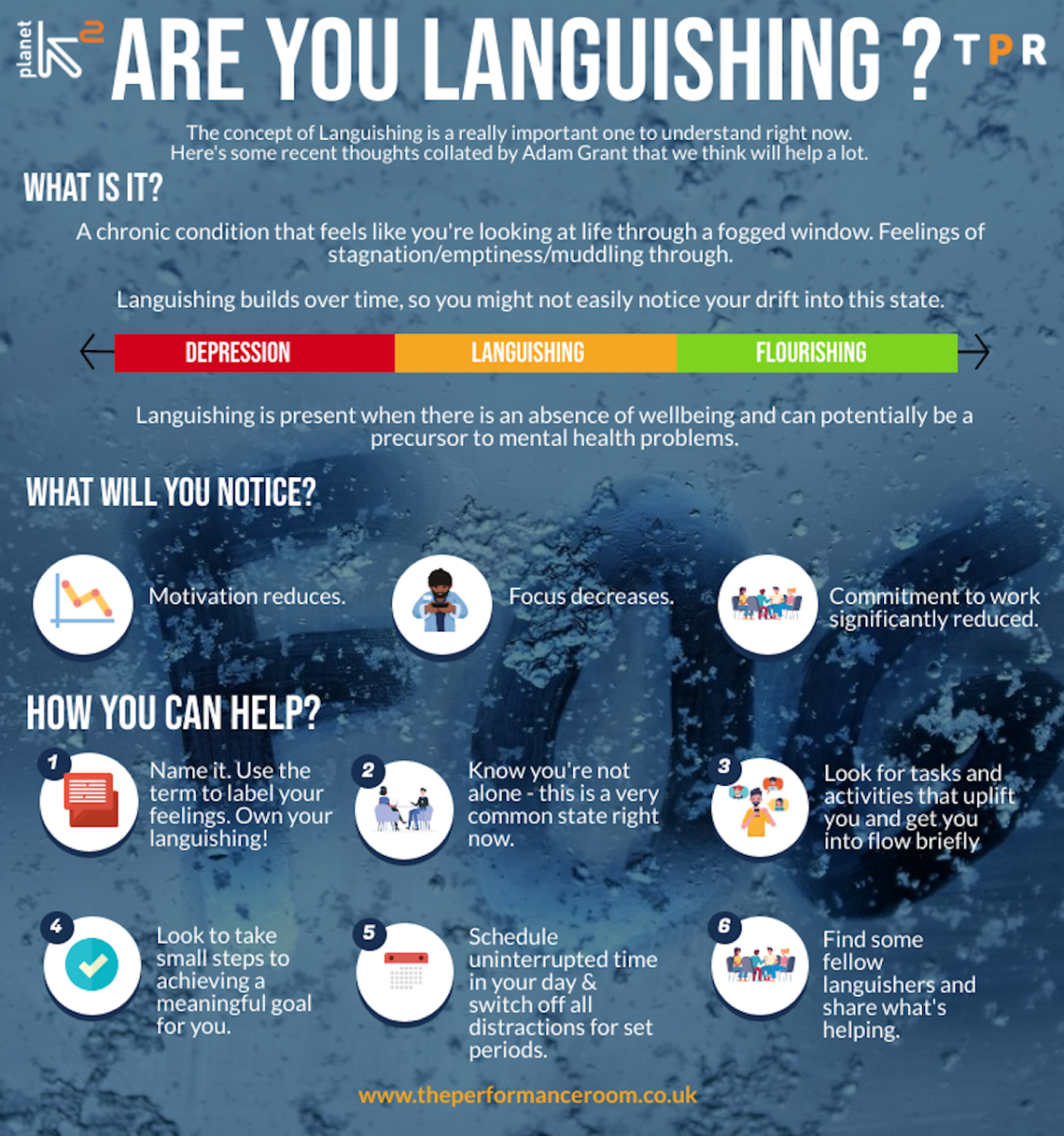
Languishing

Are you Languishing? - The Performance Room

In mid-January articles examined the effects of isolation and burnout after nearly two years of restrictions and confinement using a new characterisation of the condition***: ‘languish,’ from the 14th century, meaning to be feeble, listless, moribund or grieving, pining, is from Old French ‘languir,’ from Vulgar Latin ‘languire’ to be weak, faint, idle, from proto-IndoEuropean *'(s)leg’ the ancestor of ‘slack’, ‘lag’ and ‘lax’. ‘Anguish’ is unrelated.

The prospective and retrospective pathways to and from depravity are... |  Download Scientific Diagram

Depravity

Despite the blizzard of slurs and denigrations circulating on social media and in the mainstream press since 2019, some words have been conspicuous by their absence. One such began trending in the UK national conversation, and then only briefly, in mid-January. ‘Depravity’ in the sense of immorality, degeneracy was first recorded in English in 1641, not directly formed from the earlier verb ‘deprave’ (Old French ‘depraver’, pervert, accuse, from Latin ‘depravare’ distort, disfigure) but a version of the noun ‘pravity’ from Latin ‘pravitas’, crookedness, deformity, from ‘pravus’, crooked.

Guile

On January 7 my word of the day was ‘guile’ (first ascribed to the leader of HM Opposition, and then energetically disputed on social media: ‘…it took guile to convince so many on Labour’s left that he was the natural successor to Jeremy Corbyn’ –The Times) The noun, meaning cunning, artful ability to deceive and/or duplicity, was first recorded in the 12th century. It is from Old French ‘guile’ from Frankish ‘wigila’, ruse, from Proto-Germanic ‘*wihl’, ancestor of English wile(s), from Proto-IndoEuropean ‘*weik’, consecrated, holy.

*https://boris-johnson-lies.com/johnson-in-parliament

**https://slate.com/human-interest/2015/11/mark-peters-bullshit-word-of-the-day-rhubarb-is-a-tart-theatrical-term-for-bs.html

***https://theconversation.com/languishing-what-to-do-if-youre-feeling-restless-apathetic-or-empty-174994?utm_source=twitter&utm_medium=bylinetwitterbutton

THE OTHER ‘P-WORD’ – Postmodernism comes of age – again

Postmodernity is modernity without the hopes and dreams which made modernity bearable. it is a hydra-headed, decentred condition in which we get dragged along from pillow [sic] to post across a succession of reflected surfaces, drawn by the call of the wild signifier.” – Dick Hebdige, Hiding in the Light, 1988

Among the toxic terms listed in the glossary of weaponised words, elsewhere on this site*, is a term that has seemed contentious and which has been imperfectly understood since its first appearance in the late Sixties. I included the same word – Postmodernism – in my 1993 book Fads, Fashions and Cults, provocatively subtitled ‘The definitive guide to post(modern) culture.’ When my book, which was aimed at a popular, not a scholarly readership, was launched in Slovenia and featured on national television the Slovene philosopher and critical theorist Mladen Dolar dismissed it as atheoretical and trivial, two other resonant terms which I was not sure whether to resent or to celebrate at the time. An extract from the offending title follows…

Elsewhere on this site I have tried to follow the trajectory of woke**, another, rather different toxic buzzword now favoured by the same side, the opponents of BLM, eco-activism, ‘leftist’ attitudes, in the so-called culture wars that rage on despite the pandemic. In a perceptive review in the New Statesman this week William Davies sets out postmodernism’s trajectory, its recent reimaginings and reiterations by very different interest groups. His article, with his kind permission, is here…

To end with for now, another extract from my antique 1993 guide. I am still pondering the present and possible future of the second p-word, along with other characterisations of our era such as late-modern, techno-modern, post-industrial, post-capitalist and the tension between the post-individual and hyperindividualism, also thinking about the way in which critical positions which were significant for me – Situationism and McLuhanism, for instance – are today ignored or forgotten, and how more recent terms that I think encode important insights – third places, heteroglossia, superdiversity – remain marginal and under-examined. I will try to unpack these musings on these pages very soon…

Post-Modernism, which deals with the past like one huge antique supermarket, looks very relevant indeed. Pastiche and parody is just an uncomfortable transition to a time when period references will be used without any self-consciousness.” – Peter York, Style Wars, 1980

*https://language-and-innovation.com/2021/01/25/woke-not-woke/

**https://language-and-innovation.com/2018/08/23/a-glossary-of-skunked-terms-brexitspeak-and-the-toxic-terminology-of-populism/

Another review of Stuart Jeffries‘ title, this time by Terry Eagleton, subsequently appeared in the Guardianhttps://www.theguardian.com/books/2021/nov/10/everything-all-the-time-everywhere-by-stuart-jeffries-review-how-we-became-postmodern

SLANG NOW – the Language of UK Youth in 2021

At the very end of September this year came another example of a UK school seeking to police its students’ language and to ban the use of slang and colloquialisms. I have been writing about youth slang since 1990 (there are numerous articles on this site, accessible by entering slang, youth or MLE in the search box) and about such interventions for more than a decade: this time I spoke to the Guardian‘s Social Affairs Correspondent Rob Booth and his article is here…*

https://www.theguardian.com/education/2021/sep/30/oh-my-days-linguists-lament-slang-ban-in-london-school

September 2021 also saw the fruition, or culmination (portentous words) of a long-term project of mine dealing with the same topic: the rich, creative, controversial use of highly informal language by younger speakers. I have collected the multicultural slang, traded among younger people and used especially in urban centres across the UK. I have listed authentic examples of this language variety gathered from conversations, messaging, fieldwork interviews and donations and stored these in the Archive of Slang and New Language which I have curated at King’s College London.

Looking for a way to make this data available to the widest possible readership – whether students, teachers, researchers, fellow lexicographers or simply individuals fascinated by language change and novelty – I decided against traditional publishing in hardcopy in favour of putting the material online and so was gratified when, a year ago, the University of Aston’s Institute for Forensic Linguistics agreed to host an extract from the Archive, an up-to-date Glossary of UK Youth Slang, in its Forensic Linguistics Databank. This lexicon, very modest in its format but unique in the UK and I think in the wider Anglosphere, has just been made accessible. I hope it will be helpful for interested parties and I urge anyone consulting it to comment, criticise and, above all, send me additions for inclusion in future versions (rights to the content are restricted, so please don’t circulate it or republish it without full acknowledgement). I am constantly updating and expanding this and other datasets of nonstandard and socially significant language as well as teaching and broadcasting about them.

The Youth Slang Glossary in question is here…

http://fold.aston.ac.uk/handle/123456789/4

I am very grateful indeed to all the collaborators, colleagues, students, parents, youth workers and many others who have helped me to record and analyse this exciting, inventive, sophisticated and technically innovative language – and to celebrate it rather than decry and stigmatise it in doing so.

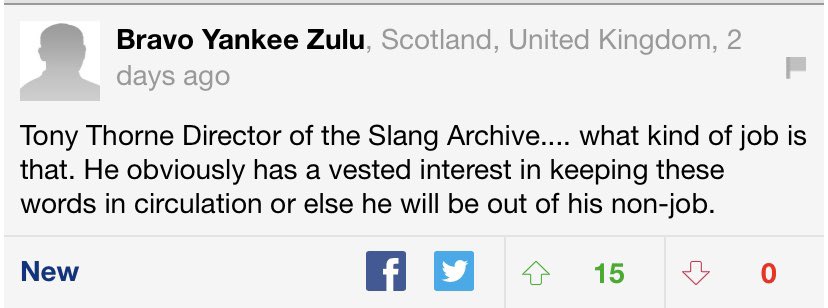
* Rob Booth’s Guardian article was rewritten very slightly and republished by the Daily Telegraph and the Daily Mail. I think the last word on my contribution to the subject, and indeed my career, should go to the anonymous poster of a comment following the Mail‘s piece…

Image

One day in July

On Burnout, Decompression, Re-entry Syndrome – and Calling It a Day

Still mulling over the words of Dr Mike Ryan of the World Health Organisation, who described plans by the UK Government for a general relaxation of COVID-protection policies in ten days time as ‘moral emptiness and epidemiological stupidity’, I was invited to join a discussion on London’s Voice of Islam radio station about the notion of ‘Pandemic Fatigue’ and its implications.

The full discussion is here, with my contribution beginning at 44 minutes…

We can see then, that ‘pandemic fatigue’ can sometimes be a useful, neutral, technical designation, and this is how the WHO itself presented it in 2020…

We can become aware, too, that ‘pandemic fatigue’ is a very conflicted term: although used by the WHO and by ‘ordinary’ people to describe their very real exhaustion, it has also been used, like ‘compliance fatigue’ by authorities to blame the public for disobeying…

https://blogs.bmj.com/bmj/2021/01/07

Despite being locked down myself, in exile for the moment, this was another busy day, with long, mainly heated and indignant discussions taking place on Twitter of what ‘indigenous’ might mean in the context of the UK, triggered by the assertion by Tory MP Andrew Bridgen that the ‘indigenous’ population of the UK will not tolerate immigration. The offending word is an ambiguous and context-dependent term currently. Recent examples have referred to Canada’s First Nations in the harrowing context of deaths in schools where indigenous children were confined. I don’t think it has been used by any reputable specialists in or about the UK, and its use at a time when an England football team of very mixed origins is being celebrated seems crass and provocative. (We don’t know who the ‘original’ inhabitants of the British Isles were, because there was no written record until 55 BCE, but they certainly immigrated, or invaded and colonised as did all the subsequent settler groups.)

On BBC Radio Bristol I once again answered listeners’ queries on the the etymology of popular expressions. This time, perhaps aptly in present circumstances, the phrase was ‘call it a day.’ First recorded in 1838 by US writer Joseph C Nolan in his Charcoal Sketches – A Study in the Humor of the Old Northeast, it was in the form ‘call it half a day’ and seems to have reflected the mixed feelings of weariness and resistance on the part of workers from the Philadelphia slums, deciding to knock off early or to award themselves a half-day holiday. By 1919, as the USA wearily emerged from war, the usage had mutated into ‘call it a day’: in 1938 ‘call it a night’ was first recorded.

Image

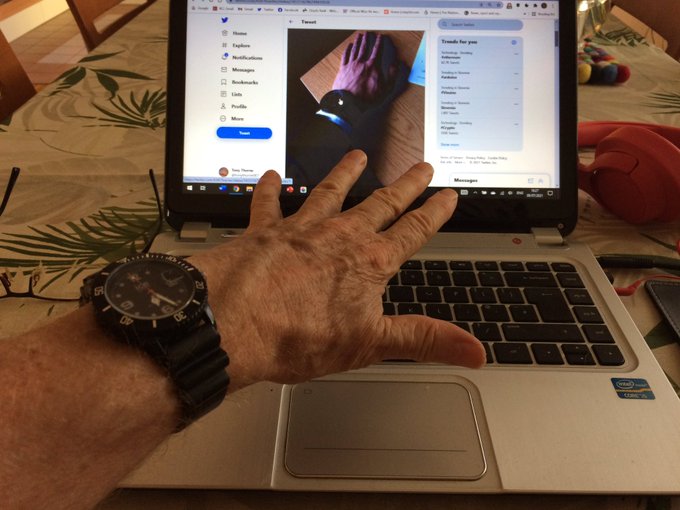
I called it a day myself, at nine o’clock on a warm evening, pleased to have been awarded nine out of ten in a facetious Twitter competition for a photo of my hand, and recalling the louche philosopher Gurdjieff’s realisation that he had progressed from drinking from glasses to drinking from “what are called ‘tumblers'”…

Image