PERCEPTIONS OF THE YOUNG

Image result for annoying young people


                                                  How are British Youth described? 


Over the last few years I have been collecting articles in the UK press (from tabloids, broadsheets and online sources) which seek to characterise young people. The following, in no particular order, except perhaps for the sake of ironic contrast, are the salient characteristics which emerge from an informal analysis of these articles’ claims:


  • Narcissistic with an unfounded sense of entitlement
  • Experiencing unprecedented levels of anxiety and depression
  • Identifying with celebrity culture
  • Prone to ‘drug abuse, alcohol-fuelled pregnancy or law-breaking,’
  • Clean-living, ambitious and competitive
  • ‘…growing up without boundaries, thinking they can do as they please… No adult will intervene to stop them.’ (David Cameron in 2009: the discourse of ‘broken Britain’)
  • More socially liberal and accepting than previous generations on issues such as gay marriage and euthanasia
  • More politically right-wing than parents or grandparents at the same age
  • Digitally literate and globally empowered
  • Suffering from literacy problems and economic disempowerment
  • Speaking a different language


UrBEn-ID is an ethnographic linguistic research project being carried out at Manchester Metropolitan University, funded by The Leverhulme Trust. UrBEn stands for Urban British English, reflecting the project’s aim to investigate ways in which young people in an urban environment use language in the construction, negotiation and performance of their identities.

Some of their recent findings can be accessed here:


http://www.urben-id.org/attitudes-survey/


Three years on, and those labels; Babyboomer, Generation X, Millennial and Gen Z are still contentious, still contested. This from Marketing Week in April 2019:

Are terms like ‘millennial’ actually useful?


BANTER

TOP BANTZ

Tony Thorne

B2

Banter noun good natured raillery, badinage, chaffing, teasing repartee, clever chit-chat, laddish drollery, facetious, ironic verbal to-and-fro

 verb to converse teasingly, chaff, rib

A national sport? An elaborate private joke between likeminded people? A healthy bonding, a celebration of mateyness?

Banter matters, not least because of its links with bullying, sporting slurs, even rape. In more subtle ways it keys into topical issues like diversity, gender relations and class. Its subversive humour is central to our national identity. A proper investigation is overdue.

For someone like me who suffers long enforced absences in humourless territories overseas, it’s an important pleasure to keep in touch with our own vibrant national conversation, online via Twitter, MumsNet, Popbitch, etc. then to return in person and join in for real. But what a conversation. The soundtrack to modern Britain is made up of non-stop punning, teasing, riffing on catchphrases and clichés, knowing references to pop-culture tropes, gossip and ribaldry and sustained abuse of the privileged and pretentious.

Coming back to the UK, I’m always struck by the native wit immediately on offer from strangers, whether shop assistants, taxi drivers, football fans or simply anonymous citizens waiting in a checkout queue. Banter is absolutely central to an English sense of self and others. For us it’s a default setting. Only the English among all the peoples of the planet are required to be funny, about everything, all the time. It reflects both the worst – the strident endless chippiness – and the best – our cheerful fellow-feeling – of us as a people. In fact I think that where it was once the upside of the reserve and insularity that used to afflict us as a nation, those things no longer apply, leaving only a free-for-all by a newly empowered, insolent and fantastically talkative public.

cluedont @cluedont

I remember the first time I heard a man use the word ‘bantz’ as an abbreviation for ‘banter’, and he’s got the scars to prove it.


We should look more closely at the fascinating history of banter, consider its components: wit, facetiousness, irony, wordplay, sarcasm, looking at examples and analysing its uses:  bonding, bullying, self-defence – and seduction. Examining both sides of this double-edged weapon, we have to consider both the cruelty (when black teenager Stephen Lawrence’s killers were questioned by reporter Martin Bashir about their racist video rant they replied ‘Harmless banter, Martin. Harmless banter’) and the poignancy associated with the practice (ex-players invariably cite it as what they most miss when they retire from sport; hard-pressed police officers I interviewed said that they measured a station by whether the team there ‘had good banter’).

Twitflup ‏@Twitflup 

“Whenever I see my husband naked he reminds me of a beautifully coloured bird”

“Peacock?”

“Well it’s more like a baby carrot to be honest”

The fun started in earnest, or, another view has it, the rot began to set in, when in October 2007 UKTV relaunched its UKTV G2 channel under the name of Dave. ‘Everyone knows a bloke called Dave’ the press release quipped. The channel’s slogan was, and is, ‘The Home of Witty Banter.’ It was thus that a national pastime which hitherto had gone unnoticed, or had been taken for granted, was highlighted, commercialised and sold back to its legions of fans. By 2012 the b-word was all over t-shirts, posters, mugs and websites, namechecked in radio and TV broadcasts and arraigned over and over again by right-thinking (or sanctimonious) journalists in the ‘quality’ press.

David Stokes ‏@scottywrotem 

Hate it when I’m ironing and people say “can you do my shirt” & “iron these trousers” and “you’re going to have to leave sir, this is Ikea”.

Mutating from a mildly amusing tic into a divisive social issue, where did banter come from, and where is it going? It has come to be our defining characteristic, beloved of the football dressing room and Sky Sports, student bedsittees and Twitter devotees, loathed by Guardianistas, feminists and right-thinking metrosexuals…debated by the chattering classes, but practised – unusually – by all the classes, and, despite what some claim, all the genders, too.

Banter is a catch-all word for idiocy that warns the rest of us that Here Be Lads. Banter is Soccer AM. It is Andy Gray. It is middle-aged men on Top Gear pretending that they are edgy outsiders by mocking society’s weakest, then going home to Chipping Norton where they live two doors down from the Prime Minister. It is an English stag do in Dublin or Amsterdam with matching T-shirts

– Lizzy Porter, Daily Telegraph

Banter is arguably part of a very ancient tradition that takes in ‘flyting’, the ritual exchange of insults practised by Norse and Scottish poets in the fifth century. The word itself, though, is not so very old and its origins are unusually obscure. When bantering appeared, first as verb then as noun, in the street slang of the late seventeenth century it referred to exchanges that were more aggressive and vicious than the mild, playful and friendly exchange of teasing remarks, often preceded in descriptions by ‘harmless’, ‘good-natured’ or ‘witty’, that it had become by the twentieth century. It first meant to trick or bamboozle somebody, to hold them up to ridicule and to give them a ‘roasting’, in a term of the day we still possess. The first recorded instance of the verb is in Madam Fickle, an otherwise unremarkable play of 1676 by Thomas D’Urfey, in which Zechiel cries to his brother: ‘Banter him, banter him, Toby. ’Tis a conceited old Scarab, and will yield us excellent sport — go play upon him a little — exercise thy Wit.’ A letter of 1723 equated banter with ‘Billingsgate’, the foul and vituperative language used by the porters at the London fish market of that name. Banter became notorious because of a spirited attack on it by Jonathan Swift in a famous article he wrote for The Tatler in 1710. In it he attacked what he called ‘the continual corruption of our English tongue’:

‘The third refinement observable in the letter I send you, consists in the choice of certain words invented by some pretty fellows; such as banterbamboozlecountry put, and kidney, as it is there applied; some of which are now struggling for the vogue, and others are in possession of it. I have done my utmost for some years past to stop the progress of mob and banter, but have been plainly borne down by numbers, and betrayed by those who promised to assist me.’

In the same year he referred to the term in his Apology to The Tale of a Tub writing that ‘This polite word of theirs was first borrowed from the bullies in White-Friars, then fell among the footmen, and at last retired to the pedants; by whom it is applied as properly to the productions of wit, as if I should apply it to Sir Isaac Newton’s mathematics.’ Linguists have failed to identify the ultimate origin of the word, but I think it’s very probably from rural dialect, in which ‘banty’ can still mean small, aggressive and irritating.

In the nineteenth and twentieth centuries banter most usually denoted fairly gentle ribbing by friends, acquaintances and workmates. Its connotations have subtly changed again more recently, moving closer perhaps to its original edgier senses, but with added nuances. My survey of recent references from the US shows that there it is nowadays most often linked to the language of would-be seduction – invariably by hapless males of females – or to sales talk or business slogans. In the UK on the other hand it is most likely to be associated with sports fans (where it may be allied to the tradition of ‘sledging’), students (with their ‘neknomination’ drinking rituals and ‘violation nite’ initiation ceremonies) and of course with a myriad amateur and professional humourists, from the wannabe standups and scriptwriters competing for attention on social media sites to the established big guns firing off salvoes in Mock the Week, QI and the like.

Liza Thompson ‏@LizaJThompson 

Today, in celebration of Kierkegaard’s birthday, I’m slumped in a chair in a state of existential despair #curtainsclosedandeverything

 from Camberwell

B2

Shortly after I published this Ben Jagoda explained the term for an American readership…

“Banter”

Update from June 2017: I talked to Archie Bland about this subject and here is his long read in the Guardian this week…

https://www.theguardian.com/society/2017/jun/30/the-age-of-banter

And now, in May 2019, Billy Bragg comments on the visual banter that got Danny Baker fired by the BBC…

 

BALKANISATION

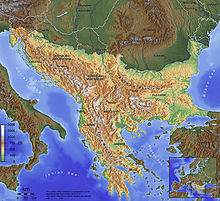
A word that is bandied about – recently by Boris Johnson among many others – yet rarely examined closely. I have tried to unravel its connotations in two different contexts, once fairly flippantly, once a little more seriously…

Image result for the balkans

Once used to describe the weakness of tiny, mutually hostile nations with changing borders, this invocation of the troubled Balkan region is now fashionably applied to the banking sector. Balkanisation refers to, in the words of the FT‘s Patrick Jenkins, “the breakdown of cross-border banking as nervous lenders retreat… from the more troubled parts of the Eurozone.”

It is part of the trend towards deglobalisation, financial fragmentation, renationalisation and domestication of debt caused primarily by economic turbulence, prompting banks to introduce more effective safeguards against cyclical changes, aka buffering (another buzzword du jour), but increasingly also due to tighter official regulation. National regulators may now stop banks using deposits in one area to fund debts in another (the ability to shift capital or asset-swap from country to country is known as fungibility), and regulatory intervention can result in the breaking up, or Balkanisation, of the big, diversified financial entities themselves.


Here is a more detailed consideration…(long read) 

Click to access Thorne.pdf


Image result for balkanisation


WEASEL WORDS

A propos of nothing in particular, some thoughts on doubletalk, hypocrisy and evasions…

Image result for weasel

In 1982, during negotiations on a peacekeeping force for the Sinai peninsula, the British Foreign Secretary of the time, patrician Tory smoothie Lord Carrington, was damned by then US Secretary of State Alexander Haig, (using an adjective so rare as to cause some to doubt its existence) as ‘a duplicitous bastard’, and it’s fair to ask whether duplicity, in its various manifestations and like its better-known sibling, hypocrisy, is not a very fundament of the English way of life. Again, it is by our language that ye shall know us and for our language that we are – nowadays – regularly taken to task. For the frequently foulmouthed Haig, this was a mild imprecation; what Carrington had been saying has never been revealed, but ‘the British lied through their teeth’ according to Haig’s aides’. As serious practitioners of the art of insult, the British probably dismissed Haig’s testy comment on Carrington as hardly in the same world class as the invective of Lloyd George, who said that Winston Churchill would ‘make a drum out of the skin of his own mother in order to sound his own praises’; of Haig’s namesake, the World War I Field Marshal, that he ‘was brilliant to the top of his army boots’; or of Lord Derby that he was ‘like a cushion who always bore the impress of the last man who sat on him.’ Devastating ad libs and insults are carefully crafted in Britain; Haig’s was an impulsive throwaway.

One way of characterising language which is self-serving, empty and/or evasive is by damning it as ‘weasel words’. As Plain English Campaign veterans Chrissie Maher and Simon Cutts assert, ‘…in step with managerial thinking, opinion polls and an impossibly demanding media, our political leaders employ this new language of clichés, jargon, platitudes and weasel words to hide or twist the truth.’

Weasel words is an expression that appeared in the USA in the late 19th century, and in print in Stewart Chaplin’s short story Stained Glass Political Platform (published in 1900 in The Century Magazine), deriving not from the furtive sneakiness of Mustela nivalis, but from its habit of sucking out the contents of eggs, hence draining words of their real meaning. Weasel itself comes from an extremely ancient Indo–European word denoting a slimy liquid or poison which may also be the origin of ‘virus’. More recently it has featured in popular metaphor: ‘weaselly’ meaning devious and evasive with overtones of malice, while in the slang of the 1950s a ‘weasel’ could refer to a railway porter’s tip, an amphibious military vehicle or in rhyming slang to one’s coat (from ‘weasel-and–stoat’); weak tea in Yorkshire was ‘weasel-pee’ and wits replaced Shell’s petrol slogan of 1965, ‘Put a Tiger in Your Tank’, with ‘Put a Weasel in Your Diesel.’ Poor Willy Weasel didn’t listen to the advice given by the Tufty the Squirrel and was hit by a car when he tried to buy an ice-cream: as the voiceover (Bernard Cribbins) reminded us, in those poignant road safety cartoons of the 1970s, ‘Now Willy has been hurt. And all because he didn’t ask his mummy to go with him to the ice cream van.’ But what is it that makes it so very clear that Willy Weasel is bad news? You just know that he’s going to come to a nasty end. Is it because he’s a weasel, a by-word for a sneak? Is it because his neck is so long and he doesn’t therefore look quite as cute and human as a squirrel? Is it his stripy jumper with its connotations of criminality? Today in cyberslang weasel can designate both a penis and a home-made hashish pipe.

More pertinently, our then Poet Laureate, Carol Ann Duffy, in 1990 used Weasel Words as the title of a sonnet skewering the political cynicism of the Thatcherite era by parodying parliamentary rhetoric as reported in Hansard:

Let me repeat that we Weasels mean no harm.
You may have read that we are vicious hunters,
but this is absolutely not the case. Pure bias
on the part of your Natural History Book.
(Hear, hear).

We are long, slim-bodied carnivores with exceptionally
short legs and we have never denied this.
Furthermore, anyone here today could put a Weasel
down his trouser-leg and nothing would happen.
(Weasel laughter).

Which is more than can be said for the Ferrets opposite…


HIGH TABLE WIT


Why do academic professionals masquerade as tongue-tied dullards? In an article a decade ago Tony Thorne demanded a return to donnish wit.


I’ve more than once complained to colleagues that, in the eighteen or so years since I returned to higher education, I have yet to come across an example of ‘high-table wit’. Indeed I’m hard put to recall a single on-campus laugh, let alone a bon mot or jeu d’esprit, in all that time. Colleagues cheerfully riposted that even if there were a High Table, I would be unlikely to be seated at it, and anyway, in a world constrained by critical theory, funding shortfalls and dignity-at-work procedures, what is there to be witty about?

We are hobbled by the mateyness of the tutorial, the robotspeak of the audit culture, not to mention the overemphasis, in Russell Group institutions at least, on mute research, not teaching, as the noblest calling. Levity, in HE, is verboten.

Sophisticated usages, complicated syntax are seen as threats to equal opportunities for the inarticulate. Because we have come to realise that language can disempower, it doesn’t follow that we should muzzle ourselves: if ‘rhetoric’ is widely distrusted as flim-flam and trickery, it doesn’t mean that we should forget its huge (re-)empowering potential.

During one exchange not so long ago a student accused me of having swallowed a dictionary. I not-very-wittily replied that it was probably the Longman Dictionary of Contemporary English which I helped edit, but the point is that he was astonished that I dared to strain for eloquence. Many more students have complained to me of the uninspiring delivery of lectures, the numbing aridity of powerpoint-dependent presentations: why, they ask, are their teachers so desperately embracing a geek demotic?

In 1916 the leading literary scholar and writer Sir Arthur Quiller-Couch upbraided those he termed ‘scientific men’, the technocrats of his day, for undervaluing refinement in language, remarking that ‘the sharper the chisel, the more ice it is likely to cut.’ To borrow his (slightly mixed) metaphor, it’s a point well made, and still to the point.

Of course old-style ‘high-table wit’ is an unsustainable cliché, part of a mythology of the academy which is cultivated mainly by those outside it. Who would wish to revive the amusing speech impairments of the poor Reverend Spooner or the effete waspishness of Warden John Sparrow?

The very idea of donnishness – the mystique of the virtuoso lecturer, the unworldly worldliness of the professoriate – is an anachronism, and the tradition of academic witticisms seems to have expired sometime in the 1960s, a decade in which, in Joseph Losey’s film Accident, the acerbic don (Dirk Bogarde) still lived in a sprawling rectory, drove a new Jaguar, and knew all about port.

And yet, and yet… the notion nags at me. I’m really arguing for the sense of self-worth that makes indulgence in humour and the bravura use of language possible, and I guess I’m targeting VCs, VPs as well as practitioners in the humanities, whose rhetorical skills should provide models for their students. Now that the sermon and the debating society are moribund, who else is to take the lead? George Galloway? Stephen Fry? On their own??

Quips around the high table rarely went beyond their immediate audience, but we should be thinking more ambitiously, of a discourse style that can make its user heard above the soundbites and the earnest browbeatings of public debate and restore the right of university teachers to influence opinion on a wider scale

It could be said that this already happens in terms of science and technology, whose public and social influence is unarguable, and there are signs at least that other academic voices are being raised, in the interdisciplinary public debates taking place in London right now for instance, where arts and social science specialists contend with luminaries from the second and third estates.

Let’s pray not just for piety and conviction in those debates, but for repartee and badinage, because the other key component of wit is a sense of humour. Not gallows humour, born of desperation, but what Aristotle defined as ‘cultured insolence’, the byproduct of quick thinking and a keen combativeness; qualities, along with verbal facility, that seem to me to be essential for the survival of a still undervalued and self-effacing academy. Montaigne said wit was a dangerous weapon; in fact it’s not so much the equivalent of Sir Arthur’s little ice-pick as our own sector’s Weapon of Mass Seduction. And it’s time we deployed it.


A version of this article appeared in the Times Higher in September 2006