THE SLANG AND NEW LANGUAGE ARCHIVE

A research portal for scholars, the press and the public

The Slang and New Language Archive was created in 1994 while I was Director of the Language Centre at King’s College London. The archive, consisting of a small library of books and periodicals and a number of databases and sub-directories, was designed as a repository for the collection, storage and dissemination of new language, in particular examples of nonstandard varieties of English such as slang, jargon and buzzwords. The archive was later expanded to take in examples of media language, political language, linguistic curiosities and etymologies. It remains a resource, unique in the UK and not-for-profit, assisting researchers, students, teachers and journalists, as well as non-specialists, in accessing information about aspects of contemporary language that are under-represented in traditional dictionaries and reference works.

This link will take you to the Archive webpage at King’s College, where there are further links to relevant articles and published sources…

https://www.kcl.ac.uk/research/slang-and-new-language

Glossaries from the archive may be accessed on this site by entering keywords, such as slang, jargon, MLE (Multiethnic London English), familect (highly colloquial language used in the home), coronaspeak (language related to the COVID-19 pandemic) and weaponised words (the contentious language of Brexit, populism and biased reporting) and slurs (racist and misogynist terms) in the search box. Once you have accessed a post of interest, check the tags and categories at the foot of the page for other articles or glossaries on the same topic.

Two of the larger archive datafiles are hosted on Aston University’s Institute of Forensic Linguistics Databank site. These are a glossary of current youth slang

https://fold.aston.ac.uk/handle/123456789/4

And a glossary of UK street slang, rap music and gang terminology

https://fold.aston.ac.uk/handle/123456789/5

Please note that the King’s archive focuses principally on contemporary language, that is terms used from the twentieth century to the present day. If you are interested in historical slang, I strongly recommend the monumental work by my associate, the British lexicographer Jonathon Green. His dictionary, now generously freely available online, lists current and historical slang terms with timelines and citations illustrating their usage and development…

https://greensdictofslang.com/

For more information, for queries, or to donate examples of language, contact me via this website or via the King’s College webpage. I’m on Twitter as @tonythorne007 too.

In terms of new slang and nonstandard language there are few reliable resources online. In February 2025, however, US publisher Merriam-Webster launched their own slang dictionary. You can find it here…

https://www.merriam-webster.com/slang

Among the many more informal glossaries and wordlists of slang posted on the internet in 2025, this review of slang in English schools is unusually comprehensive and accurate…

https://teachertapp.com/uk/articles/down-with-the-kids-slang-in-british-classrooms-2025/

LANGUAGE AND LONGEVITY – 2

Dictionary makers and journalists are breathlessly – if not desperately – publicising the latest online language – but do they really understand it?

One week on, I spoke to Chloe MacDowell of the UK Guardian newspaper, then to Marni McFall of the US Newsweek magazine on the topic of TikTok language and the online messaging mannerisms of Influencers and GenZ. Chloe was interested in one particular trending TikTok catchphrase, Marni in the whole panoply of 2024’s viral innovations.

Once authentic conversations and personal interactions (previously happening in private spaces or local communities) began to feature on the internet and in messaging and on microblogging platforms,  language novelties, slang and faddish usages crossed over from a private realm into the global public domain. The latest slang and new language was visible, audible and immediately available to share. Obscure or exotic terms might quickly catch on and become viral favourites, spreading in some cases across the anglosphere more rapidly than print, broadcast or word-of-mouth transmission had ever been to achieve in the past.

Words and phrases began to function like memes, taking on sometimes a ‘multimodal’ aspect whereby sound and image could reinforce the purely verbal expressions that people chose to exchange and promote. Pre-internet there had always been catchphrases, what linguists call ‘vogue words’, slogans and soundbites, and keywords that somehow seemed to evoke or encapsulate some special aspect of the ‘zeitgeist’. What we have now is a much more knowing, deliberate intention (on the part of trend-setters, influencers, ‘thought-leaders’) to create new language to celebrate new identities and to promote new attitudes and lifestyle innovations to the widest possible audience.

Subcultures like surfers, valley girls, fanboys and girls, hip hop aficionados had always invented striking, expressive language and this is still true, but instead of niche culture we have ‘meganiches’, instead of subcultures we are dealing with globalised communities.

The fashionable language of TikTok and GenZ in particular is part of their wider obsession with vibes, aesthetics and microtrends, many of which arise and are discarded in rapid succession. The prevalent style is exhibitionist, self-promoting, allusive and often ironic, increasingly even absurdist, making it hard for outsiders to grasp the nuances in play. Older commentators and dictionary publishers struggle to keep pace, often misunderstand and record the terms in desperation (in their searches for ‘word of the year’ for example) just as they fall out of use.

The use of this language as an identity marker in an intensely competitive digital ecosystem means that the Gen Alpha cohort now ridicule GenZ usages as being out-of date, while GenZ is still deriding millennials for their old-fashioned ‘cringe’ vocabulary. At the same time would-be influencers practise bragging, ‘manifesting’ and other forms of self-congratulation in a search for clicks and clout.

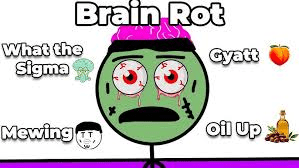
One of the latest features of online wordplay is the elevating of an older concept or cliche into a teasing provocation or pretence at new insights, as we have seen with ‘delulu’, ‘demure’ and ‘mindful’, ‘rizz’ and ‘brat’. The current rash of declarations of ‘being privileged’ – a new version of ‘humblebragging’ or ‘virtue-signalling’ – is another example. In parallel is the ironic celebration of the incoherence or absurdity of much online discourse and of low-quality ‘slop’ by embracing a culture of ‘brainrot’ – nonsense memes such as ‘skibidi’ and vacuous, contagious content.

Most of the innovation in online language and image still emanates from the US and even though a global audience can access it instantly, its tropes (think ‘goblin-mode’ – ‘goblin’ doesn’t have the same associations for Brits) don’t always translate for other speakers of English. In parallel, poses, gestures and looks as well as music-related modes are increasingly generated from non-English cultural zones such as Japan and Korea. It will be interesting to see if other parts of the globe begin to play a part in the evolving online theatre of signs and behaviours, but this doesn’t seem to have happened yet.

Chloe’s piece is here…

https://www.theguardian.com/media/2024/nov/02/what-a-privilege-trend-catches-on-as-gratitude-makes-social-media-comeback?CMP=share_btn_url

And the Newsweek article is here…

https://www.newsweek.com/2024-most-popular-internet-slang-words-revealed-1978732

On the first of November Collins Dictionaries, ahead of the pack, had already announced their choice of word of the year for 2024, and their candidates illustrated the same, in my opinion mistaken, concentration exclusively on terms from a very narrow range of sources. While postings on social media are performances designed to attract attention, there is an even wider domain in which discourse demands analysis: the crises in the Middle East and Ukraine and the surreal spectacle of the US presidential campaigns, for example, are also highlighting keywords and generating new formulations or reworkings of language – data that mainstream media and lexicographers seem to think unworthy of their attention…

https://twitter.com/CollinsDict/status/1852139743112208794

FAMILECT AGAIN

DOMESTIC DIALECT FEATURES FAMILY FIXATIONS

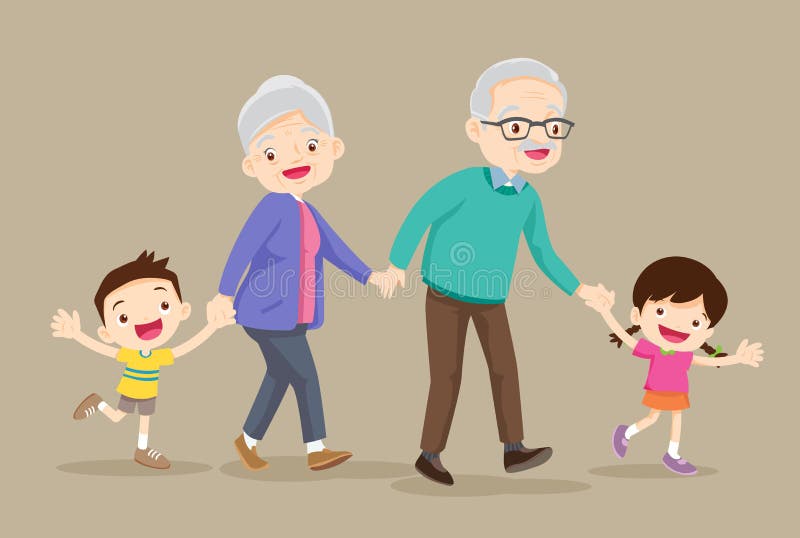
Families and Older Generations Stock Vector - Illustration of grandparents,  seniors: 114207016

In 2016 I wrote about so-called familect, the ‘microdialect’ originating in the home*. Also known as ‘family slang’ and ‘kitchen table lingo’, this is one of those underappreciated, under-researched varieties of ‘in-group’ language which, like slang and jargon, make use of the same techniques (metaphor, irony, analogy – alliteration, rhyme, assonance, reduplication) as poetry and literature and at the same time offer a window into the private worlds of ordinary people: their preoccupations, pleasures and ways of bonding. Familect can also be a sharing ritual within the household whereby humour and creativity and inventiveness are enjoyed across generations. Kids are adept in creating new words from an early age and at playing with existing language to create new and colourful expressions, while older family members have their own ways of coining expressions and recycling or reworking the language of their youth, so the home is also a laboratory in which to cultivate new literacies.

Just recently the cApStAn Translation Team reviewed the topic and provided a useful link-fest and bibliography…

Today another article, by my friend Connie Chang, featuring interviews with specialists in the field, was published in the National Geographic

https://www.nationalgeographic.com/family/article/why-your-familys-secret-language-is-good-for-kids?loggedin=true

Familect can provide a useful subject for research and field work as part of exploring word creation and language innovation for school or college projects. Its users can be encouraged to look more carefully at the words and phrases they have invented themselves or shared or just heard, and asked to consider…

  1. Why was the expression invented? (usually because the object, idea or feeling described is precious or important or super-familiar. Sometimes because there isn’t an existing word or a memorable word to describe it in standard English)  
  2. What is it that makes these words funny, understandable, memorable? Is it that they sound like something else, remind you of something already familiar? Or is it the spelling and sound of them itself that makes them amusing?

In fact the school itself may be a source of similar novelties, as Tabitha McIntosh wrote in the TES this summer…

https://www.tes.com/news/schools-teachers-does-your-classroom-have-its-own-unique-language

Grandparents with Kids are Walker Stock Vector - Illustration of happiness,  cute: 153811703

One year on, in August 2022, the Guardian featured the phenomenon in an article by Arwa Mahdawi

https://www.theguardian.com/commentisfree/2022/aug/09/i-am-beshwiggled-and-incatacipated-why-theres-nothing-better-than-family-slang?CMP=share_btn_tw

*https://language-and-innovation.com/2016/07/23/family-language/

One day in July

On Burnout, Decompression, Re-entry Syndrome – and Calling It a Day

Still mulling over the words of Dr Mike Ryan of the World Health Organisation, who described plans by the UK Government for a general relaxation of COVID-protection policies in ten days time as ‘moral emptiness and epidemiological stupidity’, I was invited to join a discussion on London’s Voice of Islam radio station about the notion of ‘Pandemic Fatigue’ and its implications.

The full discussion is here, with my contribution beginning at 44 minutes…

We can see then, that ‘pandemic fatigue’ can sometimes be a useful, neutral, technical designation, and this is how the WHO itself presented it in 2020…

We can become aware, too, that ‘pandemic fatigue’ is a very conflicted term: although used by the WHO and by ‘ordinary’ people to describe their very real exhaustion, it has also been used, like ‘compliance fatigue’ by authorities to blame the public for disobeying…

https://blogs.bmj.com/bmj/2021/01/07

Despite being locked down myself, in exile for the moment, this was another busy day, with long, mainly heated and indignant discussions taking place on Twitter of what ‘indigenous’ might mean in the context of the UK, triggered by the assertion by Tory MP Andrew Bridgen that the ‘indigenous’ population of the UK will not tolerate immigration. The offending word is an ambiguous and context-dependent term currently. Recent examples have referred to Canada’s First Nations in the harrowing context of deaths in schools where indigenous children were confined. I don’t think it has been used by any reputable specialists in or about the UK, and its use at a time when an England football team of very mixed origins is being celebrated seems crass and provocative. (We don’t know who the ‘original’ inhabitants of the British Isles were, because there was no written record until 55 BCE, but they certainly immigrated, or invaded and colonised as did all the subsequent settler groups.)

On BBC Radio Bristol I once again answered listeners’ queries on the the etymology of popular expressions. This time, perhaps aptly in present circumstances, the phrase was ‘call it a day.’ First recorded in 1838 by US writer Joseph C Nolan in his Charcoal Sketches – A Study in the Humor of the Old Northeast, it was in the form ‘call it half a day’ and seems to have reflected the mixed feelings of weariness and resistance on the part of workers from the Philadelphia slums, deciding to knock off early or to award themselves a half-day holiday. By 1919, as the USA wearily emerged from war, the usage had mutated into ‘call it a day’: in 1938 ‘call it a night’ was first recorded.

Image

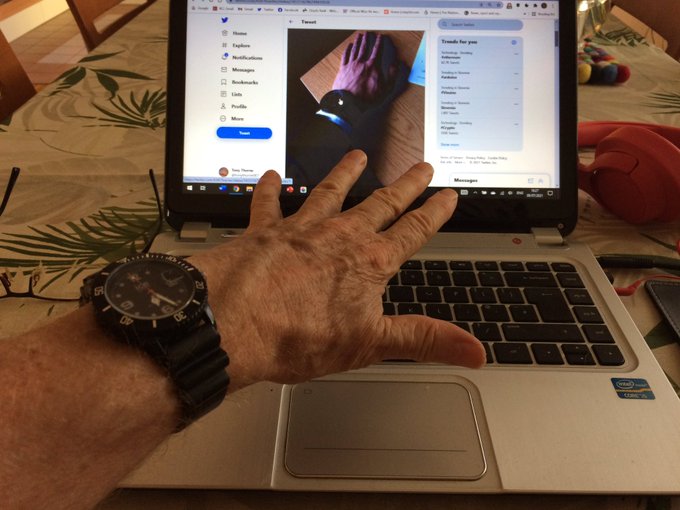
I called it a day myself, at nine o’clock on a warm evening, pleased to have been awarded nine out of ten in a facetious Twitter competition for a photo of my hand, and recalling the louche philosopher Gurdjieff’s realisation that he had progressed from drinking from glasses to drinking from “what are called ‘tumblers'”…

Image

READ MY LIPS – a Catchphrase is forever

Man is a creature who lives not upon bread alone, but primarily by catchwords.

– Robert Louis Stevenson 

Image result for old catchphrases

In the end, Mr. Trump’s simple promise to ‘Make America Great Again,’ a catchphrase Mrs. Clinton dismissed as a vow to return to a racist past already long disappeared, would draw enough white Americans to the polls to make up for his low minority support.

– Amy Chozick, New York Times, November 9, 2016


Image result for old catchphrases


A poll of 2000 representative adult citizens has just revealed, according to surrounding publicity, the British public’s fifty favourite catchphrases. I was asked to comment on the survey and its findings and have expanded on those first thoughts here…

  1. Linguists describe the catchphrase as a ‘pre-formed lexical unit’, a component of the lexical repertoire shared by individual speakers and wider social groups. A catchphrase is ‘disseminated’ – spread – by repeated media usage and by word of mouth repetition.
  2. A catchphrase is typically a sequence of several words which works in memory and in conversation as a single unit. It triggers recognition because it is used repeatedly across society and this recognition in turn triggers the pleasure of sharing a cultural allusion with other people.
  3. Catchphrases, like proverbs, slogans or clichés (not to mention adages, maxims, platitudes, sayings and mottos), work because they encode ideas that are wise or funny or inspiring – sometimes all three at once. They also work well in interactions because they are information shortcuts or emotional prompts that can be slipped into conversations instead of having to explain interesting or complex ideas at length. In the digital and visual sphere hashtags and memes share many of the catchphrase’s attributes.
  4. A catchphrase such as ‘I don’t believe it!’ expresses a mix of exasperation, world-weary resignation and fatalistic humour that will be familiar from many people’s personal experience. ‘Don’t panic!’ is a piece of urgent advice that fits almost all of the traumas that life inflicts upon us. (The same words were memorably used in the cult TV series The Hitchhiker’s Guide to the Galaxy’)
  5. The psychology of using a catchphrase is similar to that of telling a joke or repeating a famous quote: it not only conveys an opinion or information but forms a social bond of intimacy between the user and whoever they are talking to.
  6. Many catchphrases are associated with a particular performer, celebrity or public figure and so have a double impact in evoking that person’s trademark persona and attributes as well as the ideas they originally expressed. Catchphrases from much-loved shows lodge in the listener’s mind and stay with them as pleasurable memories to replay over and over again.
  7. Some catchphrases – ‘it is what it is’, for example, mimic a philosopher or sage expressing universal truths in simple language. The repetition used drives home the idea and its finality is effective in closing down a discussion – but at the same time this kind of catchphrase (like its abrupt synonym ‘end of’) can irritate the hearer if it is thought to be meaningless or stating the obvious or falsely affecting profundity. ‘Simples’, on the other hand is inoffensive and works especially well because it is itself as simple as it can be, as well as teasingly funny and associated with a lovable, if fictionalised and Russian-accented creature.
  8. Catchphrases derive their power from compressing quite complex ideas into short sequences and reinforce their power by employing unexpected juxtapositions and by using striking or clever combinations of sound (‘phonaesthetics’ or ‘sound symbolism’) that work just as in poetry or literature to arouse feelings in the listener. A very short expression such as ‘beermunch’ (the product name associated with the poll promotion in question) brings two already very familiar words together for the first time and combines two short, sharp contrasting sounds, sounds that for many will evoke the act of imbibing a stimulating liquid and the act of ‘chomping’ on delicious snack food.
  9. Catchphrases are a key component of popular culture as they connect the world of entertainment and consumption with the everyday concerns of real people – their feelings and experiences, their shared pleasures and their struggles and frustrations, and especially their triumphs over adversity.
  10. Some catchphrases (like buzzwords, linguists call these ‘vogue terms) quickly fall out of use or soon begin to sound dated and embarrassing. What is notable in the latest list, however, is how many of the expressions chosen are decades old and still in favour. It seems that certain phrases reverberate across generations, becoming part of the shared vocabulary of family members and neighbours (more technically ‘familect’).

Image result for old catchphrases

So here are…

 THE NATION’S TOP 50 CATCHPHRASES – as of September 2019 

  1. I don’t believe it! – Victor Meldrew
  2. Simples – Compare the Market
  3. Don’t panic! – Lance-Corporal Jones/Dad’s Army
  4. Lovely jubbly – Del Boy/Only Fools and Horses
  5. I had a cunning plan! – Tony Robinson / Blackadder
  6. To me, to you – Chuckle Brothers
  7. I’ll be back – Arnold Schwarzenegger / Terminator 2
  8. Nice to see you – to see you nice – Bruce Forsyth
  9. Only me! – Harry Enfield
  10. Rodney, you plonker! Del Boy/Only Fools and Horses
  11. Cheeky Nando’s
  12. How YOU doin’? Joey from FRIENDS
  13. Listen very carefully, I shall say this only once – ‘Allo ‘Allo
  14. Computer says no – Little Britain
  15. Garlic bread! – Peter Kay
  16. Should’ve gone to Specsavers – Specsavers
  17. D’oh! – Homer Simpson
  18. Am I bovvered? Catherine Tate
  19. The name’s Bond… James Bond – James Bond
  20. Beam me up, Scotty – Star Trek
  21. It is what it is – Love Island
  22. Aha! – I’m Alan Partridge
  23. What’s occurring? – Gavin and Stacey
  24. I’ve started so I’ll finish – Mastermind presenter
  25. It’s goodnight from me, and it’s goodnight from him – The Two Ronnies
  26. I’m free! – Mr Humphries/Are You Being Served
  27. Ooh Betty – Frank Spencer
  28. You dirty old man! – Steptoe and Son
  29. Lads lads lads – and everybody! – Ladbrokes
  30. Exterminate! – Dalek
  31. Live Long and Prosper – Star Trek
  32. We’re going out-out – Mickey Flanagan
  33. I’ll make him an offer he can’t refuse – The Godfather
  34. Have a break, have a Kit Kat – Kit Kat
  35. Scorchio! – The Fast Show
  36. Because I’m worth it – L’Oreal
  37. Bazinga! – The Big Bang Theory
  38. It’s good, but it’s not right – Roy Walker/Catchphrase
  39. Who loves ya, baby! – Kojak
  40. I ain’t getting’ on no plane! – Mr T/The A Team
  41. I’m Lovin’ It – McDonald’s
  42. Shut that door – Larry Grayson
  43. Smokin’! – Jim Carrey – The Mask
  44. On that bombshell… – Jeremy Clarkson / Top Gear
  45. You are the weakest link – goodbye! – Anne Robinson / The Weakest Link
  46. You’ll like this – not a lot – Paul Daniels
  47. …Which was nice – The Fast Show
  48. No likey, no lighty! – Take Me Out
  49. Whatchoo talkin’ ’bout, Willis? – Diff’rent Strokes
  50. Giggity – Quagmire / Family Guy

Image result for old catchphrases

And here is how the poll results were relayed to a waiting public…

https://www.dailymail.co.uk/news/article-7520653/I-dont-believe-Victor-Meldrews-catchphrase-voted-nations-favourite-time.html


 Grumpy Victor Meldrew's catchphrase topped the list


FAMILY LANGUAGE

“STOP PLOITERING AND GRAB THE MELLY!”

I’ve long been interested by the inventive, jokey, sometimes ludicrous expressions that arise within the family and only very occasionally emerge into the speech of the wider community. This variety is sometimes known as family slang or familect, otherwise, by the English Project at Winchester University, as kitchen-table lingo.

The following article gives some examples of these lighthearted, eccentric expressions…

http://www.dailymail.co.uk/news/article-2571693/Fancy-blish-Its-new-slang-nice-cuppa-New-list-gibberish-words-used-families-country-published.html

PR specialist Hamish Thompson has been working on his own glossary of family language and was kind enough to send me his introduction, acknowledgements and a selection of entries:

Most families have an invented vocabulary – the words that grow out of mishearing, misspelling, kids’ early attempts at talking or things that you might have seen that have become folkloric.

One of my kids coined the term ‘argubating’, which means arguing a point in a self-indulgent, unproductive way.  We also have ‘wookthack’, which for complicated reasons means ‘a rucksack from Derbyshire’.

And then there’s ‘scrapey’, which is a disappointing texture, named for the moment that my daughter, aged about 5, jumped the fence at the Postman Pat Village at Longleat to touch Mrs Goggins’ hair.

I asked people on Facebook last week whether they had any words that were part of their family vocabulary and I got some lovely responses.

I like the idea of a new dictionary, which I’m going to call ‘Famguage’ (thanks Alex Johnson).  I heard my son talking to his girlfriend about some of our words the other day. Clanguage is something that you’re eventually introduced to when you really enter a family.

I’d love to hear yours and add them to this list.  Tweet me at @HamishMThompson or email me at hthompson@houstonpr.co.uk and I’ll add them here.  Acknowledgements below.’

‪Alligator – a moving staircase.

‪Angipodes – crawly insect

‪Apogetic – opposite of energetic

‪Argubating – self indulgent row

‪Bantry – basement pantry

‪Bisgusting – poor personal habits

‪Bishee bishee Barnarbee – ladybird

Bleenger – someone who keeps losing something

‪Bonger – TV remote control)

‪Boop and bamwhiches – nutritious lunch

Cake Out – a stake out with bought cakes

‪Calm chowder – popular meal for kids in New England

‪Cat-flap – have a big panic or over fussy reaction to something

‪Chish and fips – Fish and Chips

Cluckston – generic term for chicken, hen, rooster, cockrell etc. “It’s some kind of cluckston.” See also, crucially, ‘Quackston’

‪Complify – opposite of simplify

‪Daddy’s soda – beer

‪Dinger- TV remote control

‪Embuggery – embroidery

‪Fi (pronounced like hi) plural of foxes

‪Forgettabox. Floatycoat. Windy man (fart)

‪Goggy for the favorite blankets the boys used when they were little.

‪Graunch – the scraping of furniture on a wooden floor when moving it improperly.

Gruncle and Graunt – great uncle and aunt

‪Gruntled – happy

Hairochopter – helicopter

‪Hangry – annoyed because of lack of food.

‪’Have you forgotten how to English?’

Iforloafer – falling over

In a little minute – buying a bit more time before bed

‪Industriocity – busy / va va voom “hoy lad, it’s time you showed a bit of industriocity”

‪Marshmellons – soft sweet

‪Merangutans – Meringues

‪Miseratating – so constantly miserable you are irritating

Nicknames – Lewie, Boogle, Doodie, Moomin

Nommelin – omelette

‪Nonk – milk

‪On the roof – imminent danger

Ploitering about – piddling about and loitering

‪Pokey pola – Coca-cola

Quackston – a duck (see also ‘cluckston’)

Scrapey – unpleasant texture (after jumping the fence at the Longleat Postman Pat Village to touch Mrs Goggins’ hair)

‪Sidey the table – sit around the table for dinner

Sluggerbaths – kids that dawdle in the bath until the water gets cold

‪Smaggy – horrible

Spudy – a spare bedroom that doubles as a study

‪Stinging lentils – weeds to be avoided

‪Swimpamool – the place you go for a swim in the summer

Tahairnairhair – proximity of a friend called Tahir

‪The Feli – two Felixes – my son and his best friend

‪The Ho Ho Hos – the seven dwarves

‪Till donk – the thing supermarkets use to separate your shopping from another customer on the conveyor at the register.

Tootles – toilets

Tryer trick – trousers falling down to a point that makes walking difficult

‪Veggybubbles – veg

Voulez-vous –  vol au vent.

Wice – wood lice

‪Wish dosher – a machine for cleaning crockery

Wookthack – rucksack from Derbyshire

“Yes then!” – exclamation when receiving good news or when a cunning plan is formed

‪Yippers – indoor footwear

With thanks (so far) to: Kellie Evans, Nicola Texeira, Tamzin Benjamin, Shaun Andrews, David Johnson, Clare Corbet, Vanessa Potts, Michael Cullen, Nick Higham, Michael Moran, Rene Wright, Lynne Clark, Cam Ross, Steve Dring, Alex Johnson, Dawn Murray, Chris Winstanley, Helen Hobbs, Jean Harbilas, Tracey Holmes-Reynolds, Elizabeth Varley, Jenny Hodge, Caroline Lavelle, Andy Ravenscroft, Vivien Patterson, Sharon Rasker, Leroy Bingham, Alex Thomson, Donal McCabe, Duncan Wisbey, Gina Jones, Jim Boulden, Joanna Oliver, Peppi Wilson, Mark Webb, Susanna Voyle, MoiOfRa, Jane Symons, Tyler Massie, Rebecca McKie, Dr Decadence Marple.

More from 2013 in the Guardian

https://www.theguardian.com/media/mind-your-language/2013/jul/19/mind-your-language-family-slang

…and January 2018, an excellent article that includes personal reflections by Caroline Baum also in the Guardian newspaper…

https://www.theguardian.com/lifeandstyle/2018/jan/03/shnibble-gunzle-dolltalk-share-your-familys-invented-words

In August 2020 the BBC appealed for examples of family-only expressions. They received a good response on Twitter…

@BBCRadio4
Is there a word, or phrase, that only you or your family use?

Bruce Hiscock
@BruceHiscock

Replying to

‘Boys names’ – whenever one of us can’t be bothered to answer. Our youngest son c 4 and a half on returning from his first day at school was asked whether he had a nice day. He said ‘yes’ . Did you make some friends ‘yes’ . What are their names? Answer ‘boys names’!

Sarah Hagger-Holt
@SarahHaggerHolt

Replying to

Coolth (opposite of warmth)

Lord Tim Moon of Glencoe
@TimMoonMusic

Replying to

More betterer.

Sue Goldman
@SueGoldman1

Replying to

Cowlets = calves
Alastair Schwarz
@riot_salad

Replying to

‘bangers’ – not fit for purpose

Reynold Forman, M.Ed.
@ReynoldLeTreaux

Replying to

Dawn squirt, bagel peel
Jackie Smith
@alassmith

Replying to

Eggy-weggy

Kellie Fisher
@Coastineer
Replying to

We used to live in Australia and were fascinated by the way ‘o’ gets added to the end of words. As a result we invented the term ‘umbo’ for umbrella. Even though it’s made up and not Australian at all we still use it!

Alex.Robinson
@_Star_Tron
Replying to

GIF
alan hendrix
@Siralanhe

Replying to

shambolic

boardman
@hawkstonpark

Replying to

Nor
It’s interesting that some of these words are actually in widespread colloquial usage, though those donating them think that they, their family members or friends invented them. Four years on and the topic was attracting renewed interest, from my friend Professor Richard Norquist for one…

LONDON’S LANGUAGE

My exploration of the Language of London is a work in progress. Here is a fragment thereof, to be followed by others…

When on his Box the nodding Coachman snores,
And dreams of fancy’d Fares; when Tavern Doors
The Chairmen idly croud; then ne’er refuse
To trust thy busie Steps in thinner shoes…

…But when the swinging Signs your Ears offend
With creaking Noise, then rainy Floods impend;
Soon shall the Kennels swell with rapid Streams,
And rush in muddy Torrents to the Thames.
The Bookseller, whose Shop’s an open Square,
Foresees the Tempest, and with early Care
Of Learning strips the Rails; the rowing Crew
To tempt a Fare, cloath all their Tilts in Blue:

– John Gay, Trivia, 1716

Linguists know that language, public or private, is never singular but always pluralistic, in their words a shifting and evolving pattern of dialects, ‘sociolects’ and ‘idiolects’. An enduring myth is that Brits, Londoners among them, are ‘monoglots’ and always have been, imprisoned in the one-dimensional reality of a single language. This may have been true of some of us in recent years, but the Londoner of the past was as likely as not to be bi-, if not multi-lingual. The common inhabitants of Roman Londinium, if they wished to better themselves, would have been fluent in Latin as well as in their own Ancient British dialects. Dark-Age traders plying the Thames from Lundenwic had to negotiate the many varieties of Anglo-saxon spoken in England as well as Viking Norse and the ancestors of Dutch and French. For centuries after the Norman Conquest those working in the courts of law had to be tri-lingual as the proceedings were conducted simultaneously in Latin, French and Old English.

At any time in its history the city has resounded to all sorts of Englishes: the picturesque slangs of costermongers, butchers and pickpockets, the arcane jargon of bankers and lawyers, the polished verbal posturing of salon wits and the literati.

In London there I was bent,
I saw my-selfe, where trouthe shuld be ateynte;
Fast to Westminstar-ward I went
To a man of lawe, to make my complaynt.
I sayd, “For Marys love, that holy seynt,
Have pity on the powre, that would procede.
I would gyve sylvar, but my purs is faynt.”
For lacke of money, I may not spede.

– An anonymous man of Kent, London Lickpenny, c 1440

Of course the languages of London are not only varieties of English. From the earliest times other tongues have resonated around its hills and streams: the lost Celtic languages of Iron Age Britain, Caesar’s Latin and his legionaries’ vernaculars from around the Empire, the French of mediaeval court and convent, immigrant dialects from Huguenot French and sailor’s Dutch to Yiddish, yielding to the multinational, polyphonic buzz of the modern metropolis.

“If I hole up for a bit I won’t stand a chance of earning myself no more. You’ll have to sausage me a goose’s.” “Sausage you a goose’s? What the hell are you talking about?” Len had turned round from the window and was staring at Snowey. “Cash me a cheque, dopey.”

– James Curtis, You’re in the Racket Too, 1937

It was in London’s Westminster that English finally became a language in its own right, symbolically used for the first time by Edward III in 1362 at the opening of parliament. It was in London above all that the unparalleled marvel of Modern English, with its plunderings of other European tongues and borrowings from across the Empire, first evolved in the time of Jonson, Marlowe and Shakespeare. And now, five hundred years on, a wholly new hybrid, drawing on sources as disparate as Jamaican, Urdu, Arabic and Gaelic is set, some experts claim, to displace the native Cockney and Estuary dialects of London, even eventually transform Standard English itself into something strange and novel.

Statistics from the latest Census show that 78 per cent of the capital’s 7.8 million residents speak English as their main language. But the remaining 22 per cent — equivalent to just over 1.7 million people — have one of more than 300 first languages. Of these nearly 320,000 declare, rather worryingly, that they cannot speak English well or at all. The most striking revelation, however, is the scale of linguistic diversity. Overall there are 53 community or heritage languages in the capital spoken by at least 0.1 per cent of residents. There are also another 54 which include variants of established languages such as Chinese or those, such as Caribbean Creole, Cornish or Gaelic, spoken by a small number of people. The most common other language is Polish, spoken by nearly two per cent of residents, followed by Bengali, Gujarati, French, Urdu and Arabic. The most diverse borough is Hillingdon, where 107 languages defined by the Census are spoken, followed by Newham with 104. Tony Thorne’s own researches reveal that these ‘other’ languages themselves are undergoing weird transformations as they come into contact with one another and with native ‘white’ London usages.

A decade later and I still haven’t realised my wish to stage an exhibition, online or, preferably, IRL, to celebrate the language(s) of London. I was reminded by a news item this week recording the publication of a new and original  – and personal – account of South London words and sayings… 

https://www.richmondandtwickenhamtimes.co.uk/news/25408835.south-london-speaks-book-slang-sayings/?ref=twtrec