Back in December last year I wrote a second opinion piece on words of the year for the Conversation. You can find it here… *
At the end of January this year the Lexis Podcast team kindly invited me to discuss some of those words and why – if – they were really significant. We also looked at new terms recorded in 2025 so far, making a first attempt to explain and assess them, and to wonder which if any of them might endure. Our discussion, which went on for 40 minutes, is here…
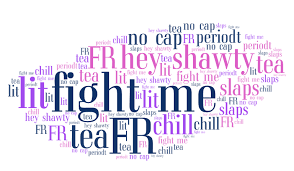
…and, from February, a little puzzle for you. Can you unscramble and reassemble these two-word novelties? (Thanks to simplewordcloud.com)
It’s now July, and my attempts to go on recording this year’s wholly new, or reworked and updated termsand expressions have been interrupted by the need to react to the news-cycle – to the sinister euphemisms, avoidances and untruths perpetrated by war criminals, would-be dictators and their servants in the media. Examples of their language have been added my glossary of toxic terminology and the updated version is here…
John Belgrove reminded me that in May Donald Trump bragged of coming up with a new word – ‘a good word’, but the word in question was ‘equalising’. I have managed nonetheless, with the help of other friends and contacts on Twitter, BlueSky, Instagram and Facebook, to gather a few more examples of lexical innovation, candidates for an end-of year survey in due course…
But I would very much welcome suggestions of other new words and phrases, ideally together with their meanings and comments on their usage in context. All donations will be credited and donors thanked.
Researching and tracking the latest slang can now draw upon statistical analysis of online data.
As 2024 draws to its end and talk among lexicographers, culture journalists and language buffs turns to ‘words of the year’, I’m immensely grateful to Randoh Sallihall of Unscramblerer for providing me with his datasets showing lookups (Google searches) for the most popular recent slang expressions…
Most searched for slang words in United Kingdom:
1. Gaslighting (170 000 searches) – a type of manipulation that makes you doubt your memories and feelings. The person doing it may lie and deny things.
2. Skibidi (125 000 searches) – refers to a viral internet trend featuring surreal, animated videos of singing toilets and dancing heads, popularized on platforms like TikTok for its bizarre humor.
3. Pookie (47 000 searches) – to show endearment and affection. Used for a close friend, partner or family member. A playful way to say someone is special.
4. Hawk tuah (40 000 searches) – imitative of a spitting sound. The catchphrase originates from a viral street interview conducted in June 2024 with Haliey Welch, who stated that her signature move for making a man ‘go crazy’ in bed was to ‘give him that hawk tuah and spit on that thang’.
5. Sigma (37 000 searches) – refers to an independent, self-reliant person who operates outside traditional social hierarchies, often described as a ‘lone wolf.’
6. SMH (31 000 searches) – internet slang for ‘shaking my head’. Used to express disapproval or disappointment.
7. Demure (26 000 searches) – reserved, modest or shy in manner or appearance. The TikTok user Jools Lebron made a series of viral videos using the phrase “very demure”. This trend gave the word a playful slang meaning. She uses it to assess appropriate makeup and fashion choices in various settings.
8. Rizz (25 000 searches) – style, charm or attractiveness. The ability to attract a romantic partner and make others like you.
9. Dei (17 000 searches) – diversity, equity, inclusion. A family friendly way of saying woke.
10. Aura (13 000 searches) – the vibe someone gives off. When used by tweens and teens it is likely a reference to how badass someone is. Aura points make you cooler. So you definitely want to earn more aura points instead of losing them.
We can compare this list with Randoh’s equivalent for the USA, used in the Newsweek article posted previously to which I contributed, and reproduced here with his explanatory comments…
Analysis of Google search data for 2024 reveals the most searched for slang words in America:
1. Demure (260 000 searches) – reserved, modest or shy in manner or appearance. The TikTok user Jools Lebron made a series of viral videos using the phrase “very demure”. This trend gave the word a playful slang meaning. She uses it to assess appropriate makeup and fashion choices in various settings.
2. Sigma (220 000 searches) – refers to an independent, self-reliant person who operates outside traditional social hierarchies, often described as a ‘lone wolf.’
3. Skibidi (205 000 searches) – refers to a viral internet trend featuring surreal, animated videos of singing toilets and dancing heads, popularized on platforms like TikTok for its bizarre humor.
4. Hawk tuah (180 000 searches) – imitative of a spitting sound. The catchphrase originates from a viral street interview conducted in June 2024 with Haliey Welch, who stated that her signature move for making a man ‘go crazy’ in bed was to ‘give him that hawk tuah and spit on that thang’.
5. Sobriquet (105 000 searches) – a nickname or descriptive name given to a person or thing. Borrowed from French sobriquet (nickname).
6. Schmaltz (65 000 searches) – refers to excessive sentimentality or melodrama. Often used for art, movies, music or storytelling if there is too much sappiness.
7. Sen (50 000 searches) – slang for self.
8. Katz (34 000 searches) – a term for anything enjoyable, fun or pleasing. It can also mean ‘yes’.
9. Oeuvre (25 000 searches) – refers to the complete works produced by an artist, writer or composer. A word used by literature professors to express superiority.
10. Preen (20 000 searches) – slang for a child who tries to act like a teenager(wears teen clothes or makeup).
A spokesperson for Unscramblerer.com commented on the findings: “The English language is ever changing. Every year new slang words are created. Many slang words are born through trending topics and viral videos on social media. However only few manage to stick around long enough to be added to the dictionary and remain in daily use. Slang words are a normal and fun evolution of language. We encourage everyone to learn some new words and surprise their children by using them.”
Research was conducted by word-finding experts at Unscramblerer.com.
We analyzed 01.01.2024 -25.10.2024 search data from Google Trends for terms related to slang words.
Methodology: We used Google Trends to discover the top trending slang terms and Ahrefs to find the number of searches. Americas most popular slang terms can be discovered in Google Trends through the keyword ‘meaning’. People will hear or read slang terms and search for the meaning of the term (example ‘demure meaning’). Ahrefs shows many variations of meaning searches like ‘slang’ or ‘trend’ (example ‘demure slang’) and similar keyword combinations (example ‘what does demure mean’). We added up 150 search variations of top slang terms.
A few days after Randoh’s findings were published, I was asked by Robert Milazzo* to take part in the masterclass on new slang and youth language that he convened at Virginia Commonwealth University. The whole lively one-hour event was recorded and can be accessed here…
Robert’s class was particularly illuminating, allowing as it did for contributions from young slang users themselves and from puzzled old-timers too. Bear in mind that the samples handled by data analysts are taken solely from online usage and not from authentic speech. Nearly all the slang used on TikTok, YouTube, Instagram, etc. originates in the USA whereas the slang terms used by British youth in their IRL conversations will differ considerably from their North American counterparts, showing much greater influence from African Caribbean rather than African American sources.
As the campaigning reached its climax and the polling-stations began to open, I spoke to Kate O’Connell and Gemma Chatwin of the Corporate Communications TeamatKing’s College London about the language used by the rival candidates, their aides and their supporters during the twelve months since the election process began. Kate and Gemma’s questions are below with my replies…
As a language specialist, what have you observed/found interesting about the US election?
One thing that strikes an outsider – British or European, I suggest – is the different nature of the vocabulary and rhetoric employed in US campaigning: the seemingly chaotic and unrestrained messaging, pivoting and veering unexpectedly into new areas sometimes, showing a lack of consistency, except in tone (Trump’s particularly). There is actually less reliance on a narrow range of repeated specific keywords, slogans and soundbites than has been the case in UK political campaigning – for Brexit, during the pandemic and in the recent election: (‘Take back control’, ‘Brexit means Brexit’, ‘Eat out to help out’, ‘Stop the Boats’ etc.). The Republicans’ messages have been more consistent in emphasising a few key ‘wedge’ issues while Democrats seemed to take a long time to decide on their priorities in terms of focus.
How has the language used by both candidates differed? What does their language tell us about their campaign strategy/ voter base?
Linguists – myself included – have tried to track the formulations (not so much genuinely new language as reworking of familiar tropes) used by each side and measure the frequency with which particular topics and particular trigger-words recur. Donald Trump has employed a vocabulary containing many examples of the language of fear and violence, and much intemperate language throughout: ‘vermin’, ‘criminal migrants’, ‘the enemy from within’, ‘radical left lunatics’, and words evoking existential threats: ‘invaded’, ‘conquered’, ‘occupied’, ‘deportation’ and violence: ‘kill’, ‘death’, ‘blood’, ‘nuclear war’, ‘guns trained on her face’. One analysis concluded that Trump had used more violent language than any other recent political orator except Fidel Castro!
Trump has consistently favoured the use of ‘I’ and ‘they’, Harris more often emphasising ‘we’. The Democrats on the other hand, while perhaps favouring less inflammatory language have possibly failed, until the closing days of the campaign (‘neighbors not enemies’ is a last-minute exception), to find memorable, resonant phrases to inspire and motivate. While initially hesitant, and despite Kamala Harris being accused in the more distant past of ‘word salads’ the Democrats, apart from Joe Biden, have been measurably more coherent, while many of Trump’s recent performances have been criticised as meandering if not incomprehensible. His justification for this being that he is practising ‘the weave’, a sort of improvisational incantation that his followers appreciate.
We have seen a lot of name-calling in the 2024 election, has it been effective?
A famous example of a slur which seems to have worked is Tim Walz’s characterising of Trump and the Republicans as ‘weird’. This is effective since the word is not especially offensive or toxic but frames the opposition as odd, eccentric, unstable in worrying ways, by implication disturbing – a relatively casual criticism of a community that is old and out of touch with reality. The Republicans accusing ‘immigrants’ of eating pet dogs and cats and likening Puerto Rico to a ‘floating island of garbage’ outraged their opponents, though Joe Biden also came unstuck when he reached for the same metaphor. It’s notable that both sides have used proxies to deliver some of the most stinging criticisms of the leaders, rather than have them delivered by the candidates themselves: ‘childless cat lady’ for example, or ‘unhinged, unstable, unchecked’ – words supplied by former Trump aides and reposted by the Democrats. One rather surprising blip in the unfolding news cycle occurred when Harris suddenly approved the f-word, agreeing when it was suggested to her that Donald Trump was a ‘fascist’. He quickly returned the insult, adding the ‘N-word’ which everyone had so far avoided: ‘I’m the opposite of a Nazi’. Both sides seem to have tacitly put those words aside for the final phase of the campaigning, though tellingly, in a final peroration J.D Vance urged followers to ‘take out the trash’ in reference to the Vice-President.
I think that outsiders listening in bemusement or horror at the campaign rhetoric misunderstand the nature of the voter bases involved. Doom-laden warnings and threats and angry braggadocio can be effective, reassuring and motivating to an audience for whom ‘make America great again’ carries a conviction that the country is at the mercy of hostile forces and on the edge of social breakdown. Conversely Kamala Harris’s more upbeat, feelgood emphasis attempts to instil a cheerful positivity which may not always have been backed up with hard facts or firm commitments(apart perhaps where reproductive rights are concerned).
Could this be the first election won on TikTok?
Kamala Harris’s folksy reference, early in the campaign, to having ‘fallen out of the coconut tree’ cleverly appealed to a family audience and referenced her own potentially controversial heritage in a positive way.She has also tried, seemingly with some success, to tap into the female and feminine constituency and the relatively youthful energy displayed by users of TikTok, a platform which avoids threats and displays of anger and relies on self-promotion, performances of success and – crucially – an element of self-mockery and humour that is entirely missing from Donald Trump’s repertoire. TikTok currently occupies the high-ground of the social media landscape and is a valuable channel by which to reach millennials and GenZ (the latter voting for the first time) millions of whom are potential democrat supporters. It does not reach, however the middle-aged or elderly undecided.Celebrity endorsements apparently can motivate potential non-voters to change their minds and vote, but unsurprisingly probably only affect a demographic which is already on-side anyway (‘Swifties’ for example who are said to have added 400,000 votes to Harris’s tally). Elon Musk’s embracing of Donald Trump is more difficult to assess, as Musk’s own fanbase – tech bros, startup promoters and bitcoin traders among them – aren’t necessarily effective multipliers or influencers on his behalf or Trump’s and perhaps less likely to sway the undecided.
How did brat summer and ‘vibes’ benefit Kamala Harris’s campaign?
When pop icon Charli XCX posted her endorsement on X, ‘Kamala IS brat’, young women flooded social media with pro-Harris ‘brat’ memes, kickstarting her takeover from Biden and effectively labelling her as endearingly ‘messy, honest and volatile.’ The democrat campaign switched up to make good use of the tropes and tendencies of pop culture and entertainment media, receiving endorsements from many musicians and Hollywood names, culminating in their candidate’s surprise appearance on Saturday Night Live in which she launched viral versions of her own name -‘End the drama-la’, ‘Cool new step mom-ala’ and returned to that conflicted keyword, asserting that she would be able to open the ‘doors of the garbage truck’ that Trump had fumbled with. This confident banter in the very last moments of the campaign, along with her pivot, after Bill Clinton’s disastrous intervention, to promising some sort of support for Gaza, can only help the democrats’ chances, and these messages are featuring in places that Trump cannot usually access. Nevertheless the Republican candidate is doubling down on his insurrectionist rhetoric, welcomed by his base, saying now that he ‘should never have left the White House in the first place’.
My friend Serena Smith wrote perceptively for Dazed magazine about the role of celebrities in the presidential race…
Once the race was over the avalanche of post-mortems and recriminations began. Among them were a few which focused, as I had tried to, on the discourse of division. In the New YorkerJoshua Rothman considered the very different flavour of the two parties’ language…
“Id been spending a lot of time watching interviews with Kamala Harris and Donald Trump – conversations that tended to be below average. On shows like “60 Minutes” and in her CNN town tall, Harris had been charming and trenchant but also repetitive and inflexible. Restrained by her determination to stay on message, she often failed to answer questions directly. Trump, for his part, lied, rambled and spouted nonsense as usual. And yet his lack of constraint at least made him entertaining…
…Harris and Trump’s flawed performances were typical of the duelling communications styles now wielded by Democrats and Republicans. Broadly, Democrats preach while Republicans riff; Democrats stick to their messages while Republicans let loose with whatever comes into their heads.”
In the GuardianNesrine Malik convincingly dismantled the lazy consensus that held that the result was a defeat for the Democrats’ supposedly embracing ‘woke’ policies and relying on endorsement by ‘woke’ celebrities…
Dictionary makers and journalists are breathlessly – if not desperately – publicising the latest online language – but do they really understand it?
One week on, I spoke to Chloe MacDowell of the UK Guardian newspaper, then to Marni McFall of the US Newsweek magazine on the topic of TikTok language and the online messaging mannerisms of Influencers and GenZ. Chloe was interested in one particular trending TikTok catchphrase, Marni in the whole panoply of 2024’s viral innovations.
Once authentic conversations and personal interactions (previously happening in private spaces or local communities) began to feature on the internet and in messaging and on microblogging platforms, language novelties, slang and faddish usages crossed over from a private realm into the global public domain. The latest slang and new language was visible, audible and immediately available to share. Obscure or exotic terms might quickly catch on and become viral favourites, spreading in some cases across the anglosphere more rapidly than print, broadcast or word-of-mouth transmission had ever been to achieve in the past.
Words and phrases began to function like memes, taking on sometimes a ‘multimodal’ aspect whereby sound and image could reinforce the purely verbal expressions that people chose to exchange and promote. Pre-internet there had always been catchphrases, what linguists call ‘vogue words’, slogans and soundbites, and keywords that somehow seemed to evoke or encapsulate some special aspect of the ‘zeitgeist’. What we have now is a much more knowing, deliberate intention (on the part of trend-setters, influencers, ‘thought-leaders’) to create new language to celebrate new identities and to promote new attitudes and lifestyle innovations to the widest possible audience.
Subcultures like surfers, valley girls, fanboys and girls, hip hop aficionados had always invented striking, expressive language and this is still true, but instead of niche culture we have ‘meganiches’, instead of subcultures we are dealing with globalised communities.
The fashionable language of TikTok and GenZ in particular is part of their wider obsession with vibes, aesthetics and microtrends, many of which arise and are discarded in rapid succession. The prevalent style is exhibitionist, self-promoting, allusive and often ironic, increasingly even absurdist, making it hard for outsiders to grasp the nuances in play. Older commentators and dictionary publishers struggle to keep pace, often misunderstand and record the terms in desperation (in their searches for ‘word of the year’ for example) just as they fall out of use.
The use of this language as an identity marker in an intensely competitive digital ecosystem means that the Gen Alpha cohort now ridicule GenZ usages as being out-of date, while GenZ is still deriding millennials for their old-fashioned ‘cringe’ vocabulary. At the same time would-be influencers practise bragging, ‘manifesting’ and other forms of self-congratulation in a search for clicks and clout.
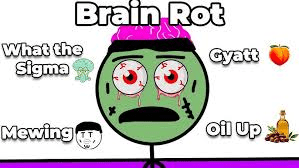
One of the latest features of online wordplay is the elevating of an older concept or cliche into a teasing provocation or pretence at new insights, as we have seen with ‘delulu’, ‘demure’ and ‘mindful’, ‘rizz’ and ‘brat’. The current rash of declarations of ‘being privileged’ – a new version of ‘humblebragging’ or ‘virtue-signalling’ – is another example. In parallel is the ironic celebration of the incoherence or absurdity of much online discourse and of low-quality ‘slop’ by embracing a culture of ‘brainrot’ – nonsense memes such as ‘skibidi’ and vacuous, contagious content.
Most of the innovation in online language and image still emanates from the US and even though a global audience can access it instantly, its tropes (think ‘goblin-mode’ – ‘goblin’ doesn’t have the same associations for Brits) don’t always translate for other speakers of English. In parallel, poses, gestures and looks as well as music-related modes are increasingly generated from non-English cultural zones such as Japan and Korea. It will be interesting to see if other parts of the globe begin to play a part in the evolving online theatre of signs and behaviours, but this doesn’t seem to have happened yet.
On the first of November Collins Dictionaries, ahead of the pack, had already announced their choice of word of the year for 2024, and their candidates illustrated the same, in my opinion mistaken, concentration exclusively on terms from a very narrow range of sources. While postings on social media are performances designed to attract attention, there is an even wider domain in which discourse demands analysis: the crises in the Middle East and Ukraine and the surreal spectacle of the US presidential campaigns, for example, are also highlighting keywords and generating new formulations or reworkings of language – data that mainstream media and lexicographers seem to think unworthy of their attention…
Digital media enables language change and innovation – of course, but how much and for how long?
I spoke to Caitlin Talbot, Culture Researcher for the Economist magazine, who asked me about the effect of TikTok talk and the slang, catchphrases and viral puns invented by Gen Z. Caitlin wondered how many new terms were actually being added to the global conversation each year, and whether these novelties would last.
My own solo attempts to record new language and to understand and comment on its sources rely on fairly haphazard, old-fashioned techniques, so it’s not possible for me to quantify the lexical items, locutions, expressions and longer elements of discourse that I come across. The major dictionary publishers do have access to powerful and sophisticated electronic methods of scanning, scraping (‘aggregating’ as it should more properly be termed) raw linguistic data from across the internet. This material can be categorised to a certain extent and entered into giant databanks from which lexicographers can select the terms they periodically admit into published dictionaries.
Attempts to amass and analyse examples of language in use are nonetheless hampered by several considerations: the language in question is primarily in the form of text, rather than authentic speech, and the texts in question are largely recoverable from published sources and media platforms, only to a limited extent from personal messages. Tracking their use over time is possible, and the popularity of some usages can be subjected to frequency counts and represented on timelines, but private use and communications by local and specialist communities is far harder to assess. One of the more interesting challenges to the lexicographer is to predict which novel terms may become embedded in the national conversation and which drop out of use – some almost immediately and others over time. In fact my experience (since I began to collect slang in the 1980s) proves that it’s impossible to predict, let alone to speculate as to why this happens.
Caitlin’s article, with useful links, is here…(if it is paywalled for you, go to here *)
In speculating about the number of new terms generated (and the playful, sometimes absurdist tendencies featuring on social media involve not only inventing new terms but reworking and re-purposing existing language like ‘demure’, ‘babygirl’, ‘millennial pause’, etc.) we can only fall back on subjective, anecdotal, incomplete accounts, even if these may be interesting and informative in their way…
THE WORD “demure” is old—it describes the sort of modest lady Victorians esteemed—but it is freshly fashionable. There are some 800,000 posts on TikTok with the tag #demure. Youngsters today are using the word with lashings of irony, invoking it to describe everything from Saturn to sunset to New York City’s bin service.
TikTok is changing how young people talk. Other fusty words, such as “coquette”, are fashionable again. Colloquialisms are on the rise: members of Gen Z say “yapping” instead of “talking” and trim “delusional” to “delulu”. New words have also become popular. Take “skibidi”, a term popularised by a meme of an animated head singing in a toilet; it means “cool”, “bad” or “very”, depending on the context.
On social media words spread far and fast. At least 100 English words are produced, or given new meaning, on TikTok a year, reckons Tony Thorne, director of the Slang and New Language Archive at King’s College London. Some linguists think the platform is changing not just what youngsters are saying, but how they are saying it. A “TikTok accent”, which includes “uptalk”, an intonation that rises at the end of sentences, may be spreading.
The platform’s versatility encourages experimentation. Users can combine audio, text and video in a single post. That means words that sound especially satisfying can go viral, as well as those that are memorable in written form. Linguistic code has emerged, dubbed “algospeak”, to dodge content-moderation algorithms. It includes euphemisms (sex workers are called “accountants”), and misspellings (“seggs” instead of sex).
The mutation of language on TikTok is also due, in large part, to the age of its users. Most are 18-34 years old. That matters because “Young people are language innovators,” says Christian Ilbury, a linguist at the University of Edinburgh. For decades youngsters have created words to distinguish themselves from adults. On social media such neologisms find a big audience. Mr Ilbury describes this as “linguistic identity work”; parents have long called it attention-seeking.
The platform brings together fan groups and communities, from #kpopfans (people who like Korean pop music) to #booktokers (people who love reading). These groups create their own slang, says Adam Aleksic, a linguist and influencer. Some of it leaks into the mainstream. Other slang comes from specific groups: black people have innovated and spread hundreds of English words over the years, from “cool” to “tea” (gossip). Journalists and screenwriters popularise such words; now TikTokers do, too.
*For help in understanding the language and online mannerisms of TikTok and GenZ, I’m grateful to my daughter, Daisy Thorne Mrak*
Teen talk continues to baffle older cohorts, but as autumn approaches the vibes shift – and Tiktok identities evolve…
In mid-August I talked to Mary McCarthy about the ever-changing patterns of youth language, and, with her kind permission, Mary’s article for the Irish Independent follows…
No cap, sigma and rizz? You’ll need more than Google Translate for teen talk now
Parents are supposed to be bemused by the slang words their children use, but the new summer vocab in our house has me totally flummoxed. This is particularly so with the younger two lads – eight and 11 – who walk around saying nonsense words like “sigma”, “no cap” “Skibidi Toilet” and “gyat” all the time.
I don’t mind them having in-jokes, and it’s nice to see them falling around laughing – I’ll take that over sullen moods any day. But what are they laughing about?
Are they being kind? I can see the pleasure of getting the giggles over absurd stuff. I used to have this thing with a school friend where we would say repeatedly “The dog is dead” in a Northern Ireland accent – no idea why. But there is so much coming at them now online. How can I know they won’t soak up the wrong messages? The Andrew Tate alpha-male rubbish, for example.
This week I hired my Gen Z 16-year-old to help me decode what his brothers were saying, and he pocketed his €5 before unhelpfully telling me that “it’s just little kids saying random, mental stuff”.
“It’s the internet, it’s TikTok language,” he said. But they don’t have TikTok, I reminded him. YouTube shorts are the same and they have a lot of that, he told me darkly.
So I asked the lads themselves, and they were fairly keen to enlighten me, which was reassuring. “No cap” means no lying, “sigma” just means cool (no Andrew Tate alpha-male link, thank goodness) and rizz is “charisma”.
My 11-year-old elaborated. “So, this would be a chat-up line like, ‘Are you from Tennessee? Because you’re the only ten I see’.” I’m unsure what to say. They refused to explain “gyat”, so I looked it up later.
It mostly seems fine. They’re getting it from pals and YouTube shorts, which I will limit more now. But what I’m most baffled about is the Skibidi Toilet YouTube show, and why they call everything Skibidi for no reason.
The show has amassed over 65 billion views over the last year, and I can’t see any pull factor. It’s about toilets with human heads engaged in a war with people who have CCTV cameras for heads, all set in a dystopian landscape. Apparently, there will be a TV show and a movie. I had a headache watching it after 30 seconds.
Youth slang can spread very quickly these days via online platforms and messaging
It’s everywhere. We were on holiday in Kerry a few weeks ago and had a few hours to kill in Kenmare, so we visited the Kenmare Stone Circle, which was erected some time between 2000 and 500 BC. If you clip a wish at the Hawthorn Fairy Tree, it comes true. That’s according to the man working there, who handed us a piece of paper and a pen.
Being my nosy self, I immediately started reading other people’s wishes, and among the pleas for health, happiness and planning permission there were lots of Skibidi.
“Sigma, sigma on the wall, who is the Skibiest of them all?” one card read.
“Desidere che i cani diventine Skibidy Toilet,” read another, which Google translate told me was “Wish that dogs become Skibidy toilets” in Italian. So it’s not just my children larking around. I’m sure it’s all just a silly phase, perhaps the same as my own “the dog is dead”.
Tony Thorne, director of the Slang and New Language Archive at King’s College London, said young people have always created their own language to keep outsiders like parents and teachers out. It just happens that there’s more around today.
“This language innovation, as linguists call it, used to take place in private spaces and only sometimes spread further – if, for example, the language was used in music or movies or TV comedies,” he said.
“Youth slang can spread very quickly these days via online platforms and messaging and so can become global. Terms often coined in the US rapidly move into the Anglosphere. We see that in the huge network of English speakers who converse excitedly in ‘mid-Atlantic’ accents.”
Thorne recommends the guide to teenage slang on the Gabb.com website. I soon discovered that “gyat” is a way to express admiration, usually for a woman’s backside. So I nipped that one in the bud.
It is a habit for parents and the older generation to laugh at teenagers for speaking in a frivolous way
Once you start researching the origins of these words, it gets interesting. According to a recent Forbes article on how Gen Z language is changing the workplace, to “slay” – which is something my 13-year-old daughter says, as in “You slayed that lasagne, Mammy” – means “high praise” and originated in black and LGBTQ+ communities before gaining popularity on TikTok.
I can’t remember using much slang as a teen, apart from the many violent descriptions we had for being drunk, among them flutered, slaughtered, battered and trollied.
My cousin would visit from Canada, and she loved hearing those terms. Today, though, there’s no difference between what a 15-year-old in Dublin and a 15-year-old in Toronto is exposed to, and they’re the more creative for this. After all, the way we learn to speak is from listening to other people, so we probably don’t really need to worry much about the slang.
Kevin Barry, former professor of English at the University of Galway, said that while adults can see it as foolish, there’s a wisdom to the newly minted words and phrases.
“It is a habit for parents and the older generation to laugh at teenagers for speaking in a frivolous way – to the adults it makes no sense. What they are seeing is the frontier of language change, which is a creative Wild West,” he said.
There’s no point trying to keep up. New slang will be coined as fast as I learn. We can’t police it. The only thing to do is role-model IRL (in real life) what it is to be a nice person. To not shout, to be kind, to make time for the children. To let them know you have high expectations for their behaviour by having high expectations for your own – no cap.
The dominance of memes and viral posts from the USA celebrating a brat summer was challenged in late August by a TikTok injunction to ‘be demure and mindful‘ in all one’s actions and representations. Alternative and mainstream media jumped quickly aboard the accelerating bandwagon – and Ellie Bramley of the Guardian asked me to comment…
‘Demure‘ is a seemingly prim and dated adjective, used recently only by rueful babyboomers and tabloid journalists, for whom it is code for ‘not completely undressed’ when describing female celebrities attending film festivals, tottering along red carpets and catwalks. In drag queen and ‘ballroom LGBT‘ circles, though, it has long featured as a self-mocking keyword when urging the outrageous, usually ironically and teasingly, to behave with modesty and decorum. It is in this spirit that ‘fierce divas’ and other influencers have relaunched the term, along with ‘mindful‘ in its older sense (before the advent of self-seeking ‘mindfulness’) of considerate, respectful and cautious. The Guardian piece is here…
It’s very easy to dismiss GenZ and TikTok fads as shallow, ephemeral provocations, unworthy of the attention of rational adults. Easy, too, to deride aged babyboomers like me who record them and attempt to analyse the thinking behind them. But as Ellie herself remarked, a keyword like ‘demure’, inasfar as it isn’t just an absurdist gesture, can not only signify a genuine shift in self-awareness on the part of a few influential online individuals, but can prompt reflection and even changes in behaviour among a much larger segment of the population.
With that in mind, from Laura Pitcher, here’s Dazed‘s perceptive take on the word of the moment…
It’s my responsibility, despite my very advanced age and despite the linguistic distractions from war crimes abroad and political meltdown at home, to try to keep track of the latest slang. For some time Gen Z, the population group born between 1997 and 2010, has been torchbearer for the zeitgeist, via TikTok, Instagram and YouTube, promoting such novelties as influencer-talk and its accelerated succession of fads and looks known as aesthetics or vibes (search this site with those keywords for more on all of these).
Now, in early May, help arrives in the form of a diatribe by 21 year-old LA-based singer-songwriter Allegra Miles, calling out aging millennials for their use of dated terminology and urging them to update themselves with Gen Z’s newest catchphrases and slogans. Allegra’s translations attracted the attention of the mainstream media in Australia and the UK and you can read them here…
But Allegra’s generation are no longer the youngest on the block, and I’m curious as to how Gen Alpha – those born between 2010 and 2024 – will modify existing language and generate their own novelties. Tiktok influencer Nicole Pellegrino comments here…
Unfortunately, attempts by parents and teachers to get to grips with their students’ new ways of expressing themselves are embarrassingly inept, if well-meaning. Witness this glossary of terms, one of several ‘guides’ published this year, that is actually a ragbag of well-worn language items favoured by younger millennials and Gen Z…
I’ll continue, from my distant vantage point, to investigate, but my post is, then, an appeal, to any members of Gen Alpha (or their siblings, classmates, neighbours) who bother with online blogs or antique social media platforms, to send me samples of their favourite expressions. I’ll add these to my databases and write about them in due course.
In fairness, I should also list one of several similar articles published recently, again by the Daily Mail in this case, but whose source (the Curry’s electronic retail group) is perhaps not exactly representative of the age-group it describes…
*For help in understanding the language and online mannerisms of TikTok and GenZ and Gen Alpha, I’m especially grateful to my daughter, Daisy Thorne Mrak*
I have written several times on this site about new language and novel forms of expression generated by Generation Z and about how evolving attitudes, fashions and social behaviour among younger cohorts translate into a multimodal mix of verbal and visual on platforms such as TikTok. I have argued that older generations should not ignore or deride the unfamiliar and often baffling messaging practised by ‘the youth’, but try to understand and engage with it. During the slow, fraught, trying first weeks of 2024 the UK’s mainstream media has for the first time begun to pay some attention to the new language appearing online and on the street.
Earlier in the month my friend, Financial Times journalist Emma Jacobs, wrote about intergenerational language differences and resulting misunderstandings in the workplace. Her article, which quotes me, is here…
Dr Christian Ilbury, quoted in that article, added this caveat subsequently: “it’s just HRTs + memetic discourse styles which keep the audience engaged (linked to platform capitalism) not a *new accent*”. Christian had previously helped to explain the latest incarnations of the once taboo c-word…
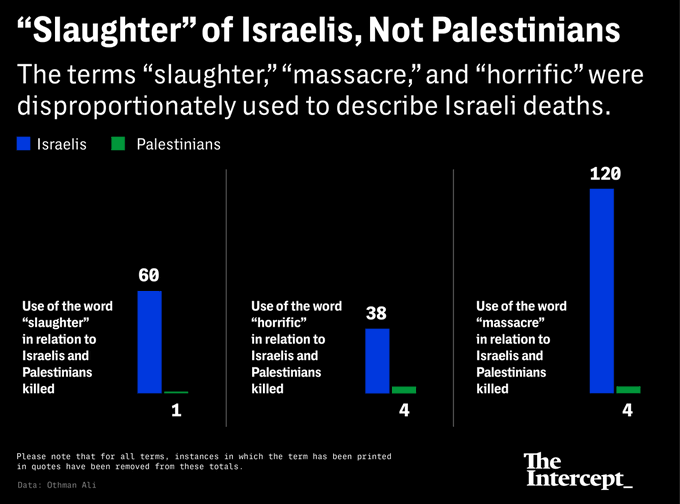
In distressing contrast, the news cycle has been dominated throughout the month of January, in fact since October last year, by far less frivolous concerns. The Israeli-Palestinian conflict in a very different way has generated language (‘administrative detention’, ‘the other team’, ‘educide’, ‘nakba 2’) – or recycled older terminology (‘ethnic cleansing’, ‘demilitarization’, ‘collateral’) – which is controversial and which demands analysis. While recording the language of Donald Trump, of Brexit and of the Covid pandemic, and once again, while tracking the atrocities taking place today, I have been conscious of distortion, untruths, avoidance and manipulations practised both by the participants in the conflict, by their allies or sponsors, and by those who should be reporting on it objectively and, where possible, impartially. It is by scrutinising their language and treating public and media discourse critically, by exposing bad faith and countering falsehood that linguists can make some small contribution to the global conversation taking place.
Linguists have begun to discuss the ways in which facts and opinions are being presented to the public and to unpack the assumptions and covert intentions of those controlling, or attempting to control the narratives in question…
For my part I am collecting new examples of contentious language relating to the middle eastern crises and adding them to my existing glossary of weaponised words and toxic terminology on this website. I would be very grateful for contributions from readers and will acknowledge these in upcoming posts.
During October I relished the chance to talk to the editors of DazedDigital, Serena Smith and Gunseli Yalcinkaya, and they told me about the most recent developments in online and digital communication and the new language varieties trending on social media. I have tried to make sense of a much younger generation’s performances and interactions and the notes I made follow here…
Language and the way we use it is now for the first time truly globalised. This means for example that new accents and intonations and vocal affectations take place across several cultures almost simultaneously. This gives us pronunciation and intonation novelties like Youtuber or Influencer accent, TikTok voice, etc. These are fluid, evolving and can blend more than one traditional source (UK and US linguistic styles and usages for example). The phenomenon is not new – the mid-Atlantic accent dates back many decades and both Valley Girls and users of Multiethnic London English – MLE – have played with new ways of pronouncing, but the platforms and apps of the 2020s – TikTok in particular – highlight these…
Obviously the way we consume and exploit media has changed radically with the internet and mobile technology and determines the kinds of messages we exchange and the words, sounds and visuals we actually use. Short attention-spans mean that messages need to be accelerated, brief and telling: the constraints of apps and platforms make for compressed and dense information packages. At the same time the imperative for innovation (something that has always been part of language evolution, but used to happen very gradually) – novelty, neologisms, new and more liberated attitudes to formality and informality and style in general – is integral to changing fashions, aesthetics, vibes. Even such basics as whether messages have to make sense have been destabilised by Gen Z‘s playful surrealism and absurdism and TikTok’s creative conventions.
One major change is the way that the distinction between written and spoken language has broken down since people began to type conversations and exchange rapid interactions electronically. Also Pre-existing words and expressions are hijacked, reversed, toxified, appropriated and modified as never before. And we all now have the power to do this via electronic media – we don’t need permission to publish and exchange our ideas and indulge our playful, mischievous or creative new usages.
Gunceli asked, There are so many memes joking about how we’ve ‘progressed past the need for language’. Obviously worth taking with a pinch of salt, but do you think there’s any truth to this?
We won’t evolve ‘beyond language’ since language is simply a label for human interaction and communicative practices, but the specifics of that language will continue to adapt and mutate along with our social needs and our technologies. Linguists do talk increasingly in terms of multimodality whereby both online and offline communication involves much more than speech or writing – ‘language’ as we have known it. The buzzword multimodality can refer to how IRL we blend all sorts of semiotics often simultaneously: stance and posture, facial expression, gesture, writing, speaking and using a communication device, but also refers to how online and app messages employ abbreviations, acronyms, audio, video, symbols, memes as well as or instead of words (…soon probably touch and smell as well!)
The NPC streamers phenomenon highlighted by Dazed is another example of what I described as GenZ and TikTokers’ minimalist, surrealist or absurdist treatment of language. NPC stands for ‘non-playable character(s)’, the digital background entities with a limited repertoire of utterances and repetitive actions encountered in video games, and the streaming is an online activity, primarily on the TikTok platform, whereby creators imitate these characters by livestreaming themselves, and viewers reward them with in-app gifts for doing it.
The new primacy of image (and audio) over simply text and conversation has resulted in a human imitation of cartoon sounds and seemingly meaningless bits of language that only followers and enthusiasts will recognise and be positively triggered by. Playing with identities by way of words, slogans, soundbites and catchphrases is as much influenced by the poses of cosplayers or Furries and the behaviour of video-gamers as it is by ‘traditional’ ways of using verbal and visual language.
How do you think the mainstreaming of emerging tech like AI is changing the way we communicate verbally with one another?
Algorithms being used for automated reasoning and the generating of persuasive messaging or content are already operating at sophisticated levels, but the linguistic aspect is just as much prey to error and detectable failures as, for example, deepfake images and impersonations of artistic productions. If we are digitally literate and managing to keep up, we can often see through the deception, and this is probably reassuring. AI has some interesting potential: for example, to allow us to communicate with people whose language we don’t share. But I think the limitations of AI(-its difficulties in interpreting or reproducing human nuance, implication, indirectness, etc) will lead to – is already leading to – new forms of incoherence and misunderstanding. I suspect we will soon be able to recognise a particular ‘AI style’ so that artificially generated messages can be recognised as such in some cases – at least I hope so! Translators and teachers are already grappling with potential of AI to assist, supplement or replace their work – and its limitations in doing so. More alarmingly AI is already inventing and using languages that we humans can’t understand: https://www.fastcompany.com/90132632/ai-is-inventing-its-own-perfect-languages-should-we-let-it
Gunceli’s fascinating review of all these themes and more is here…
Serena Smith spoke to me about the latest version of familect, the intimate, informal, often comical language invented in private domestic spaces, about which I’ve written before on this site. Her excellent account of TikTok’s #MarriageLanguage is here…
Fads, Fashions, Lifestyles and Vibes – thirty years on
During 2022 I wrote several times about the new terminology that has been generated by younger generations’ (younger Millennials and so-called Gen Z or Zoomers) online celebration of an accelerated series of Fads, Fashions and Cults (the title of my book on the same topic published back in 1993). I was bemused, but not surprised that my articles and posts received little attention. Those over 40, even if active online or otherwise in touch with the wider culture, seem to pay no attention to what their children and grandchildren are saying, or perhaps just view their activities on social media as trivial, frivolous and ephemeral*. It’s slightly absurd that someone of my advanced age should be trying to record and comment on youth-based popular culture, but, just as back in the nineties, only a few fashionistas and influencers and a handful of style journalists manage to achieve any sort of critical perspective on the high-speed succession of poses, performances and pastiches that plays out on 21st century cyberspaces (and incidentally in teenagers’ bedrooms and college dorms too).
At the end of the year, however, I was asked to contribute to a major press review of these same phenomena, and discussed them with the MailOnline’s science reporter, Fiona Jackson. Fiona had picked up on recent mutations in slang and online jargon, in the novel use of emoji and punctuation, and changes, too, in the accents and intonations used on platforms such as TikTok – in particular the voice affectation known as ‘vocal fry.’
It’s interesting that Gen Z is seen as having a particularly exotic or impenetrable vocabulary, baffling and irritating parents, teachers, journalists and anyone too old to keep up. Inventing new words and changing the meanings of old ones, though, is something that each generation does (see UK millennials with their MLE – Multiethnic London English) and is a natural part of language. Accent is another essential component in curating and projecting one’s identity. ‘Vocal fry’ or ‘creaky voice’ first got noticed and was fiercely debated in the USA in 2015. The low, raspy growling voice tone favoured by female US celebrities has since been imitated by some younger people in the UK, and by British ‘influencers’ online, but not to the same extent. What I have noticed is not specifically vocal fry but something newer and more complex: a UK accent favoured by fashionable younger females which mixes a sort of high-pitched, lisping breathless ‘girly’ delivery with a lower-pitched drawl that can slide in and out of American intonations. Something like this is now prevalent, particularly on TikTok which is where Gen Z goes to influence and be influenced.
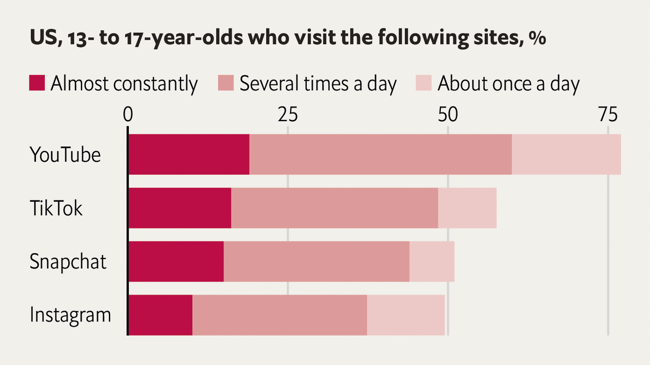
In the US now 63% of people aged 13 to 17 use TikTok weekly, a rate that now tops both Snapchat and Instagram. TikTok is also the go-to environment for the celebration of youth fads, fashions and lifestyle trends, not to mention the parodies, mash-ups, spoofs and in-jokes which are central to its video performances. Older people trying to keep up or simply to comprehend what is happening on TikTok or understand what Gen Z is saying and messaging should however beware: I have a suspicion, shared by a few other commentators, that many of the fads, fashions and trends they celebrate (they call them ‘vibes’ or ‘aesthetics’) are not really taken seriously at all by most of them, are passing fancies or simply spoofs perhaps designed to mock the tedious concerns of outdated millennials. Fashionable new ‘looks’ like so-called ‘goblin-mode’ which has, unusually, been noticed and publicised in the mainstream, have been appearing and disappearing on Gen Z platforms with a bewildering speed (see ‘cottagecore’, ‘blokecore’, ‘hag chic’, ‘frazzled English woman’, etc.).
Gen Z, as they come of age and begin to access power and influence in mainstream society, will inevitably affect the way we collectively behave and of course communicate. But there is an interesting phenomenon that those like me who try to track slang and new language have to face up to. That is that it’s quite impossible to predict exactly how language is going change. No so-called linguistic authorities have ever been able to guess how technology and society is going to mutate, or how fast, or which aspects of human behaviour will come to predominate in the future – even in the near-future. Gen Z may settle down into family life and work and become distracted by adult responsibilities, just as we once-radical Boomers, muted, tortured Gen X and much misunderstood millennials have done before them. Or perhaps they will not, and will manage to realise the boomers’ dream of staying radical, innovative and young forever? How their destiny plays out will dictate what they say and how they say it (and they will have to find ways to negotiate their obsessions and describe their changing environments), but I, for one, don’t dare to hazard any more than that.
*She’s much younger than 40, but journalist Marie le Conte struck a contrarian note in the New Statesman, suggesting that we shouldn’t be interested in Gen Z’s predilections…
Its finger still on the pulse of the zeitgeist, the Mail followed up with a warning to older generations that Gen Z disapprove not only of their language and their emoji use, but of their gesturing too (unsurprisingly the hand-signals castigated are all part of my own sad repertoire)…
At the end of January I talked to Karyn Hay of Radio New Zealand about Generation Zed (the preferred term in Wellington and Auckland), their language and online activities…
In February 2023 King’s College London Faculty of Arts and Humanities, host to my Slang and New Language Archive, featured my activities in their Net Gains series…





















 tony thorne