INITIAL FINDINGS

more updates on 2025’s language landscape

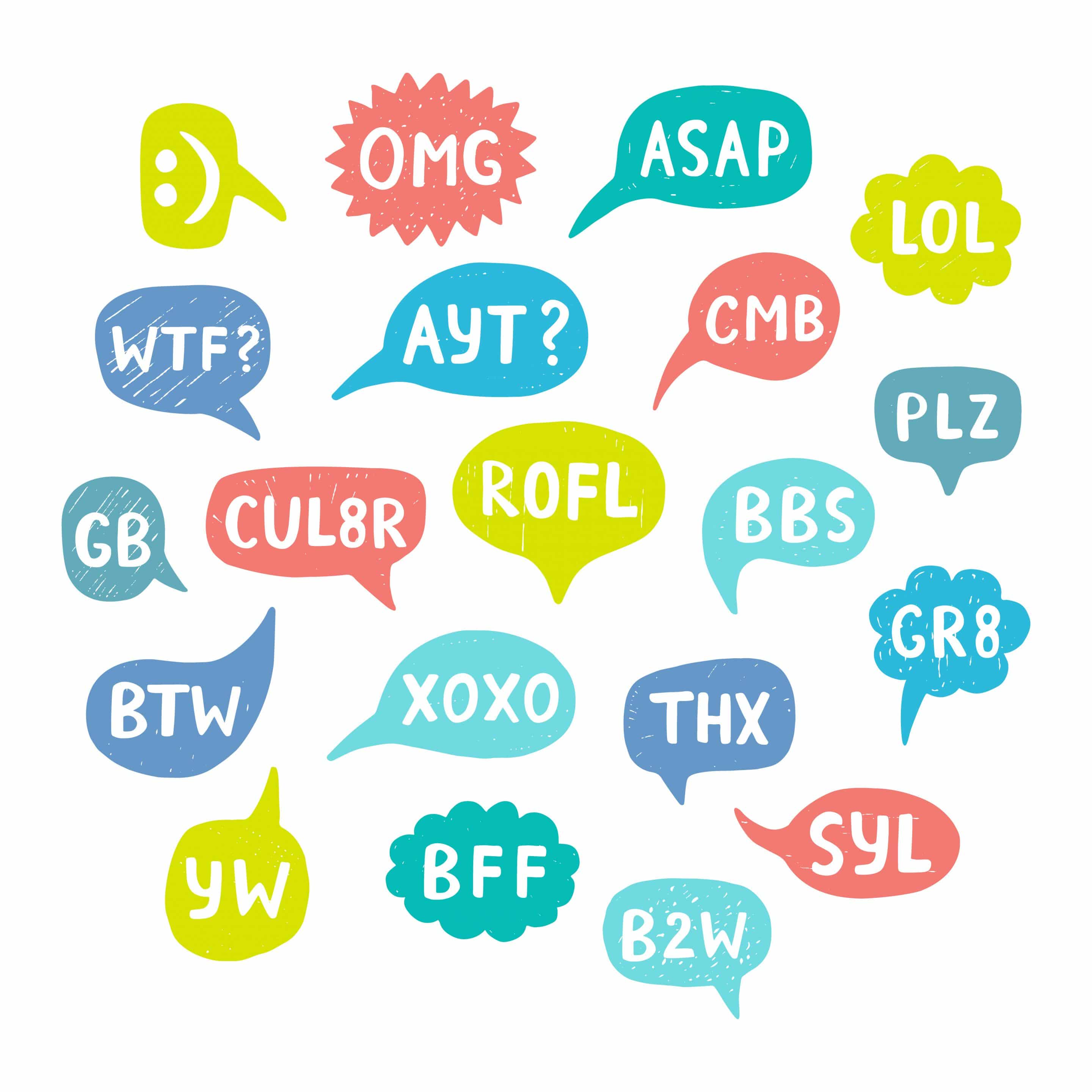
Once again, I’m very grateful indeed to Randoh Sallihall of Unscramblerer.com for sharing his data on language usage online. I previously posted his analysis of last year’s slang lookups (online searches)* and this time his findings reveal the most popular internet text abbreviation lookups in 2025 so far, for the UK and the USA. I was amused to see SMH (‘shaking my head‘) featuring high in both lists. A few years ago I confidently stated in a BBC radio interview that this stood for ‘same here’ – as I had just been informed by a group of schoolkids. I was immediately and publicly corrected – and shamed – by presenter Anne McElvoy and invited journalist Hannah Jane Parkinson and the bitter experience has stayed with me.** It may be culturally significant also that Britain’s favourite apology – in the form of SOZ – doesn’t feature at all on the American list.

“Analysis of Google search data for 2025 so far reveals the most searched for text abbreviations in the UK.”

Most searched for text abbreviations in the United Kingdom:

1.      POV (39 000 searches) – Point of view.

2.      SMH (34 000 searches) – Shake my head.

3.      PMO (28 000 searches) – Put me on.

4.      ICL (17 000 searches) – I Can’t Lie.

5.      OG (16 000 searches) – Original gangster.

6.      OTP (16 000 searches) – One true pairing.

7.      NVM (13 000 searches) – Never mind.

8.      TM (11 000 searches)- Talk to me.

9.      SN (7 000 searches) – Say nothing.

10.   BTW (6 000 searches) – By the way.

11.   KMT (6 000 searches) – Kiss my teeth.

12.   FS (6 000 searches) – For sure.

13.   WYM (6 000 searches) – What you mean.

14.   HRU (6 000 searches) – How are you?

15.   ATP (5 000 searches) – At this point.

16.   SYBAU (5 000 searches) – Shut your b—h ass up.

17.   IGHT (5 000 searches) – Alright.

18.   ONB (4 000 searches) – On bro.

19.   WSP (4 000 searches) – What’s up?

20.   TY (4 000 searches) – Thank you.

21.   SOZ (3 500 searches) – Sorry.

22.   IDC (3 000 searches) – I don’t care.

23.   LDAB (3 000 searches) –  Let’s do a b-tch.

24.   PFP (3 000 searches) – Picture for proof.

25.   IBR (3 000 searches) – It’s been real.

26.   IYW  (3 000 searches) – If you will.

27.   TB (2 500 searches) – Text back.

28.   FYI (2 500 searches) – For your information.

29.   GTFO (2 500 searches) – Get the f–k out.

30.   HY (2 000 searches) – Hell yeah.

Most searched for text abbreviations in the United States:

1.      FAFO (254 000 searches) – F–k around and find out.

2.      SMH (166 000 searches) – Shake my head.

3.      PMO (101 000 searches) – Put me on.

4.      OTP (95 000 searches) – One true pairing.

5.      TBH (93 000 searches) – To be honest.

6.      ATP (85 000 searches) – At this point.

7.      TS (79 000 searches) – Talk soon.

8.      WYF (76 000 searches) – Where are you from.

9.      NFS (75 000 searches) – New friends.

10.   ASL (65 000 searches) – As hell.

11.   POV (63 000 searches) – Point of view.

12.   WYLL (59 000 searches) – What you look like.

13.   FS (58 000 searches) – For sure.

14.   FML (56 000 searches) – F–k my life.

15.   DW (55 000 searches) – Don’t worry.

16.   HMU (54 000 searches) – Hit me up.

17.   ISO (53 000 searches) – In search of.

18.   WSG (50 000 searches) – What’s good?

19.   IMO (48 000 searches) – In my opinion.

20.   MK (45 000 searches) – Mmm, okay.

21.   ETA (40 000 searches) – Estimated time of arrival.

22.   ICL (37 000 searches) – I Can’t Lie.

23.   MB (37 000 searches) – My bad.

24.   STG (29 000 searches) – Swear to god.

25.   ION (28 000 searches) – In other media.

26.   PFP (27 000 searches) – Picture for proof.

27.   NTM (27000 searches) – Nothing much.

28.   DTM (26 000 searches) – Doing too much.

29.   TTM (26 000 searches)- Talk to me.

30.   MBN (25 000 searches) – Must be nice.

31.   ETC (24 000 searches) – And the rest.

32.   BTW (23 000 searches) – By the way.

33.   WFH (21 000 searches) – Work from home.

34.   GMFU (20 000 searches) – Got me f—-d up.

35.   NGL (19000 searches) – Not gonna lie.

36.   SYBAU (19 000 searches) – Shut your b—h ass up.

37.   BTA (17 000 searches) – But then again.

38.   SB (17 000 searches) – Somebody.

39.   HBD (16 000 searches) – Happy Birthday.

40.   PMG (15 000 searches) – Oh my god.

41.   HY (15 000 searches) – Hell yeah.

42.   TMB (11 000 searches) – Text me back.

43.   WYS (10 000 searches) – Whatever you say.

44.   GNG (9 000 searches) – Gang (close friends or family).

45.   IKTR (8 000 searches) – I know that’s right.

46.   IKR (7 000 searches) – I know, right?

47.   ARD (6 000 searches) – Alright.

48.   IFG (5 500 searches) – I f—–g guess.

49.   HN (4 000 searches) – Hell no.

50.   TTH (3 000 searches) – Trying too hard.

A spokesperson for Unscramblerer.com commented on the findings: “Text abbreviations are the secret language of the internet. You could even call them an integral part of social media culture. Snappy, always changing and hard to understand. Texting abbreviations is all about saving time and appearing cool. Keeping up to date with the newest trending abbreviations is no easy task. Old meanings can change while new abbreviations are created. A recent study found that abbreviations might not be as cool as people think. Using abbreviations makes the sender seem less sincere. This also leads to lower engagement and shorter responses. There is nothing wrong with using abbreviations in casual conversations with friends and family. However it is best do draw a line for professional conversations. Context matters.”

Research was conducted by word finding experts at Unscramblerer.com.

We analyzed 01.01.2025 -05.03.2025 search data from Google Trends for terms related to text abbreviations.

Methodology: We used Google Trends to discover the top trending text abbreviations and Ahrefs to find the number of searches. America’s most popular text abbreviations can be discovered in Google Trends through the keyword variations of ‘meaning text’. Abbreviations are used most often on social media and texting. The 2025 top trending abbreviations are the least understood. People have to search for their meaning (example ‘TBH meaning text’). Ahrefs shows many variations of meaning searches like ‘text meaning’ or ‘means in text'(example ‘PMO meaning in text’) and similar keyword combinations(example ‘what does SMH mean in text’). We added up 100 search variations of top text abbreviations.

I was very grateful, too, when Claire Martin-Tellis of content marketing and digital PR specialists North Star Inbound contacted me with an update, again from the USA, on attitudes to outdated slang

“As new slang terms like “Beta,” “GYAT,” and  “Skibidi,” continue to surface, it’s enough even to make Gen Z feel old! Language learning app Preply asked Americans of all ages to weigh in on their favorite era of slang. Here is what decade reigns supreme:

  • Over ⅓ of Americans say the 1990s is their favorite decade for slang.
  • Men surveyed preferred the 1970s while women preferred the 1990s.
  • “Baloney,” “take a chill pill,” and “bogus” are the three most popular slang terms Americans want to see come back.

*https://language-and-innovation.com/2024/11/18/the-search-for-slang/

**the embarrassment is still audible here…https://www.bbc.co.uk/programmes/b06vs6g2
LEVITY – OR LEVY-T?

Wordplay to keep the world at bay

I posted this in January 2023, but now – in May of the following year – it seems timely to update and repost the article and the links, given the fact that the snappy genners were right and a UK genny lec has been announced for July 4…

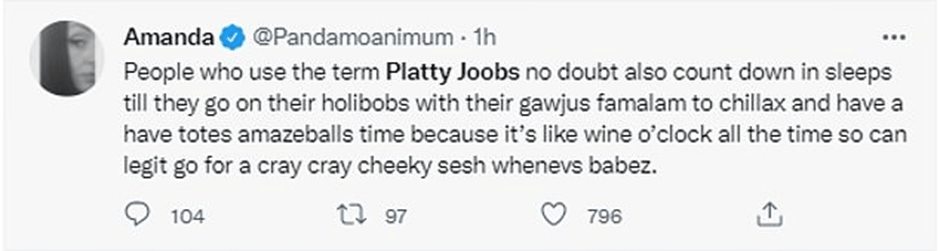
We are halfway through January now. The Holibobs are over and we have come to the end of Chrimbo Limbo – that uncertain period between Christmas and New Year. Dishy Rishi is still in number 10 and, despite unprecedented crises in the health services (though the Panny-D seems to have subsided and Locky-D is just a memory) and family finances (in meltdown due to the Cozzi-Liv), we will have to wait until next year for a Genny-Lec (and perhaps the predicted Labby-Maj once the votes have been counted). In the midst of adversity, on social media (on Facey-B, Insta-G, and even Linky-D) the usual barrage of banter, badinage and bonhomie continues unabated nevertheless. As my Twitter friend Amanda comments…

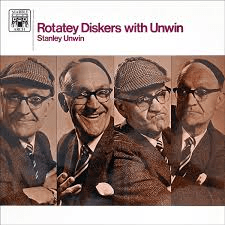
Platty Joobs’ (for Platinum Jubilee in case you missed it) and ‘famalam’ have a Professor Stanley Unwin feel, for me and possibly others of my advanced years. Unwin was an eccentric old chap who used to perform monologues on the radio in the 1950s in which he mangled words and phrases and challenged listeners to interpret what he was saying. ‘Unwinese’ added nonsense syllables, reversed syllables, jumbled parts of sentences – like children’s nonsense stories and nursery and baby talk does. Exaltation of childhood by way of whimsy and nonsense (as in the works of Lewis Carroll, Edward Lear) has been an enduring feature of British literary and popular culture – perhaps a tactic by which we try to play down the dark side of life, smooth over social inequalities and make light of the blunders of our ruling class: deploying non-stop facetiousness, irony, cheek and irreverence in all everyday communications.

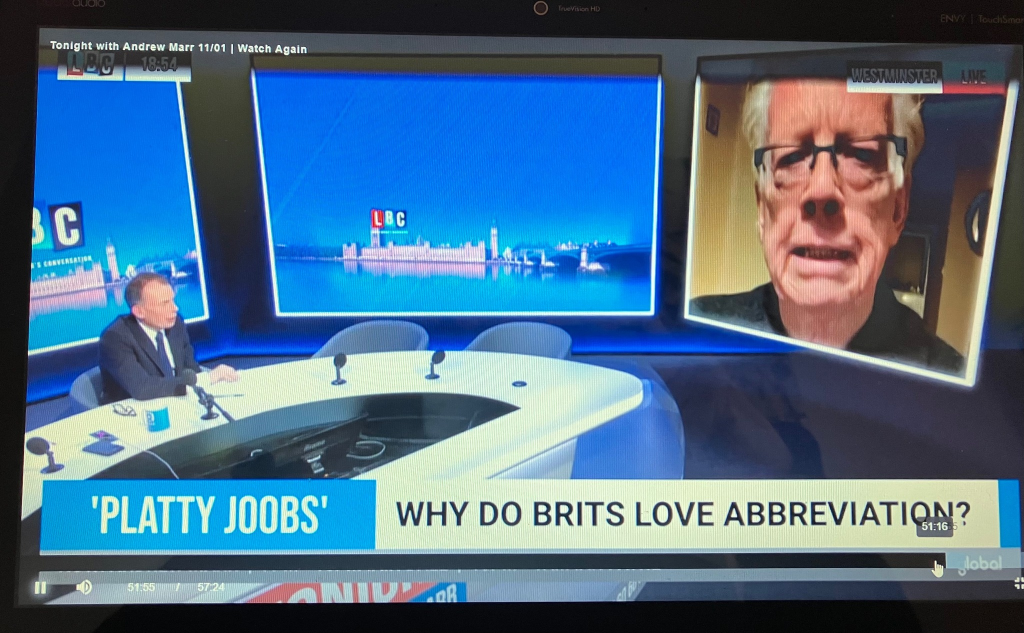
I spoke to Serena Smith, editor at Dazed Digital, about the sassy, cutesy – or cringe-inducing – humour involved in abbreviating, coining nicknames, dismantling and reassembling words and phrases in a particularly British manner, then a few days later answered questions on the same subject from Andrew Marr on LBC Radio. Serena’s article is here…

https://www.dazeddigital.com/life-culture/article/57904/1/why-do-british-people-love-to-abbreviate-things-cozzie-livs-platty-joobs

It’s heartening that, despite the seeming indifference of older commentators and experts, some, mainly younger academic linguists are beginning to study these developments, applying statistical techniques to tracking the spread of new terms and analysing specifics of their users. Dr Christian Ilbury of Edinburgh University, with whom I’ve exchanged ideas, has been doing this for some time and writes here of the online personas created and celebrated by new labels, catchphrases and in-jokes…

https://onlinelibrary.wiley.com/doi/full/10.1111/josl.12563

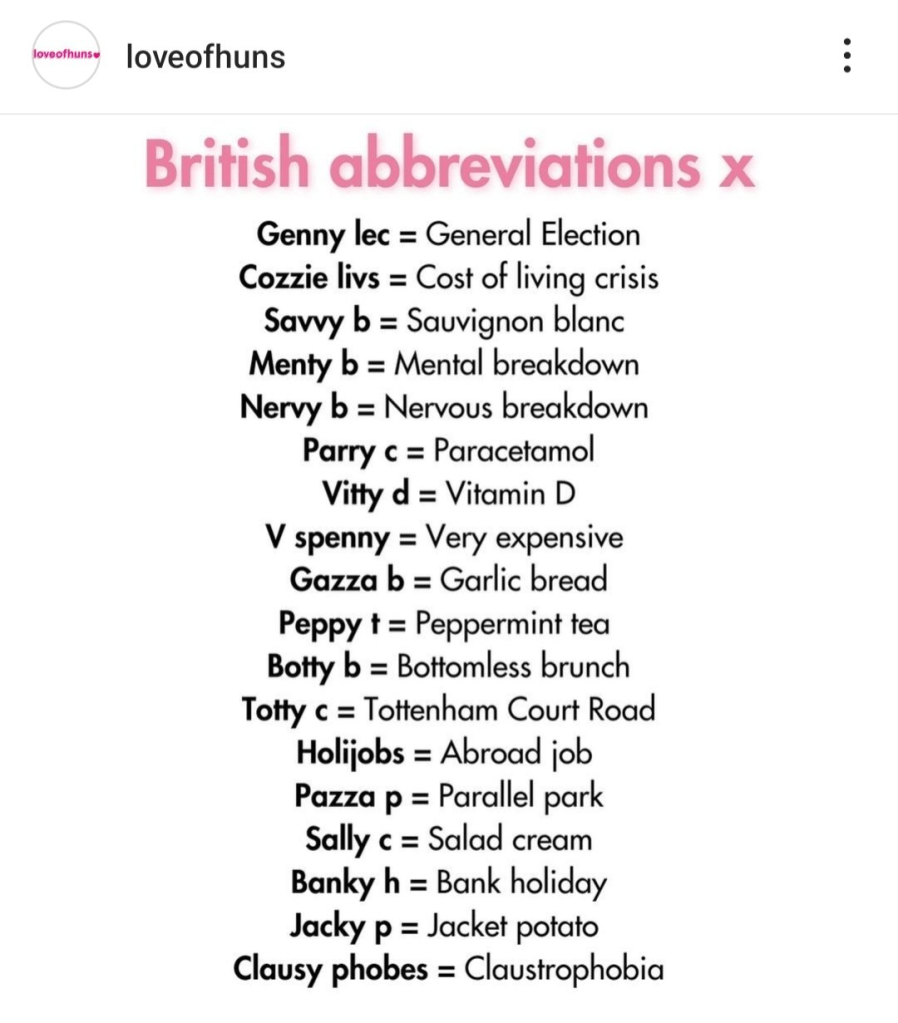
The announcement of a genny lec in May 2024 sparked renewed interest in the phrases, as listed by the Loveofhuns Instagram account…

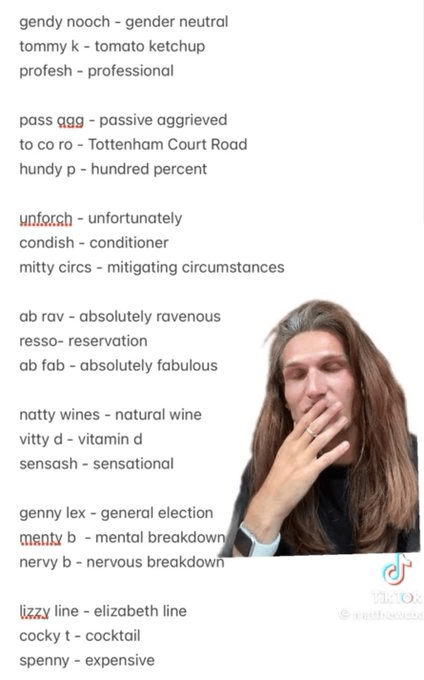
More here, from Christian Calgie via Puja Teli

And on Tiktok via Twitter

In August I spoke to Madeline Sherratt about the latest developments in abbreviating and wordplay, and her update in The Independent is here…

From the ‘panny d’ to a ‘jackie p’, is the language of hun culture leaving you behind? | The Independent

ACRONYMS – ALL IN THE LINE OF DUTY

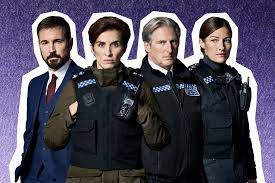
There are several articles on jargon elsewhere on this site, and in 2018 I wrote about the proliferation of acronyms and their effect on listeners and readers too (that article is here*). Now in 2021 the cult ‘appointment television’ crime series Line of Duty has reignited debate on the status of codes and abbreviations as a mainstay of officialese and the private, exclusive languages that both fascinate and intimidate the public. The long-running hit police drama The Bill is due to return to screens very soon, no doubt introducing civilians to some updated terminology and slang of its own.

In March I spoke to Amit Katwala, who was researching this topic for Wired magazine, and the resulting article is here, followed for any students, teachers – and fans of Line of Duty – by a list of links to sources of both real-life and fictional acronyms and discussion of them…

https://www.wired.co.uk/article/line-of-duty-police-jargon

ACTUAL (2019)

https://www.plymouthherald.co.uk/news/plymouth-news/guide-to-police-slang-codewords-2074442

OLD-FASHIONED (THE BILL)

https://thebill.fandom.com/wiki/Police_lingo

ANECDOTAL, FROM THE 90S

http://www.f.waseda.jp/buda/library/seabrook.html

LINE OF DUTY 2021

https://www.radiotimes.com/tv/drama/line-of-duty-acronyms-abbreviations-guide/

THE MET’S OFFICIAL JARGON GUIDE

https://www.met.police.uk/foi-ai/af/accessing-information/met/glossary/

CAMBRIDGESHIRE POLICE’S VERSION

https://www.cambs.police.uk/information-and-services/About-us/Jargon

While the Sun satirises them, the Guardian has perceptively gone beyond the linguistic challenges and plot contortions in Line of Duty and detected underlying references to current political realities…

https://www.theguardian.com/commentisfree/2021/apr/16/the-guardian-view-on-line-of-duty-more-about-our-politics-than-our-policing

In May 2023 The Times tackled the same subject (their article may be paywalled)…

https://www.thetimes.co.uk/article/jargon-obsessed-police-struggle-with-letters-of-the-law-xqr8w6ns9

*https://language-and-innovation.com/2018/10/15/at-war-with-acronyms-tmi-via-tla/

AT WAR WITH ‘ACRONYMS’ – TMI via TLA


Maria Hill: What does S.H.I.E.L.D. stand for, Agent Ward?
Grant Ward: Strategic Homeland Intervention, Enforcement and Logistics Division.
Maria Hill: And what does that mean to you?
Grant Ward: It means someone really wanted our initials to spell out “shield.”

— Agents of S.H.I.E.L.D. pilot episode


Stuart Andrew  MP


Two days ago the UK press reported that the Minister for Defence Procurement, Welsh Conservative MP Stuart Andrew, had declared war. On acronyms. Confounded and irritated by the number of these abbreviations circulating in his office and beyond, he ordered staff to avoid them at all costs. ‘He got fed up with people coming into his office and reeling off a list of letters and assuming he knew what they were referring to,’ a source close to the minister said. ‘I thought DVD had something to do with movies!’ the hapless minister (who has never served in the armed forces) had quipped at a meeting four weeks earlier. DVD was the name of the event at which he was speaking. It stands for ‘defence vehicle dynamics’.

Image result for military acronyms word cloud

The flustered politician may have a point – one of the first documents to cross his desk was the latest 402-page guidebook to terminology used in the MOD (Ministry of Defence)*, referencing such titles as AARADCOM – the Army Armament Research and Development Command, and explaining that the initials CCU, for instance, could refer to

Central Control Unit
Certificate of Clearance for Use (for software)
Cockpit Control Unit
Combat Control Unit
Common Control Unit
Communication Control Unit
Computer Crime Unit

In vain did an unnamed MOD spokesperson respond: ‘These terms are used between subject matter experts and not with the general public.’


Image result for military acronyms


‘Acronym’ entered English in 1940, as a translation of German akronym, first attested in 1921. It is composed of acro- from Greek akron (tip or top) and the English combining form  -onym, from Greek onoma, name. It denotes a word made up of initials or parts of other words, and should be pronounced as a word in its own right. It is not the same as an ‘initialism’ such as BBC or VIP or PC, where the letters are pronounced separately (the minister’s DVD falls into this category), or an abbreviation such as etc. or  lb (pound) where the relationship between form and sound is not straightforward. So NATO, AWOL, laser (for ‘light amplification by simulated emission of radiation’, radar (‘radio detection and ranging’) are acronyms: ASAP (‘as soon as possible’) is an acronym if said like a word, BOGOF (‘buy one, get one free’) too, but not when said as separated letters.

Some more modern three-letter combinations are genuine acronyms – SIM (card) from ‘subscriber identity module’, GIF (‘ graphics interchange format’), however you pronounce it,  and PIN (‘personal information number’) among them – but those familiar items of business-speak, ROI, SEO, B2B, SME – and now AI – are not, and nor, ironically is the disapproving or jokey shorthand TLA, for ‘three-letter acronym’ itself.

Lighthearted coinages SNAFU (‘situation normal, all fouled up’) or BOHICA (the oppressed officeworker’s injunction to ‘bend over, here it comes again’) are acronyms, but only a few of the so-called acronyms used in messaging and on social media really qualify: BTW, IDK, IMHO, SMH, TL;DR and the rest are strictly speaking initialisms. YOLO, LOL and ROFL, providing they are uttered in full, are among the exceptions.

The reason for the proliferation of acronyms, initialisms and abbreviations, and the justification for their use are obvious. In an accelerated culture they save us from having to – literally – spell out what we have to say or write and at the same time impart an idea of novelty, urgency and dynamism. As my correspondent Graham Guest observed on Twitter in a spoof response to Stuart Andrew’s protestations: ‘Minister, my radio detection and ranging equipment has just picked up a group of sea, air, lands wearing self-contained underwater breathing apparatus diving gear.’

Acronyms are very often controversial, in the same way as jargon and slang, in that they mystify and intimidate those who aren’t familiar with them, and seem to confer prestige and privilege on those who know how to use them. They can reinforce an insider/outsider imbalance in power in the workplace, the seminar –  or the ministerial briefing. A very simple test, though, is to try and replace the offending acronym with its full translation or explanation and see if the resulting sequence of speech, or text, sounds or looks viable. If it’s necessary to introduce a new abbreviated form, it must be glossed  (translated into simple language) the first time it is used, and, as with all insider codes, should only be employed in a context where interlocutors, partners, stakeholders, clients or audiences will readily understand it.

In April 2019 the BBC tried to forestall mockery of the acronyms peppering the script of its Line of Duty series by posting this synopsis:

‘A UCO is embedded in an OCG who was deployed as a CHIS but is AWOL. The SIO, who loves a REG 15, and his DI and DS from AC-12 are investigating because of the ED905 HGV ambush which the OCG set up as an RTC. They’re hunting H. Let’s go.’


Image result for acronyms


You can hear me chatting about the latest acronym wars on BBC5Live radio (the sequence begins at 47 minutes 26 seconds):

https://www.bbc.co.uk/radio/play/m0000pvp


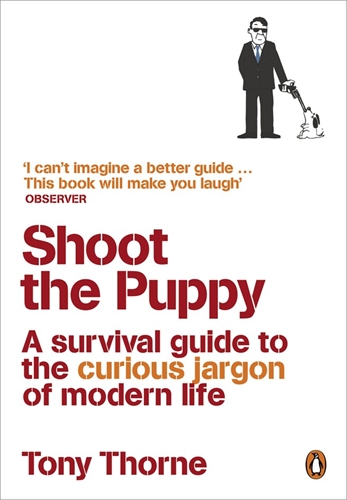
As a footnote, my book of buzzwords and jargon, first published in 2007, contains examples of acronyms and abbreviations, many still in use, together with observations on the status conferred by mastering business-speak…


Shoot the Puppy


*An earlier version of it is here if you want to consult it:

Click to access acronyms_and_abbreviations_dec08.pdf