My un-asked for, scrambled words of the year for 2025 appear in the wordcloud above. Not based on statistical surveys, frequency scans or media prominence, but on the instincts and intuition of a logophile and lexicographer. The words of the year chosen and promoted by the Dictionary publishers* are worthy in their way, once again favouring expressions generated by tech innovation and social media, but they reflect inevitably the perspective of a cohort (aging dictionary editors and their target market) who are at one remove from the language actually being coined or repurposed by what linguists call ‘expert users’. As I write I realise that my own final selection has left out some important last-minute candidates, now featuring in the end-of-year online discourse: vice-signalling, shroud-waving, microshifting and tablescaping, plus a runner-up, sponcon (= sponsored content) for example. The familiar youth slang term of address unc** has just, belatedly, been noticed by the mainstream media, while the terms flow state, in the zone and locked in, used by influencers, content creators and gamers, all meaning focusing intently on an activity, are not yet on the old person radar.
As the winter solstice came and went I was quoted in a few of mainstream media’s reviews of the year’s language…
In Lane Greene‘s discussion of slang and its significance…
…and lastly I promise, a last word before Christmas Day: treatonomics, also known as Little Treat Culture, describes the trend for affordable indulgences, small, emotionally satisfying purchases that offer ‘guilt-free joy’
Back in December last year I wrote a second opinion piece on words of the year for the Conversation. You can find it here… *
At the end of January this year the Lexis Podcast team kindly invited me to discuss some of those words and why – if – they were really significant. We also looked at new terms recorded in 2025 so far, making a first attempt to explain and assess them, and to wonder which if any of them might endure. Our discussion, which went on for 40 minutes, is here…
…and, from February, a little puzzle for you. Can you unscramble and reassemble these two-word novelties? (Thanks to simplewordcloud.com)
It’s now July, and my attempts to go on recording this year’s wholly new, or reworked and updated termsand expressions have been interrupted by the need to react to the news-cycle – to the sinister euphemisms, avoidances and untruths perpetrated by war criminals, would-be dictators and their servants in the media. Examples of their language have been added my glossary of toxic terminology and the updated version is here…
John Belgrove reminded me that in May Donald Trump bragged of coming up with a new word – ‘a good word’, but the word in question was ‘equalising’. I have managed nonetheless, with the help of other friends and contacts on Twitter, BlueSky, Instagram and Facebook, to gather a few more examples of lexical innovation, candidates for an end-of year survey in due course…
But I would very much welcome suggestions of other new words and phrases, ideally together with their meanings and comments on their usage in context. All donations will be credited and donors thanked.
In 2018 I began collecting new and controversial languagegenerated by the rise of conservative populism in the US and the UK, by pro- and anti-Trump sentiment in the US and by the divisions resulting from the UK’s Brexit vote. This is still a work in progress: the list of terms as it stands is below. An ideal glossary or lexicon would include detailed definitions and comments (for example, the second word in the list is my own invention, intended to describe a statement, act or policy showing effrontery, and itself a deliberate affront to a section of the population), dates of first use where traceable and a ‘lexical’ categorisation (into ‘jargon’, ‘slang, ‘catchphrase’, cliché, for instance).This more exhaustive treatment is beyond my resources for now, but googling the term in question will throw up examples which may be accompanied by dates and useful commentary.
In January 2024 I began to add words and phrases used by combatants and commentators in connection with the continuing ‘conflict’ in Israel, Palestine and Lebanon.Exactly one year later the ‘coup’, as some described it, enacted in the USA by Donald Trump and Elon Musk, featured new examples of distortion, euphemism and the language of rancour.
***Please do contact me with new examples, with comments and with criticism, which will be gratefully acknowledged and credited.***
Accelerationist
Accommodationist
Administrative detention
Affrontery
Agitators
Airfix patriotism
Alpha
Alt-centre
Alt-right
Amalek
Anglosphere
Annexationist
Anticipatory compliance/obedience
Antifa
Anti-growth coalition
Anywheres
Armed intervention
Asset
Astroturfing
Asylum shopping
Attitudinarian
Australia-style deal
Autohagiography
Backstop
Bad actors
Based
Basement dwellers
Bed-wetting
Beta
Beyond satire
Bike-shedding
Birtherism
Bitterites
Black hole
Black ops
The Blob
Blowback
Body count
Boomerslop
Bot
Both-sidesism
Bourgeois
Breadcrumbs
Brectum
Bregressive
Bregret(s)
Bremain
Brengland
Brexiles
Brexit dividend
Brexiteer
Brexit means Brexit
Brexit ultras
Brexmageddon
Brexmas
Brexodus
Brexomertà
Brexpats
Brexshit
Brextension
Briefcases
BRINO
Britain deserves better
Bubble
Butthurt
Cakeism
Calling out
Canada plus plus plus
Cancel culture
Candour deficit
Canzuk union
Casino capitalism
Centrist dad
Cherry-picking
Children of light
Chilling
Chumocracy
Churnalism
Civics
Civilian Security teams
Civility
Classist
Cliff-edge
Clown car
Clown country/state
Clusterbùrach
Coerced migration
Coercive diplomacy
Cognitive elite
Cognitive warfare
Collateral
Collective narcissism
Combative
Combat propaganda operative
Compassion deficit
Competing narratives
Concern(ed)
Concierge class
Confected fury
Conflicting accounts
Consequence culture
Copaganda
Cosmopolitan
Corbynista
Corporatocracy
Coup
Coup Klux Klan
Courtier journalists
Crash out
Cronyvirus
Crowdstrike
Crybaby
Cuck
Culturalism
Cultural marxist
Culturally coherent
Culture warrior
Dark forces
Datagrab
Dead cat strategy
Death cult
Deepfake
Deep state
Defund
DEI (Diversity, Equity, Inclusion)
DEI items
Delegitimizer
Demilitarization
Democide
Deplorables
Detained
DEXEU
‘Dies’
Disappeared
Disaster capitalism
Discourse engineering
Disinformation
Divorce bill
Do-gooder
Dogpile
Dog-whistle
Doom loop
Double down
Doxxing
Drain the swamp
DREAMer
Dumpster fire
Echo-chamber
Economic nationalism
Economically inactive
Educide
Elite
Empty chair
Enablers
Enemies of the people
English exceptionalism
Ergo decedo
Establishment
Ethnics
Ethnonationalist
Ethno-state
Exchange of fire
Expert
Factuality
Fake news
Fall off a cliff
False flag operation
Fash-adjacent
Fashy
Fauxlanthropist
FBPE
Feminazi
Fifth column
Finger-sniffer
Firehosing
Flextension
Flooding the zone
FluTruxKlan
Fractionate
Fractious
Fratriarchy
Frictionless
Frit
Frontlash
FUD
Gammon
Gammonista
Gangster state
Genocide Joe
Get it done
Getting the barnacles off the boat
Gimmegrant
Girly swot
Global Britain
Globalist
GNU
Grievance studies
Grindcore
Grumpy retiree
Guardianista
Hard Brexit
Hate goblin
Hatriot
Headroom
Headwinds
Henry VIII powers
Heterophobic
High-vis nazis
Hobbit
Homonationalism
Hopepunk
Hose it down
Humanitarian bridge
Hybrid threats
Identitarian
Idiocracy
Illuminati
Incel
Indications
Indicative vote
Individual-1
Intentional explosion
Intifada
Irrational exuberance
Jambon jaunes
Jexodus
Kayfabe
Keirmacht
Kicking the can down the road
Kindercoup
King baby
Kipper
Kipper moment
Kleptofascist
Kompromat
Lamestream media
Lanyardism
Lawfare
Leave means leave
Leftwaffe
Legitimate concerns
Lentil-weaving
Lesser mortals
Lethal aid
Level up
Lexit
Libertarian
Libtard
Loss of life
“Lost their lives”
Limited ground operation
Limousine liberal
Limp-wristed
Little Englander
Lolcow
Londongrad
Londonistan
Long Corbyn
Long coup
Low-energy
Luftwaffle
MAGA
Magic Grandpa
Magic money tree
Majoritarian
Man-baby
Mangina
Manosphere
Manufactured consent
Masculinist
Matrixed
Maybot
Meaningful vote
Meat wave(s)
Mediaeval methods
Melt
Meninist
Mercurial
Metropolitan
Microaggression
Militarised nostalgia
Milkshake(d)
Mindless compassion
Ming vase
Mischievous
Mishap
Missing
Momtifa
Moral clarity
Moral emptiness
Moral grandstanding
MSM
Nakba 2
Nanny state
Narrative engineering
Nativist
Necrocapitalism
Necropolitics
Neglexit
Negotiated exit
Neon nazis
Nerd Reich
Neurotic elite
Neutrollization
No-deal
No-platforming
Normie
Nudgism
Obey in advance
Offence archaeology
Operational matter
Operation Red Meat
Operation Save Big Dog
Optics
Ordeals
Ostentatious meekness
Oven-ready
Over-briefed
Overly purist
Overton window
Palaeoconservative
Partygate
Pearl-clutching
Penumbral jobs
People’s vote
Performative allyship
Performative cruelty
Pile on
Political correctness
Political gospel
Polycrisis
Post apocalyptic warlord
Post-liberal
Postmodern
Posttext
Post-truth
Poverty porn
Prebunking
Pre-emptive strike
Price cap
Project Fear
Protesters
Prozac leadership
Pugnacious
Punchy
Purity of arms
Push (BBC euphemism for armed incursion, invasion)
Pushback
Put/stick that on the side of a bus
QAnon
Quitlings
Rabble
Race to the bottom
Rage bait
Rage farming
Rampdown
Red lines
Red pill
Red wall
Regrexit
Rejoiner
Re-leaver
Relocate
Remainiacs
Remain plus
Remigration
Remoanathon
Remoaner
Remove kebab
Replacement theory
Reply deboosting
Reputation laundering
Resistance
Restorative nostalgia
Retconning
Revoker
Roll back
Rootless
Row back
Russian asset
Saboteur
Sadopopulism
Safe space
Scumbag centrism
#ScumMedia
Sealioning
Sectarian
Sensitivity reader
Shadow blocking
Shadow war
Shallowfake
Shill
Shire
Shitposting
Shitshow
Showboating
Shylock
Sick-note culture
Singapore-on-Thames
SJW social justice warrior
Skilling up
Skunked term**
Slave populace
Sleaze
Slopaganda
Slopulism
Snowflake
Sobersides
Sockpuppet
Soft border
Soft Brexit
Somewheres
Sovereignty
Soy-boy
Spartan phalanx
Spiv
Star Chamber
Starmergeddon
Stenographer
Sticking point
Strategic self-abasement
Stunning proposal
Sunlit uplands
Supermajority
Surgical strike
Svengali
SWERF
TACO
Taking back control
Tankie
Targeted individual
Targeted strike
Technofeudalism
Tender-age shelter
“Tensions rise”
Terf
Terminability
Testy
The other team
Throw under the bus
#tfg, ‘the former guy’
Tick tock
Tigger
Tofu-eating
Tone deaf
Tone policing
Tory scum
Toxic positivity
Transactional
Transition period
Trexit
Triangulation
Tribal(ism)
Trickle-down pathology
Troll farm/factory
Trumpcession
Trump slump
Truth-squadding
Tufton Street
Tu quoque
Two-tier policing
Unconfirmed reports
Unicorns
Unpopulism
Unrest
Unspin
Urban
Values voter
Vassal state
Verbal incontinence
Vice-signalling
Vigilante journalism
Village idiot
Virtue-signalling
Voluntary emigration
Walk back
War cabinet
War of extraordinary civilian casualties (Guardian euphemism for genocide)
Watch-list
Weaponised*
Wedge issues
West(s)plaining
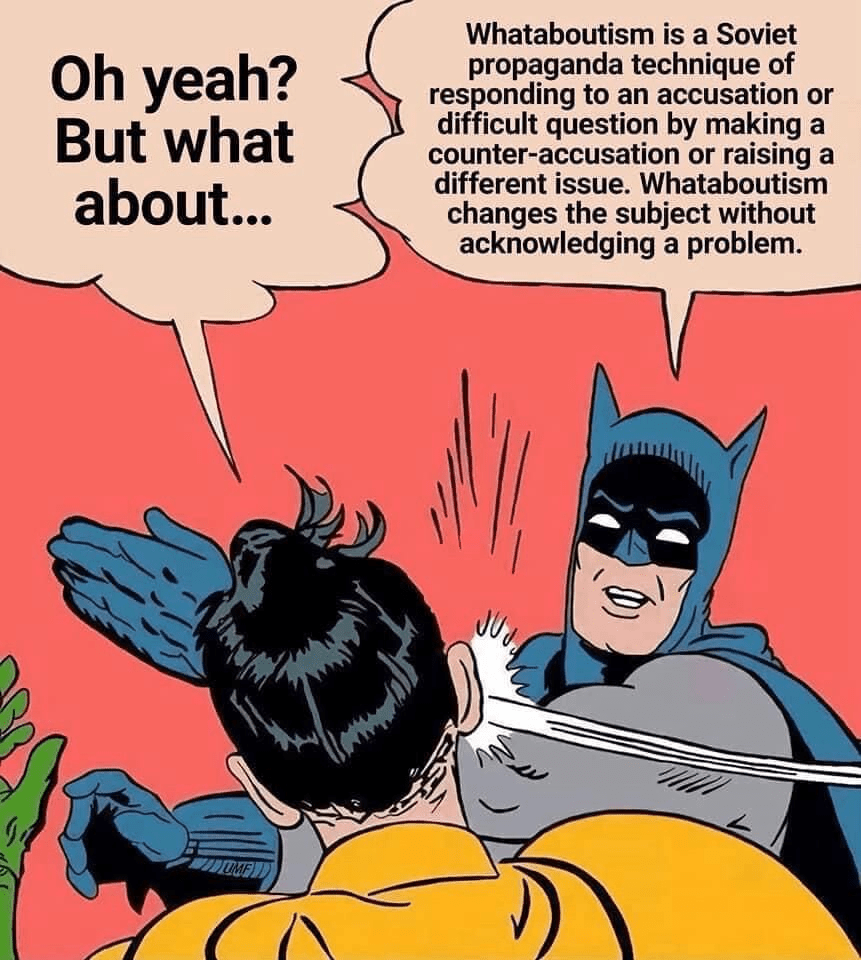
Whataboutery
White supremacist
Will of the people
With a heavy heart
Woke
Woke mind virus
Wokerati
Wokescold
Woketard
Woke warriors
Woke-washing
Womp womp
Workington man
Yoghurt-knitting
Zealot
I’m grateful especially to the many contacts on Twitterwho have already contributed to this modest project, particularly Duncan Reynolds @duncanr2, and will credit them all by name/handle when a final version is published.
I’m also very grateful to Rob Booth and the Guardian who, in October 2019, wrote about the glossary and its topicality in increasingly conflicted times:
In November 2018 The Guardian published a useful ‘jargon-buster’ guide to the terms being used at this late stage of (or impasse in, if you prefer) UK-EU negotiations:
I have only just come across this perceptive essay from 2017, by Otto English on his Pinprick blog, in which he coins the terms Ladybird libertarian and Ronseal academic:
**’Skunked terms’ are words or expressions undergoing a controversial change in meaning. Examples are ‘liberal’ and ‘libertarian’ which have transitioned from referring to leftist, progressive or centrist positions to denote neo-conservative or alt-right affiliations. Nearly two years on from my original post the useful designation ‘anglosphere’, describing English-speaking nations with shared cultural features, has been co-opted by far-right nativists in the UK to promote a supremacist ideology.
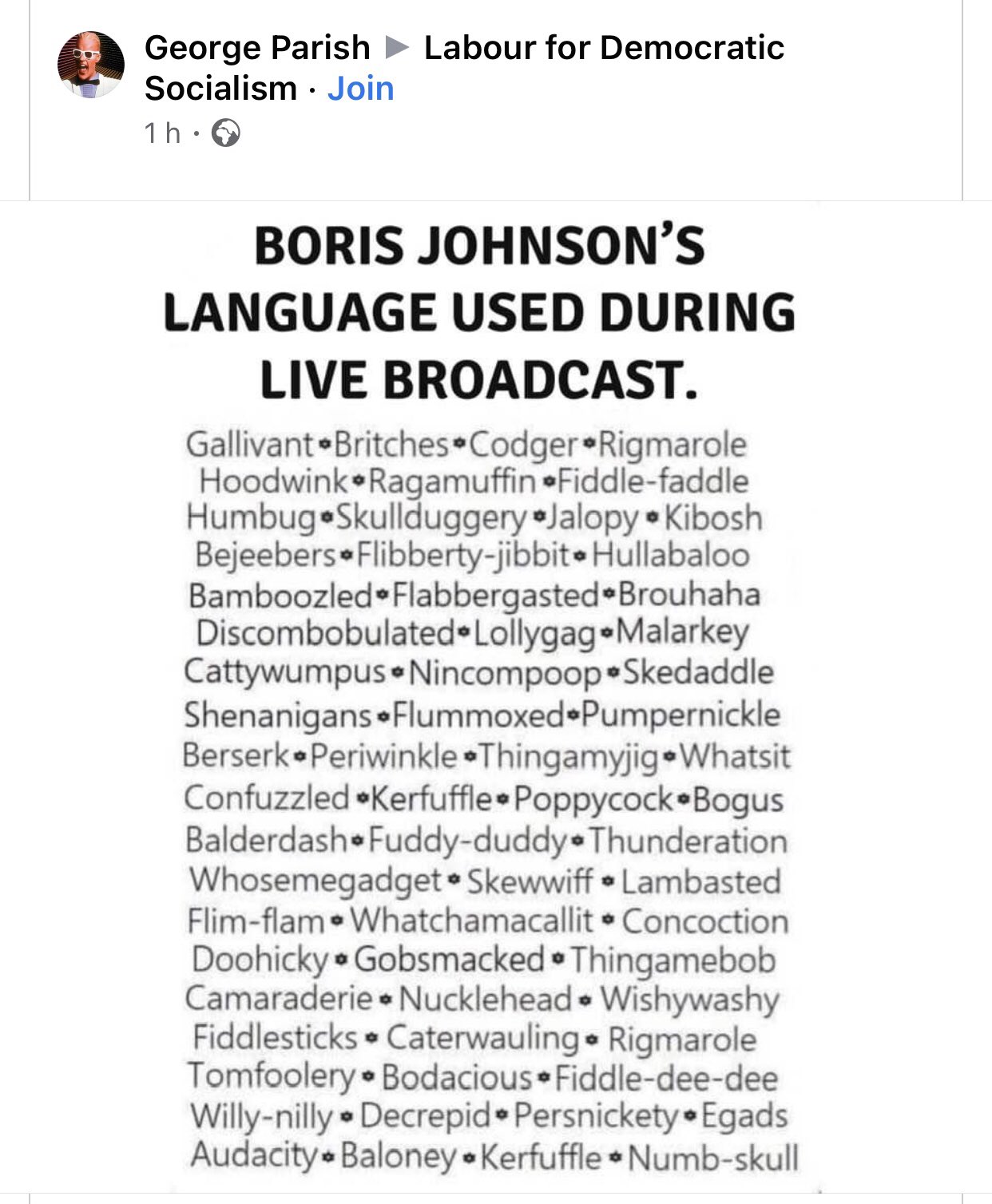
As a further footnote, this from Twitter in November 2020 (thanks to Alan Pulverness), a reminder that weaponised words may also be frivolous – even puerile:
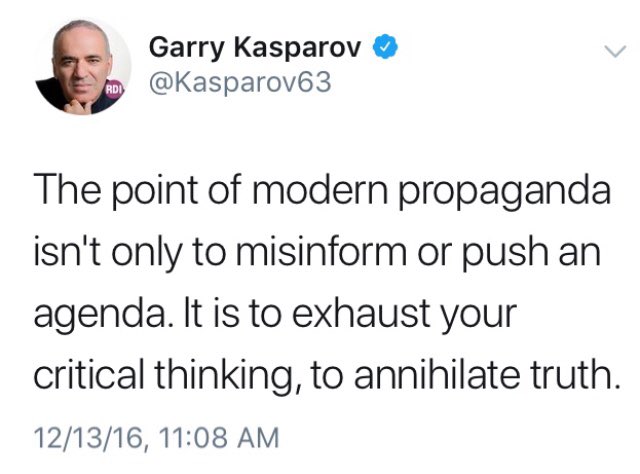
Looking back to 2016, a prescient tweet by Gary Kasparov:
At the end of 2022 my friend and collaborator Dan Clayton wrote, for Byline Times, about the latest iteration of toxic terminology and rhetoric: the demonising of refugees and migrants:
In early 2024 I belatedly learned of an interestingly tendentious and sententious glossary purporting to list and explain the words used by the ‘woke’. This, compiled by Dr James Lindsay, critically examines key terms relating to gender studies, critical race theory and identity politics in the US context:
Later in June, as Israel and Iran exchanged fire, Assal Rad noted the double standards employed in reports of the conflict:
The language of manufacturing consent:
: Preemptive strikes
: Escalation
: Warns
: Threatens
: Targets
: Attacks
: Government
: Regime
: Right to self-defense
: Condemnations
: Sophisticated military (has nukes)
: Nuclear threat (has no nukes)
Most recently, in January 2026, for Byline Times, my friend and collaborator Dan Clayton wrote a penetrating analysis of the way the US right and the media had manipulated the language of the ICE atrocities in Minnesota…
A research portal for scholars, the press and the public
The Slang and New Language Archive was created in 1994 while I was Director of the Language Centre at King’s College London. The archive, consisting of a small library of books and periodicals and a number of databases and sub-directories, was designed as a repository for the collection, storage and dissemination of new language, in particular examples of nonstandard varieties of English such as slang, jargon and buzzwords. The archive was later expanded to take in examples of media language, political language, linguistic curiosities and etymologies. It remains a resource, unique in the UK and not-for-profit, assisting researchers, students, teachers and journalists, as well as non-specialists, in accessing information about aspects of contemporary language that are under-represented in traditional dictionaries and reference works.
This link will take you to the Archive webpage at King’s College, where there are further links to relevant articles and published sources…
Glossaries from the archive may be accessed on this site by entering keywords, such as slang, jargon, MLE (Multiethnic London English), familect (highly colloquial language used in the home), coronaspeak (language related to the COVID-19 pandemic) and weaponised words (the contentious language of Brexit, populism and biased reporting) and slurs (racist and misogynist terms) in the search box. Once you have accessed a post of interest, check the tags and categories at the foot of the page for other articles or glossaries on the same topic.
Two of the larger archive datafiles have now been revised and updated. You can access the glossary of current youth slang here…
To access the glossary of UK street slang, rap music and gang terminology please email me at tony.thorne@kcl.ac.uk to request a link.*
Please note that the King’s archive focuses principally on contemporary language, that is terms used from the twentieth century to the present day. If you are interested in historical slang, I strongly recommend the monumental work by my associate, the British lexicographer Jonathon Green. His dictionary, now generously freely available online, lists current and historical slang terms with timelines and citations illustrating their usage and development…
For more information, for queries, or to donate examples of language, contact me via this website or via the King’s College webpage. I’m on Twitter as @tonythorne007 and on Bluesky as @tonythorne007.bsky.social too.
In terms of new slang and nonstandard language there are few reliable resources online. In February 2025, however, US publisher Merriam-Webster launched their own slang dictionary. You can find it here…
Among the many more informal glossaries and wordlists of slang posted on the internet in 2025, this review of slang in English schools is unusually comprehensive and accurate…
A (nearly) new lexicon describes new attitudes to work
I spoke last week to Financial Times journalist Emma Jacobs about so-called ‘Polygamous Working‘, part of the new vocabulary of the workplace generated by younger employees still coming to terms with a post-pandemic work-life balance. Holding a second job is not necessarily illegal providing it is disclosed, but recent reports describe hundreds of public sector workers in the UK illicitly receiving multiple salaries from simultaneous jobs. When the idea of a polyamorous workplace first surfaced three or so years ago, some business gurus hailed it as a positive trend: “Polygamous careers are giving workers the opportunity to hone new skills, fully leverage their knowledge, and pursue numerous interests at once. The emphasis is on contributing to various projects and roles, as opposed to working exclusively with a specific employer.”
“In this context new expressions like “quiet quitting” and “task masking” are gaining traction. They are, says writer and lexicographer Tony Thorne, “self-consciously coined and promoted like memes”, designed to go viral. Thorne thinks this suggests the young people using them are not lazy, but “more resistant to accepting traditional notions of work, workplaces and work etiquette”. Perhaps no surprise, given they grew up in the aftermath of Brexit and the pandemic.“
Gen Z in particular have a different take on work-life balance and really on the nature of work itself I think. They approach these things as part of a wider matrix of lifestyle modes, (self-help and self actualisation and curating relationships) what they call ‘vibes’ and ‘aesthetics’ and performative behaviour. We can’t forget also that their behaviour even at work often reflects their pervasive use of irony, sarcasm and self-parody.
This is reflected in the terminology they have adopted of course. I think another aspect which hasn’t been discussed much is the fact that GenZ have not been conditioned by the sort of corporate culture, office culture or lingering work ethic that Gen X and millennials were conditioned by. Add to this the fact that they more than anyone have undergone the disruption caused by Brexit, the aftermath of austerity and the pandemic and so may be more resistant to accepting traditional notions of work, workplaces and work etiquette.
There is yet another way in which things are different for younger cohorts. They exist in a globalised online reality where trends in behaviour are not driven by ‘authorities’ or ‘professionals’ but by influencers and content creators chasing clicks and clout. New expressions are not just words or phrases which spread by word of mouth but may be self consciously coined and promoted like memes. They may not simply exist as sounds and spellings but also accompany images and soundtracks (as on TikTok). Linguists might call them ‘multimodal‘.
Neither the notions they describe or the terms themselves are completely new. Back in 2005* I reported ironic office slang such as ‘FaceTiming’, just putting in an appearance to suggest dedication to the job, ‘Sunlighting’ (like moonlighting), aka ‘Dual Jobbing‘, doing a quite different job one day a week. ‘WFH‘, ‘Remote Working‘, ‘Hybrid Working‘ – and ‘Side Hustles‘ – were later coinages prompted by enforced flexibility. The end of the pandemic saw the ‘Great Resignation‘ of 2021 as disillusioned workers supposedly abandoned unfulfilling careers en masse. Employers were encouraged to promote ‘Cross-Skilling‘, training staff to perform a wider range of functions, and ‘Job-Crafting‘, allowing employees to design their own roles.
Emma’s article with contributions from Bobby Duffy, director of the Policy Institute at King’s College London, is here…
Researching and tracking the latest slang can now draw upon statistical analysis of online data.
As 2024 draws to its end and talk among lexicographers, culture journalists and language buffs turns to ‘words of the year’, I’m immensely grateful to Randoh Sallihall of Unscramblerer for providing me with his datasets showing lookups (Google searches) for the most popular recent slang expressions…
Most searched for slang words in United Kingdom:
1. Gaslighting (170 000 searches) – a type of manipulation that makes you doubt your memories and feelings. The person doing it may lie and deny things.
2. Skibidi (125 000 searches) – refers to a viral internet trend featuring surreal, animated videos of singing toilets and dancing heads, popularized on platforms like TikTok for its bizarre humor.
3. Pookie (47 000 searches) – to show endearment and affection. Used for a close friend, partner or family member. A playful way to say someone is special.
4. Hawk tuah (40 000 searches) – imitative of a spitting sound. The catchphrase originates from a viral street interview conducted in June 2024 with Haliey Welch, who stated that her signature move for making a man ‘go crazy’ in bed was to ‘give him that hawk tuah and spit on that thang’.
5. Sigma (37 000 searches) – refers to an independent, self-reliant person who operates outside traditional social hierarchies, often described as a ‘lone wolf.’
6. SMH (31 000 searches) – internet slang for ‘shaking my head’. Used to express disapproval or disappointment.
7. Demure (26 000 searches) – reserved, modest or shy in manner or appearance. The TikTok user Jools Lebron made a series of viral videos using the phrase “very demure”. This trend gave the word a playful slang meaning. She uses it to assess appropriate makeup and fashion choices in various settings.
8. Rizz (25 000 searches) – style, charm or attractiveness. The ability to attract a romantic partner and make others like you.
9. Dei (17 000 searches) – diversity, equity, inclusion. A family friendly way of saying woke.
10. Aura (13 000 searches) – the vibe someone gives off. When used by tweens and teens it is likely a reference to how badass someone is. Aura points make you cooler. So you definitely want to earn more aura points instead of losing them.
We can compare this list with Randoh’s equivalent for the USA, used in the Newsweek article posted previously to which I contributed, and reproduced here with his explanatory comments…
Analysis of Google search data for 2024 reveals the most searched for slang words in America:
1. Demure (260 000 searches) – reserved, modest or shy in manner or appearance. The TikTok user Jools Lebron made a series of viral videos using the phrase “very demure”. This trend gave the word a playful slang meaning. She uses it to assess appropriate makeup and fashion choices in various settings.
2. Sigma (220 000 searches) – refers to an independent, self-reliant person who operates outside traditional social hierarchies, often described as a ‘lone wolf.’
3. Skibidi (205 000 searches) – refers to a viral internet trend featuring surreal, animated videos of singing toilets and dancing heads, popularized on platforms like TikTok for its bizarre humor.
4. Hawk tuah (180 000 searches) – imitative of a spitting sound. The catchphrase originates from a viral street interview conducted in June 2024 with Haliey Welch, who stated that her signature move for making a man ‘go crazy’ in bed was to ‘give him that hawk tuah and spit on that thang’.
5. Sobriquet (105 000 searches) – a nickname or descriptive name given to a person or thing. Borrowed from French sobriquet (nickname).
6. Schmaltz (65 000 searches) – refers to excessive sentimentality or melodrama. Often used for art, movies, music or storytelling if there is too much sappiness.
7. Sen (50 000 searches) – slang for self.
8. Katz (34 000 searches) – a term for anything enjoyable, fun or pleasing. It can also mean ‘yes’.
9. Oeuvre (25 000 searches) – refers to the complete works produced by an artist, writer or composer. A word used by literature professors to express superiority.
10. Preen (20 000 searches) – slang for a child who tries to act like a teenager(wears teen clothes or makeup).
A spokesperson for Unscramblerer.com commented on the findings: “The English language is ever changing. Every year new slang words are created. Many slang words are born through trending topics and viral videos on social media. However only few manage to stick around long enough to be added to the dictionary and remain in daily use. Slang words are a normal and fun evolution of language. We encourage everyone to learn some new words and surprise their children by using them.”
Research was conducted by word-finding experts at Unscramblerer.com.
We analyzed 01.01.2024 -25.10.2024 search data from Google Trends for terms related to slang words.
Methodology: We used Google Trends to discover the top trending slang terms and Ahrefs to find the number of searches. Americas most popular slang terms can be discovered in Google Trends through the keyword ‘meaning’. People will hear or read slang terms and search for the meaning of the term (example ‘demure meaning’). Ahrefs shows many variations of meaning searches like ‘slang’ or ‘trend’ (example ‘demure slang’) and similar keyword combinations (example ‘what does demure mean’). We added up 150 search variations of top slang terms.
A few days after Randoh’s findings were published, I was asked by Robert Milazzo* to take part in the masterclass on new slang and youth language that he convened at Virginia Commonwealth University. The whole lively one-hour event was recorded and can be accessed here…
Robert’s class was particularly illuminating, allowing as it did for contributions from young slang users themselves and from puzzled old-timers too. Bear in mind that the samples handled by data analysts are taken solely from online usage and not from authentic speech. Nearly all the slang used on TikTok, YouTube, Instagram, etc. originates in the USA whereas the slang terms used by British youth in their IRL conversations will differ considerably from their North American counterparts, showing much greater influence from African Caribbean rather than African American sources.
Dictionary makers and journalists are breathlessly – if not desperately – publicising the latest online language – but do they really understand it?
One week on, I spoke to Chloe MacDowell of the UK Guardian newspaper, then to Marni McFall of the US Newsweek magazine on the topic of TikTok language and the online messaging mannerisms of Influencers and GenZ. Chloe was interested in one particular trending TikTok catchphrase, Marni in the whole panoply of 2024’s viral innovations.
Once authentic conversations and personal interactions (previously happening in private spaces or local communities) began to feature on the internet and in messaging and on microblogging platforms, language novelties, slang and faddish usages crossed over from a private realm into the global public domain. The latest slang and new language was visible, audible and immediately available to share. Obscure or exotic terms might quickly catch on and become viral favourites, spreading in some cases across the anglosphere more rapidly than print, broadcast or word-of-mouth transmission had ever been to achieve in the past.
Words and phrases began to function like memes, taking on sometimes a ‘multimodal’ aspect whereby sound and image could reinforce the purely verbal expressions that people chose to exchange and promote. Pre-internet there had always been catchphrases, what linguists call ‘vogue words’, slogans and soundbites, and keywords that somehow seemed to evoke or encapsulate some special aspect of the ‘zeitgeist’. What we have now is a much more knowing, deliberate intention (on the part of trend-setters, influencers, ‘thought-leaders’) to create new language to celebrate new identities and to promote new attitudes and lifestyle innovations to the widest possible audience.
Subcultures like surfers, valley girls, fanboys and girls, hip hop aficionados had always invented striking, expressive language and this is still true, but instead of niche culture we have ‘meganiches’, instead of subcultures we are dealing with globalised communities.
The fashionable language of TikTok and GenZ in particular is part of their wider obsession with vibes, aesthetics and microtrends, many of which arise and are discarded in rapid succession. The prevalent style is exhibitionist, self-promoting, allusive and often ironic, increasingly even absurdist, making it hard for outsiders to grasp the nuances in play. Older commentators and dictionary publishers struggle to keep pace, often misunderstand and record the terms in desperation (in their searches for ‘word of the year’ for example) just as they fall out of use.
The use of this language as an identity marker in an intensely competitive digital ecosystem means that the Gen Alpha cohort now ridicule GenZ usages as being out-of date, while GenZ is still deriding millennials for their old-fashioned ‘cringe’ vocabulary. At the same time would-be influencers practise bragging, ‘manifesting’ and other forms of self-congratulation in a search for clicks and clout.
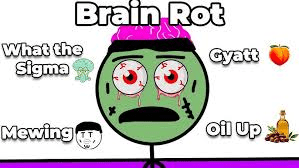
One of the latest features of online wordplay is the elevating of an older concept or cliche into a teasing provocation or pretence at new insights, as we have seen with ‘delulu’, ‘demure’ and ‘mindful’, ‘rizz’ and ‘brat’. The current rash of declarations of ‘being privileged’ – a new version of ‘humblebragging’ or ‘virtue-signalling’ – is another example. In parallel is the ironic celebration of the incoherence or absurdity of much online discourse and of low-quality ‘slop’ by embracing a culture of ‘brainrot’ – nonsense memes such as ‘skibidi’ and vacuous, contagious content.
Most of the innovation in online language and image still emanates from the US and even though a global audience can access it instantly, its tropes (think ‘goblin-mode’ – ‘goblin’ doesn’t have the same associations for Brits) don’t always translate for other speakers of English. In parallel, poses, gestures and looks as well as music-related modes are increasingly generated from non-English cultural zones such as Japan and Korea. It will be interesting to see if other parts of the globe begin to play a part in the evolving online theatre of signs and behaviours, but this doesn’t seem to have happened yet.
On the first of November Collins Dictionaries, ahead of the pack, had already announced their choice of word of the year for 2024, and their candidates illustrated the same, in my opinion mistaken, concentration exclusively on terms from a very narrow range of sources. While postings on social media are performances designed to attract attention, there is an even wider domain in which discourse demands analysis: the crises in the Middle East and Ukraine and the surreal spectacle of the US presidential campaigns, for example, are also highlighting keywords and generating new formulations or reworkings of language – data that mainstream media and lexicographers seem to think unworthy of their attention…
Digital media enables language change and innovation – of course, but how much and for how long?
I spoke to Caitlin Talbot, Culture Researcher for the Economist magazine, who asked me about the effect of TikTok talk and the slang, catchphrases and viral puns invented by Gen Z. Caitlin wondered how many new terms were actually being added to the global conversation each year, and whether these novelties would last.
My own solo attempts to record new language and to understand and comment on its sources rely on fairly haphazard, old-fashioned techniques, so it’s not possible for me to quantify the lexical items, locutions, expressions and longer elements of discourse that I come across. The major dictionary publishers do have access to powerful and sophisticated electronic methods of scanning, scraping (‘aggregating’ as it should more properly be termed) raw linguistic data from across the internet. This material can be categorised to a certain extent and entered into giant databanks from which lexicographers can select the terms they periodically admit into published dictionaries.
Attempts to amass and analyse examples of language in use are nonetheless hampered by several considerations: the language in question is primarily in the form of text, rather than authentic speech, and the texts in question are largely recoverable from published sources and media platforms, only to a limited extent from personal messages. Tracking their use over time is possible, and the popularity of some usages can be subjected to frequency counts and represented on timelines, but private use and communications by local and specialist communities is far harder to assess. One of the more interesting challenges to the lexicographer is to predict which novel terms may become embedded in the national conversation and which drop out of use – some almost immediately and others over time. In fact my experience (since I began to collect slang in the 1980s) proves that it’s impossible to predict, let alone to speculate as to why this happens.
Caitlin’s article, with useful links, is here…(if it is paywalled for you, go to here *)
In speculating about the number of new terms generated (and the playful, sometimes absurdist tendencies featuring on social media involve not only inventing new terms but reworking and re-purposing existing language like ‘demure’, ‘babygirl’, ‘millennial pause’, etc.) we can only fall back on subjective, anecdotal, incomplete accounts, even if these may be interesting and informative in their way…
THE WORD “demure” is old—it describes the sort of modest lady Victorians esteemed—but it is freshly fashionable. There are some 800,000 posts on TikTok with the tag #demure. Youngsters today are using the word with lashings of irony, invoking it to describe everything from Saturn to sunset to New York City’s bin service.
TikTok is changing how young people talk. Other fusty words, such as “coquette”, are fashionable again. Colloquialisms are on the rise: members of Gen Z say “yapping” instead of “talking” and trim “delusional” to “delulu”. New words have also become popular. Take “skibidi”, a term popularised by a meme of an animated head singing in a toilet; it means “cool”, “bad” or “very”, depending on the context.
On social media words spread far and fast. At least 100 English words are produced, or given new meaning, on TikTok a year, reckons Tony Thorne, director of the Slang and New Language Archive at King’s College London. Some linguists think the platform is changing not just what youngsters are saying, but how they are saying it. A “TikTok accent”, which includes “uptalk”, an intonation that rises at the end of sentences, may be spreading.
The platform’s versatility encourages experimentation. Users can combine audio, text and video in a single post. That means words that sound especially satisfying can go viral, as well as those that are memorable in written form. Linguistic code has emerged, dubbed “algospeak”, to dodge content-moderation algorithms. It includes euphemisms (sex workers are called “accountants”), and misspellings (“seggs” instead of sex).
The mutation of language on TikTok is also due, in large part, to the age of its users. Most are 18-34 years old. That matters because “Young people are language innovators,” says Christian Ilbury, a linguist at the University of Edinburgh. For decades youngsters have created words to distinguish themselves from adults. On social media such neologisms find a big audience. Mr Ilbury describes this as “linguistic identity work”; parents have long called it attention-seeking.
The platform brings together fan groups and communities, from #kpopfans (people who like Korean pop music) to #booktokers (people who love reading). These groups create their own slang, says Adam Aleksic, a linguist and influencer. Some of it leaks into the mainstream. Other slang comes from specific groups: black people have innovated and spread hundreds of English words over the years, from “cool” to “tea” (gossip). Journalists and screenwriters popularise such words; now TikTokers do, too.
*For help in understanding the language and online mannerisms of TikTok and GenZ, I’m grateful to my daughter, Daisy Thorne Mrak*
Teen talk continues to baffle older cohorts, but as autumn approaches the vibes shift – and Tiktok identities evolve…
In mid-August I talked to Mary McCarthy about the ever-changing patterns of youth language, and, with her kind permission, Mary’s article for the Irish Independent follows…
No cap, sigma and rizz? You’ll need more than Google Translate for teen talk now
Parents are supposed to be bemused by the slang words their children use, but the new summer vocab in our house has me totally flummoxed. This is particularly so with the younger two lads – eight and 11 – who walk around saying nonsense words like “sigma”, “no cap” “Skibidi Toilet” and “gyat” all the time.
I don’t mind them having in-jokes, and it’s nice to see them falling around laughing – I’ll take that over sullen moods any day. But what are they laughing about?
Are they being kind? I can see the pleasure of getting the giggles over absurd stuff. I used to have this thing with a school friend where we would say repeatedly “The dog is dead” in a Northern Ireland accent – no idea why. But there is so much coming at them now online. How can I know they won’t soak up the wrong messages? The Andrew Tate alpha-male rubbish, for example.
This week I hired my Gen Z 16-year-old to help me decode what his brothers were saying, and he pocketed his €5 before unhelpfully telling me that “it’s just little kids saying random, mental stuff”.
“It’s the internet, it’s TikTok language,” he said. But they don’t have TikTok, I reminded him. YouTube shorts are the same and they have a lot of that, he told me darkly.
So I asked the lads themselves, and they were fairly keen to enlighten me, which was reassuring. “No cap” means no lying, “sigma” just means cool (no Andrew Tate alpha-male link, thank goodness) and rizz is “charisma”.
My 11-year-old elaborated. “So, this would be a chat-up line like, ‘Are you from Tennessee? Because you’re the only ten I see’.” I’m unsure what to say. They refused to explain “gyat”, so I looked it up later.
It mostly seems fine. They’re getting it from pals and YouTube shorts, which I will limit more now. But what I’m most baffled about is the Skibidi Toilet YouTube show, and why they call everything Skibidi for no reason.
The show has amassed over 65 billion views over the last year, and I can’t see any pull factor. It’s about toilets with human heads engaged in a war with people who have CCTV cameras for heads, all set in a dystopian landscape. Apparently, there will be a TV show and a movie. I had a headache watching it after 30 seconds.
Youth slang can spread very quickly these days via online platforms and messaging
It’s everywhere. We were on holiday in Kerry a few weeks ago and had a few hours to kill in Kenmare, so we visited the Kenmare Stone Circle, which was erected some time between 2000 and 500 BC. If you clip a wish at the Hawthorn Fairy Tree, it comes true. That’s according to the man working there, who handed us a piece of paper and a pen.
Being my nosy self, I immediately started reading other people’s wishes, and among the pleas for health, happiness and planning permission there were lots of Skibidi.
“Sigma, sigma on the wall, who is the Skibiest of them all?” one card read.
“Desidere che i cani diventine Skibidy Toilet,” read another, which Google translate told me was “Wish that dogs become Skibidy toilets” in Italian. So it’s not just my children larking around. I’m sure it’s all just a silly phase, perhaps the same as my own “the dog is dead”.
Tony Thorne, director of the Slang and New Language Archive at King’s College London, said young people have always created their own language to keep outsiders like parents and teachers out. It just happens that there’s more around today.
“This language innovation, as linguists call it, used to take place in private spaces and only sometimes spread further – if, for example, the language was used in music or movies or TV comedies,” he said.
“Youth slang can spread very quickly these days via online platforms and messaging and so can become global. Terms often coined in the US rapidly move into the Anglosphere. We see that in the huge network of English speakers who converse excitedly in ‘mid-Atlantic’ accents.”
Thorne recommends the guide to teenage slang on the Gabb.com website. I soon discovered that “gyat” is a way to express admiration, usually for a woman’s backside. So I nipped that one in the bud.
It is a habit for parents and the older generation to laugh at teenagers for speaking in a frivolous way
Once you start researching the origins of these words, it gets interesting. According to a recent Forbes article on how Gen Z language is changing the workplace, to “slay” – which is something my 13-year-old daughter says, as in “You slayed that lasagne, Mammy” – means “high praise” and originated in black and LGBTQ+ communities before gaining popularity on TikTok.
I can’t remember using much slang as a teen, apart from the many violent descriptions we had for being drunk, among them flutered, slaughtered, battered and trollied.
My cousin would visit from Canada, and she loved hearing those terms. Today, though, there’s no difference between what a 15-year-old in Dublin and a 15-year-old in Toronto is exposed to, and they’re the more creative for this. After all, the way we learn to speak is from listening to other people, so we probably don’t really need to worry much about the slang.
Kevin Barry, former professor of English at the University of Galway, said that while adults can see it as foolish, there’s a wisdom to the newly minted words and phrases.
“It is a habit for parents and the older generation to laugh at teenagers for speaking in a frivolous way – to the adults it makes no sense. What they are seeing is the frontier of language change, which is a creative Wild West,” he said.
There’s no point trying to keep up. New slang will be coined as fast as I learn. We can’t police it. The only thing to do is role-model IRL (in real life) what it is to be a nice person. To not shout, to be kind, to make time for the children. To let them know you have high expectations for their behaviour by having high expectations for your own – no cap.
The dominance of memes and viral posts from the USA celebrating a brat summer was challenged in late August by a TikTok injunction to ‘be demure and mindful‘ in all one’s actions and representations. Alternative and mainstream media jumped quickly aboard the accelerating bandwagon – and Ellie Bramley of the Guardian asked me to comment…
‘Demure‘ is a seemingly prim and dated adjective, used recently only by rueful babyboomers and tabloid journalists, for whom it is code for ‘not completely undressed’ when describing female celebrities attending film festivals, tottering along red carpets and catwalks. In drag queen and ‘ballroom LGBT‘ circles, though, it has long featured as a self-mocking keyword when urging the outrageous, usually ironically and teasingly, to behave with modesty and decorum. It is in this spirit that ‘fierce divas’ and other influencers have relaunched the term, along with ‘mindful‘ in its older sense (before the advent of self-seeking ‘mindfulness’) of considerate, respectful and cautious. The Guardian piece is here…
It’s very easy to dismiss GenZ and TikTok fads as shallow, ephemeral provocations, unworthy of the attention of rational adults. Easy, too, to deride aged babyboomers like me who record them and attempt to analyse the thinking behind them. But as Ellie herself remarked, a keyword like ‘demure’, inasfar as it isn’t just an absurdist gesture, can not only signify a genuine shift in self-awareness on the part of a few influential online individuals, but can prompt reflection and even changes in behaviour among a much larger segment of the population.
With that in mind, from Laura Pitcher, here’s Dazed‘s perceptive take on the word of the moment…
I thought it might be interesting, even informative, to look back from our post-Brexit, post-COVID vantage point in early 2023 to a time before a culture of impunity had become embedded, a time when there still seemed to be a consensus across political persuasions that competence was a first requirement of whoever was elected to govern Britain, (but a time, too, in which there was a feeling among many that profound changes were overdue). In 1997 I made a series of programmes for BBC World Service Radio, looking at how emerging words and phrases seemed to embody novel attitudes on the part of the British. The broadcasts were aimed at listeners outside the UK, although at that time also accessible inside the territory.
The first in a series of short programmes looked at the language of New Labour, at perceptions of a closer relationship between its politicians and what is now called the mainstream media and at the role of the spin doctors (one of the very new formulations heard in those days) responsible for what is now called comms and messaging and for negotiating that rapprochement.
I was fortunate to be able to draw upon insights from Derek Draper, at that time one of New Labour’s highest placed political advisors and lobbyists, journalist and columnist Julia Hobsbawm and writer and critic Peter Bradshaw. Our conclusions were at that time revealing, I think, even if now the notions and the behaviour we were looking at and the terminology that accompanied them have become commonplace.
These recordings were lost for many years, and I am very grateful, both to my then-producer Colin Babb for recovering some of them, and to Urban Mrak who has managed to restore and re-record a small selection of the damaged tapes. The first of them can be accessed here, although the first few seconds during which we listened in the studio to reiterations of the ‘New Labour, New Britain’ mantra are missing…
In the following days I will add two more of these short recordings, dealing, respectively, with the idea that late-90s Britain was experiencing an upsurge in aggressive, selfish behaviour, typified by the new concept of ‘road rage‘, and an increase in female assertiveness caricatured as ‘girl power‘.

















 tony thorne