LANGUAGE AND LONGEVITY – 2

Dictionary makers and journalists are breathlessly – if not desperately – publicising the latest online language – but do they really understand it?

One week on, I spoke to Chloe MacDowell of the UK Guardian newspaper, then to Marni McFall of the US Newsweek magazine on the topic of TikTok language and the online messaging mannerisms of Influencers and GenZ. Chloe was interested in one particular trending TikTok catchphrase, Marni in the whole panoply of 2024’s viral innovations.

Once authentic conversations and personal interactions (previously happening in private spaces or local communities) began to feature on the internet and in messaging and on microblogging platforms,  language novelties, slang and faddish usages crossed over from a private realm into the global public domain. The latest slang and new language was visible, audible and immediately available to share. Obscure or exotic terms might quickly catch on and become viral favourites, spreading in some cases across the anglosphere more rapidly than print, broadcast or word-of-mouth transmission had ever been to achieve in the past.

Words and phrases began to function like memes, taking on sometimes a ‘multimodal’ aspect whereby sound and image could reinforce the purely verbal expressions that people chose to exchange and promote. Pre-internet there had always been catchphrases, what linguists call ‘vogue words’, slogans and soundbites, and keywords that somehow seemed to evoke or encapsulate some special aspect of the ‘zeitgeist’. What we have now is a much more knowing, deliberate intention (on the part of trend-setters, influencers, ‘thought-leaders’) to create new language to celebrate new identities and to promote new attitudes and lifestyle innovations to the widest possible audience.

Subcultures like surfers, valley girls, fanboys and girls, hip hop aficionados had always invented striking, expressive language and this is still true, but instead of niche culture we have ‘meganiches’, instead of subcultures we are dealing with globalised communities.

The fashionable language of TikTok and GenZ in particular is part of their wider obsession with vibes, aesthetics and microtrends, many of which arise and are discarded in rapid succession. The prevalent style is exhibitionist, self-promoting, allusive and often ironic, increasingly even absurdist, making it hard for outsiders to grasp the nuances in play. Older commentators and dictionary publishers struggle to keep pace, often misunderstand and record the terms in desperation (in their searches for ‘word of the year’ for example) just as they fall out of use.

The use of this language as an identity marker in an intensely competitive digital ecosystem means that the Gen Alpha cohort now ridicule GenZ usages as being out-of date, while GenZ is still deriding millennials for their old-fashioned ‘cringe’ vocabulary. At the same time would-be influencers practise bragging, ‘manifesting’ and other forms of self-congratulation in a search for clicks and clout.

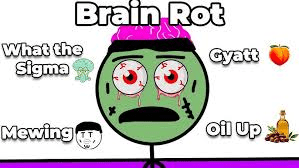
One of the latest features of online wordplay is the elevating of an older concept or cliche into a teasing provocation or pretence at new insights, as we have seen with ‘delulu’, ‘demure’ and ‘mindful’, ‘rizz’ and ‘brat’. The current rash of declarations of ‘being privileged’ – a new version of ‘humblebragging’ or ‘virtue-signalling’ – is another example. In parallel is the ironic celebration of the incoherence or absurdity of much online discourse and of low-quality ‘slop’ by embracing a culture of ‘brainrot’ – nonsense memes such as ‘skibidi’ and vacuous, contagious content.
Most of the innovation in online language and image still emanates from the US and even though a global audience can access it instantly, its tropes (think ‘goblin-mode’ – ‘goblin’ doesn’t have the same associations for Brits) don’t always translate for other speakers of English. In parallel, poses, gestures and looks as well as music-related modes are increasingly generated from non-English cultural zones such as Japan and Korea. It will be interesting to see if other parts of the globe begin to play a part in the evolving online theatre of signs and behaviours, but this doesn’t seem to have happened yet.

Chloe’s piece is here…

https://www.theguardian.com/media/2024/nov/02/what-a-privilege-trend-catches-on-as-gratitude-makes-social-media-comeback?CMP=share_btn_url

And the Newsweek article is here…

https://www.newsweek.com/2024-most-popular-internet-slang-words-revealed-1978732
On the first of November Collins Dictionaries, ahead of the pack, had already announced their choice of word of the year for 2024, and their candidates illustrated the same, in my opinion mistaken, concentration exclusively on terms from a very narrow range of sources. While postings on social media are performances designed to attract attention, there is an even wider domain in which discourse demands analysis: the crises in the Middle East and Ukraine and the surreal spectacle of the US presidential campaigns, for example, are also highlighting keywords and generating new formulations or reworkings of language – data that mainstream media and lexicographers seem to think unworthy of their attention…

https://twitter.com/CollinsDict/status/1852139743112208794

After language?

The latest multimodalities examined

During October I relished the chance to talk to the editors of DazedDigital, Serena Smith and Gunseli Yalcinkaya, and they told me about the most recent developments in online and digital communication and the new language varieties trending on social media. I have tried to make sense of a much younger generation’s performances and interactions and the notes I made follow here…

 Language and the way we use it is now for the first time truly globalised. This means for example that new accents and intonations and vocal affectations take place across several cultures almost simultaneously. This gives us pronunciation and intonation novelties like Youtuber or Influencer accent, TikTok voice, etc. These are fluid, evolving and can blend more than one traditional source (UK and US linguistic styles and usages for example). The phenomenon is not new – the mid-Atlantic accent dates back many decades and both Valley Girls and users of Multiethnic London English – MLE – have played with new ways of pronouncing, but the platforms and apps of the 2020s – TikTok in particular – highlight these…

Obviously the way we consume and exploit media has changed radically with the internet and mobile technology and determines the kinds of messages we exchange and the words, sounds and visuals we actually use. Short attention-spans mean that messages need to be accelerated, brief and telling: the constraints of apps and platforms make for compressed and dense information packages.  At the same time the imperative for innovation​ (something that has always been part of language evolution, but used to happen very gradually) – novelty, neologisms, new and more liberated attitudes to formality and informality and style in general – is integral to changing fashions, aesthetics, vibes. Even such basics as whether messages have to make sense have been destabilised by Gen Z‘s playful surrealism and absurdism and TikTok’s creative conventions.

One major change is the way that the distinction between written and spoken language has broken down since people began to type conversations and exchange rapid interactions electronically. Also Pre-existing words and expressions are hijacked, reversed, toxified, appropriated and modified as never before. And we all​ now have the power to do this via electronic media – we don’t need permission to publish and exchange our ideas and indulge our playful, mischievous or creative new usages.

Gunceli asked, There are so many memes joking about how we’ve ‘progressed past the need for language’. Obviously worth taking with a pinch of salt, but do you think there’s any truth to this? 

We won’t evolve ‘beyond language’ since language is simply a label for human interaction and communicative practices, but the specifics of that language will continue to adapt and mutate along with our social needs and our technologies. Linguists do talk increasingly in terms of multimodality whereby both online and offline communication involves much more than speech or writing – ‘language’ as we have known it. The buzzword multimodality can refer to how IRL we blend all sorts of semiotics often simultaneously: stance and posture, facial expression, gesture, writing, speaking and using a communication device, but also refers to how online and app messages employ abbreviations, acronyms, audio, video, symbols, memes as well as or instead of words (…soon probably touch and smell as well!)

The NPC streamers phenomenon highlighted by Dazed is another example of what I described as GenZ and TikTokers’ minimalist, surrealist or absurdist treatment of language. NPC stands for ‘non-playable character(s)’, the digital background entities with a limited repertoire of utterances and repetitive actions encountered in video games, and the streaming is an online activity, primarily on the TikTok platform, whereby creators imitate these characters by livestreaming themselves, and viewers reward them with in-app gifts for doing it.

The new primacy of image (and audio) over simply text and conversation has resulted in a human imitation of cartoon sounds and seemingly meaningless bits of language that only followers and enthusiasts will recognise and be positively triggered by. Playing with identities by way of words, slogans, soundbites and catchphrases is as much influenced by the poses of cosplayers or Furries and the behaviour of video-gamers as it is by ‘traditional’ ways of using verbal and visual language.

How do you think the mainstreaming of emerging tech like AI is changing the way we communicate verbally with one another?

Algorithms being used for automated reasoning and the generating of persuasive messaging or content are already operating at sophisticated levels, but the linguistic aspect is just as much prey to error and detectable failures as, for example, deepfake images and impersonations of artistic productions. If we are digitally literate and managing to keep up, we can often see through the deception, and this is probably reassuring. AI has some interesting potential: for example, to allow us to communicate with people whose language we don’t share. But I think the limitations of AI(-its difficulties in interpreting or reproducing human nuance, implication, indirectness, etc) will lead to – is already leading to – new forms of incoherence and misunderstanding. I suspect we will soon be able to recognise a particular ‘AI style’ so that artificially generated messages can be recognised as such in some cases – at least I hope so! Translators and teachers are already grappling with potential of AI to assist, supplement or replace their work – and its limitations in doing so. More alarmingly AI is already inventing and using languages that we humans can’t understand: https://www.fastcompany.com/90132632/ai-is-inventing-its-own-perfect-languages-should-we-let-it

Gunceli’s fascinating review of all these themes and more is here…

Serena Smith spoke to me about the latest version of familect, the intimate, informal, often comical language invented in private domestic spaces, about which I’ve written before on this site. Her excellent account of TikTok’s #MarriageLanguage is here…

DO TRY TO KEEP UP

Following fashions is an exhausting task. And has become more exhausting still.

I have been recording the fads, fashions, cults and trends that energise popular culture, and the labels by which they register themselves on our collective consciousness, for more than thirty years. With the advent of the Internet and messaging the lifestyle innovations, aesthetic novelties and personal badges of allegiance are nowadays free to go viral, go global, and in many cases to disappear, virtually instantaneously. I talked to Olive Pometsey of The Face magazine (itself an iconic vehicle for the propagation of new ideas and images) about the latest, accelerated, overheated iterations of micro and macro-identities competing on online platforms. The equally frenzied quality of much comment and analysis is perhaps conveyed by the notes I made before we spoke…

Olive’s excellent article is here…

A crowdsourced, online, free-for-all, 24/7 source of slang, catchphrases and new terminology is my friend Aaron Peckham‘s Urban Dictionary. As the Face article was going to press this was its phrase of the day…

vibe shift

Coined by trend forecaster Sean Monahan, a vibe shift describes the emergence of a “new era of cool.”

Fashion is a realm that experiences frequent vibe shifts, especially with the arrival of a new decade. Gone are the days when frosted tips and low-rise jeans and Abercrombie & Fitch were in.

We’re in the midst of a vibe shift right now with the widespread lifting of Covid-19 protocols and restrictions. We’re going out again and adapting in new ways to our environment; some will survive the shifting tides, and some won’t.

Yeah I’m in my vibe shift right now. You won’t catch me in the club now that things are opening back up again. I’m all about going to the Home Depot, renovating my home and hearthyknow? Once I tried topless gardening things changed a lot for me.

by bruhdisease April 24, 2022

Those once-thriving subjects, Cultural Studies and Media Studies, which I used to teach in the 1990s, are nowhere to be found in today’s educational landscape, and the cultural practices we used to analyse are these days ignored by most commentators, the subcultures (and microniches, hyperlocal communities) if they are mentioned at all are dismissed by older cohorts as trivial, frivolous and ephemeral. I doggedly persist, in solidarity with The Face, Wire, Dazed, i-D, TikTok, nanoinfluencers and microcelebrities, in finding them fascinating and significant.

Just a few days after the Face article appeared, the Mail Online announced the latest look for Summer 2022…

https://www.dailymail.co.uk/femail/article-10782439/Why-blokecore-set-biggest-trend-summer.html

And if you want a comprehensive list of currently trending aesthetic genres, it’s here…

https://aesthetics.fandom.com/wiki/Special:AllPages

A November update from the Guardian features one influential fashion website, and more of the latest terminology (‘auntwave‘)…

https://www.theguardian.com/fashion/2022/nov/09/blackbird-spyplane-newsletter-jonah-weiner-interview?CMP=share_btn_tw

…But then, in January 2023 Vice revealed the trend beyond all trends – (and beyond my understanding at first sight)…

https://www.vice.com/en/article/wxnmeq/corecore-tiktok-trend-explained

…In May Hugh Barnard alerted me to a Wiki register of aesthetics…

https://aesthetics.fandom.com/wiki/List_of_Aesthetics

BAD BUZZWORDS!?

The 27 Most Annoying Business Buzzwords of 2021

I talked last week to New York-based journalist Zoe Henry about the worst buzzwords of the year so far, and her article for Inc.com follows.

Here, first, are some of the points that came up in our conversation.

‘I think we can and should distinguish between business or corporate buzzwords (like ‘disruption’, ‘digital native’, ‘pivot’), political buzzwords (‘libertarian’, ‘alt-right’, ‘antifa’, ‘fake news’ in the US; ‘brexiteer’, ‘remoaner’, most recently ‘mutineer’ in the UK) and lifestyle buzzwords (‘side-hustle’, ‘woke’, ‘influencers’). There are however some words that overlap these categories: ‘resilience’ is one that is still trending in the UK in 2017, ‘storytelling’ and ‘holistic’ are others. I think it’s especially significant that examples of  political/sociocultural discourse like ‘weaponize’, ‘elite’, ‘toxic’, and slangy terms like  ‘snowflake’, ‘cuck’ or ‘libtard’ have dominated the conversation on both sides of the Atlantic in 2017. These are expressions that both reflect and evoke the unprecedented conflict and division in society that have been witnessed since the US election and the UK’s EU referendum.

Tedious buzztalk has increasingly involved generational or generationalist categorisation, conflict or prejudice: ‘Generation Z’, ‘parennials’, ‘centennials’ – ‘snowflakes’ again – are examples of the terms in use: opinion pieces listing millennials’ supposed failings or misdeeds are commonplace. This kind of language is evidence of commerce, politicians and the media trying to stage and exploit imagined or real ‘disconnects’ between babyboomers, millennials and the intervening Generation X, not for the common good but for their own devious purposes.

A word like ’empathy’ – an existing word and concept which suddenly starts trending -may be annoying when it’s over-used but points to something important happening in society. In this case the need to refocus on this quality in a divided, hypercompetitive and often uncaring environment.

Image result for bad buzzwords

Nearly all buzzwords follow the same trajectory:

  1. A buzzword appears and catches on because it defines some important innovation (‘AI’ for example or ‘fintech’, ‘blockchain’, ‘cryptocurrency’, ‘algorithm’ or ‘internet of things’) – a new device, process, way of behaving, a fashion or fashion item or fad. The ‘buzz’ comes about naturally if the new concept is truly significant, or artificially because it is hyped by the media.
  2. People who want to appear up-to-date or ‘cool’ adopt the buzzword (whether they fully understand it or not – ‘digital’ or ‘mindfulness’ are often cited, ‘portability’ is another offender) in order to impress – or if they are part of the corporate sphere, to assert their power, to dominate. The user of the jargon presents themselves as an informed progressive insider: those who don’t use the jargon are excluded or subordinated.
  3. The buzzword is over-used and becomes a cliche: the phrase ‘reach out’ and the word ‘craft’ are cases in point. It may be ridiculed and mocked  by sophisticates, castigated by self-appointed guardians of traditional language (but some people will go on using it nevertheless).
  4. Buzzwords eventually fall out of favour but this doesn’t happen quickly. Terms like ‘think outside the box’, often singled out in surveys as a recent irritant have actually been ‘on trend’ for a decade. ‘Frictionless’ has been around for some time but is just now at peak popularity, while one of Macmillan’s Dictionary’s words of 2017, ‘maximalism’ featured in Shoot the Puppy, my dictionary of buzzwords published in 2006, (which also listed the by-then-ten-year-old metaphorical meaning of ‘bandwidth’, on Zoe Henry’s hitlist and discussed today by Merriam Webster’s word-watchers: https://www.merriam-webster.com/words-at-play/what-is-the-new-meaning-of-bandwidth)’

(On a personal note I must admit that there are some labels or catchphrases that, however contentious or ludicrous they are, don’t especially upset me: both ‘centrist dad’, coined in the UK to deride middle-aged males who are too liberal either to embrace the left or attack the right, and ‘hand-wringing metropolitan elitist’, a slur beloved of conservatives, if I’m honest seem to describe me perfectly.)

Here, then is Zoe’s article, with her own selection of 2017’s worst buzzwords:

https://www.inc.com/zoe-henry/worst-buzzwords-2017.html

…And here is my earlier piece on the same subject from The Conversation in which I try to make the point that buzzwords may not always merit only condemnation:

https://theconversation.com/translated-the-baffling-world-of-business-jargon-52795

…Coincidentally, 24 hours after the above was posted, Andre Spicer, castigator of ‘business bullshit’, writes in The Guardian. He makes the rarely made historical connection between jargon and the terminology of therapy, but his condemnation of all ‘management speak’ is not nuanced enough to my mind:

https://www.theguardian.com/news/2017/nov/23/from-inboxing-to-thought-showers-how-business-bullshit-took-over

…Evidence here, from CBS News, that it’s political buzzwords which have dominated this year:

https://www.cbsnews.com/news/2017-contenders-for-word-of-the-year/

An update from February 2020: the anti-jargon polemics continue, unabated and tediously repetitive. This is a little more detailed, more thought-provoking piece from Molly Young at Vulture:

https://www.vulture.com/2020/02/spread-of-corporate-speak.html

..which prompted this riposte from Mark Morgioni at Slate:

https://slate.com/human-interest/2020/02/garbage-language-business-speak-defense.html

…and, four years later, the topic is still trending, here on the BBC website:

https://www.bbc.com/worklife/article/20240202-the-animal-instinct-that-drives-workers-to-adopt-corporate-jargon

Image result for shoot the puppy book