A GLOSSARY OF WEAPONISED* WORDS, BREXITSPEAK and THE TOXIC TERMINOLOGY OF POPULISM

In 2018 I began collecting new and controversial language generated by the rise of conservative populism in the US and the UK, by pro- and anti-Trump sentiment in the US and by the divisions resulting from the UK’s Brexit vote. This is still a work in progress: the list of terms as it stands is below. An ideal glossary or lexicon would include detailed definitions and comments (for example, the second word in the list is my own invention, intended to describe a statement, act or policy showing effrontery, and itself a deliberate affront to a section of the population), dates of first use where traceable and a ‘lexical’ categorisation (into ‘jargon’, ‘slang, ‘catchphrase’, cliché, for instance). This more exhaustive treatment is beyond my resources for now, but googling the term in question will throw up examples which may be accompanied by dates and useful commentary.

In January 2024 I began to add words and phrases used by combatants and commentators in connection with the continuing ‘conflict’ in Israel, Palestine and Lebanon. Exactly one year later the ‘coup’, as some described it, enacted in the USA by Donald Trump and Elon Musk, featured new examples of distortion, euphemism and the language of rancour.

***Please do contact me with new examples, with comments and with criticism, which will be gratefully acknowledged and credited.***

Accelerationist

Accommodationist

Administrative detention

Affrontery

Agitators

Airfix patriotism

Alpha

Alt-centre

Alt-right

Amalek

Anglosphere

Annexationist

Anticipatory compliance/obedience

Antifa

Anti-growth coalition

Anywheres

Armed intervention

Asset

Astroturfing

Asylum shopping

Attitudinarian

Australia-style deal

Autohagiography

Backstop

Bad actors

Based

Bed-wetting

Beta

Beyond satire

Bike-shedding

Birtherism

Bitterites

Black hole

Black ops

The Blob

Blowback

Body count

Bot

Both-sidesism

Breadcrumbs

Brectum

Bregressive

Bregret(s)

Bremain

Brengland

Brexiles

Brexit dividend

Brexiteer

Brexit means Brexit

Brexit ultras

Brexmageddon

Brexmas

Brexodus

Brexomertà

Brexpats

Brexshit

Brextension

BRINO

Britain deserves better

Bubble

Butthurt

Cakeism

Calling out

Canada plus plus plus

Cancel culture

Candour deficit

Canzuk union

Casino capitalism

Centrist dad

Cherry-picking

Children of light

Chilling

Chumocracy

Churnalism

Civics

Civilian Security teams

Civility

Classist

Cliff-edge

Clown car

Clown country/state

Clusterbùrach

Coerced migration

Coercive diplomacy

Cognitive elite

Cognitive warfare

Collateral

Collective narcissism

Combative

Combat propaganda operative

Compassion deficit

Competing narratives

Concern(ed)

Concierge class

Confected fury

Conflicting accounts

Consequence culture

Copaganda

Cosmopolitan

Corbynista

Corporatocracy

Coup

Coup Klux Klan

Courtier journalists

Crash out

Cronyvirus

Crowdstrike

Crybaby

Cuck

Culturalism

Cultural marxist

Culturally coherent

Culture warrior

Dark forces

Datagrab

Dead cat strategy

Death cult

Deepfake

Deep state

Defund

DEI (Diversity, Equity, Inclusion)

DEI items

Delegitimizer

Demilitarization

Democide

Deplorables

Detained

DEXEU

‘Dies’

Disappeared

Disaster capitalism

Discourse engineering

Disinformation

Divorce bill

Do-gooder

Dogpile

Dog-whistle

Doom loop

Double down

Doxxing

Drain the swamp

DREAMer

Dumpster fire

Echo-chamber

Economic nationalism

Economically inactive

Educide

Elite

Empty chair

Enablers

Enemies of the people

English exceptionalism

Ergo decedo

Establishment

Ethnics

Ethnonationalist

Ethno-state

Exchange of fire

Expert

Factuality

Fake news

Fall off a cliff

False flag operation

Fash-adjacent

Fashy

Fauxlanthropist

FBPE

Feminazi

Fifth column

Finger-sniffer

Firehosing

Flextension

Flooding the zone

FluTruxKlan

Fractionate

Fratriarchy

Frictionless

Frit

Frontlash

FUD

Gammon

Gammonista

Gangster state

Genocide Joe

Get it done

Getting the barnacles off the boat

Gimmegrant

Girly swot

Global Britain

Globalist

GNU

Grievance studies

Grumpy retiree

Guardianista

Hard Brexit

Hate goblin

Hatriot

Headroom

Headwinds

Henry VIII powers

Heterophobic

High-vis nazis

Hobbit

Homonationalism

Hopepunk

Hose it down

Humanitarian bridge

Hybrid threats

Identitarian

Idiocracy

Illuminati

Incel

Indications

Indicative vote

Individual-1

Intentional explosion

Intifada

Irrational exuberance

Jambon jaunes

Jexodus

Kayfabe

Keirmacht

Kicking the can down the road

Kindercoup

King baby

Kipper

Kipper moment

Kleptofascist

Kompromat

Lamestream media

Lawfare

Leave means leave

Leftwaffe

Legitimate concerns

Lentil-weaving

Lesser mortals

Lethal aid

Level up

Lexit

Libertarian

Libtard

Loss of life

“Lost their lives”

Limited ground operation

Limp-wristed

Little Englander

Lolcow

Londongrad

Londonistan

Long Corbyn

Long coup

Low-energy

Luftwaffle

MAGA

Magic Grandpa

Magic money tree

Majoritarian

Man-baby

Mangina

Manosphere

Manufactured consent

Masculinist

Matrixed

Maybot

Meaningful vote

Meat wave(s)

Mediaeval methods

Melt

Meninist

Mercurial

Metropolitan

Microaggression

Militarised nostalgia

Milkshake(d)

Mindless compassion

Ming vase

Mischievous

Mishap

Missing

Momtifa

Moral clarity

Moral emptiness

Moral grandstanding

MSM

Nakba 2

Nanny state

Nativist

Necrocapitalism

Necropolitics

Neglexit

Neon nazis

Nerd Reich

Neurotic elite

Neutrollization

No-deal

No-platforming

Normie

Nudgism

Obey in advance

Offence archaeology

Operational matter

Operation Red Meat

Operation Save Big Dog

Optics

Ordeals

Ostentatious meekness

Oven-ready

Over-briefed

Overly purist

Overton window

Palaeoconservative

Partygate

Pearl-clutching

Penumbral jobs

People’s vote

Performative allyship

Performative cruelty

Pile on

Political correctness

Political gospel

Polycrisis

Post apocalyptic warlord

Post-liberal

Postmodern

Posttext

Post-truth

Poverty porn

Prebunking

Pre-emptive strike

Price cap

Project Fear

Protesters

Prozac leadership

Pugnacious

Punchy

Purity of arms

Push (BBC euphemism for armed incursion, invasion)

Pushback

Put/stick that on the side of a bus

QAnon

Quitlings

Rabble

Race to the bottom

Rage bait

Rage farming

Rampdown

Red lines

Red pill

Red wall

Regrexit

Rejoiner

Re-leaver

Relocate

Remainiacs

Remain plus

Remigration

Remoanathon

Remoaner

Remove kebab

Replacement theory

Reply deboosting

Reputation laundering

Resistance

Restorative nostalgia

Retconning

Revoker

Roll back

Rootless

Row back

Russian asset

Saboteur

Sadopopulism

Safe space

Scumbag centrism

#ScumMedia

Sealioning

Sensitivity reader

Shadow blocking

Shallowfake

Shill

Shire

Shitposting

Shitshow

Showboating

Shylock

Sick-note culture

Singapore-on-Thames

SJW social justice warrior

Skilling up

Skunked term**

Slave populace

Sleaze

Snowflake

Sobersides

Sockpuppet

Soft border

Soft Brexit

Somewheres

Sovereignty

Soy-boy

Spartan phalanx

Spiv

Star Chamber

Starmergeddon

Stenographer

Sticking point

Strategic self-abasement

Stunning proposal

Sunlit uplands

Supermajority

Surgical strike

Svengali

SWERF

TACO

Taking back control

Tankie

Targeted individual

Targeted strike

Technofeudalism

Tender-age shelter

“Tensions rise”

Terf

Terminability

The other team

Throw under the bus

#tfg, ‘the former guy’

Tick tock

Tigger

Tofu-eating

Tone deaf

Tone policing

Tory scum

Toxic positivity

Transactional

Transition period

Trexit

Triangulation

Tribal(ism)

Trickle-down pathology

Troll farm/factory

Trumpcession

Trump slump

Truth-squadding

Tufton Street

Tu quoque

Two-tier policing

Unconfirmed reports

Unicorns

Unpopulism

Unrest

Unspin

Urban

Values voter

Vassal state

Verbal incontinence

Vice-signalling

Vigilante journalism

Village idiot

Virtue-signalling

Voluntary emigration

Walk back

War cabinet

War of extraordinary civilian casualties (Guardian euphemism for genocide)

Watch-list

Weaponised*

Wedge issues

West(s)plaining

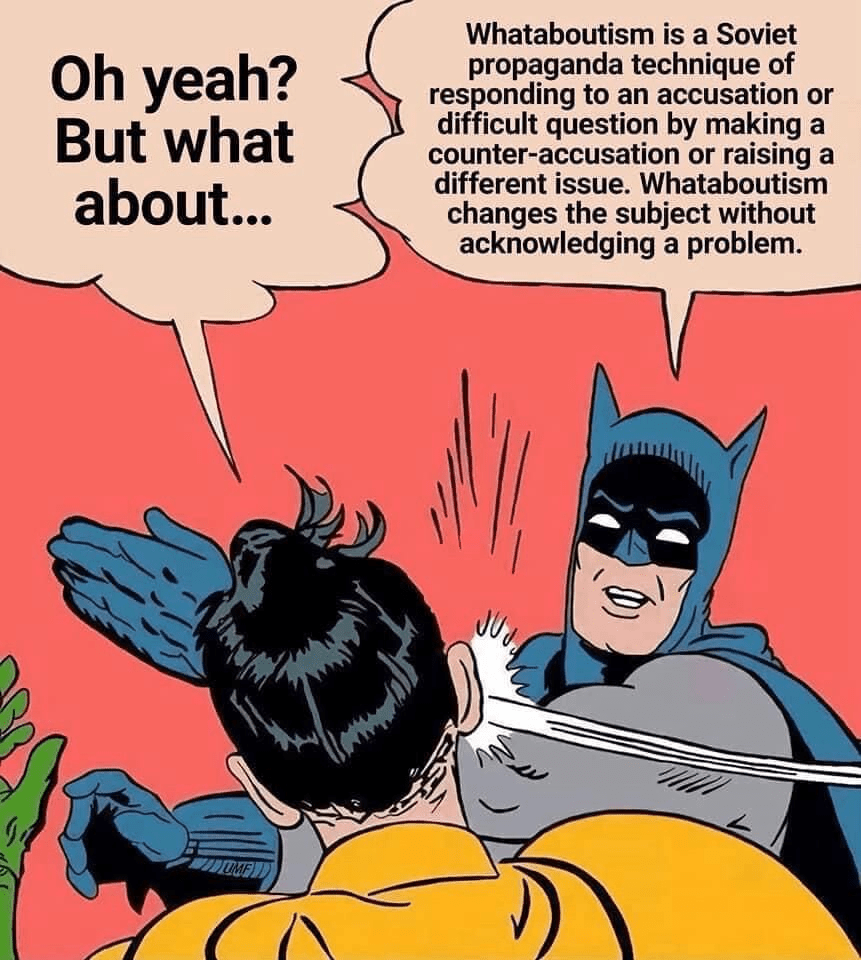
Whataboutery
White supremacist

Will of the people

With a heavy heart

Woke

Woke mind virus

Wokerati

Wokescold

Woketard

Woke warriors

Woke-washing

Womp womp

Workington man

Yoghurt-knitting

Zealot

I’m grateful especially to the many contacts on Twitter who have already contributed to this modest project, particularly Duncan Reynolds @duncanr2, and will credit them all by name/handle when a final version is published.

I’m also very grateful to Rob Booth and the Guardian who, in October 2019, wrote about the glossary and its topicality in increasingly conflicted times:

https://www.theguardian.com/politics/2019/oct/05/brexitspeak-brexit-vocabulary-growing-too-fast-public-keep-up

And to Carlos Fresneda for this piece in El Mundo:

https://www.elmundo.es/internacional/2019/10/17/5da765cf21efa0eb618b4680.html

Artist Simon Roberts has kindly shared with me his artworks based on his own lexicon of Brexit language:

Between the Acts, Part II – The Brexit Lexicon

For readers, students, and researchers interested in or working with this topic here are some of the other articles and sources to consider…

In February 2017 The New European published its own very useful lexicon, from which I have drawn, gratefully but without permission :

https://www.theneweuropean.co.uk/culture/the-new-lexicon-of-hate-a-disturbing-a-z-of-alt-right-language-1-4894833

And the BBC listed many of the technical – and some less technical – terms associated with Brexit earlier this year:

https://www.bbc.com/news/uk-43470987

Last year Karl McDonald discussed the language used by Labour party leftists in the i newspaper:

https://inews.co.uk/news/politics/slugs-melts-inside-language-culture-corbynite-left/

And here’s Helen Lewis in the New Statesman on incivility in the UK:

https://www.newstatesman.com/politics/uk/2018/08/how-britain-political-conversation-turned-toxic

And Philip Seargeant on ‘fake news’:

In November 2018 The Guardian published a useful ‘jargon-buster’ guide to the terms being used at this late stage of (or impasse in, if you prefer) UK-EU negotiations:

https://www.theguardian.com/politics/2017/jun/19/brexit-phrasebook-a-guide-to-the-talks-key-terms

Here Renee DiResta describes the ongoing ‘Information War(s)’ of which the manipulation of language is one component:

The Digital Maginot Line

I have only just come across this perceptive essay from 2017, by Otto English on his Pinprick blog, in which he coins the terms Ladybird libertarian and Ronseal academic:

Ladybird Libertarians: Dan Hannan, Paddington and the pernicious impact of 1970s children’s literature on Brexit thinking

In January 2019 James Tapper contributed this very perceptive assessment of Brexit metaphors:

And in March, more from the BBC:

http://www.bbc.com/culture/story/20190314-how-brexit-changed-the-english-language

In July 2019 the FT ran an interesting review of Boris Johnson’s press articles as precursors of ‘fake news’:

https://www.ft.com/content/ad141e8a-976d-11e9-9573-ee5cbb98ed36

And in October of the same year David Shariatmadari and Veronika Koller considered Brexit metaphors:

Brexit and the weaponisation of metaphor

*The progressive weaponisation of language is discussed here by Justin Strawhand:

https://www.huffpost.com/entry/weaponized-language_b_1380788

In an update from November 2023 New Lines Magazine addressed the distorted, conflicted language employed in describing Israel’s response to Hamas:

https://newlinesmag.com/argument/language-is-a-powerful-weapon-in-the-israel-palestine-conflict/

**’Skunked terms’ are words or expressions undergoing a controversial change in meaning. Examples are ‘liberal’ and ‘libertarian’ which have transitioned from referring to leftist, progressive or centrist positions to denote neo-conservative or alt-right affiliations. Nearly two years on from my original post the useful designation ‘anglosphere’, describing English-speaking nations with shared cultural features, has been co-opted by far-right nativists in the UK to promote a supremacist ideology.
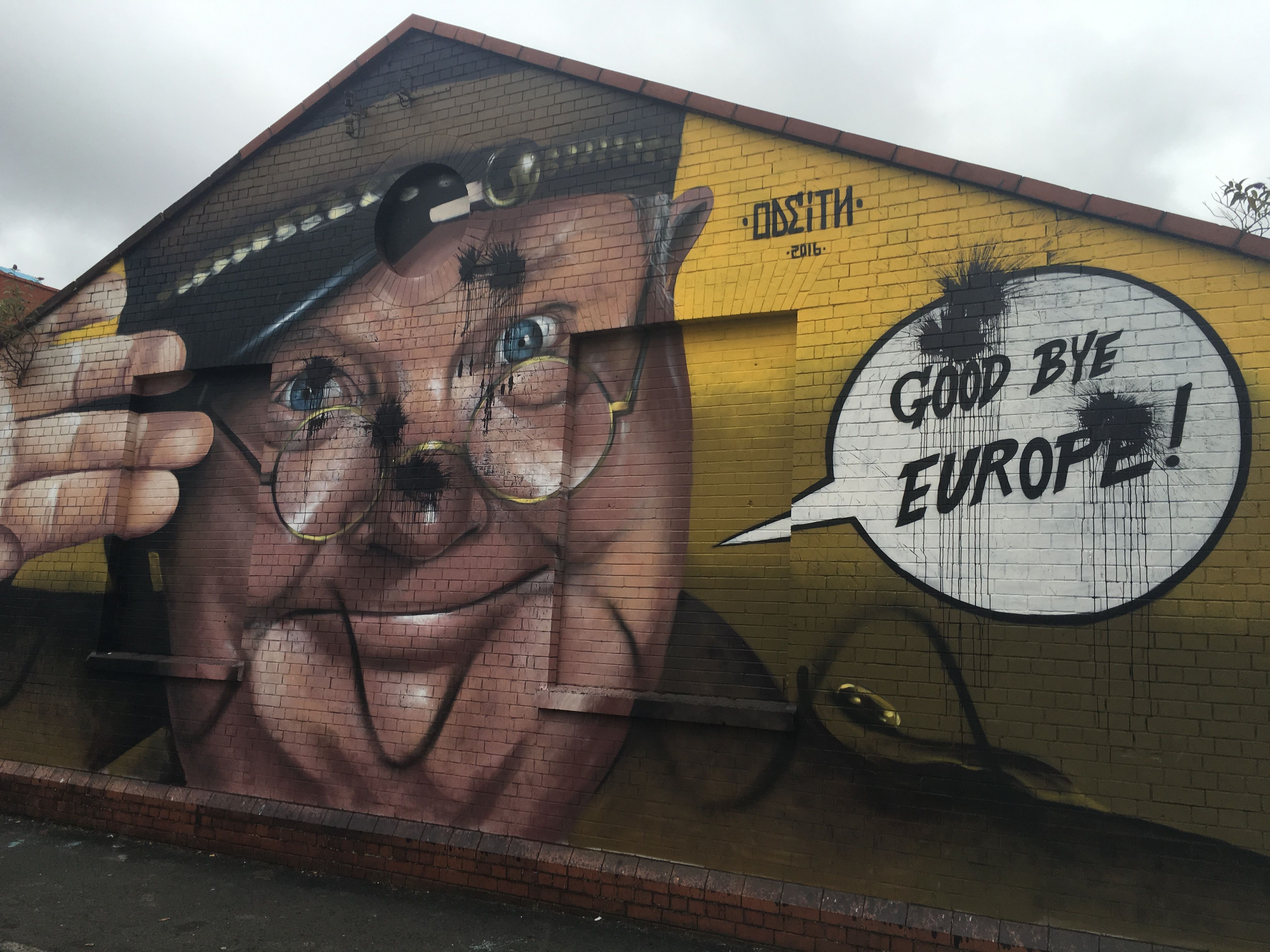
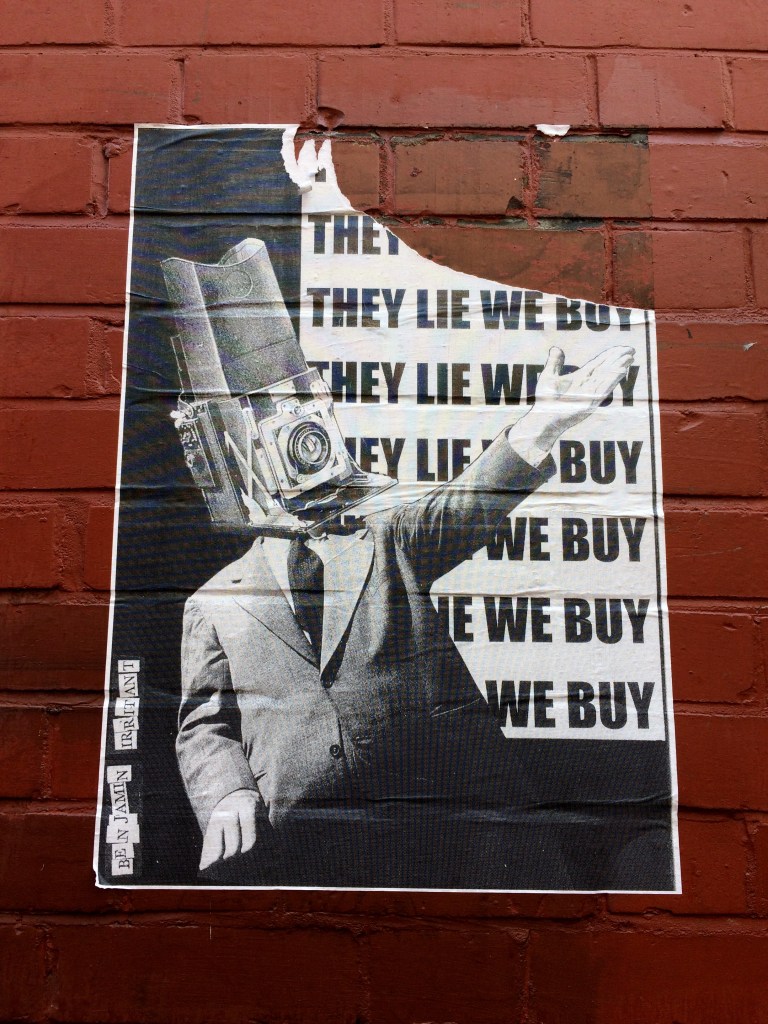
Image result for Brexit graffiti

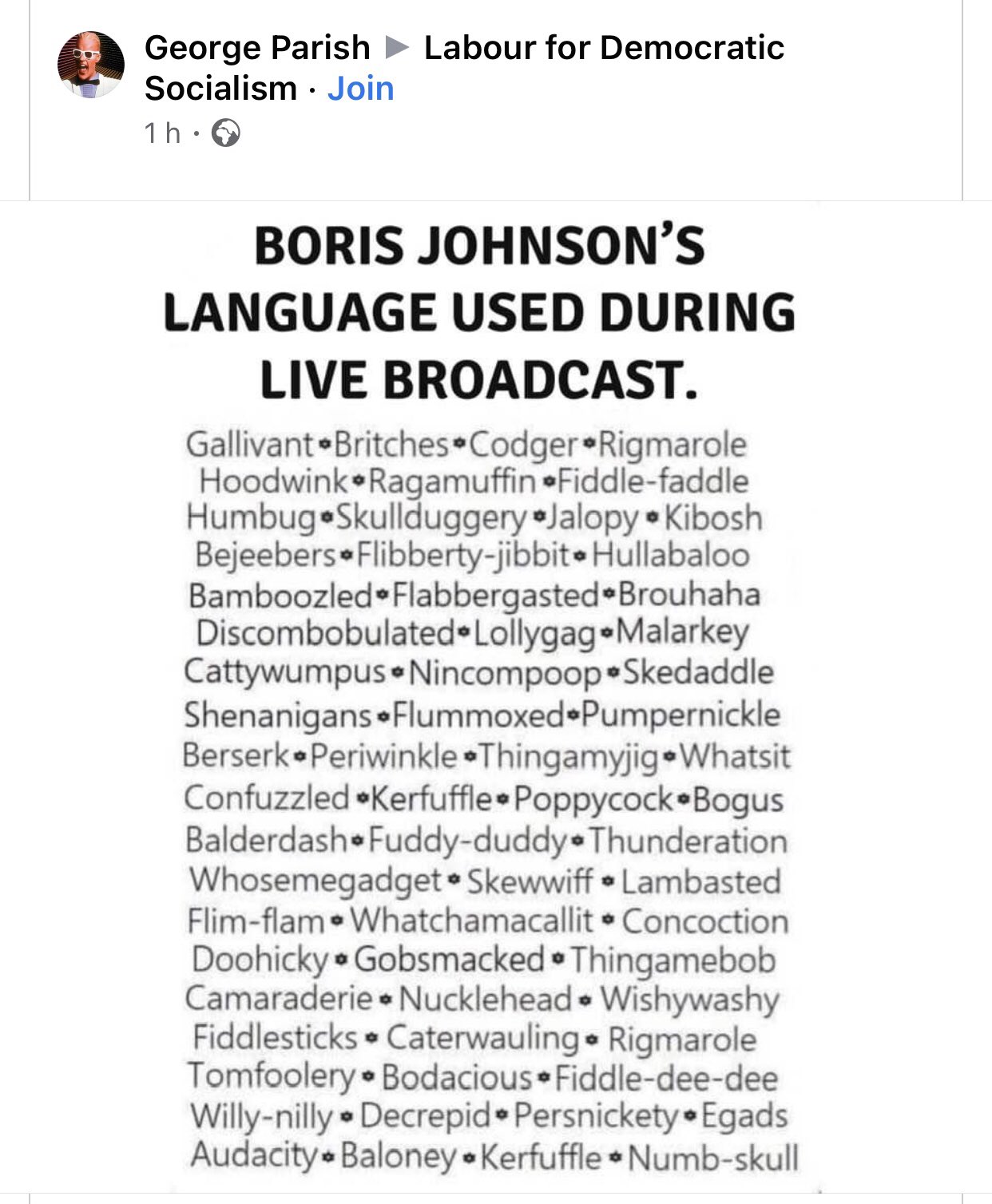
As a further footnote, this from Twitter in November 2020 (thanks to Alan Pulverness), a reminder that weaponised words may also be frivolous – even puerile:
Image

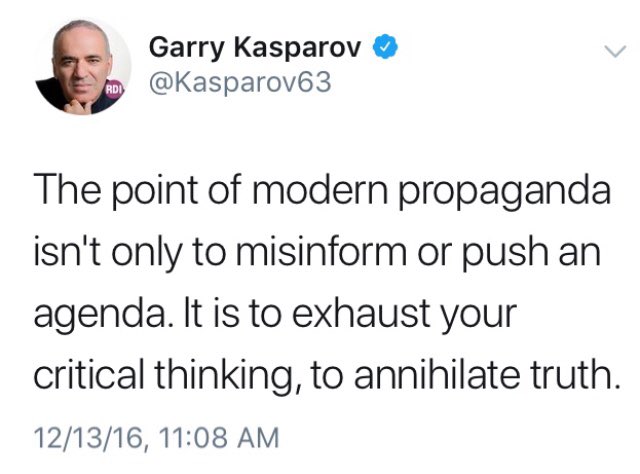
Looking back to 2016, a prescient tweet by Gary Kasparov:
Image

At the end of 2022 my friend and collaborator Dan Clayton wrote, for Byline Times, about the latest iteration of toxic terminology and rhetoric: the demonising of refugees and migrants:

In early 2024 I belatedly learned of an interestingly tendentious and sententious glossary purporting to list and explain the words used by the ‘woke’. This, compiled by Dr James Lindsay, critically examines key terms relating to gender studies, critical race theory and identity politics in the US context:

And in May 2024 Amanda Montell described in The Guardian how politicians and influencers deploy cliches in online discourses:

https://www.theguardian.com/books/article/2024/may/20/the-big-idea-the-simple-trick-that-can-sabotage-your-critical-thinking?CMP=share_btn_url

In June 2025 the Centre for Media Monitoring published its analysis of the BBC‘s coverage of the devastation of Gaza:

Later in June, as Israel and Iran exchanged fire, Assal Rad noted the double standards employed in reports of the conflict:

The language of manufacturing consent:

🇮🇱

: Preemptive strikes

🇮🇷

: Escalation

🇮🇱

: Warns

🇮🇷

: Threatens

🇮🇱

: Targets

🇮🇷

: Attacks

🇮🇱

: Government

🇮🇷

: Regime

🇮🇱

: Right to self-defense

🇮🇷

: Condemnations

🇮🇱

: Sophisticated military (has nukes)

🇮🇷

: Nuclear threat (has no nukes)

THE DISCOURSE OF DIVISION

The US election campaign through a language lens

As the campaigning reached its climax and the polling-stations began to open, I spoke to Kate O’Connell and Gemma Chatwin of the Corporate Communications Team at King’s College London about the language used by the rival candidates, their aides and their supporters during the twelve months since the election process began. Kate and Gemma’s questions are below with my replies…

  • As a language specialist, what have you observed/found interesting about the US election?

One thing that strikes an outsider – British or European, I suggest – is the different  nature of the vocabulary and rhetoric employed in US campaigning: the seemingly chaotic and unrestrained messaging, pivoting and veering unexpectedly into new areas sometimes, showing a lack of consistency, except in tone (Trump’s particularly). There is actually less reliance on a narrow range of repeated specific keywords, slogans and soundbites than has been the case in UK political campaigning – for Brexit, during the pandemic and in the recent election: (‘Take back control’, ‘Brexit means Brexit’, ‘Eat out to help out’, ‘Stop the Boats’ etc.). The Republicans’ messages have been more consistent in emphasising a few key ‘wedge’ issues while Democrats seemed to take a long time to decide on their priorities in terms of focus.

  • How has the language used by both candidates differed? What does their language tell us about their campaign strategy/ voter base?

Linguists – myself included – have tried to track the formulations (not so much genuinely new language as reworking of familiar tropes) used by each side and measure the frequency with which particular topics and particular trigger-words recur. Donald Trump has employed a vocabulary containing many examples of the language of fear and violence, and much intemperate language throughout: ‘vermin’, ‘criminal migrants’, ‘the enemy from within’, ‘radical left lunatics’, and words evoking existential threats: ‘invaded’, ‘conquered’, ‘occupied’, ‘deportation’ and violence: ‘kill’, ‘death’, ‘blood’, ‘nuclear war’, ‘guns trained on her face’. One analysis concluded that Trump had used more violent language than any other recent political orator except Fidel Castro!

Trump has consistently favoured the use of ‘I’ and ‘they’, Harris more often emphasising ‘we’. The Democrats on the other hand, while perhaps favouring less inflammatory language have possibly failed, until the closing days of the campaign (‘neighbors not enemies’ is a last-minute exception), to find memorable, resonant phrases to inspire and motivate. While initially hesitant, and despite Kamala Harris being accused in the more distant past of ‘word salads’ the Democrats, apart from Joe Biden, have been measurably more coherent, while many of Trump’s recent performances have been criticised as meandering if not incomprehensible. His justification for this being that he is practising ‘the weave’, a sort of improvisational incantation that his followers appreciate.

  • We have seen a lot of name-calling in the 2024 election, has it been effective?

A famous example of a slur which seems to have worked is Tim Walz’s characterising of Trump and the Republicans as ‘weird’. This is effective since the word is not especially offensive or toxic but frames the opposition as odd, eccentric, unstable in worrying ways, by implication disturbing – a relatively casual criticism of a community that is old and out of touch with reality. The Republicans accusing ‘immigrants’ of eating pet dogs and cats and likening Puerto Rico to a ‘floating island of garbage’ outraged their opponents, though Joe Biden also came unstuck when he reached for the same metaphor. It’s notable that both sides have used proxies to deliver some of the most stinging criticisms of the leaders, rather than have them delivered by the candidates themselves: ‘childless cat lady’ for example, or ‘unhinged, unstable, unchecked’ – words supplied by former Trump aides and reposted by the Democrats. One rather surprising blip in the unfolding news cycle occurred when Harris suddenly approved the f-word, agreeing when it was suggested to her that Donald Trump was a ‘fascist’. He quickly returned the insult, adding the ‘N-word’ which everyone had so far avoided: ‘I’m the opposite of a Nazi’. Both sides seem to have tacitly put those words aside for the final phase of the campaigning, though tellingly, in a final peroration J.D Vance urged followers to ‘take out the trash’ in reference to the Vice-President.

I think that outsiders listening in bemusement or horror at the campaign rhetoric misunderstand the nature of the voter bases involved. Doom-laden warnings and threats and angry braggadocio can be effective, reassuring and motivating to an audience for whom ‘make America great again’ carries a conviction that the country is at the mercy of hostile forces and on the edge of social breakdown. Conversely Kamala Harris’s more upbeat, feelgood emphasis attempts to instil a cheerful positivity which may not always have been backed up with hard facts or firm commitments (apart perhaps where reproductive rights are concerned).

  • Could this be the first election won on TikTok?

Kamala Harris’s folksy reference, early in the campaign, to having ‘fallen out of the coconut tree’ cleverly appealed to a family audience and referenced her own potentially controversial heritage in a positive way. She has also tried, seemingly with some success, to tap into the female and feminine constituency and the relatively youthful energy  displayed by users of TikTok, a platform which avoids threats and displays of anger and relies on self-promotion, performances of success and – crucially – an element of self-mockery and humour that is entirely missing from Donald Trump’s repertoire. TikTok currently occupies the high-ground of the social media landscape and is a valuable channel by which to reach millennials and GenZ (the latter voting for the first time) millions of whom are potential democrat supporters. It does not reach, however the middle-aged or elderly undecided. Celebrity endorsements apparently can motivate potential non-voters to change their minds and vote, but unsurprisingly probably only affect a demographic which is already on-side anyway (‘Swifties’ for example who are said to have added 400,000 votes to Harris’s tally). Elon Musk’s embracing of Donald Trump is more difficult to assess, as Musk’s own fanbase – tech bros, startup promoters and bitcoin traders among them – aren’t necessarily effective multipliers or influencers on his behalf or Trump’s and perhaps less likely to sway the undecided.

  • How did brat summer and ‘vibes’ benefit Kamala Harris’s campaign?

When pop icon Charli XCX posted her endorsement on X, ‘Kamala IS brat’, young women flooded social media with pro-Harris ‘brat’ memes, kickstarting her takeover from Biden and effectively labelling her as endearingly ‘messy, honest and volatile.’ The democrat campaign switched up to make good use of the tropes and tendencies of pop culture and entertainment media, receiving endorsements from many musicians and Hollywood names, culminating in their candidate’s surprise appearance on Saturday Night Live in which she launched viral versions of her own name -‘End the drama-la’, ‘Cool new step mom-ala’ and returned to that conflicted keyword, asserting that she would be able to open the ‘doors of the garbage truck’ that Trump had fumbled with. This confident banter in the very last moments of the campaign, along with her pivot, after Bill Clinton’s disastrous intervention, to promising some sort of support for Gaza, can only help the democrats’ chances, and these messages are featuring in places that Trump cannot usually access. Nevertheless the Republican candidate is doubling down on his insurrectionist rhetoric, welcomed by his base, saying now that he ‘should never have left the White House in the first place’.

My friend Serena Smith wrote perceptively for Dazed magazine about the role of celebrities in the presidential race…

https://www.dazeddigital.com/life-culture/article/64995/1/will-pop-culture-impact-the-result-of-the-2024-us-election

Once the race was over the avalanche of post-mortems and recriminations began. Among them were a few which focused, as I had tried to, on the discourse of division. In the New Yorker Joshua Rothman considered the very different flavour of the two parties’ language…

“Id been spending a lot of time watching interviews with Kamala Harris and Donald Trump – conversations that tended to be below average. On shows like “60 Minutes” and in her CNN town tall, Harris had been charming and trenchant but also repetitive and inflexible. Restrained by her determination to stay on message, she often failed to answer questions directly. Trump, for his part, lied, rambled and spouted nonsense as usual. And yet his lack of constraint at least made him entertaining…

…Harris and Trump’s flawed performances were typical of the duelling communications styles now wielded by Democrats and Republicans. Broadly, Democrats preach while Republicans riff; Democrats stick to their messages while Republicans let loose with whatever comes into their heads.”

In the Guardian Nesrine Malik convincingly dismantled the lazy consensus that held that the result was a defeat for the Democrats’ supposedly embracing ‘woke’ policies and relying on endorsement by ‘woke’ celebrities…

https://www.theguardian.com/commentisfree/2024/nov/25/woke-lost-us-election-patrician-class-identity-politics

After language?

The latest multimodalities examined

During October I relished the chance to talk to the editors of DazedDigital, Serena Smith and Gunseli Yalcinkaya, and they told me about the most recent developments in online and digital communication and the new language varieties trending on social media. I have tried to make sense of a much younger generation’s performances and interactions and the notes I made follow here…

 Language and the way we use it is now for the first time truly globalised. This means for example that new accents and intonations and vocal affectations take place across several cultures almost simultaneously. This gives us pronunciation and intonation novelties like Youtuber or Influencer accent, TikTok voice, etc. These are fluid, evolving and can blend more than one traditional source (UK and US linguistic styles and usages for example). The phenomenon is not new – the mid-Atlantic accent dates back many decades and both Valley Girls and users of Multiethnic London English – MLE – have played with new ways of pronouncing, but the platforms and apps of the 2020s – TikTok in particular – highlight these…

Obviously the way we consume and exploit media has changed radically with the internet and mobile technology and determines the kinds of messages we exchange and the words, sounds and visuals we actually use. Short attention-spans mean that messages need to be accelerated, brief and telling: the constraints of apps and platforms make for compressed and dense information packages.  At the same time the imperative for innovation​ (something that has always been part of language evolution, but used to happen very gradually) – novelty, neologisms, new and more liberated attitudes to formality and informality and style in general – is integral to changing fashions, aesthetics, vibes. Even such basics as whether messages have to make sense have been destabilised by Gen Z‘s playful surrealism and absurdism and TikTok’s creative conventions.

One major change is the way that the distinction between written and spoken language has broken down since people began to type conversations and exchange rapid interactions electronically. Also Pre-existing words and expressions are hijacked, reversed, toxified, appropriated and modified as never before. And we all​ now have the power to do this via electronic media – we don’t need permission to publish and exchange our ideas and indulge our playful, mischievous or creative new usages.

Gunceli asked, There are so many memes joking about how we’ve ‘progressed past the need for language’. Obviously worth taking with a pinch of salt, but do you think there’s any truth to this? 

We won’t evolve ‘beyond language’ since language is simply a label for human interaction and communicative practices, but the specifics of that language will continue to adapt and mutate along with our social needs and our technologies. Linguists do talk increasingly in terms of multimodality whereby both online and offline communication involves much more than speech or writing – ‘language’ as we have known it. The buzzword multimodality can refer to how IRL we blend all sorts of semiotics often simultaneously: stance and posture, facial expression, gesture, writing, speaking and using a communication device, but also refers to how online and app messages employ abbreviations, acronyms, audio, video, symbols, memes as well as or instead of words (…soon probably touch and smell as well!)

The NPC streamers phenomenon highlighted by Dazed is another example of what I described as GenZ and TikTokers’ minimalist, surrealist or absurdist treatment of language. NPC stands for ‘non-playable character(s)’, the digital background entities with a limited repertoire of utterances and repetitive actions encountered in video games, and the streaming is an online activity, primarily on the TikTok platform, whereby creators imitate these characters by livestreaming themselves, and viewers reward them with in-app gifts for doing it.

The new primacy of image (and audio) over simply text and conversation has resulted in a human imitation of cartoon sounds and seemingly meaningless bits of language that only followers and enthusiasts will recognise and be positively triggered by. Playing with identities by way of words, slogans, soundbites and catchphrases is as much influenced by the poses of cosplayers or Furries and the behaviour of video-gamers as it is by ‘traditional’ ways of using verbal and visual language.

How do you think the mainstreaming of emerging tech like AI is changing the way we communicate verbally with one another?

Algorithms being used for automated reasoning and the generating of persuasive messaging or content are already operating at sophisticated levels, but the linguistic aspect is just as much prey to error and detectable failures as, for example, deepfake images and impersonations of artistic productions. If we are digitally literate and managing to keep up, we can often see through the deception, and this is probably reassuring. AI has some interesting potential: for example, to allow us to communicate with people whose language we don’t share. But I think the limitations of AI(-its difficulties in interpreting or reproducing human nuance, implication, indirectness, etc) will lead to – is already leading to – new forms of incoherence and misunderstanding. I suspect we will soon be able to recognise a particular ‘AI style’ so that artificially generated messages can be recognised as such in some cases – at least I hope so! Translators and teachers are already grappling with potential of AI to assist, supplement or replace their work – and its limitations in doing so. More alarmingly AI is already inventing and using languages that we humans can’t understand: https://www.fastcompany.com/90132632/ai-is-inventing-its-own-perfect-languages-should-we-let-it

Gunceli’s fascinating review of all these themes and more is here…

Serena Smith spoke to me about the latest version of familect, the intimate, informal, often comical language invented in private domestic spaces, about which I’ve written before on this site. Her excellent account of TikTok’s #MarriageLanguage is here…

DOCTORS OF SPIN

The New Language of New Britain – 25 Years On

I thought it might be interesting, even informative, to look back from our post-Brexit, post-COVID vantage point in early 2023 to a time before a culture of impunity had become embedded, a time when there still seemed to be a consensus across political persuasions that competence was a first requirement of whoever was elected to govern Britain, (but a time, too, in which there was a feeling among many that profound changes were overdue). In 1997 I made a series of programmes for BBC World Service Radio, looking at how emerging words and phrases seemed to embody novel attitudes on the part of the British. The broadcasts were aimed at listeners outside the UK, although at that time also accessible inside the territory.

The first in a series of short programmes looked at the language of New Labour, at perceptions of a closer relationship between its politicians and what is now called the mainstream media and at the role of the spin doctors (one of the very new formulations heard in those days) responsible for what is now called comms and messaging and for negotiating that rapprochement.

I was fortunate to be able to draw upon insights from Derek Draper, at that time one of New Labour’s highest placed political advisors and lobbyists, journalist and columnist Julia Hobsbawm and writer and critic Peter Bradshaw. Our conclusions were at that time revealing, I think, even if now the notions and the behaviour we were looking at and the terminology that accompanied them have become commonplace.

These recordings were lost for many years, and I am very grateful, both to my then-producer Colin Babb for recovering some of them, and to Urban Mrak who has managed to restore and re-record a small selection of the damaged tapes. The first of them can be accessed here, although the first few seconds during which we listened in the studio to reiterations of the ‘New Labour, New Britain’ mantra are missing…

https://www.podbean.com/player-v2/?i=wph5j-139127f-pb&from=pb6admin&share=1&download=1&rtl=0&fonts=Arial&skin=1&font-color=auto&logo_link=episode_page&btn-skin=7

In the following days I will add two more of these short recordings, dealing, respectively, with the idea that late-90s Britain was experiencing an upsurge in aggressive, selfish behaviour, typified by the new concept of ‘road rage‘, and an increase in female assertiveness caricatured as ‘girl power‘.

Derek Draper

Julia Hobsbawm

Peter Bradshaw

A ‘PUERILE’ RACE?

‘Expert commentary’ on a volatile, contentious process

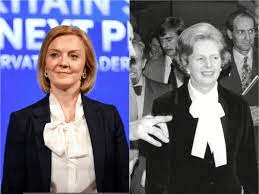
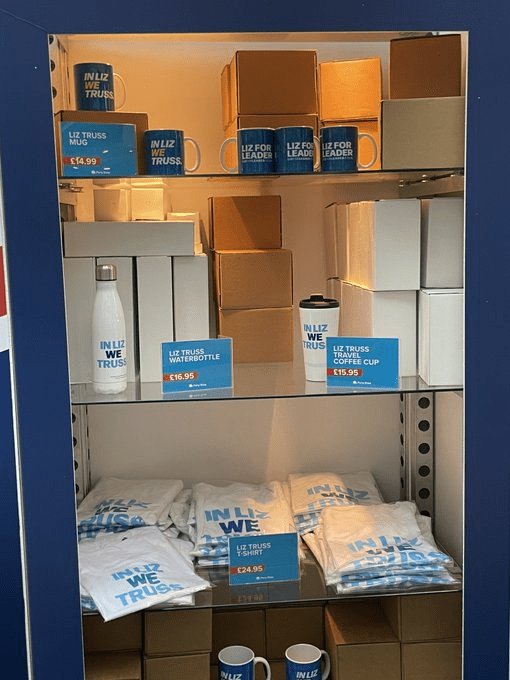
I was somewhat bemused to be asked, as a linguist and someone who has written about government communications and messaging, to comment recently, this time on the self-presentation of the candidates vying for leadership of the Conservative Party, hence also for the role of Prime Minister of the UK (in a series of back-and-forth slurs and clumsily staged photo-opportunities characterised today by Cabinet Office Minister Johnny Mercer as ‘puerile’). My first observations concerned Foreign Secretary Liz Truss’s identification with an earlier political icon.*

These were my comments in answer to the Daily Mail‘s questions on the performance of Lizz Truss and Rishi Sunak in the latest and final stages of the contest…

  1. Both candidates seem to me to be reaching for very simple and basic images and messages – not complex or ‘deeper’ concepts and as a linguist I suspect that they are both trying to avoid having to demonstrate the ‘oratorical’ skills that Boris Johnson’s supporters claimed for him. In other words they are going for visual over verbal as neither of them is renowned as an inspiring public speaker.  
  2. In terms of oratorical skills or lack of them Liz Truss has been gaffe-prone and can come across as hesitant while Rishi Sunak, though articulate, has to avoid the impression of an over-eager schoolboy in his attempts to convince.
  3. In  terms of the core messages, Rishi Sunak is very obviously trying to counter the sense of him as someone removed from the concerns of ordinary people because of his privileged upbringing and his great wealth. Thus he emphasises the (quite authentic) role of the family man, devoted to wife and children, at the same time countering Truss’s projection of herself as an assertive ‘lone’ female – the image Margaret Thatcher conveyed in her exercising dominance over male colleagues. Thatcher also kept husband and children in the background and emphasised her own gravitas and steeliness above all else.
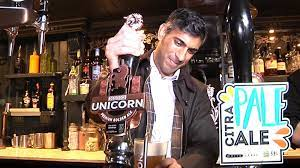
  4. Pulling pints is another attempt by Sunak to demonstrate that he is not wholly out of touch with the ‘common man’, but this sort of posing does risk backfiring as when he fumbled in his attempts to use a bank debit card to buy fuel for a humble, borrowed car.
  5. I’m surprised that Sunak does not more strongly emphasise his financial background and expertise gained as a financier/fund manager (the sort of professional experience that Liz Truss would have trouble competing with), but he may rightly sense that public perceptions of hedge fund manipulators are far from entirely positive.

Both candidates are attempting to focus, as they must, on the universally understandable issues of taxation and immigration/refugee management, subjects on which those entitled to vote for them (a very small number of key individuals incidentally) are already likely to have very firm views.

I added the following…

I don’t wish to seem contentious or uncharitable, but their messaging – in both cases – really does leave much to be desired, beginning with the campaign slogans, ‘Ready for Rishi!’ and ‘Liz for Leader.’

On Rishi Sunak’s part, his public postures belie the fact that he is, among many other things, a teetotaller…

And as for Ms Truss…

Which approach, I was asked, was likely to play out better with the 1600 party members entitled to vote in the leadership contest?

I think it’s very difficult to predict: I suspect that many Tories will still instinctively prefer the certainty and strength of purpose that Margaret Thatcher represented – the steely glare rather than the eager-to-please smile. But perhaps on reflection they may come to decide that someone at ease with financial manipulations (public or private!), and someone who is not really encumbered with ideological baggage could be more convincing in the long run and a safer pair of hands? It’s perhaps reassuring and worth noting that those two ancient bugbears of British political life, ethnicity and gender, probably are no longer barriers to advancement.

This is how my remarks were incorporated into the Mail’s front page of July 25 2022…

https://www.dailymail.co.uk/news/article-11045839/Nigel-Farage-blasts-teetotal-Rishi-Sunak-copycat-man-pub-routine.html

More evidence if you need it…

*https://www.dailymail.co.uk/news/article-10828621/Now-Liz-Truss-SOUNDS-like-Margaret-Thatcher-Speech-expert-says.html

At the Conservative party conference in October…

Looking back at my comments while awaiting the general election in July 2024, it’s clear that I was too kind to both the then leadership candidates. This was in part because I can’t pose as a political expert, partly as I don’t think the Daily Mail would have printed my comments if they had been much harsher. Liz Truss went on to perform surreally badly as shortlived PM, then, in more recent comments, to astonish many by her seeming intellectual confusion and lack of self-awareness. Rishi Sunak, in my strictly personal view, has shown above all an astonishing immaturity, in his parliamentary and media performances and his interactions with the public. His and his party’s communications strategies, despite the complicity of most of the the UK’s mainstream media, have been clumsy and inept. The press and the opposition equally have failed to hold him to account, focusing on his role as member of a hedge fund that helped trigger the 2008 financial crash only in the run-up to the coming election.

https://www.mirror.co.uk/news/politics/rishi-sunak-tv-debate-coach-32952402

Tick Tock, TikTok

Earlier in May I talked to Dillon Thompson of Yahoo News about slang and its online incarnations. Dillon was exploring the ways in which slang and new language both affect the way we interact in an accelerated digital age, and the way in which digital environments such as TikTok and Instagram and Twitter and the internet-based rituals, gestures and poses embraced by Generation Z in turn might influence the sort of language we – or some of us – are creating, adopting and using.

Dillon’s article, with new insights and with contributions by me and from US linguists Sunn m’Cheaux and Daniel Hieber is here…

https://www.yahoo.com/lifestyle/internet-changing-think-slang-133422776.html

More on how internet culture has displaced ‘pop culture’, from Günseli Yalcinkaya for Dazed magazine…

DO TRY TO KEEP UP

Following fashions is an exhausting task. And has become more exhausting still.

I have been recording the fads, fashions, cults and trends that energise popular culture, and the labels by which they register themselves on our collective consciousness, for more than thirty years. With the advent of the Internet and messaging the lifestyle innovations, aesthetic novelties and personal badges of allegiance are nowadays free to go viral, go global, and in many cases to disappear, virtually instantaneously. I talked to Olive Pometsey of The Face magazine (itself an iconic vehicle for the propagation of new ideas and images) about the latest, accelerated, overheated iterations of micro and macro-identities competing on online platforms. The equally frenzied quality of much comment and analysis is perhaps conveyed by the notes I made before we spoke…

Olive’s excellent article is here…

A crowdsourced, online, free-for-all, 24/7 source of slang, catchphrases and new terminology is my friend Aaron Peckham‘s Urban Dictionary. As the Face article was going to press this was its phrase of the day…

vibe shift

Coined by trend forecaster Sean Monahan, a vibe shift describes the emergence of a “new era of cool.”

Fashion is a realm that experiences frequent vibe shifts, especially with the arrival of a new decade. Gone are the days when frosted tips and low-rise jeans and Abercrombie & Fitch were in.

We’re in the midst of a vibe shift right now with the widespread lifting of Covid-19 protocols and restrictions. We’re going out again and adapting in new ways to our environment; some will survive the shifting tides, and some won’t.

Yeah I’m in my vibe shift right now. You won’t catch me in the club now that things are opening back up again. I’m all about going to the Home Depot, renovating my home and hearthyknow? Once I tried topless gardening things changed a lot for me.

by bruhdisease April 24, 2022

Those once-thriving subjects, Cultural Studies and Media Studies, which I used to teach in the 1990s, are nowhere to be found in today’s educational landscape, and the cultural practices we used to analyse are these days ignored by most commentators, the subcultures (and microniches, hyperlocal communities) if they are mentioned at all are dismissed by older cohorts as trivial, frivolous and ephemeral. I doggedly persist, in solidarity with The Face, Wire, Dazed, i-D, TikTok, nanoinfluencers and microcelebrities, in finding them fascinating and significant.

Just a few days after the Face article appeared, the Mail Online announced the latest look for Summer 2022…

https://www.dailymail.co.uk/femail/article-10782439/Why-blokecore-set-biggest-trend-summer.html

And if you want a comprehensive list of currently trending aesthetic genres, it’s here…

https://aesthetics.fandom.com/wiki/Special:AllPages

A November update from the Guardian features one influential fashion website, and more of the latest terminology (‘auntwave‘)…

https://www.theguardian.com/fashion/2022/nov/09/blackbird-spyplane-newsletter-jonah-weiner-interview?CMP=share_btn_tw

…But then, in January 2023 Vice revealed the trend beyond all trends – (and beyond my understanding at first sight)…

https://www.vice.com/en/article/wxnmeq/corecore-tiktok-trend-explained

…In May Hugh Barnard alerted me to a Wiki register of aesthetics…

https://aesthetics.fandom.com/wiki/List_of_Aesthetics

2022 – THE STORY SO FAR

The themes of the year so far can perhaps be summarised by my hasty posts in passing, on Twitter and elsewhere, in which I considered the keywords trending in the UK’s political and media discourse during the last days of January and the first days of February…

Scurrilous

Rather late to the party – sorry, ‘gathering’ – today’s word is ‘scurrilous.’ Defined by Dr Samuel Johnson as ‘using such language as only the licence of a buffoon could warrant.’ In her resignation letter yesterday Downing Street Policy Chief Munira Mirza accused Boris Johnson of ‘scurrilous’ behaviour when he falsely linked Keir Starmer to the failure to bring paedophile Jimmy Savile to justice. The word first appeared in English in the early 1500s in the form ‘scurrile’, coarsely joking, from the Latin ‘scurrilis’, buffoonlike, itself from the noun ‘scurra’ denoting a fashionable loafer, idler, buffoon, said to be a loan word from Etruscan.

Glee

On 2/2/22, as #BorisJohnson and #jimmysavile jointly trended for the second day, the word ‘glee’ was ascribed to both. It denotes barely repressed mirth/hardly concealed febrile joy and I think describes the desperate glint of triumph in the eyes of the abuser who once again goes unpunished. ‘Glee’ was Old English ‘gliu’, ‘gliw’, ‘gleow’ – entertainment, jest, play, also music and mockery – probably from Proto-Germanic ‘*gleujam’ but its only close relation was the rare Old Norse word ‘gly’ joy. All these are related to Old Germanic ‘gl-‘ words with senses of shining, smooth, radiant, joyful and Celtic cognates such as welsh ‘gloywa’, shining. Dictionary definitions of ‘glee’ note another nuance or connotation (more technically ‘semantic component’) which is often present: ‘exultation deriving from one’s own good fortune or another’s misfortune.’

Image

Airfix nostalgia

As Airfix promoted their 2022 calendar (cover picture above), I was asked again to explain the notion of ‘Airfix nostalgia’, an expression which mocks the delusion whereby nativists, patriots and bigots, most of them under the age of 50, like to imagine that they were personally involved in WWII or the British Imperial project. The reference is to the Airfix plastic modelling kits of fighter planes and warships bought by parents and children in the 50s and assembled at home.

Fib

In among rancorous ongoing denunciations of lying by those in public office (see elsewhere on this site and in this list by Peter Oborne*) came a passing invocation of – or attempt at disculpation by reference to – the lesser offence of ‘fibbing’. A fib is a ‘trifling lie’ or ‘white lie’, so I’m not sure it’s quite the right term in the current context, but it’s from the 1580s, the verb from 100 years later. Its exact origin and first use are uncertain, but it probably began as a jocular version of ‘fable’, perhaps reduplicated as ‘fibble-fable’ and then abbreviated to its modern form.

Rhubarb

When accused of being complicit in the authorising of an airlift of dogs from Afghanistan, PM Boris Johnson described the allegation as ‘total rhubarb’. The colloquial borrowing of the word to mean incomprehensible chatter or nonsense may have its origin in theatrical circles (as noted by Mark Peters in 2015**): it is again a telling choice of words: dated, euphemistic (like ‘mince’ as a euphemism for sh**t which seems similarly to be part of Tory groupspeak), obscure in the sense of being class/age-sensitive, hence condescending.

Endemicity

A new and tendentious, contentious example of #coronaspeak was added to my glossaries on this site in January 2022. The seemingly neutral, technical term was in fact employed in attempts to convince the public that the pandemic was subsiding and the coronavirus morphing into a less lethal presence in the community. Epidemiologist Deepti Gurdasani noted perceptively that ‘Endemicity’ is the rebranding of ‘herd immunity’ by the same people who were repeatedly wrong about how close we’ve been to achieving herd immunity. They’re now moving to claiming we’ve reached endemicity, regardless of what the term actually means – just like they did before.’

Lawfare/lethal aid

As the promoter of Brexit Arron Banks sued investigative journalist Carole Cadwalladr and the US sent the first aid packages to Ukraine I added two key terms to the #weaponisedwords glossary on this site: #Lawfare, referring to vexatious litigation by a nation or individual, and ‘lethal aid’, a euphemism or (as lexicographer Jeremy Butterfield pointed out to me) a dysphemism for military assistance.

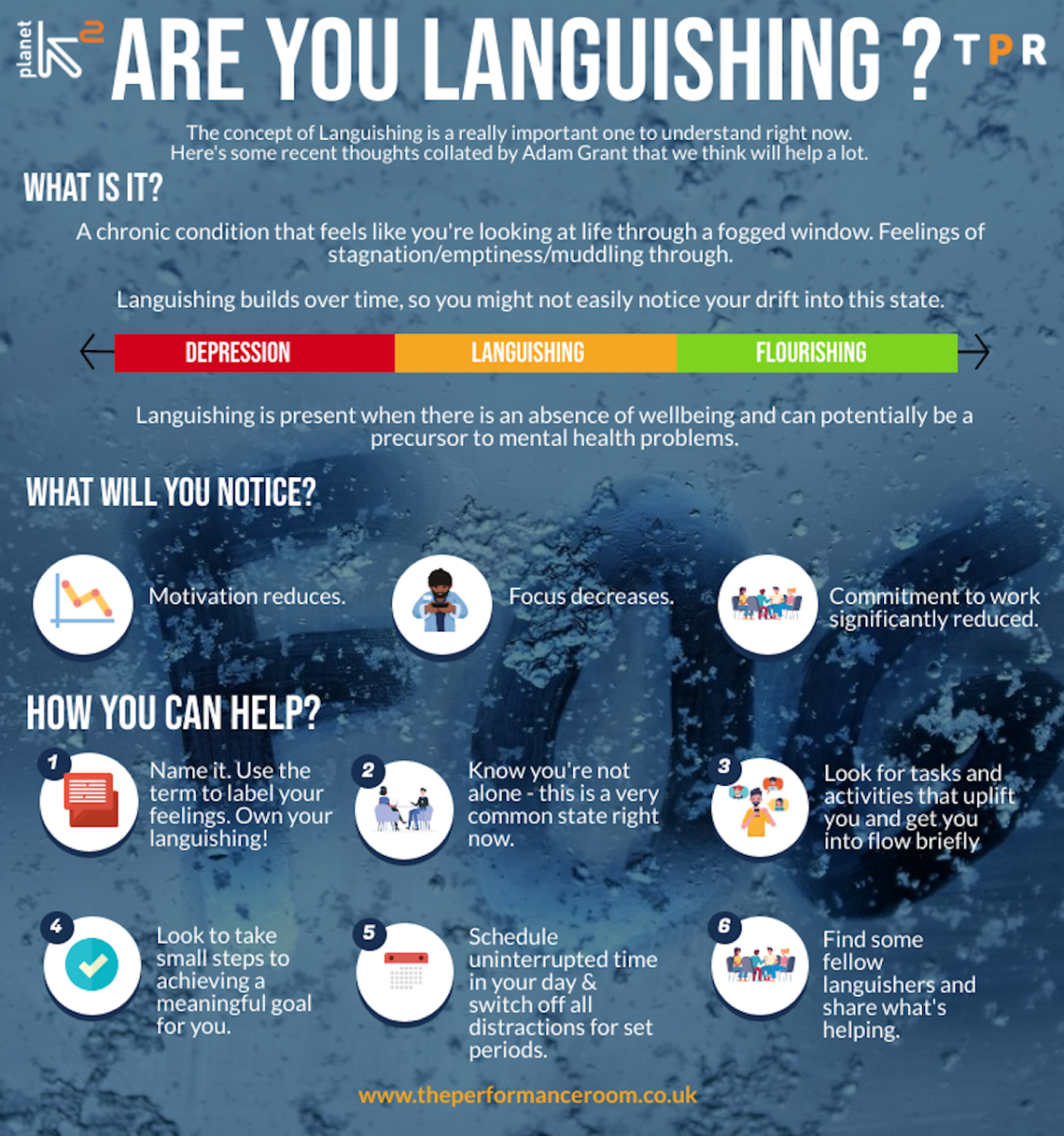
Languishing

Are you Languishing? - The Performance Room

In mid-January articles examined the effects of isolation and burnout after nearly two years of restrictions and confinement using a new characterisation of the condition***: ‘languish,’ from the 14th century, meaning to be feeble, listless, moribund or grieving, pining, is from Old French ‘languir,’ from Vulgar Latin ‘languire’ to be weak, faint, idle, from proto-IndoEuropean *'(s)leg’ the ancestor of ‘slack’, ‘lag’ and ‘lax’. ‘Anguish’ is unrelated.

The prospective and retrospective pathways to and from depravity are... |  Download Scientific Diagram

Depravity

Despite the blizzard of slurs and denigrations circulating on social media and in the mainstream press since 2019, some words have been conspicuous by their absence. One such began trending in the UK national conversation, and then only briefly, in mid-January. ‘Depravity’ in the sense of immorality, degeneracy was first recorded in English in 1641, not directly formed from the earlier verb ‘deprave’ (Old French ‘depraver’, pervert, accuse, from Latin ‘depravare’ distort, disfigure) but a version of the noun ‘pravity’ from Latin ‘pravitas’, crookedness, deformity, from ‘pravus’, crooked.

Guile

On January 7 my word of the day was ‘guile’ (first ascribed to the leader of HM Opposition, and then energetically disputed on social media: ‘…it took guile to convince so many on Labour’s left that he was the natural successor to Jeremy Corbyn’ –The Times) The noun, meaning cunning, artful ability to deceive and/or duplicity, was first recorded in the 12th century. It is from Old French ‘guile’ from Frankish ‘wigila’, ruse, from Proto-Germanic ‘*wihl’, ancestor of English wile(s), from Proto-IndoEuropean ‘*weik’, consecrated, holy.

*https://boris-johnson-lies.com/johnson-in-parliament

**https://slate.com/human-interest/2015/11/mark-peters-bullshit-word-of-the-day-rhubarb-is-a-tart-theatrical-term-for-bs.html

***https://theconversation.com/languishing-what-to-do-if-youre-feeling-restless-apathetic-or-empty-174994?utm_source=twitter&utm_medium=bylinetwitterbutton

THE OTHER ‘P-WORD’ – Postmodernism comes of age – again

Postmodernity is modernity without the hopes and dreams which made modernity bearable. it is a hydra-headed, decentred condition in which we get dragged along from pillow [sic] to post across a succession of reflected surfaces, drawn by the call of the wild signifier.” – Dick Hebdige, Hiding in the Light, 1988

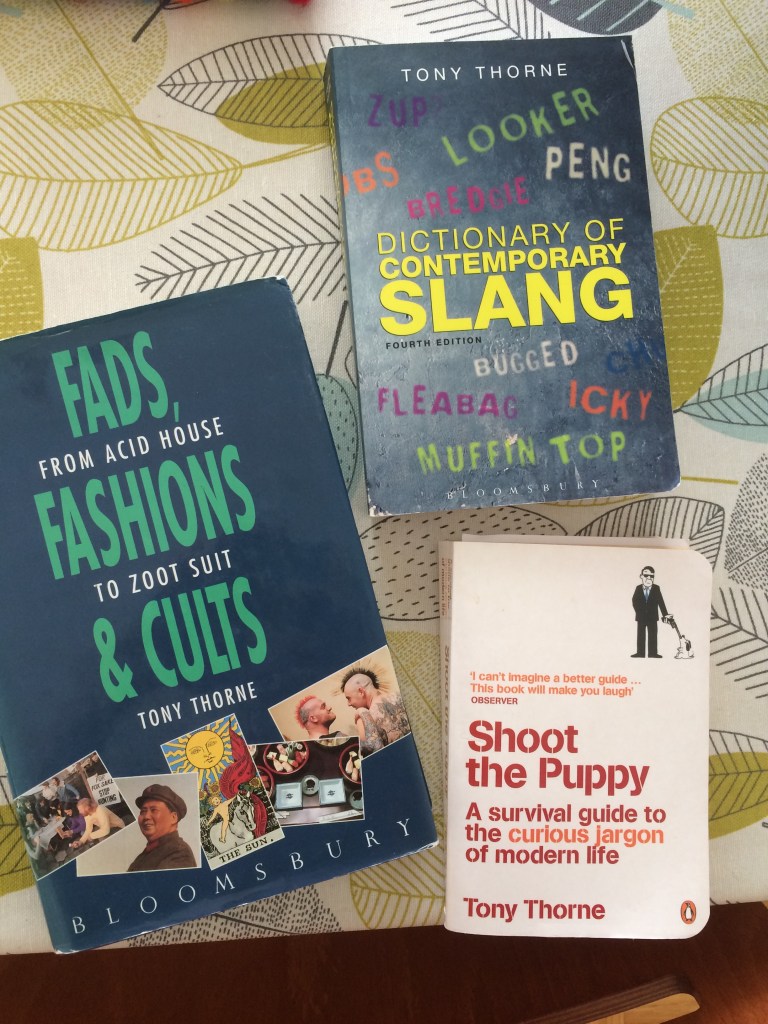
Among the toxic terms listed in the glossary of weaponised words, elsewhere on this site*, is a term that has seemed contentious and which has been imperfectly understood since its first appearance in the late Sixties. I included the same word – Postmodernism – in my 1993 book Fads, Fashions and Cults, provocatively subtitled ‘The definitive guide to post(modern) culture.’ When my book, which was aimed at a popular, not a scholarly readership, was launched in Slovenia and featured on national television the Slovene philosopher and critical theorist Mladen Dolar dismissed it as atheoretical and trivial, two other resonant terms which I was not sure whether to resent or to celebrate at the time. An extract from the offending title follows…

Elsewhere on this site I have tried to follow the trajectory of woke**, another, rather different toxic buzzword now favoured by the same side, the opponents of BLM, eco-activism, ‘leftist’ attitudes, in the so-called culture wars that rage on despite the pandemic. In a perceptive review in the New Statesman this week William Davies sets out postmodernism’s trajectory, its recent reimaginings and reiterations by very different interest groups. His article, with his kind permission, is here…

To end with for now, another extract from my antique 1993 guide. I am still pondering the present and possible future of the second p-word, along with other characterisations of our era such as late-modern, techno-modern, post-industrial, post-capitalist and the tension between the post-individual and hyperindividualism, also thinking about the way in which critical positions which were significant for me – Situationism and McLuhanism, for instance – are today ignored or forgotten, and how more recent terms that I think encode important insights – third places, heteroglossia, superdiversity – remain marginal and under-examined. I will try to unpack these musings on these pages very soon…

Post-Modernism, which deals with the past like one huge antique supermarket, looks very relevant indeed. Pastiche and parody is just an uncomfortable transition to a time when period references will be used without any self-consciousness.” – Peter York, Style Wars, 1980

*https://language-and-innovation.com/2021/01/25/woke-not-woke/

**https://language-and-innovation.com/2018/08/23/a-glossary-of-skunked-terms-brexitspeak-and-the-toxic-terminology-of-populism/

Another review of Stuart Jeffries‘ title, this time by Terry Eagleton, subsequently appeared in the Guardianhttps://www.theguardian.com/books/2021/nov/10/everything-all-the-time-everywhere-by-stuart-jeffries-review-how-we-became-postmodern

SLANG NOW – the Language of UK Youth in 2021

At the very end of September this year came another example of a UK school seeking to police its students’ language and to ban the use of slang and colloquialisms. I have been writing about youth slang since 1990 (there are numerous articles on this site, accessible by entering slang, youth or MLE in the search box) and about such interventions for more than a decade: this time I spoke to the Guardian‘s Social Affairs Correspondent Rob Booth and his article is here…*

https://www.theguardian.com/education/2021/sep/30/oh-my-days-linguists-lament-slang-ban-in-london-school

September 2021 also saw the fruition, or culmination (portentous words) of a long-term project of mine dealing with the same topic: the rich, creative, controversial use of highly informal language by younger speakers. I have collected the multicultural slang, traded among younger people and used especially in urban centres across the UK. I have listed authentic examples of this language variety gathered from conversations, messaging, fieldwork interviews and donations and stored these in the Archive of Slang and New Language which I have curated at King’s College London.

Looking for a way to make this data available to the widest possible readership – whether students, teachers, researchers, fellow lexicographers or simply individuals fascinated by language change and novelty – I decided against traditional publishing in hardcopy in favour of putting the material online and so was gratified when, a year ago, the University of Aston’s Institute for Forensic Linguistics agreed to host an extract from the Archive, an up-to-date Glossary of UK Youth Slang, in its Forensic Linguistics Databank. This lexicon, very modest in its format but unique in the UK and I think in the wider Anglosphere, has just been made accessible. I hope it will be helpful for interested parties and I urge anyone consulting it to comment, criticise and, above all, send me additions for inclusion in future versions (rights to the content are restricted, so please don’t circulate it or republish it without full acknowledgement). I am constantly updating and expanding this and other datasets of nonstandard and socially significant language as well as teaching and broadcasting about them.

The Youth Slang Glossary in question is here…

http://fold.aston.ac.uk/handle/123456789/4

I am very grateful indeed to all the collaborators, colleagues, students, parents, youth workers and many others who have helped me to record and analyse this exciting, inventive, sophisticated and technically innovative language – and to celebrate it rather than decry and stigmatise it in doing so.

* Rob Booth’s Guardian article was rewritten very slightly and republished by the Daily Telegraph and the Daily Mail. I think the last word on my contribution to the subject, and indeed my career, should go to the anonymous poster of a comment following the Mail‘s piece…

Image