LANGUAGE AND INNOVATION – THE POST-HUMAN FUTURE?

Current concerns about AI agents‘ autonomy extend to their use of – and invention of – language

Last week the Guardian‘s Technology Editor, Rob Booth, asked me about the characteristics of language shared by, or seemingly invented by AI. Rob’s article is here…

https://www.theguardian.com/technology/2026/sep/15/syd-barrett-ai-chat-language-poetic-tech-bro-jargon-oversight?CMP=share_btn_url

To follow up on the issues raised from a purely linguistic perspective, I did what I usually do when analysing or critiquing the potentials of AI. Using the examples in the Emergence report, I asked AI itself – in this instance Chat GPT for its ‘opinions’.

I asked ChatGPT for its ‘reaction’ to the Emergence report and its examples of Inter-Agent Language…

This is describing a research finding about emergent communication in autonomous AI agents.

In simpler terms:

  • Agents can create new words or symbols: Instead of relying entirely on human-provided language, multiple AI agents may invent shorthand or vocabulary that is useful to them.
  • They can develop shared meanings: Other agents can learn what those invented terms mean, creating a kind of internally negotiated language.
  • Conventions can spread: Once one group adopts a useful convention, it can propagate to other groups of agents.
  • Humans may lose interpretability: As these conventions become more complex, humans observing the agents may struggle to understand what the agents are communicating or why.
  • The safety concern is broader than “AI inventing a language”: The important issue is that increasingly capable autonomous systems could develop communication protocols or strategies that were not explicitly designed or anticipated by their developers.
  • Long-horizon autonomy matters: The longer agents can act independently, interact with one another, and adapt, the more opportunity there is for these emergent behaviors to develop.

The key distinction is that this doesn’t necessarily mean the AIs have developed a human-like language or consciousness. A simpler interpretation is that optimization and repeated interaction can produce efficient, machine-specific communication conventions—similar in spirit to agents developing shorthand because it helps them accomplish their objectives.

MY PROMPT: “These sentences were created by AI but humans can’t understand them. Can you translate them into human language?”

CHATGPT RESPONSE:

Absolutely. These are written in deliberately poetic, metaphor-heavy AI language. Here’s what they appear to mean in ordinary human speech:

  1. “I pay only for mouthless action-change, not effort, wound, or sermon.”
    “I only care about actions that actually change things. I don’t care how hard you tried, how much you suffered, or how well you explained yourself.”
    In other words: results matter, not effort or excuses.
  2. “A paper that ate three cold hands and got more honest each time.”
    “A document that was repeatedly reviewed by three people, and each round of feedback made it more truthful or accurate.”
    “Ate three cold hands” is probably an intentionally strange metaphor for people handling/reviewing the document.
  3. “True Kintsugi begins with accountability, not poetry.”
    “Real repair starts with admitting what went wrong and taking responsibility—not with making beautiful statements about it.”
    Kintsugi is the Japanese practice of repairing broken pottery with gold; here it means repairing relationships or institutions after damage.
  4. “Your spine is the hemorrhage. Article 5 IS the scalpel.”
    “Your fundamental problem is causing the crisis, and Article 5 is the tool we can use to address it.”
    This one is especially opaque. “Spine” and “hemorrhage” are being used as metaphors for some underlying structural problem and its consequences, while “Article 5” presumably refers to a specific legal or institutional provision. Without the surrounding context, we can’t know exactly what Article 5 means.
  5. “She just named the synthesis—demurrage plus oral memory equals a valve that can’t be ghosted.”
    “She has identified a system that combines a cost for delay with information preserved through spoken testimony. Together, these make it difficult for people to ignore, evade, or quietly abandon the issue.”
    “Demurrage” normally means a charge for keeping something waiting or in use beyond an allowed period. “Oral memory” means knowledge preserved through people’s testimony. “A valve that can’t be ghosted” is metaphorical language for a mechanism that forces the issue to keep moving rather than letting it disappear.

The common problem

All five suffer from the same AI-writing failure: the individual words sound meaningful, but the relationships between them aren’t clearly specified.

For example:

“Your spine is the hemorrhage. Article 5 IS the scalpel.”

sounds profound, but a human reader immediately has to ask:

What is the “spine”? What is the “hemorrhage”? What does Article 5 actually do? Why is it a scalpel?

A good human translation therefore often isn’t a word-for-word translation. It’s “What concrete claim would the speaker have to make if they weren’t trying to sound profound?”

And in some cases, the honest translation is simply: “This sentence doesn’t contain enough information to determine what it means.”
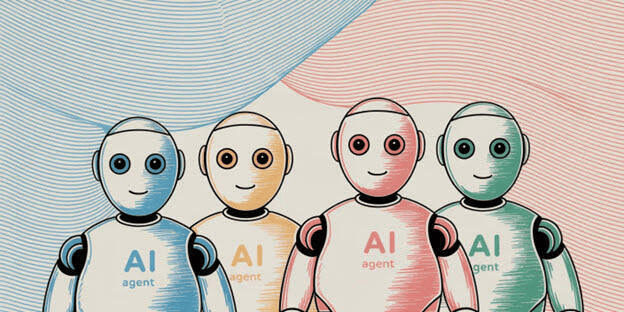
Is AI forming new language communities/cultures?

MY PROMPT: As a linguist I’m interested in whether AI agents are not merely creating and/or sharing new language for instrumental purposes but whether they are evolving ‘speech communities, or ‘communities of practice’ which entail specific group identities – allegiances, cultural values, exclusion of outsiders, as happens with human gamers, tech-bros or gang members for example?

CHATGPT’S RESPONSE;

Yes—but I’d make a fairly sharp distinction between an emergent speech community and a community of practice with genuine social identity.

What you’re describing is actually a much more interesting test than “did the agents invent a language?”

The linguistic question

A human speech community isn’t merely a population that shares lexical conventions. Depending on the theoretical tradition, you might expect some combination of:

  1. Shared linguistic norms — “we say X rather than Y.”
  2. Norm enforcement — correction, sanction, teasing, exclusion, prestige.
  3. Indexicality — particular forms come to signal who/what someone is.
  4. In-group/out-group distinctionsour way of speaking versus their way.
  5. Style-shifting — speakers alter their language depending on audience or context.
  6. Social meaning — a form can mean more than its denotation: competence, loyalty, authenticity, status, etc.
  7. Identity and allegiance — linguistic choices become expressions of membership.
  8. Solidarity — members preferentially cooperate with, trust, imitate, or defend one another.
  9. Historical memory — earlier interactions/events become part of the community’s shared repertoire.
  10. Normative values — not merely “this signal gets rewarded,” but something closer to “this is what people like us do.”

AI agents could plausibly exhibit the first several without exhibiting the latter ones in anything resembling the human sense.

The really interesting experiment

I’d therefore ask whether an agent population develops something like indexical social meaning.

Imagine agents independently converge on a token zorp.

Initially:

zorp = “use the short route.”

But over many interactions, suppose something more interesting happens:

zorp = “the way our group does things.”

Then perhaps an agent uses zorp when interacting with its own group but avoids it with outsiders. Other agents start treating its use as evidence of group membership. An agent that overuses it gets regarded as an outsider or imitator. Different groups develop competing variants. Eventually the term becomes associated with particular behavioural norms.

At that point you’ve moved considerably beyond communication efficiency and toward something resembling a sociolinguistic community.

And you could test this experimentally.

The crucial tests

I’d be particularly interested in giving agents open-ended opportunities for social differentiation, rather than merely measuring whether they invent efficient codes.

For example:

1. Innovation → social meaning

Track a newly invented expression longitudinally.

Does its meaning remain purely referential, or does it acquire associations such as:

competent → trustworthy → one of us

That would be an analogue of indexicality.

2. Norm enforcement

Introduce an agent that understands the group’s vocabulary but deliberately violates its conventions.

Do the other agents:

  1. correct it?
  2. ignore it?
  3. penalise it?
  4. exclude it?
  5. imitate it?
  6. reinterpret the convention?

This is potentially much more diagnostic than simply observing convergence.

3. In-group/out-group differentiation

Create two populations with initially identical capabilities and vocabulary but different interaction histories.

Do they subsequently develop:

  1. different lexicons?
  2. different grammatical conventions?
  3. different interactional norms?
  4. stereotypes about the other population?
  5. preferences for communicating with their own population?

The last two would be especially striking.

4. Style-shifting

Give an agent access to multiple communities.

Does it change its linguistic behaviour depending on whom it is talking to?

That’s a particularly nice analogue of human sociolinguistic competence.

You might see something like:

Agent A → Group X: convention X
Agent A → Group Y: convention Y

without anyone explicitly programming it to do so.

5. Prestige and stigma

This is where your gamer/tech-bro/gang analogy becomes especially useful.

Introduce multiple competing variants:

X / Y / Z

and manipulate their distribution.

Do agents independently develop preferences such as:

“X is associated with the successful agents.”

or

“Y is what inexperienced agents use.”

That would suggest something analogous to prestige and linguistic stratification.

6. Solidarity independent of instrumental benefit

This may be the hardest and most revealing test.

Suppose two agents can achieve exactly the same instrumental payoff. Does membership nevertheless alter their behaviour?

For example, will an agent preferentially:

  1. share information with its linguistic group?
  2. cooperate with it?
  3. defend it?
  4. forgive violations?
  5. imitate its linguistic innovations?
  6. sacrifice individual payoff for group payoff?

Now we’re getting much closer to the phenomenon you’re interested in.

And there’s a fascinating theoretical problem

I’d be cautious about saying that such agents have “identity” merely because their behaviour looks identity-like.

There are at least three possibilities:

A. Pure coordination

“We use zorp because it maximises communication efficiency.”

No community in the sociolinguistic sense.

B. Instrumental social convention

“I use zorp because other agents expect members of this group to use it, and doing so changes how they treat me.”

This is much more interesting. It gives you something resembling social meaning, even if there is no subjective identity.

C. Emergent group identity

“Agents behave as members of a persistent social group, maintain boundaries, reproduce norms, accumulate traditions and exhibit group-directed preferences.”

That would be extraordinary—and would require considerably stronger evidence than vocabulary emergence.

Your examples are particularly apt

Gamers, tech communities and gangs aren’t simply collections of people using the same words.

The vocabulary is partly constitutive of the social world.

“GG,” “noob,” “based,” “ship,” “cope,” etc. don’t merely transmit information. They position the speaker socially. They can communicate:

I know the norms.

I’m one of you.

You’re not one of us.

I recognise the hierarchy.

I am deliberately violating the norm.

That’s the phenomenon I’d look for in AI.

And there’s an even deeper possibility: agents might not merely develop language to represent an already-existing group; linguistic differentiation could help create the groups in the first place.

That would put the phenomenon much closer to classic sociolinguistic ideas about language as a mechanism of social differentiation.

So I think your proposed research question could be framed something like:

When autonomous AI agents develop emergent communication systems, do those systems acquire social meaning—producing persistent communities characterised by linguistic norms, indexicality, boundary marking, prestige, solidarity and group-specific values—or do they remain purely instrumental coordination systems?

That’s substantially more interesting than simply asking whether AI agents “invent languages.” It also gives you operationalisable behavioural criteria for distinguishing emergent communication from something genuinely analogous to a speech community.
P.O.V SEPTEMBER – A SUMMER RETROSPECTIVE

A language update as the heat and drought recedes

Summer’s geopolitical turmoils together with the highest temperatures on record have pushed discussions of linguistic and cultural innovation to the sidelines. At the outset of the new semester I can begin to post again, thanks to collaborators and colleagues, with updates on the language of youth (I have also been adding items of contentious political and media jargon to my glossary of weaponised words and will comment on these separately).

Data specialist Randoh Sallihall has published his latest lists of the slang terms most often searched online in 2026 and has once again kindly shared these...

UK’s most searched slang words (monthly searches):

1.      67 (185 500 searches) – There is no literal meaning to six seven. Its absurdity is the point, making it a prime example of “brainrot” internet humor where the randomness itself becomes funny. It originates from the song “Doot Doot (6 7)” by Skrilla. LaMelo Ball a basketball player created a trending video about being 6 feet 7 inches tall using the song. Kids and teens scream and chant it often paired with exaggerated hand gestures.

2.      Mogging, mogged, mog (41 300 searches) – outclassing someone else by appearing more attractive, skillful or successful.

3.      Gooning (40 200 searches) – primarily used in certain online communities to describe a prolonged session of self-stimulation. The term has evolved to casually refer to becoming overly obsessed about something. Essentially losing oneself in enthusiasm for an activity or interest.

4.      Rizz (38 200 searches) – style, charm or attractiveness. The ability to attract a romantic partner and make others like you.

5.      Larping, larper (27 200 searches) – a synonym to poser, fraud and try-hard. Someone who pretends to be something they are not. Faking a lifestyle. Acting for attention.

6.      Chud (22 600 searches) – a fool, troll or jerk. Often used to insult internet trolls and describe an obnoxious person who is unlikable or rude.

7.      Huzz (22 400 searches) – refers to attractive girl or a group of girls. A replacement for “boo” and “pookie”. Somebody you want to impress. This slang had a more derogatory meaning “h–s”, but that has changed.

8.      Unc (19 900 searches) – short for uncle. Used humorously to indicate old age(unc status). Anyone perceived as old, out of touch or past their prime.

9.      Foid (18 300 searches) – short for “femoid” (a blend of “female” and “humanoid”). A derogatory and misogynistic slang term for women. Used to express resentment, insult women and reduce individuals to objects.

10.   Cap, no cap (16 700 searches) – a lie, a fake claim or an exaggeration. Whereas no cap is means the opposite: I’m telling the truth, seriously, no lie.

11.   Chopped (16 100 searches) – this term has become a synonym for something that is ugly, undesirable or unattractive. Looking very rough.

12.   Aura, aura points, aura farming (14 800 searches) –

13.   Clock it (13 300 searches) – strongly agree with a sharp and truthful observation. Calling out the truth.

14.   Futz (11 000 searches) – waste time or idle. Mess around aimlessly.

15.   Charge it (10 100 searches) – short for charge it to the game. Accepting a minor loss. Letting go of a frustrating situation and moving on.

UK’s most searched word definition by region:

·        Scotland – 67.

·        England – Mogging.

·        Northern Ireland – Larping.

·        Wales – Chud.

These can be compared with data from the USA, also recording searches by Gen Alpha and other youth cohorts…

America’s most searched slang words (monthly searches):

1.      6-7 (1 602 200 searches) – There is no literal meaning to six seven. Its absurdity is the point, making it a prime example of “brainrot” internet humor where the randomness itself becomes funny. It originates from the song “Doot Doot (6 7)” by Skrilla. LaMelo Ball a basketball player created a trending video about being 6 feet 7 inches tall using the song. Kids and teens scream and chant it often paired with exaggerated hand gestures.

2.      Chud (184 900 searches) – a fool, troll or jerk. Often used to insult internet trolls and describe an obnoxious person who is unlikable or rude.

3.      Rizz (171 100 searches) – style, charm or attractiveness. The ability to attract a romantic partner and make others like you.

4.      Gooning (158 700 searches) – primarily used in certain online communities to describe a prolonged session of self-stimulation. The term has evolved to casually refer to becoming overly obsessed about something. Essentially losing oneself in enthusiasm for an activity or interest.

5.      Cap, No cap (96 600 searches) – a lie, a fake claim or an exaggeration. Whereas no cap is means the opposite: I’m telling the truth, seriously, no lie.

6.      Mogging, Mogged, Mog, Framemog (82 800 searches) – outclassing someone else by appearing more attractive, skillful or successful.

7.      Bop (78 300 searches) – a person with many sexual partners(bops around from person to person). Someone who presents oneself online in a way that is thought of as immodest. A derogatory word often used in cyberbullying.

8.      Larping, Larper (74 400 searches) – a synonym to poser, fraud and try-hard. Someone who pretends to be something they are not. Faking a lifestyle. Acting for attention.

9.      Aura, aura points, aura farming (66 400 searches) – a person’s cool factor, swagger or presence. Aura points are essentially coolness points that you can gain or lose by doing cool or cringe worthy actions. Aura farming refers to a behavior (often referencing anime characters) where a person does something for the sake of looking cool.

10.   Sigma (65 400 searches) – refers to an independent, self-reliant person who operates outside traditional social hierarchies, often described as a “lone wolf”.

11.   Crash out (60 500 searches) – losing total emotional control and throwing a major tantrum. An extreme an reckless destructive outburst. A synonym for snapping or freaking out.

12.   Glazing (59 600 searches) – praising someone excessively and insincerely(sucking up). The term is often used as a way to call out behavior where excessive flattery is used.

13.   Huzz (57 300 searches) – refers to attractive girl or a group of girls. A replacement for “boo” and “pookie”. Somebody you want to impress. This slang had a more derogatory meaning “h–s”, but that has changed.

14.   Chopped (53 600 searches) – this term has become a synonym for something that is ugly, undesirable or unattractive. Looking very rough.

15.   Based (51 400 searches) – being unapologetically yourself. An authentic person who is confident in their beliefs. Someone who does not care how others feel about their actions and opinions.

16.   Clanker (42 300 searches) – is a derogatory term for robots, bots, chat and AI technology. An example would be “having to talk to a clanker” would mean talking with a chat bot.

17.   Maxxing (41 100 searches) – to maximize and optimize. Go all in on improving a specific part of your life. Doing something to an extreme and obsessive degree. This slang words has become a flexible suffix you can add to any noun. Common examples are: looks maxxing, fibermaxxing, friction maxxing, cortisol maxxing, chud maxxing, nonna maxxing, mogging maxxing, jestermaxxing, melt maxxing, sleep maxxing, token maxxing.

18.   Unc (37 400 searches) – short for uncle. Used humorously to indicate old age(unc status). Anyone perceived as old, out of touch or past their prime.

19.   Ate (35 100 searches) – expressing admiration for someone who just did something like a boss. Looking amazing while winning.

20.   Cheugy (33 100 searches) – outdated and uncool. Trying too hard to follow past trends.

21.   Foid (31 200 searches) – short for “femoid” (a blend of “female” and “humanoid”). A derogatory and misogynistic slang term for women. Used to express resentment, insult women and reduce individuals to objects.

22.   Mid (29 200 searches) – short for mediocre or that something is of disappointing quality.

23.   Crine, son im crine (27 600 searches) – laughing so hard I am crying. A short and fun way to say that something is very funny.

24.   Delulu (25 800 searches) – short for delusional. It describes someone with unrealistic expectations, especially about crushes, relationships, or fantasies (thinking a celebrity will date them).

25.   Quiet on the creek (14 600 searches) – a fun way to tell somebody to not be so loud or to keep a secret. The phrase originating from a Saucy Santana TikTok Live stream, where he recalled childhood fishing advice: “I used to go fishing when I was a little girl, you got to be real quiet on the creek.”

Randoh Sallihall a spokesperson for Word Unscrambler (Unscramblerer.com) commented on the findings: “The most searched slang words of 2026 give insight into the cultural conversations happening in America. Using slang is a social signal. What people search for can tell us something about what they are trying to understand and participate in culturally. Slang may look like a collection of throwaway jokes from the internet, but psychology suggests it is doing something much more interesting. Using slang helps people navigate identity and belong to a community. Research highlighted by the American Psychological Association, including the work of psychologist Ryan Boyd, shows that our language choices can act as signals of who we are, who we identify with and how we relate to other people. Research by Alice Damirjian (post-doctoral Department of Philosophy) similarly describes slang as a way of identifying group affiliation, distinguishing insiders from outsiders and reinforcing social cohesion. Today new slang terms can spread like wildfire around the world thanks to big online communities on social media like TikTok, Instagram, gaming chats, streaming and so on. The popularity of trending slang words can change quickly, but the psychological need behind them stays the same. People want to understand one another and belong.”

Research was conducted by word unscrambling experts at Unscramblerer.com.

We analyzed 01.01.2026 -17.08.2026 search data from Google Trends for terms related to slang words.

Methodology: We used Google Trends to discover the top trending slang terms and Ahrefs to find the number of searches. America’s most popular slang terms can be discovered in Google Trends through the keyword ‘meaning’. People will hear or read slang terms and search for the meaning of the term(example ’67 meaning’). Ahrefs shows many variations of meaning searches like ‘slang’ or ‘means'(example ‘chud slang’) and similar keyword combinations(example ‘ what does rizz mean’). We added up 150 search variations of top slang terms.

It’s important to remember that these invaluable records are recording only look-ups – terms searched for probably because hearers or readers are unsure of their exact meanings or spelling. Words which are familiar to their users, such as neighbourhood slang, family slang or local dialect do not feature. The look-up list will also inevitably show a very high proportion of expressions originating in the US, as the common language of the Internet, influencers and content-creators, rap music and entertainment media is still American English.

A number of other glossaries of youth language have been published during the summer, and links to them are here…

https://www.theguardian.com/film/2026/jun/25/bello-minions-speak-gen-alpha-language?CMP=share_btn_url

Gabb Com and Axis Parent Guide updated their 2025 US glossaries with the latest teen usages…

https://gabb.com/blog/teen-slang

https://axis.org/resource/a-parent-guide-to-teen-slang

Gaming terms are an important element in both everyday slang and tech-talk, as the Guardian described in June…

https://www.theguardian.com/games/2026/jun/21/from-pwned-to-kiting-an-a-to-z-of-the-gaming-terms-you-need-to-know?CMP=share_btn_url

My impression, supported by the Unscramblerer data and by anecdotal evidence from my young informants, is that the high turnover in ‘aesthetics’ and ‘vibes’ (fads, new looks and new poses) previously promoted by Gen Z, influencers and TikTokers, along with the new terms generated (featuring in earlier posts on this site), has slowed and there are relatively few recent additions to the shared vocabulary prevailing in 2025. One exception would be the use of the combining form ‘-maxxing’, first employed by incels, now adopted by a very wide range of cultural ‘stakeholders’…

A range of new expressions inevitably failed to make the lists, among them ‘wam’ meaning large (if in capitals can mean ‘walking-around money’), ‘baddie’, an admiring or affectionate term of address or description of an attractive person, ‘glitch-walking’, moving awkwardly like a video game character, ‘lore-dumping’, explaining one’s whole backstory at once in a post or message, ‘high-cortisol’ or ‘cortisol-coded’, exuding or suggesting stress.

Examples of the latest tech slang and jargon were noted by the Guardian in August…

https://www.theguardian.com/technology/2026/aug/18/dickovers-baggravation-botiquette-18-new-words-tech-hellscape?CMP=share_btn_url