CHRISTMAS, ON THE CARDS

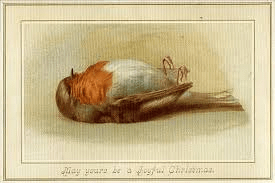
Image result for christmas cards traditional display

‘I am a poor man, but I would gladly give ten shillings
To find out who sent me the insulting Christmas card 
I received this morning.’

George Grossmith – The Diary of a Nobody

The tradition of sending Christmas cards by post has declined, though in a 2017 survey British respondents said they still preferred paper to texts or emails, while self-styled experts on etiquette dismiss the electronic ‘card’ as vulgar. Most of the cards I receive now come from charities soliciting donations or estate agents promoting retirement homes, nevertheless…

Sole example of a proto-Christmas card, a Rosicrucian manuscript on folded paper, decorated with a rose-sceptre, was presented to King James VI of Scotland and I of England at Christmas in 1611. It was inscribed as follows…

‘…a gesture of joyful celebration of the Birthday of the Lord, in most joy and fortune, we enter into the new auspicious year 1612. Dedicated and consecrated with humble service and submission, from Michael Maier, German, Count Palatine, Doctor of Medicine and Philosophy, Knight and Poet Laureate…’

Joy comes via Middle English from Old French joie, which could mean joy or jewel, itself from Latin gaudia, gaudium, from Proto-IndoEuropean *geh₂widéh₁yeti, from the verb *geh₂u , to rejoice.

Glad tidings combines the Old English word for bright or cheerful, from an Old Germanic term for smooth, with the Old English and Old Norse words for happenings, occurrences, tidung and  tiðendi , which derive ultimately from the IndoEuropean root *di-ti, meaning divide, as into time-frames. The -tide of Christmastide or Yuletide has the same source.

Noel was nowel in Middle English, an anglicisation of French noël, from Latin natalis, shorthand for birthday. Latin nātīvitās, birth, became Old English Nātiuiteð, one of the earliest names for Christmas, and gives us modern nativity.

A particular favourite, thought for several centuries to describe an essence of Englishness, is of course Merry

  1. joyous, cheery, gleeful, of good spirit
  2. mirthful, convivial, affected by gaiety, as by festive spirit
  3. Colloq tiddly, squiffy, somewhat inebriated, as if by seasonal spirits

ME merye, from OE myrige, delightful, pleasing, sweet, from Proto-Germanic *murg(i)jaz, fleeting, from Proto-IndoEuropean *mreg(h)us,short

  • make merry behave in a frolicsome, boisterous, unconstrained manner, eg dad-dancing, shattering wine-glasses during toasts, communal bellowing of sentimental songs, flirting at the office party (syn: ‘attempting to pull a cracker’) etc.
  • Slang merry-bout an act of copulation (1780) merry-got a bastard (1785) merry-legs a harlot (19C) merry old soul an arsehole (20C rhyming)

POOR GUY – a Fawkesian miscellany

Tonight is Bonfire Night, Firework Night, nowadays usurped by Hallowe’en as the most popular celebration of autumn-to-winter transition, but still a folk festival of note. Many people are aware that the fires and fireworks commemorate the failed gunpowder plot of 1605, but few know more than the name of the terrorist whose effigy we burn on Guy Fawkes night.

Image result for gunpowder plot

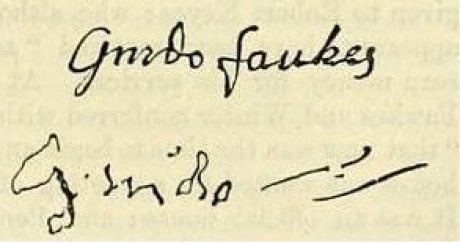
The catholic conspirator Guy Fawkes, who came from from Yorkshire, spoke French when captured and signed himself  ‘Guido’, using the Italian or Spanish form of the name (his autograph, before and after torture had been applied, is below). He may have begun the practice when fighting in the Spanish army in the Low Countries, although Italian names were considered fashionable and were sometimes adopted by English gallants. Guy is the French form of old Germanic Wido, either meaning ‘dweller at the forest margin’ or a nickname from ‘wide’ as bodily description or location (an open, flat region).

Image result for guy fawkes signature

The English surname Fawkes, also archaically spelled Fauks, Faukes and Fakes, derives from the German name or nickname Falco which probably originally referred to a person thought to resemble a falcon. Falco became Faulques in Norman French and was adopted after the Conquest, the first attestation coming from 1221.

While in London preparing to blow up parliament, Fawkes posed as a servant in the entourage of Thomas Percy, a fellow conspirator who had access to the parliamentary precincts. Fawkes’ less than imaginative choice of alias was ‘John Johnson.’

Image result for gunpowder plot

Guy’s wide-brimmed headgear, crudely imitated on effigies and now caricatured as a ‘V for Vendetta’ hat, is correctly termed a ‘sugarloaf hat’, since its high, flat-topped crown resembled the sugarloafs imported from the colonies in the Stuart period.

Isla Guy Fawkes, or Guy Fawkes Island is actually two small uninhabited islands and two smaller rocks lying in the Pacific Ocean off the Galápagos Islands which are owned by Ecuador. The name might have been given after a fiery volcanic event had been witnessed, but was more probably bestowed by buccaneers who viewed Guy as a hero and one of their own.

Image result for Bonfire night

Fireworks did not just take off (pun intended) in England after the Gunpowder Plot. They first became popular in the reign of Henry VII. Queen Elizabeth I loved them and appointed a ‘Firemaster of England’ to arrange displays.

Image result for Bonfire night

Bonfire (first recorded in 1483) is not, as Dr Johnson and others have claimed, French ‘bon feu’, (French would be ‘feu de joie’, ‘grand feu’) but ‘bone-fire’, a collection of burning bones or an open fireplace or outdoor pyre into which bones were thrown, after feasting for instance. By 1581 the word was also being used to refer to a fire in which heretics were burnt. Celebratory fires were ordered to be lit each year to commemorate the failed conspiracy against the Crown, but Guy’s effigy was only placed upon them from the1700s.

Guy himself was not executed by burning, a fate reserved for those found guilty of heresy.  He and the other condemned plotters were indeed Catholic dissidents, but the state wanted to avoid civil disturbances so accused them of treason, for which the punishment was hanging, drawing and quartering, carried out at length and in front of spectators. Fawkes managed to cheat the hangman by falling or throwing himself from the ladder leading to the scaffold, breaking his neck.

Guy Fawkes’s first name lived on, coming to mean by 1806 his effigy, then a grotesquely or poorly dressed person or eccentric. By extension a verb form arose (first attested in 1872) meaning to hold (someone) to ridicule. At the end of the 19th century in American colloquial usage the word had come to mean simply ‘a fellow’, from which we get our modern all-purpose, sometimes gender-neutral ‘guy’.

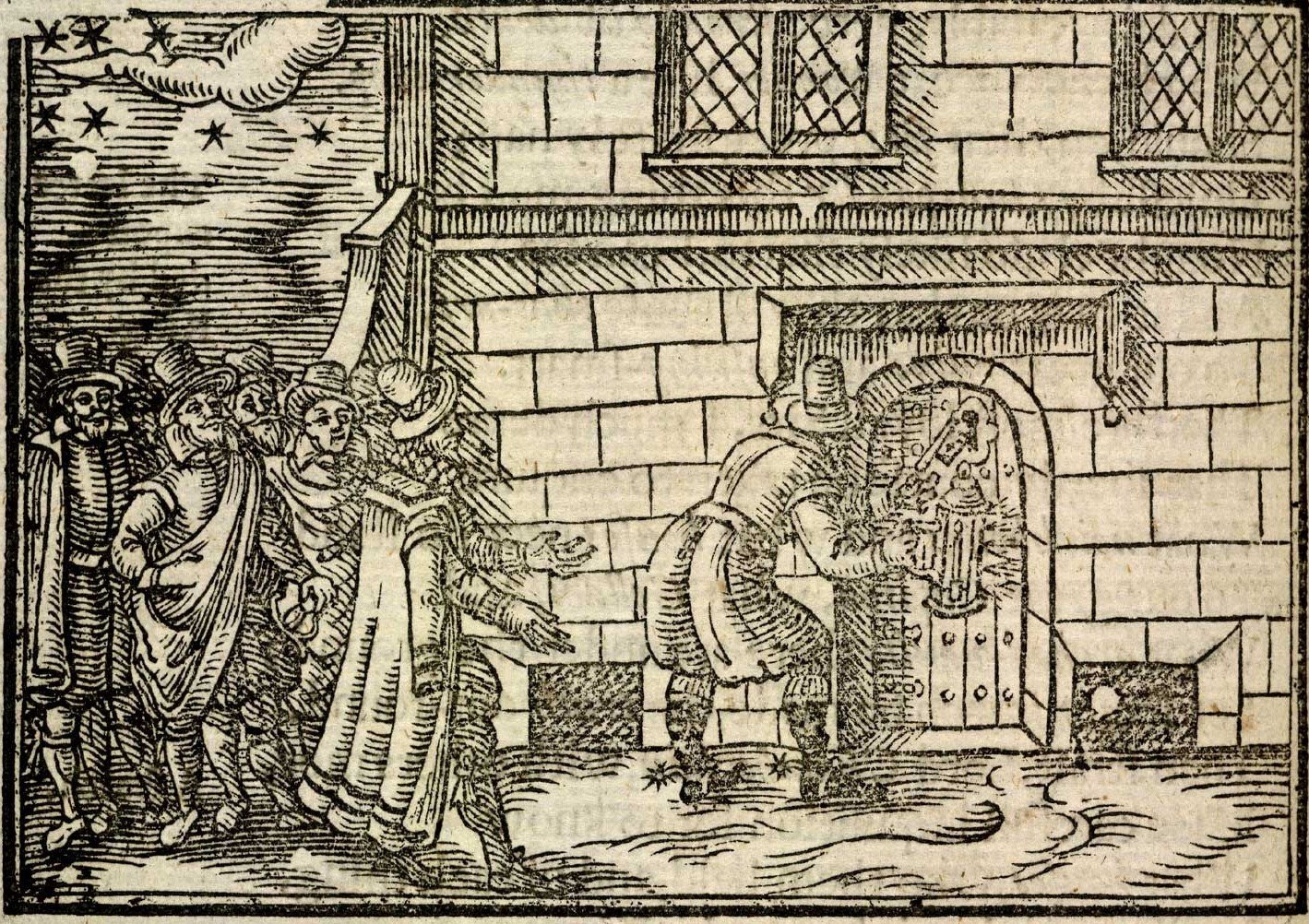
Illustration from 'Mischeefes mysterie London'

THE VAMPIRE AND ITS LINEAGE

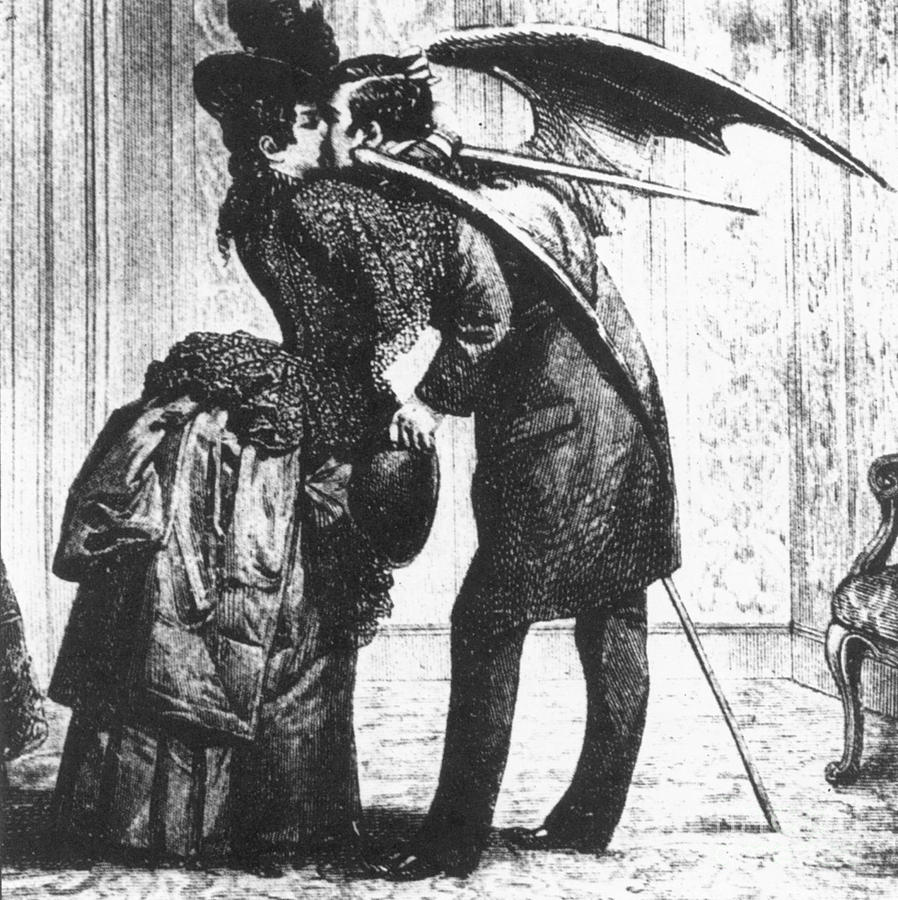
Related image


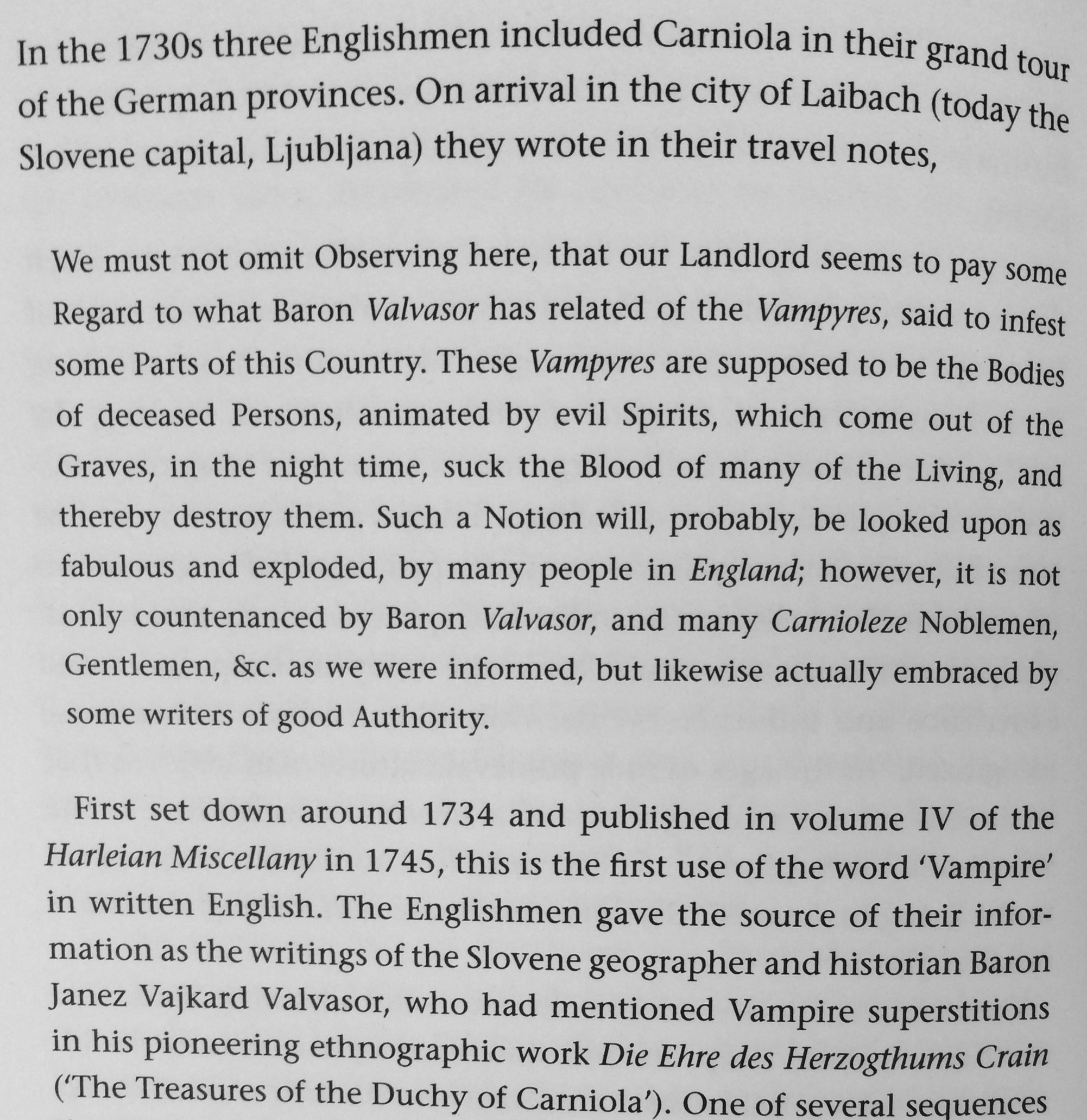
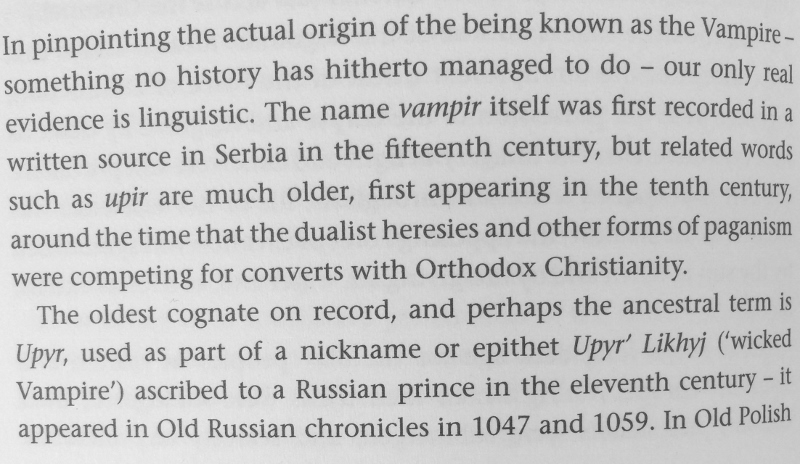
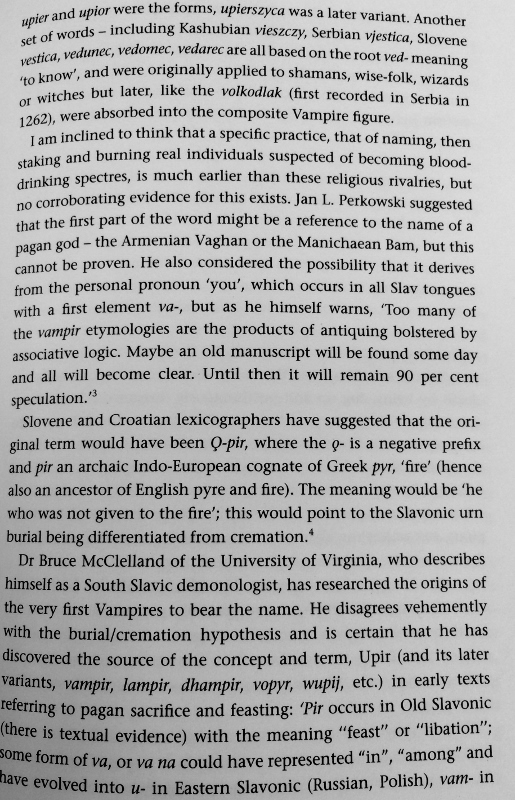
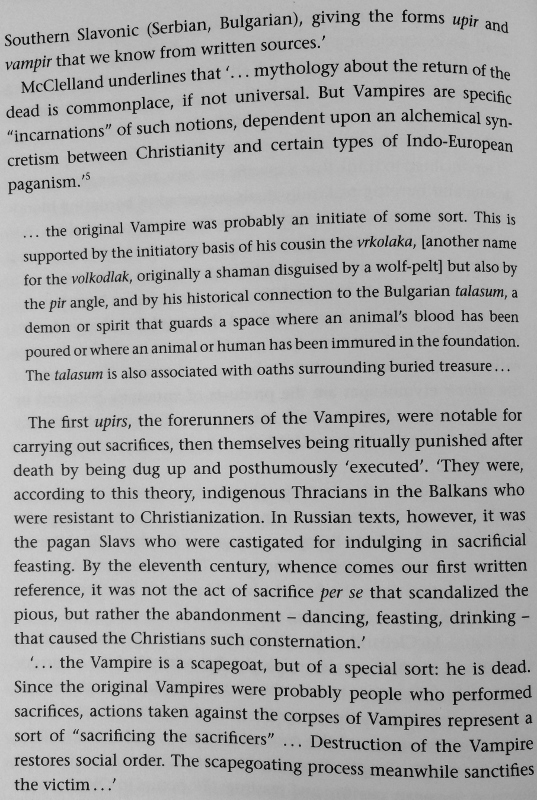
The history of the Vampire – the being and the word that names it – is fascinatingly convoluted. We know that the word came to us in the 18th century via German from Serbian vampir (вампир) but its ultimate origins and meaning are complex. Here, in fragments from a quite old – if not truly ancient –  publication are some thoughts on the enduring legend of the thirsty undead…


IMG_3570


IMG_3567 (800x464)

IMG_3566 (515x800)

IMG_3568 (537x800)


In fact the figure of the bloodsucking or life-draining revenant is recurrent and attested in almost all prehistoric and most early modern cultures. There are examples from China (so-called ‘hungry ghosts’), Malaysia, the Americas, and, most interestingly from a linguistic point-of-view, the Kipchaks and Karachays of Caucasia and their relatives, the Tatars, and other Turkic-speaking peoples of Anatolia. Their languages give us yet another possible ancestor for the many names, culminating in today’s ‘vampire’, listed above. In modern Turkish obur denotes a glutton or greedy person, but in older folklore the Obur (Tatar Ubyr) was a bloodsucking night-demon that could shapeshift into a cat or dog or a beautiful woman. Here, then, is another possible – and rather plausible – antecedent for later slavonic upirs or vampirs.


Image result for Turkish obur vampire


Vampire-like creatures were described, too, in classical writings, as Sententiae Antiquae relates here:

Ancient Greek Vampires 1: Empousa


The ‘old book’ extracts above are from my own 1999 title, Children of the Night: