Maria Hill: What does S.H.I.E.L.D. stand for, Agent Ward? Grant Ward:Strategic Homeland Intervention, Enforcement and Logistics Division. Maria Hill: And what does that mean to you? Grant Ward: It means someone really wanted our initials to spell out “shield.”
Two days ago the UK press reported that the Minister for Defence Procurement, Welsh Conservative MP Stuart Andrew, had declared war. On acronyms. Confounded and irritated by the number of these abbreviations circulating in his office and beyond, he ordered staff to avoid them at all costs. ‘He got fed up with people coming into his office and reeling off a list of letters and assuming he knew what they were referring to,’ a source close to the minister said. ‘I thought DVD had something to do with movies!’ the hapless minister (who has never served in the armed forces) had quipped at a meeting four weeks earlier. DVD was the name of the event at which he was speaking. It stands for ‘defence vehicle dynamics’.
The flustered politician may have a point – one of the first documents to cross his desk was the latest 402-page guidebook to terminology used in the MOD (Ministry of Defence)*, referencing such titles as AARADCOM – the Army Armament Research and Development Command, and explaining that the initials CCU, for instance, could refer to
Central Control Unit Certificate of Clearance for Use (for software) Cockpit Control Unit Combat Control Unit Common Control Unit Communication Control Unit Computer Crime Unit
In vain did an unnamed MOD spokesperson respond: ‘These terms are used between subject matter experts and not with the general public.’
‘Acronym’ entered English in 1940, as a translation of German akronym, first attested in 1921. It is composed of acro- from Greek akron (tip or top) and the English combining form -onym, from Greek onoma, name. It denotes a word made up of initials or parts of other words, and should be pronounced as a word in its own right. It is not the same as an ‘initialism’ such as BBC or VIP or PC, where the letters are pronounced separately (the minister’s DVD falls into this category), or an abbreviation such as etc. or lb (pound) where the relationship between form and sound is not straightforward. So NATO, AWOL, laser (for ‘light amplification by simulated emission of radiation’, radar (‘radio detection and ranging’) are acronyms: ASAP (‘as soon as possible’) is an acronym if said like a word, BOGOF (‘buy one, get one free’) too, but not when said as separated letters.
Some more modern three-letter combinations are genuine acronyms – SIM (card) from ‘subscriber identity module’, GIF (‘ graphics interchange format’), however you pronounce it, and PIN (‘personal information number’) among them – but those familiar items of business-speak, ROI, SEO, B2B, SME – and now AI – are not, and nor, ironically is the disapproving or jokey shorthand TLA, for ‘three-letter acronym’ itself.
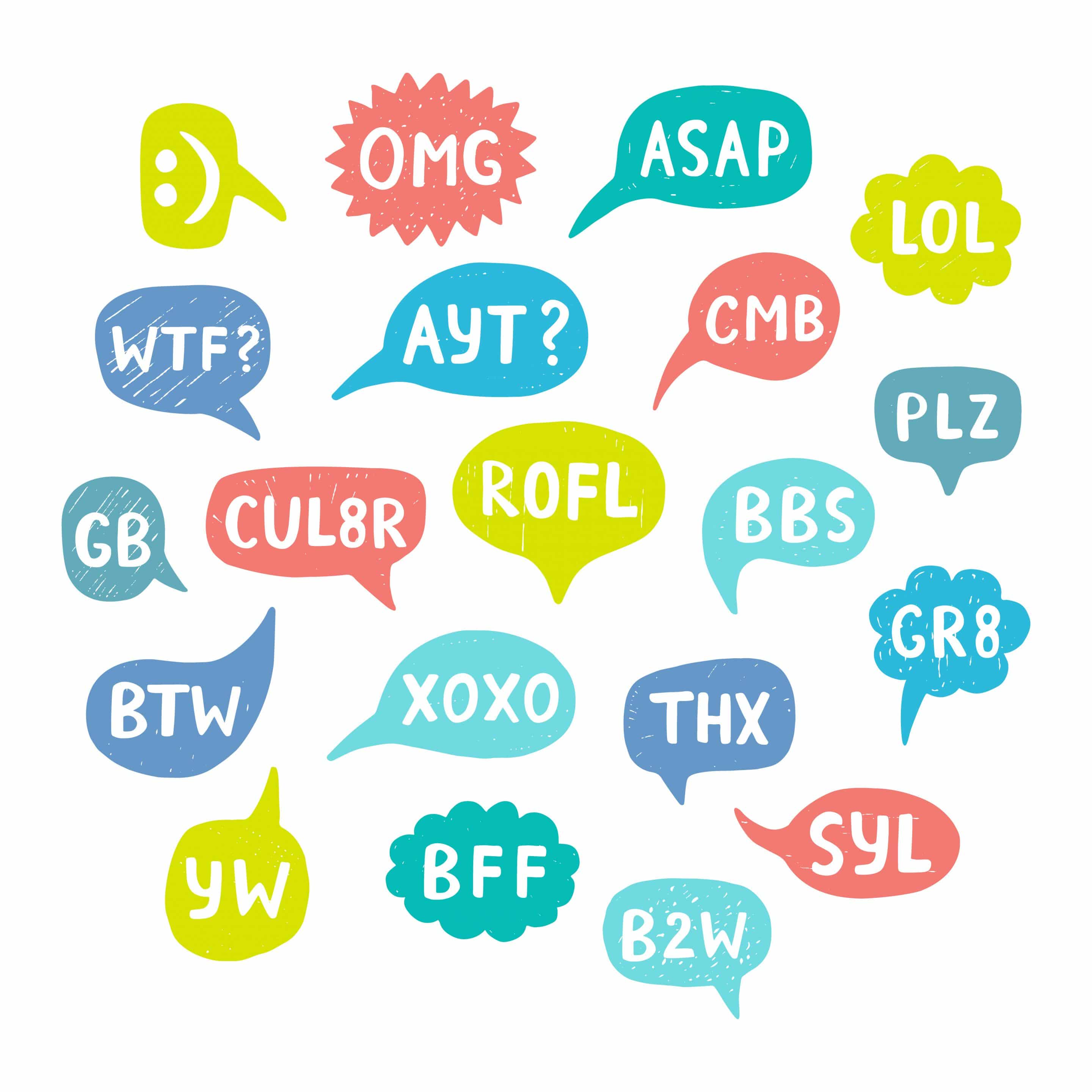
Lighthearted coinages SNAFU (‘situation normal, all fouled up’) or BOHICA (the oppressed officeworker’s injunction to ‘bend over, here it comes again’) are acronyms, but only a few of the so-called acronyms used in messaging and on social media really qualify: BTW, IDK, IMHO, SMH, TL;DR and the rest are strictly speaking initialisms. YOLO, LOL and ROFL, providing they are uttered in full, are among the exceptions.
The reason for the proliferation of acronyms, initialisms and abbreviations, and the justification for their use are obvious. In an accelerated culture they save us from having to – literally – spell out what we have to say or write and at the same time impart an idea of novelty, urgency and dynamism. As my correspondent Graham Guest observed on Twitter in a spoof response to Stuart Andrew’s protestations: ‘Minister, my radio detection and ranging equipment has just picked up a group of sea, air, lands wearing self-contained underwater breathing apparatus diving gear.’
Acronyms are very often controversial, in the same way as jargon and slang, in that they mystify and intimidate those who aren’t familiar with them, and seem to confer prestige and privilege on those who know how to use them. They can reinforce an insider/outsider imbalance in power in the workplace, the seminar – or the ministerial briefing. A very simple test, though, is to try and replace the offending acronym with its full translation or explanation and see if the resulting sequence of speech, or text, sounds or looks viable. If it’s necessary to introduce a new abbreviated form, it must be glossed (translated into simple language) the first time it is used, and, as with all insider codes, should only be employed in a context where interlocutors, partners, stakeholders, clients or audiences will readily understand it.
In April 2019 the BBC tried to forestall mockery of the acronyms peppering the script of its Line of Duty series by posting this synopsis:
‘A UCO is embedded in an OCG who was deployed as a CHIS but is AWOL. The SIO, who loves a REG 15, and his DI and DS from AC-12 are investigating because of the ED905 HGV ambush which the OCG set up as an RTC. They’re hunting H. Let’s go.’#LineOfDuty
You can hear me chatting about the latest acronym wars on BBC5Live radio (the sequence begins at 47 minutes 26 seconds):
As a footnote, my book of buzzwords and jargon, first published in 2007, contains examples of acronyms and abbreviations, many still in use, together with observations on the status conferred by mastering business-speak…
*An earlier version of it is here if you want to consult it:
Know’st thou not at the fall of the leaf How the soul feels like a dried sheaf Bound up at length for harvesting,
Today, the 22nd day of September (beginning, strictly speaking, at 11.44 am), is for us the Autumn or Autumnal Equinox. For our ancestors, speaking Old English, or ‘Anglo-Saxon,’ the time of emniht or efenniht ‘even-night’, occurs while Hāligmonath, the ‘holy month’ of September, so called because thanksgiving ceremonies for the grain harvest were held, is giving way way to Winterfylleth, the ‘winter full-moon’. In dark-age chronology the new month and the new season began with the first full moon of October. Around this time daylight and darkness are of roughly the same duration (Latin aequi, equal; nox, night), though only exactly at ‘Equilux’ (lux is light in Latin) which falls this year on September 28.
The christian church ignores the equinox, although Michaelmas, held on September 29th, may have been intended to wean pagans from their late-Summer and early-Autumn fertility rites. Modern Wiccans and new age pagans celebrate the feast of Mabon, or Second Harvest, at the Autumn equinox. Some prefer the Irish Gaelic name for this month, Mea’n Fo’mhair, which translates literally as ‘middle harvest’. Festivities may last for a week and involve the venerating and eating of fruits such as apples, blackberries, and nuts. Though derived from supposedly ancient Celtic myth, the acorn and chestnut-strewn altars, the overflowing horns-of-plenty and the russet-coloured robes on display are almost certainly modern inventions, never associated for sure with any historical or supernatural ‘Mabon.’
There was indeed a god of youth in the Celtic pantheon whose name Maponos derived from mapos, a Gaulish word for son or boy, the root mab also denoting son in Welsh, Cornish and Breton. Both come from Proto-Indo European makʷos, son, (which gives us the Mac and Mc used in Scottish and Irish surnames). The figure of Maponos was worshipped by Gallo-Romans on the continent and in Britain who identified him with the Roman god Apollo. Under the name of Mabon the same mythical youth appears in the Welsh Mabinogion legends and the Arthurian romances, but it is not known when in the year Maponos or Mabon were worshipped (there are two inscriptions on record from the end of August) or what rituals were involved.
Autumn, as is well attested, comes to us via Middle English autumpne, from Old French autompne, itself from Latin autumnus which is said to be adapted from a lost Etruscan or Venetic root autu-, but could equally be formed from Italic au(ct)- meaning dry (the notion of drying leaves and grass, in John Clare’s words; The ground parched and cracked is like overbaked bread…the greensward all wracked...) or Latin auctus, increase (the opposing notion of late fruition and abundance, Blake’s laden with fruit, and stainèd With the blood of the grape). As a seasonal name Autumn, first heard in England from the 12th century, was only rarely used here before the 16th century, ‘Harvest’ (Old English hærfest from the same root as Latin carpere to pluck, crop) being the term preferred. ‘Fall’, probably a contraction of ‘fall-of-the-leaf’ was an alternative also used in former times in Britain and it was exported to America with settlers in the 17th century.
Above is Keats’ famous ode, with its first, endlessly quoted, line. But let a later author, Emily Dickinson, have (almost) the last word…
Besides the Autumn poets sing A few prosaic days A little this side of the snow And that side of the Haze
In 2021 I talked to US journalist Keira Wingate about autumnal language differences and her article in USA Today is here…
The latest in a long series of moral panics (the term used by sociologists since the 1970s) exploited by the UK press and now subject of rancorous political debate, the issue of knife-crime and killings by street gangs, mainly in London, is genuinely concerning and is only now receiving the attention and analysis it demands. A side-effect of media interest is that the language used by the gang members and by the music genres that celebrate them is being recorded – haphazardly and not always accurately – for the first time. The musical genre in question is UK Drill, a successor to the ultra-hard-edged Trap Rap (from The Trap, slang nickname for the local area where drugs are dealt) that appeared first in Chicago in the 2000s. Drill (the word can signify shooting but has many other slang senses) has been adopted and adapted by hyperlocal urban communities in the poorer parts of London and, despite their claims, doesn’t just evoke the harsh realities of life on inner-city estates, but often glamorises it and seems to promote an ethos of territoriality, boastful masculinity and murderous retaliatory violence.
So far only very few reporters have managed to penetrate the groups whose members occupy and fiercely defend their microzones, fighting for control, too, of economies based on drug trading. The rappers emerging from the same postcode- or estate-defined enclaves compete and feud electronically, dissing and threatening their rivals in their lyrics – and in a few cases have actually been implicated in killings or woundings on the street.
In May 2018 the Metropolitan Police intensified attempts to ban videos associated with the music genre and the gangs caught up in street violence:
Since beginning this project I have managed to engage with some members of this subculture and find out more about their values and the way they encode them. In the meantime I have begun to assemble a lexicon of the most significant key terms they use, in a slang which mixes US hiphop argot and Caribbean expressions transposed to or reinvented in London (harking back to the Yardie gang culture of the 1980s). So far just a glossary, my list is far from complete, so please help me add more items if you can, or correct my mistakes. Here is this work in progress as it stands, now updated for March 2025, followed by some relevant links…
125 – scooter
3 – free (call to free a respected associate or known person)
Active – dependable associate
– involved in gang activities
Ahk, Akhi – brother, friend (from Arabic)
Axe – ask
Amm – cannabis (abbreviation of Amnesia, a potent strain)
Askari – police (from Arabic and other African languages)
Back out – draw (a weapon)
Bagged – caught by the police
Bagging – stabbing in the lower body
Bally, Bali – balaclava
Bando – abandoned property
Bands – coloured elastic bands tying batches of cash
Banger – hit, successful song
Bap – the sound of a shot or gunfire
– to fire (a gun)
Bars – lyrics
Battle – strength, competitiveness
Bean – head
(A) bean – honest(ly), truthful(ly)
Beef – dispute, feud
Bells – bullets
Bend – patrol(a neighbourhood)
Binned – shot
Birded off, birded up – imprisoned
Bite – steal
– copy
Bitz – one’s neighbourhood
– drugs weighing more than 7 grams
Blam – shoot
Blitz – raid, attack
Blow – leave, escape
– ‘take off’, achieve career success
Blunt – cannabis ‘spliff’
Bones – dead
Booj, buj – heroin
Bookie, buki – suspicious
Bora, borer – knife
Botty – firearm
Bout it – competent, skilled, authentic
Box – prison
Boxed, boxed in, boxed up – imprisoned
Bozz – leader
– excellent
Breeze off – leave town, disappear
Bruck, bruk – broken (down), broke
Bruckshot – sawn-off shotgun
Buj – obnoxious person
Bun – light up (a cannabis cigarette)
– shoot, eliminate
Burner – gun
Burst – shoot
Cabby– cigarette containing cannabis and cocaine or cannabis and crack mix
Cake – crack or cocaine
Cally – cannabis
Can – prison
Car, cah – because
Cat – drug user and/or drug purchaser
CBO – criminal behaviour order
Cheffed (up) – stabbed, killed
Chete – machete
Ching – knife
– to stab
Chinging – chilling and hanging out
– stabbing
Civilian – non-gang-member, non-combatant
Clap – attack, shoot
– steal drugs
Click – shoot
Codes – ‘postcode areas’, zones where gangs dominate
Corn – ammunition
Crash – raid, invade
– shoot
Crashing corn – shooting your gun
Crib – home
Cro – cannabis
Cunch – out-of-town locations where drugs can be sold
Cutter – knife
Cuttin – leaving, running away
– mixing or adulterating illicit drugs
Darg, dargie, dawg – male friend, ‘homie’, male active on the street, gang member
Dark – heroin
Dash – throw
– run (away)
Dasheen – running away, fleeing
Diligent – admirable, brave, cool
– dependable associate
Ding dong – dispute, brawl
also dinger, dinga, ding – cheap car
Dipped – stabbed
Dipper – knife
Don – respected person
Dottie, Dotty, Dotz – shotgun
Doughnut – idiot
Drawn out – involved in gang culture, under pressure from street crime
– lured, rendered vulnerable
Drenched – stabbed
Driller – shooter, gang member
Drilling – attacking, aggressing, invading
Dumpy – shotgun
Dun – kill(ed), punish(ed)
Dunn – friend
Duppy – kill, dead
Eating – succeeding, profiting
Elizabeth – money
Endz – one’s neighbourhood
Factor – important associate
4-door – saloon car
Febreze – spray a place to remove the smell of cannabis
– get rid of evidence of illicit activities
Feds – police
Field – danger-zone, combat area
Fishing – looking for victims
Flake – cocaine
Flashed – stopped, pulled over e.g by police
Flicky – switchblade knife
Flow – fluency, verbal skill
Food – drugs
Fry – shoot (at)
Gassed – excited
g-check – aggressively check someone’s gang credentials
Gem – weak person
Get the drop – acquire necessary information
Giraffe – £1000
Glide – drive into enemy territory
GM – (fellow) gang member
Go cunch/country – leave the city to sell drugs in rural/seaside locations
Got – attacked, robbed
Grubby – authentic, tough (neighbourhood)
Guv – prison officer
Gwop – money
Habsi, hapsi – black person
Hand ting – pistol
Hitter – gunman
Hottie – SIM card
Iron – gun
Jakes – police
Joint – gun
Jump out – undercover police on patrol
– emerge from a vehicle
Juiced – confident, energised
– bloodstained
Khala – black person
Khalas!– ‘that’s enough’, stop!
Ketchup – blood
Kick down doors, kick in doors, kick door – raid a domestic location
Kwef –violence
Kweff, Queff – kill with gun or knife, harm, attack
Kweng – cut, stabbed
Laces – ammunition
Lacking – caught unawares, without backup
Landing – prison, cell
Lane – main street, urban area
Layers – protective clothing
Leggin (it) – escaping, running away
Leng – gun
Let rip – fire a bullet or discharge a firearm
Light – cocaine, crack
Line – a drug-dealing operation or network
Link – contact, source for drugs
– make contact with, meet, collect
Lizzies – money
– mobile phones
Loud – cannabis
– impressive
Lurk – stalk a victim, prowl around
M – murder
Machine – gun
Mac(k) – automatic firearm, Mac -9 or Mac-10 small machine gun
Mains – close companions
– streets, urban zone
Marinate – relax
Mash – gun
Matic – gun
Matrixed – placed on the London Met police gang database
Matta – head
– main focus
Mazza, Mazzaleen – madness, crazy situation
Ments – mental, crazy
Milly – a 9mm pistol
Moist – disgusting, pathetic
– cowardly, weak, afraid
Monkey – £500
Mop – large gun
Motive – activity
Move – criminal operation, raid or attack
Munch – desperate, obsessive person
Nank – knife, stab
Nap nap – kidnap
Need – cannabis
Niff – cocaine
No face – masked, with identity concealed
OJ – ‘on job’, productive and successful in street activities
Old Bill – the police
On papers – on parole or probation
On road – outdoors, active in the streets/neighbourhood(s), eg engaged in selling drugs
On tag – fitted with an electronic surveillance device
On volts – intent on or engaged in violence
Ooters – shooters
– loyal associates
Opps – enemies
Opp-block – enemy territory
OT – ‘out trapping’, ‘out there’ or ‘out of town’, away on business, dealing in urban or country locations
Ox – razor, blade
Pagan, paigon – untrustworthy person, enemy
Paper, papes – money, cash
Passa – dispute, dramatic event
Patch – territory
Pattern – arrange, sort out, set up
Patty – slow-witted, ‘clueless’ or deluded person
– (white) female
Pave – streets
Pay – profitable activity, reward
Pebs, pebbles – pellets or deals of heroin, crack or steroids
Ped – moped
Pen – prison
Pepper – spray with shotgun pellets or bullets, shoot
Plot – plan, set up
– hang around
– conceal
Plug – a contact for drugs
Plugging – hiding drugs in rectum
Poke – stab
Pole – shotgun, gun
Popo – police
Posted up – hanging around, positioned to sell drugs
Pree – to check out, assess (a person)
Proper – excellent, admirable
Ps – money
Push, pusha – bicycle
Put in/on a spliff – killed
Rack – quantity of money, £1000
Rambo – large knife or machete
Rams, Ramsay – knife
Rep – promote or publicly declare for (one’s area, gang)
Ride out for (someone) – to defend, even if guilty
Riding dirty – going out armed and/or in possession of drugs
Rise – aim (a weapon)
Riz – cigarette papers
Rizzle – real
Road – street-smart, active in street culture
Rotty – firearm
Rusty – antique or old firearm
Sam, sams – samurai sword or large knife
Score – kill or injure an enemy
Scoreboard, scorecard – list of enemies killed, injured or defeated
Scram – gun
Scrub – worthless male
Scrum – attractive female, sex
Shank – knife
Sh, shh – ‘don’t mention this’, censored item
Shaved – insulted, humiliated, punished
– stabbed
Sheets – cigarette papers
Shneaky – discreet, secretive
Shoes – guns
Shot – buyer of drugs
Shotting – dealing drugs
Shouts – greetings, acclaim
Skate, skeet – run away
Skeng – knife, gun, weapon
Skududu – rapid gunfire
Slammer – prison
Slatt – cry of affection, respect
Slew – ruin, defeat
Sliding – driving into enemy territory
Slime – friend, associate
Smoke – kill
– disappear
– conflict, violence, hostility
Snitch – informer
Soak – stab
Special K – ketamine
Spinner, spin-ting – revolver
Spinners – petite females
Spitting – rapping
Splash, splash up, splash down – stab
Squirt – spray acid (over someone)
Stacks – large quantities of money
Stain – rob
– an armed robbery
– robbery victim
Stepping on toes – trespassing on or attacking enemy territory
Throwing up signs – making gang-related gestures with fingers
Ting – girl
– gun
Trap – neighbourhood, ‘ghetto’, area where drugs are sold, temporary location for dealing drugs
Trapping – hanging out, selling drugs or waiting for buyers to contact
Treesh – promiscuous person
Trey, tre – pistol
Trill – deserving respect, dependable, authentic
Tum-tum – gun
Tweed – cannabis
24s – all day
V – vehicle
Violating – behaving outrageously
Wap – gun
Warhead – cigarette containing a drug
Wass – stupid person
Weston – handgun
Wetter(s) – knife
Wetting – stabbing, killing
Whip – car
– break down (a drug) into smaller parts
Wok, wok house – prison
Woosh – shoot
Worksy – busy, diligent
Yammed – robbed
Yard – home
Yat – girl
Yay – crack
Yé – personal style, skill
Y.I.C – ‘youngest in charge’, young gang member taking or given responsibility
Yute – young person or young people on the street
Zombie – zombie knife
Zoot – cannabis cigarette
I’m keen to add more authentic terms and for my list to be corrected or commented on by those in the know. I’m very grateful indeed to all those who have already contributed, in particular Josh Jolly, Creative Director for PressPlay Media, Farhaz Janmohamed, George Baker and Nelson Bayomy and to the many students and Drill and Grime aficionados who have donated language.
You can find a dictionary of multi-ethnic London slang and other examples of so called MLE (Multicultural London English) here on my site. I have extensive files of youth language, available to researchers, journalists, etc. on request, and here are some more street slang terms from the UK Rap and Grime milieu, many also used by Drill aficionados:
I’ve long been interested by the inventive, jokey, sometimes ludicrous expressions that arise within the family and only very occasionally emerge into the speech of the wider community. This variety is sometimes known as family slang or familect, otherwise, by the English Project at Winchester University, as kitchen-table lingo.
The following article gives some examples of these lighthearted, eccentric expressions…
PR specialist Hamish Thompson has been working on his own glossary of family language and was kind enough to send me his introduction, acknowledgements and a selection of entries:
‘Most families have an invented vocabulary – the words that grow out of mishearing, misspelling, kids’ early attempts at talking or things that you might have seen that have become folkloric.
One of my kids coined the term ‘argubating’, which means arguing a point in a self-indulgent, unproductive way. We also have ‘wookthack’, which for complicated reasons means ‘a rucksack from Derbyshire’.
And then there’s ‘scrapey’, which is a disappointing texture, named for the moment that my daughter, aged about 5, jumped the fence at the Postman Pat Village at Longleat to touch Mrs Goggins’ hair.
I asked people on Facebook last week whether they had any words that were part of their family vocabulary and I got some lovely responses.
I like the idea of a new dictionary, which I’m going to call ‘Famguage’ (thanks Alex Johnson). I heard my son talking to his girlfriend about some of our words the other day. Clanguage is something that you’re eventually introduced to when you really enter a family.
I’d love to hear yours and add them to this list. Tweet me at @HamishMThompson or email me at hthompson@houstonpr.co.uk and I’ll add them here. Acknowledgements below.’
Alligator – a moving staircase.
Angipodes – crawly insect
Apogetic – opposite of energetic
Argubating – self indulgent row
Bantry – basement pantry
Bisgusting – poor personal habits
Bishee bishee Barnarbee – ladybird
Bleenger – someone who keeps losing something
Bonger – TV remote control)
Boop and bamwhiches – nutritious lunch
Cake Out – a stake out with bought cakes
Calm chowder – popular meal for kids in New England
Cat-flap – have a big panic or over fussy reaction to something
Chish and fips – Fish and Chips
Cluckston – generic term for chicken, hen, rooster, cockrell etc. “It’s some kind of cluckston.” See also, crucially, ‘Quackston’
Complify – opposite of simplify
Daddy’s soda – beer
Dinger- TV remote control
Embuggery – embroidery
Fi (pronounced like hi) plural of foxes
Forgettabox. Floatycoat. Windy man (fart)
Goggy for the favorite blankets the boys used when they were little.
Graunch – the scraping of furniture on a wooden floor when moving it improperly.
Gruncle and Graunt – great uncle and aunt
Gruntled – happy
Hairochopter – helicopter
Hangry – annoyed because of lack of food.
’Have you forgotten how to English?’
Iforloafer – falling over
In a little minute – buying a bit more time before bed
Industriocity – busy / va va voom “hoy lad, it’s time you showed a bit of industriocity”
Marshmellons – soft sweet
Merangutans – Meringues
Miseratating – so constantly miserable you are irritating
Nicknames – Lewie, Boogle, Doodie, Moomin
Nommelin – omelette
Nonk – milk
On the roof – imminent danger
Ploitering about – piddling about and loitering
Pokey pola – Coca-cola
Quackston – a duck (see also ‘cluckston’)
Scrapey – unpleasant texture (after jumping the fence at the Longleat Postman Pat Village to touch Mrs Goggins’ hair)
Sidey the table – sit around the table for dinner
Sluggerbaths – kids that dawdle in the bath until the water gets cold
Smaggy – horrible
Spudy – a spare bedroom that doubles as a study
Stinging lentils – weeds to be avoided
Swimpamool – the place you go for a swim in the summer
Tahairnairhair – proximity of a friend called Tahir
The Feli – two Felixes – my son and his best friend
The Ho Ho Hos – the seven dwarves
Till donk – the thing supermarkets use to separate your shopping from another customer on the conveyor at the register.
Tootles – toilets
Tryer trick – trousers falling down to a point that makes walking difficult
Veggybubbles – veg
Voulez-vous – vol au vent.
Wice – wood lice
Wish dosher – a machine for cleaning crockery
Wookthack – rucksack from Derbyshire
“Yes then!” – exclamation when receiving good news or when a cunning plan is formed
Yippers – indoor footwear
With thanks (so far) to: Kellie Evans, Nicola Texeira, Tamzin Benjamin, Shaun Andrews, David Johnson, Clare Corbet, Vanessa Potts, Michael Cullen, Nick Higham, Michael Moran, Rene Wright, Lynne Clark, Cam Ross, Steve Dring, Alex Johnson, Dawn Murray, Chris Winstanley, Helen Hobbs, Jean Harbilas, Tracey Holmes-Reynolds, Elizabeth Varley, Jenny Hodge, Caroline Lavelle, Andy Ravenscroft, Vivien Patterson, Sharon Rasker, Leroy Bingham, Alex Thomson, Donal McCabe, Duncan Wisbey, Gina Jones, Jim Boulden, Joanna Oliver, Peppi Wilson, Mark Webb, Susanna Voyle, MoiOfRa, Jane Symons, Tyler Massie, Rebecca McKie, Dr Decadence Marple.
‘Boys names’ – whenever one of us can’t be bothered to answer. Our youngest son c 4 and a half on returning from his first day at school was asked whether he had a nice day. He said ‘yes’ . Did you make some friends ‘yes’ . What are their names? Answer ‘boys names’!
We used to live in Australia and were fascinated by the way ‘o’ gets added to the end of words. As a result we invented the term ‘umbo’ for umbrella. Even though it’s made up and not Australian at all we still use it!
It’s interesting that some of these words are actually in widespread colloquial usage, though those donating them think that they, their family members or friends invented them. Four years on and the topic was attracting renewed interest, from my friend Professor Richard Norquist for one…
My exploration of the Language of London is a work in progress. Here is a fragment thereof, to be followed by others…
When on his Box the nodding Coachman snores, And dreams of fancy’d Fares; when Tavern Doors The Chairmen idly croud; then ne’er refuse To trust thy busie Steps in thinner shoes…
…But when the swinging Signs your Ears offend With creaking Noise, then rainy Floods impend; Soon shall the Kennels swell with rapid Streams, And rush in muddy Torrents to the Thames. The Bookseller, whose Shop’s an open Square, Foresees the Tempest, and with early Care Of Learning strips the Rails; the rowing Crew To tempt a Fare, cloath all their Tilts in Blue:
– John Gay, Trivia, 1716
Linguists know that language, public or private, is never singular but always pluralistic, in their words a shifting and evolving pattern of dialects, ‘sociolects’ and ‘idiolects’. An enduring myth is that Brits, Londoners among them, are ‘monoglots’ and always have been, imprisoned in the one-dimensional reality of a single language. This may have been true of some of us in recent years, but the Londoner of the past was as likely as not to be bi-, if not multi-lingual. The common inhabitants of Roman Londinium, if they wished to better themselves, would have been fluent in Latin as well as in their own Ancient British dialects. Dark-Age traders plying the Thames from Lundenwic had to negotiate the many varieties of Anglo-saxon spoken in England as well as Viking Norse and the ancestors of Dutch and French. For centuries after the Norman Conquest those working in the courts of law had to be tri-lingual as the proceedings were conducted simultaneously in Latin, French and Old English.
At any time in its history the city has resounded to all sorts of Englishes: the picturesque slangs of costermongers, butchers and pickpockets, the arcane jargon of bankers and lawyers, the polished verbal posturing of salon wits and the literati.
In London there I was bent, I saw my-selfe, where trouthe shuld be ateynte; Fast to Westminstar-ward I went To a man of lawe, to make my complaynt. I sayd, “For Marys love, that holy seynt, Have pity on the powre, that would procede. I would gyve sylvar, but my purs is faynt.” For lacke of money, I may not spede.
– An anonymous man of Kent, London Lickpenny, c 1440
Of course the languages of London are not only varieties of English. From the earliest times other tongues have resonated around its hills and streams: the lost Celtic languages of Iron Age Britain, Caesar’s Latin and his legionaries’ vernaculars from around the Empire, the French of mediaeval court and convent, immigrant dialects from Huguenot French and sailor’s Dutch to Yiddish, yielding to the multinational, polyphonic buzz of the modern metropolis.
“If I hole up for a bit I won’t stand a chance of earning myself no more. You’ll have to sausage me a goose’s.” “Sausage you a goose’s? What the hell are you talking about?” Len had turned round from the window and was staring at Snowey. “Cash me a cheque, dopey.”
– James Curtis, You’re in the Racket Too, 1937
It was in London’s Westminster that English finally became a language in its own right, symbolically used for the first time by Edward III in 1362 at the opening of parliament. It was in London above all that the unparalleled marvel of Modern English, with its plunderings of other European tongues and borrowings from across the Empire, first evolved in the time of Jonson, Marlowe and Shakespeare. And now, five hundred years on, a wholly new hybrid, drawing on sources as disparate as Jamaican, Urdu, Arabic and Gaelic is set, some experts claim, to displace the native Cockney and Estuary dialects of London, even eventually transform Standard English itself into something strange and novel.
Statistics from the latest Census show that 78 per cent of the capital’s 7.8 million residents speak English as their main language. But the remaining 22 per cent — equivalent to just over 1.7 million people — have one of more than 300 first languages. Of these nearly 320,000 declare, rather worryingly, that they cannot speak English well or at all. The most striking revelation, however, is the scale of linguistic diversity. Overall there are 53 community or heritage languages in the capital spoken by at least 0.1 per cent of residents. There are also another 54 which include variants of established languages such as Chinese or those, such as Caribbean Creole, Cornish or Gaelic, spoken by a small number of people. The most common other language is Polish, spoken by nearly two per cent of residents, followed by Bengali, Gujarati, French, Urdu and Arabic. The most diverse borough is Hillingdon, where 107 languages defined by the Census are spoken, followed by Newham with 104. Tony Thorne’s own researches reveal that these ‘other’ languages themselves are undergoing weird transformations as they come into contact with one another and with native ‘white’ London usages.
A decade later and I still haven’t realised my wish to stage an exhibition, online or, preferably, IRL, to celebrate the language(s) of London. I was reminded by a news item this week recording the publication of a new and original – and personal – account of South London words and sayings…
In June 2026 I became aware of another, very different project, tracing, recording and commenting on the evolution of London English. My friends from the Lexis Podcast are among those linguists, researchers and teachers involved in this enterprise. Their website is here…
How brands get it wrong – and occasionally right: an article from 2015…
THE WORD ON THE STREET? ADVERTISERS SHOULD MIND THEIR LANGUAGE IF THEY WANT TO CONNECT
Aiming at the widest possible audience means, logically enough, that advertising usually goes for the most accessible kind of language. It’s when it doesn’t do this, and heads off-piste towards the wilder realms of slang, text-speak or dialect that especially interests a linguist like me. Some recent examples show how a focus on language can work when it’s done judiciously and targeted properly. Honda’s speed-reading captions (‘Keep pushing and get to better faster.’) that go with the slogan ‘Keep Up’ have drawn admiring comments from its target audience. The ad uses highly conversational catchphrases rather than street slang and challenges viewers to keep pace with its high-speed delivery.
The Royal Navy’s latest recruitment ads feature a voiceover in strong Geordie accent, colloquial phrases like ‘up my game’, but work since their fictional speaker looks and sounds authentic, not condescending or trying too hard. Adidas, too, gets it right with its ‘haters’ ad: hiphop beats and street catchphrases like ‘take you out’, ‘score all the girls’ delivered in a multi-ethnic accent go with a message – haters will envy you, but you don’t care – that a youngish demographic is sure to embrace. Using both slang and hashtag Money Supermarket’s #epic strut car insurance campaign works because the visuals – hapless Dave struts his stuff in hotpants and heels – are so silly you fall for it. Soundtrack is once again hiphop, but street-speak is kept to the bare minimum ‘Dave feels epic.’
Other recent attempts to combine funky speech and street style have prompted mixed reactions. Sport England’s This Girl Can campaign, aimed at empowering women to exercise, featured phrases like ‘feelin like a fox,’ ‘damned right I look hot’ and ‘knackered’ to a soundtrack of Missy Elliott’s Get Ur Freak On. Judging by online comments it impressed many of its target group but was blasted by Guardian feminists for calling women ‘girls’ and focusing on close-ups of flesh.
Perceived ‘bad language’ is still an issue for UK consumers, as witness Booking.com’s 2015 TV and cinema ad, scrutinised by the ASA after it received 2345 complaints that ‘booking’ had been substituted for ‘f***ing’ in its voiceover, ‘…you got it booking right…it doesn’t get any booking better…exactly what you booking needed…’ The ASA ruling cleared the brand of wrongdoing: ‘Although we acknowledged that the placement of the word was redolent of the use of expletives, we noted that the ad did not expressly use any explicit language and therefore concluded that, although some viewers might find the connotation and word-play distasteful, it was unlikely that the ad would cause serious or widespread offence.’ Burger King’s 2010 ‘King Great’ slogan was allowed too, but furniture outlet Sofa King’s ‘Sofa King Low (prices)’ was banned. Lloyds Pharmacy wasn’t sanctioned but upset more than a few London underground commuters in 2013 with its poster campaign picturing a defensive line of uncomfortable-looking footballers above the double-entendre ‘Harder Tackle’. The ads were promoting erectile dysfunction treatment with pills ‘for better keepy-uppie.’
Another travel brand, Expedia this time, tried imitating rhyming slang and regional dialect in a 2012 campaign, provoking derision from professional linguists and not a few consumers, too. A trip to London was described in cringe-making ‘cockney’ as follows; ‘I booked in a Bob Murray so I saved maw bees an oney’ (supposedly translating as ‘I booked in a hurry so I saved more money’). Another ad reported on visiting Dublin in a bizarre attempt at Irish pronunciation; ‘It cast nex ter nuttin an we ad a tap noight oyt.’ What were they thinking?
There have been other campaigns over the years in which using unorthodox language has had mixed results. Tourism Australia’s ‘Where the bloody hell are you?’ slogan bombed in the conservative US. Jaguar, in its New Zealand billboard campaign, mystifyingly used the line ‘WTXF?’ to advertise its XF model. The abbreviation was highlighted in city centres across New Zealand and on online banners, presumably to the mystification of the brand’s mainly middle-aged and elderly targets. Jaguar nonetheless insists that the tactic did help to raise its profile in a new market. Back in the UK the official Twitter feed for London’s Victoria Line managed to offend many customers when it used texting slang to apologise for serious delays. Their tweet: ‘Hi all, just a quick chirp to let you know Victoria Line is all good this morning. Soz about yesterday! Hope you’re commute/journey goes well.’ Prompted one customer to tweet back: ‘Soz??? Are you kidding? Soz isn’t an appropriate word when your screwup causes thousands of people to get home from work late.’
In the US, where advertisers pioneered casual speech as in Budweiser’s ‘Whassup?’, McDonald’s ‘I’m Lovin’ It,’ Apple’s ‘Think Creative’ and the Dairy industry’s ‘Got Milk?’, it’s commonplace now to reach out to the youth market by using teen-talk and text-speak in campaigns. Brandwatch this year recorded 17000 recent mentions by brands of the key teen slang terms ‘bae’ (sweetheart) and ‘fleek’ (cool, successful), among them Taco Bell, Burger King, Pizza Hut and AT&T. It’s interesting to track reactions from young consumers, who, surprisingly to this Brit cynic, seem largely to accept their elders getting down with the kids, judging the brands on their merits rather than the lingo used.
O2 did the same thing successfully in the UK, surprising many when it started to talk to its social media consumers in their own language. When @Tunde24_7 tweeted ‘@O2 b*****d big man ting I swear direct me to your owner what happened to my internet connection fam – mans having to use wifi and dat’, O2 replied: “@Tunde24_7 Have you tried to reset the router ting fam, so mans can use the wifi and dat?’ The exchanges went viral, with 90% of comments positive.
While using slang or internet abbreviations on traditional platforms can be fraught with danger for advertisers, it seems that digital slang in narratives and conversations can pay off if used on the right social channels in the right way. But there are other ways to exploit the public’s fascination with exotic language, and here the noble Brit tradition of spoof and parody comes into play again. I was involved with three separate media campaigns last year which used slang and quirky lingo in original ways to engage a range of audiences.
Spitfire Ale, whose ads had previously featured Armstrong and Millers’ slang-speaking RAF pilots, took over the posh Horse and Groom pub in London’s Belgravia and refitted it with graffiti, street slang signage and menus translated into the latest argot: the pilots made personal appearances and broadcasts, and takeaway consisted of a free e-dictionary of street slang, published to coincide with the event. In the same way, Lucozade published a ‘Festival Dictionary’ for the summer season containing youth language, musicians’ slang and technical terminology, packaged either as a wearable camping accessory or online e-book. Authenticity was guaranteed not by me, an ancient babyboomer, but with co-curating by DJs, street stylists and kids. Captain Morgan Rum, meanwhile, used International Talk Like a Pirate Day, which falls in October, to translate a range of the latest tech terms into pirate–speak in a manual (electronic and free to access) resembling a ship’s log.
Street slang, local dialect, yoofspeak or teen-talk, initials and hashtags are what linguists call ‘nonstandard varieties’ of English: by definition not part of the mainstream, they must be deployed with care and skill, if at all. My own research suggest that sweary ads amuse momentarily but don’t leave a lasting positive impression of a brand. My respondents confirm that the odd example of bad grammar (‘Eat Fresh’) will be excused as long as it’s not too flagrant, and pop culture catchphrases (‘Go For The Burn,’ ‘Make It Real’) do confer impact and authenticity, but only when used sparingly. The UK teens I have worked with are more suspicious than their US counterparts, wary of an older generation trying to replicate their private, intimate slang (so shun any use of #YOLO –type abbreviations, Xtreme-type re-spellings). Against this there is evidence that Generation Y and Z members actually view brands online as the equivalent of people they can trust, so it’s the sincerity of the message they value above all else – hence O2’s success. Proliferating blogs, vlogs and print articles highlight the fact that, in a hyper-self-aware market, language itself is a hot topic across all segments right now. There is vast potential for advertisers to move beyond slogans and straplines, to key into the debates about good and bad grammar, fascination with accents, curiosity about dialects and slang, exploiting the digital ecosystem of new platforms and channels as well as traditional media and established push/pull techniques.
This article first appeared in the Beak Street Bugle
And another more recent example of misjudged language…