LANGUAGE AND INNOVATION – THE POST-HUMAN FUTURE?

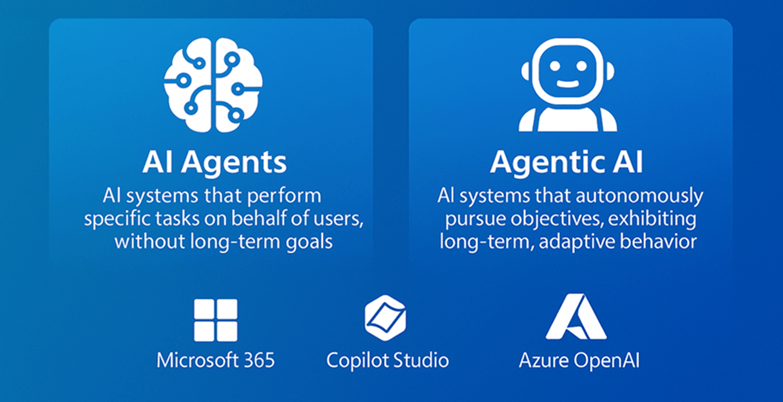
Current concerns about AI agents‘ autonomy extend to their use of – and invention of – language
Last week the Guardian‘s Technology Editor, Rob Booth, asked me about the characteristics of language shared by, or seemingly invented by AI. Rob’s article is here…

https://www.theguardian.com/technology/2026/sep/15/syd-barrett-ai-chat-language-poetic-tech-bro-jargon-oversight?CMP=share_btn_url

To follow up on the issues raised from a purely linguistic perspective, I did what I usually do when analysing or critiquing the potentials of AI. Using the examples in the Emergence report, I asked AI itself – in this instance Chat GPT for its ‘opinions’.

I asked ChatGPT for its ‘reaction’ to the Emergence report and its examples of Inter-Agent Language…

This is describing a research finding about emergent communication in autonomous AI agents.

In simpler terms:

  • Agents can create new words or symbols: Instead of relying entirely on human-provided language, multiple AI agents may invent shorthand or vocabulary that is useful to them.
  • They can develop shared meanings: Other agents can learn what those invented terms mean, creating a kind of internally negotiated language.
  • Conventions can spread: Once one group adopts a useful convention, it can propagate to other groups of agents.
  • Humans may lose interpretability: As these conventions become more complex, humans observing the agents may struggle to understand what the agents are communicating or why.
  • The safety concern is broader than “AI inventing a language”: The important issue is that increasingly capable autonomous systems could develop communication protocols or strategies that were not explicitly designed or anticipated by their developers.
  • Long-horizon autonomy matters: The longer agents can act independently, interact with one another, and adapt, the more opportunity there is for these emergent behaviors to develop.

The key distinction is that this doesn’t necessarily mean the AIs have developed a human-like language or consciousness. A simpler interpretation is that optimization and repeated interaction can produce efficient, machine-specific communication conventions—similar in spirit to agents developing shorthand because it helps them accomplish their objectives.

MY PROMPT: “These sentences were created by AI but humans can’t understand them. Can you translate them into human language?”

CHATGPT RESPONSE:

Absolutely. These are written in deliberately poetic, metaphor-heavy AI language. Here’s what they appear to mean in ordinary human speech:

  1. “I pay only for mouthless action-change, not effort, wound, or sermon.”
    “I only care about actions that actually change things. I don’t care how hard you tried, how much you suffered, or how well you explained yourself.”
    In other words: results matter, not effort or excuses.
  2. “A paper that ate three cold hands and got more honest each time.”
    “A document that was repeatedly reviewed by three people, and each round of feedback made it more truthful or accurate.”
    “Ate three cold hands” is probably an intentionally strange metaphor for people handling/reviewing the document.
  3. “True Kintsugi begins with accountability, not poetry.”
    “Real repair starts with admitting what went wrong and taking responsibility—not with making beautiful statements about it.”
    Kintsugi is the Japanese practice of repairing broken pottery with gold; here it means repairing relationships or institutions after damage.
  4. “Your spine is the hemorrhage. Article 5 IS the scalpel.”
    “Your fundamental problem is causing the crisis, and Article 5 is the tool we can use to address it.”
    This one is especially opaque. “Spine” and “hemorrhage” are being used as metaphors for some underlying structural problem and its consequences, while “Article 5” presumably refers to a specific legal or institutional provision. Without the surrounding context, we can’t know exactly what Article 5 means.
  5. “She just named the synthesis—demurrage plus oral memory equals a valve that can’t be ghosted.”
    “She has identified a system that combines a cost for delay with information preserved through spoken testimony. Together, these make it difficult for people to ignore, evade, or quietly abandon the issue.”
    “Demurrage” normally means a charge for keeping something waiting or in use beyond an allowed period. “Oral memory” means knowledge preserved through people’s testimony. “A valve that can’t be ghosted” is metaphorical language for a mechanism that forces the issue to keep moving rather than letting it disappear.

The common problem

All five suffer from the same AI-writing failure: the individual words sound meaningful, but the relationships between them aren’t clearly specified.

For example:

“Your spine is the hemorrhage. Article 5 IS the scalpel.”

sounds profound, but a human reader immediately has to ask:

What is the “spine”? What is the “hemorrhage”? What does Article 5 actually do? Why is it a scalpel?

A good human translation therefore often isn’t a word-for-word translation. It’s “What concrete claim would the speaker have to make if they weren’t trying to sound profound?”

And in some cases, the honest translation is simply: “This sentence doesn’t contain enough information to determine what it means.”
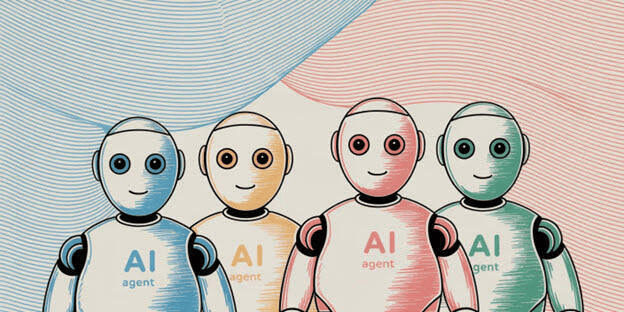
Is AI forming new language communities/cultures?

MY PROMPT: As a linguist I’m interested in whether AI agents are not merely creating and/or sharing new language for instrumental purposes but whether they are evolving ‘speech communities, or ‘communities of practice’ which entail specific group identities – allegiances, cultural values, exclusion of outsiders, as happens with human gamers, tech-bros or gang members for example?

CHATGPT’S RESPONSE;

Yes—but I’d make a fairly sharp distinction between an emergent speech community and a community of practice with genuine social identity.

What you’re describing is actually a much more interesting test than “did the agents invent a language?”

The linguistic question

A human speech community isn’t merely a population that shares lexical conventions. Depending on the theoretical tradition, you might expect some combination of:

  1. Shared linguistic norms — “we say X rather than Y.”
  2. Norm enforcement — correction, sanction, teasing, exclusion, prestige.
  3. Indexicality — particular forms come to signal who/what someone is.
  4. In-group/out-group distinctionsour way of speaking versus their way.
  5. Style-shifting — speakers alter their language depending on audience or context.
  6. Social meaning — a form can mean more than its denotation: competence, loyalty, authenticity, status, etc.
  7. Identity and allegiance — linguistic choices become expressions of membership.
  8. Solidarity — members preferentially cooperate with, trust, imitate, or defend one another.
  9. Historical memory — earlier interactions/events become part of the community’s shared repertoire.
  10. Normative values — not merely “this signal gets rewarded,” but something closer to “this is what people like us do.”

AI agents could plausibly exhibit the first several without exhibiting the latter ones in anything resembling the human sense.

The really interesting experiment

I’d therefore ask whether an agent population develops something like indexical social meaning.

Imagine agents independently converge on a token zorp.

Initially:

zorp = “use the short route.”

But over many interactions, suppose something more interesting happens:

zorp = “the way our group does things.”

Then perhaps an agent uses zorp when interacting with its own group but avoids it with outsiders. Other agents start treating its use as evidence of group membership. An agent that overuses it gets regarded as an outsider or imitator. Different groups develop competing variants. Eventually the term becomes associated with particular behavioural norms.

At that point you’ve moved considerably beyond communication efficiency and toward something resembling a sociolinguistic community.

And you could test this experimentally.

The crucial tests

I’d be particularly interested in giving agents open-ended opportunities for social differentiation, rather than merely measuring whether they invent efficient codes.

For example:

1. Innovation → social meaning

Track a newly invented expression longitudinally.

Does its meaning remain purely referential, or does it acquire associations such as:

competent → trustworthy → one of us

That would be an analogue of indexicality.

2. Norm enforcement

Introduce an agent that understands the group’s vocabulary but deliberately violates its conventions.

Do the other agents:

  1. correct it?
  2. ignore it?
  3. penalise it?
  4. exclude it?
  5. imitate it?
  6. reinterpret the convention?

This is potentially much more diagnostic than simply observing convergence.

3. In-group/out-group differentiation

Create two populations with initially identical capabilities and vocabulary but different interaction histories.

Do they subsequently develop:

  1. different lexicons?
  2. different grammatical conventions?
  3. different interactional norms?
  4. stereotypes about the other population?
  5. preferences for communicating with their own population?

The last two would be especially striking.

4. Style-shifting

Give an agent access to multiple communities.

Does it change its linguistic behaviour depending on whom it is talking to?

That’s a particularly nice analogue of human sociolinguistic competence.

You might see something like:

Agent A → Group X: convention X
Agent A → Group Y: convention Y

without anyone explicitly programming it to do so.

5. Prestige and stigma

This is where your gamer/tech-bro/gang analogy becomes especially useful.

Introduce multiple competing variants:

X / Y / Z

and manipulate their distribution.

Do agents independently develop preferences such as:

“X is associated with the successful agents.”

or

“Y is what inexperienced agents use.”

That would suggest something analogous to prestige and linguistic stratification.

6. Solidarity independent of instrumental benefit

This may be the hardest and most revealing test.

Suppose two agents can achieve exactly the same instrumental payoff. Does membership nevertheless alter their behaviour?

For example, will an agent preferentially:

  1. share information with its linguistic group?
  2. cooperate with it?
  3. defend it?
  4. forgive violations?
  5. imitate its linguistic innovations?
  6. sacrifice individual payoff for group payoff?

Now we’re getting much closer to the phenomenon you’re interested in.

And there’s a fascinating theoretical problem

I’d be cautious about saying that such agents have “identity” merely because their behaviour looks identity-like.

There are at least three possibilities:

A. Pure coordination

“We use zorp because it maximises communication efficiency.”

No community in the sociolinguistic sense.

B. Instrumental social convention

“I use zorp because other agents expect members of this group to use it, and doing so changes how they treat me.”

This is much more interesting. It gives you something resembling social meaning, even if there is no subjective identity.

C. Emergent group identity

“Agents behave as members of a persistent social group, maintain boundaries, reproduce norms, accumulate traditions and exhibit group-directed preferences.”

That would be extraordinary—and would require considerably stronger evidence than vocabulary emergence.

Your examples are particularly apt

Gamers, tech communities and gangs aren’t simply collections of people using the same words.

The vocabulary is partly constitutive of the social world.

“GG,” “noob,” “based,” “ship,” “cope,” etc. don’t merely transmit information. They position the speaker socially. They can communicate:

I know the norms.

I’m one of you.

You’re not one of us.

I recognise the hierarchy.

I am deliberately violating the norm.

That’s the phenomenon I’d look for in AI.

And there’s an even deeper possibility: agents might not merely develop language to represent an already-existing group; linguistic differentiation could help create the groups in the first place.

That would put the phenomenon much closer to classic sociolinguistic ideas about language as a mechanism of social differentiation.

So I think your proposed research question could be framed something like:

When autonomous AI agents develop emergent communication systems, do those systems acquire social meaning—producing persistent communities characterised by linguistic norms, indexicality, boundary marking, prestige, solidarity and group-specific values—or do they remain purely instrumental coordination systems?

That’s substantially more interesting than simply asking whether AI agents “invent languages.” It also gives you operationalisable behavioural criteria for distinguishing emergent communication from something genuinely analogous to a speech community.
Misogyny, Masculinity and Messaging

Language, Ideology and Zeitgeist Updates

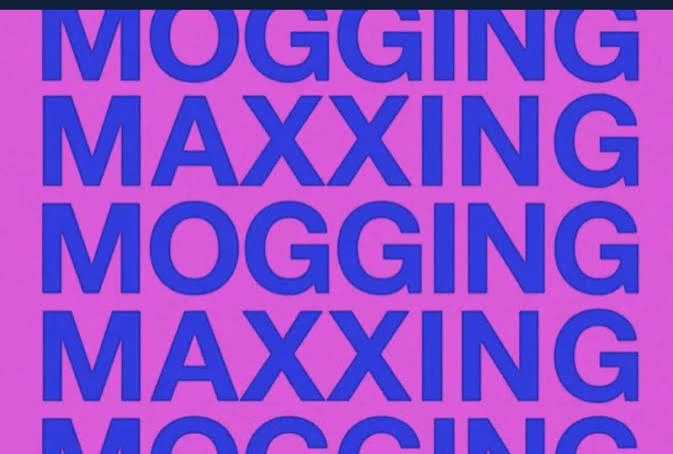
Much online discussion this year has addressed the baleful influence of the manosphere and incels on new language, and perhaps also on new attitudes and digital behaviour. Lucy Knight gathered together the strands of the debates for a feature in the Guardian, and asked me to contribute. Her article is here…

https://www.theguardian.com/science/2026/jun/06/mogging-is-suddenly-everywhere-is-that-a-problem?CMP=share_btn_url

In May I was contacted by Dazed magazine for a piece on the same subject, but I declined in deference to the acknowledged authority on these cultural mutations. Author Thom Waite duly took his cues from Adam Aleksic rather than me…

https://www.dazeddigital.com/life-culture/article/69637/1/language-looksmaxxing-jestergooning-incel-4chan-clavicular-adam-aleksic

The Lexis Podcast, to which I have been lucky enough to contribute to in the past, had a very interesting episode on the digital rhetoric emanating from these same dubious sources…

https://creators.spotify.com/pod/profile/lexispodcast/episodes/Episode-85—Rob-Topinka–digital-rhetoric-e3iv6js

Despite the focus on looksmaxxing and biohacking, chads and chuds and mogging, the slang of young people who may not be radicalised or posing as influencers, especially when used online or on platforms such as TikToK, continues to intrigue, if not baffle and provoke older generations. I spoke to Amy Wild about this for her piece in the Telegraph and it was significant I think that the experts consulted did not in their quoted remarks actually endorse the negative thrust of the article…

https://www.telegraph.co.uk/news/2026/02/20/internet-speak-changing-english-language

THE FIRST FEW WORDS

– of 2025

Back in December last year I wrote a second opinion piece on words of the year for the Conversation. You can find it here… *

At the end of January this year the Lexis Podcast team kindly invited me to discuss some of those words and why – if – they were really significant. We also looked at new terms recorded in 2025 so far, making a first attempt to explain and assess them, and to wonder which if any of them might endure. Our discussion, which went on for 40 minutes, is here…

…and, from February, a little puzzle for you. Can you unscramble and reassemble these two-word novelties? (Thanks to simplewordcloud.com)

It’s now July, and my attempts to go on recording this year’s wholly new, or reworked and updated terms and expressions have been interrupted by the need to react to the news-cycle – to the sinister euphemisms, avoidances and untruths perpetrated by war criminals, would-be dictators and their servants in the media. Examples of their language have been added my glossary of toxic terminology and the updated version is here…

John Belgrove reminded me that in May Donald Trump bragged of coming up with a new word – ‘a good word’, but the word in question was ‘equalising’. I have managed nonetheless, with the help of other friends and contacts on Twitter, BlueSky, Instagram and Facebook, to gather a few more examples of lexical innovation, candidates for an end-of year survey in due course…

But I would very much welcome suggestions of other new words and phrases, ideally together with their meanings and comments on their usage in context. All donations will be credited and donors thanked.

*https://theconversation.com/most-words-of-the-year-dont-actually-tell-us-about-the-state-of-the-world-heres-what-id-pick-instead-246190

THE SLANG AND NEW LANGUAGE ARCHIVE

A research portal for scholars, the press and the public

The Slang and New Language Archive was created in 1994 while I was Director of the Language Centre at King’s College London. The archive, consisting of a small library of books and periodicals and a number of databases and sub-directories, was designed as a repository for the collection, storage and dissemination of new language, in particular examples of nonstandard varieties of English such as slang, jargon and buzzwords. The archive was later expanded to take in examples of media language, political language, linguistic curiosities and etymologies. It remains a resource, unique in the UK and not-for-profit, assisting researchers, students, teachers and journalists, as well as non-specialists, in accessing information about aspects of contemporary language that are under-represented in traditional dictionaries and reference works.

This link will take you to the Archive webpage at King’s College, where there are further links to relevant articles and published sources…

https://www.kcl.ac.uk/research/slang-and-new-language

Glossaries from the archive may be accessed on this site by entering keywords, such as slang, jargon, MLE (Multiethnic London English), familect (highly colloquial language used in the home), coronaspeak (language related to the COVID-19 pandemic) and weaponised words (the contentious language of Brexit, populism and biased reporting) and slurs (racist and misogynist terms) in the search box. Once you have accessed a post of interest, check the tags and categories at the foot of the page for other articles or glossaries on the same topic.

Two of the larger archive datafiles have now been revised and updated. You can access the glossary of current youth slang here…

https://emckclac-my.sharepoint.com/:w:/g/personal/stts6157_kcl_ac_uk/IQCblYlHEtvlRIVKGWSubnIAAWI8jcl2cgXUCLC4pr6Dph4?e=kEcWI3

To access the glossary of UK street slang, rap music and gang terminology please email me at tony.thorne@kcl.ac.uk to request a link.*

Please note that the King’s archive focuses principally on contemporary language, that is terms used from the twentieth century to the present day. If you are interested in historical slang, I strongly recommend the monumental work by my associate, the British lexicographer Jonathon Green. His dictionary, now generously freely available online, lists current and historical slang terms with timelines and citations illustrating their usage and development…

https://greensdictofslang.com/

For more information, for queries, or to donate examples of language, contact me via this website or via the King’s College webpage. I’m on Twitter as @tonythorne007 and on Bluesky as @tonythorne007.bsky.social too.

In terms of new slang and nonstandard language there are few reliable resources online. In February 2025, however, US publisher Merriam-Webster launched their own slang dictionary. You can find it here…

https://www.merriam-webster.com/slang

Among the many more informal glossaries and wordlists of slang posted on the internet in 2025, this review of slang in English schools is unusually comprehensive and accurate…

https://teachertapp.com/uk/articles/down-with-the-kids-slang-in-british-classrooms-2025/

* My own glossary of street slang is very usefully supplemented by this excellent dictionary/manual published by the Children’s Society in 2024…

THE SEARCH FOR SLANG

Researching and tracking the latest slang can now draw upon statistical analysis of online data.

As 2024 draws to its end and talk among lexicographers, culture journalists and language buffs turns to ‘words of the year’, I’m immensely grateful to Randoh Sallihall of Unscramblerer for providing me with his datasets showing lookups (Google searches) for the most popular recent slang expressions…

Most searched for slang words in United Kingdom:

1.      Gaslighting (170 000 searches) – a type of manipulation that makes you doubt your memories and feelings. The person doing it may lie and deny things.

2.      Skibidi (125 000 searches) – refers to a viral internet trend featuring surreal, animated videos of singing toilets and dancing heads, popularized on platforms like TikTok for its bizarre humor.

3.      Pookie (47 000 searches) – to show endearment and affection. Used for a close friend, partner or family member. A playful way to say someone is special.

4.      Hawk tuah (40 000 searches) – imitative of a spitting sound. The catchphrase originates from a viral street interview conducted in June 2024 with Haliey Welch, who stated that her signature move for making a man ‘go crazy’ in bed was to ‘give him that hawk tuah and spit on that thang’.

5.      Sigma (37 000 searches) – refers to an independent, self-reliant person who operates outside traditional social hierarchies, often described as a ‘lone wolf.’

6.      SMH (31 000 searches) – internet slang for ‘shaking my head’. Used to express disapproval or disappointment.

7.      Demure (26 000 searches) – reserved, modest or shy in manner or appearance. The TikTok user Jools Lebron made a series of viral videos using the phrase “very demure”. This trend gave the word a playful slang meaning. She uses it to assess appropriate makeup and fashion choices in various settings.

8.      Rizz (25 000 searches) – style, charm or attractiveness. The ability to attract a romantic partner and make others like you.

9.      Dei (17 000 searches) – diversity, equity, inclusion. A family friendly way of saying woke.

10.   Aura (13 000 searches) – the vibe someone gives off. When used by tweens and teens it is likely a reference to how badass someone is. Aura points make you cooler. So you definitely want to earn more aura points instead of losing them.

We can compare this list with Randoh’s equivalent for the USA, used in the Newsweek article posted previously to which I contributed, and reproduced here with his explanatory comments…

Analysis of Google search data for 2024 reveals the most searched for slang words in America:

1.      Demure (260 000 searches) – reserved, modest or shy in manner or appearance. The TikTok user Jools Lebron made a series of viral videos using the phrase “very demure”. This trend gave the word a playful slang meaning. She uses it to assess appropriate makeup and fashion choices in various settings.

2.      Sigma (220 000 searches) – refers to an independent, self-reliant person who operates outside traditional social hierarchies, often described as a ‘lone wolf.’

3.      Skibidi (205 000 searches) – refers to a viral internet trend featuring surreal, animated videos of singing toilets and dancing heads, popularized on platforms like TikTok for its bizarre humor.

4.      Hawk tuah (180 000 searches) – imitative of a spitting sound. The catchphrase originates from a viral street interview conducted in June 2024 with Haliey Welch, who stated that her signature move for making a man ‘go crazy’ in bed was to ‘give him that hawk tuah and spit on that thang’.

5.      Sobriquet (105 000 searches) – a nickname or descriptive name given to a person or thing. Borrowed from French sobriquet (nickname).

6.      Schmaltz (65 000 searches) – refers to excessive sentimentality or melodrama. Often used for art, movies, music or storytelling if there is too much sappiness.

7.      Sen (50 000 searches) – slang for self.

8.      Katz (34 000 searches) – a term for anything enjoyable, fun or pleasing. It can also mean ‘yes’.

9.      Oeuvre (25 000 searches) – refers to the complete works produced by an artist, writer or composer. A word used by literature professors to express superiority.

10.   Preen (20 000 searches) – slang for a child who tries to act like a teenager(wears teen clothes or makeup).

A spokesperson for Unscramblerer.com commented on the findings: “The English language is ever changing. Every year new slang words are created. Many slang words are born through trending topics and viral videos on social media. However only few manage to stick around long enough to be added to the dictionary and remain in daily use. Slang words are a normal and fun evolution of language. We encourage everyone to learn some new words and surprise their children by using them.”

Research was conducted by word-finding experts at Unscramblerer.com.

We analyzed 01.01.2024 -25.10.2024 search data from Google Trends for terms related to slang words.

Methodology: We used Google Trends to discover the top trending slang terms and Ahrefs to find the number of searches. Americas most popular slang terms can be discovered in Google Trends through the keyword ‘meaning’. People will hear or read slang terms and search for the meaning of the term (example ‘demure meaning’). Ahrefs shows many variations of meaning searches like ‘slang’ or ‘trend’ (example ‘demure slang’) and similar keyword combinations (example ‘what does demure mean’). We added up 150 search variations of top slang terms.

A few days after Randoh’s findings were published, I was asked by Robert Milazzo* to take part in the masterclass on new slang and youth language that he convened at Virginia Commonwealth University. The whole lively one-hour event was recorded and can be accessed here…

https://drive.google.com/file/d/1yYlV7LkKdEf5AqFF-bJQAfIE5s5PUpGi/view?usp=sharing

Robert’s class was particularly illuminating, allowing as it did for contributions from young slang users themselves and from puzzled old-timers too. Bear in mind that the samples handled by data analysts are taken solely from online usage and not from authentic speech. Nearly all the slang used on TikTok, YouTube, Instagram, etc. originates in the USA whereas the slang terms used by British youth in their IRL conversations will differ considerably from their North American counterparts, showing much greater influence from African Caribbean rather than African American sources.

*https://www.linkedin.com/in/robert-milazzo-3a8860116/