…NO WORD OF A LIE…?

Some new thoughts about the pervasive, destabilising, discomfiting Language of Lying in public life
Image result for lie word cloud

In 2015 Conservative politician Grant Shapps was forced to admit that he had ‘over-firmly denied’ having a second job under a pseudonym, selling a ‘get-rich-quick’ scheme while sitting as an MP.

In 2008 Hillary Clinton admitted that she had ‘misspoken’ when she claimed to have come under sniper fire during a 1996 visit to Bosnia.

A slang phrase, borrowed from US street and hiphop parlance into so-called MLE, ‘multicultural London English’, and often used by teenagers in London today, is ‘no cap!’ an exclamation which is the modern equivalent of the adult ‘no word of a lie!’ when swearing that you can be trusted, are being sincere, are telling the truth.

Orwell famously exposed the doublespeak of totalitarianism and I wrote some years ago about politicians’ evasive and duplicitous ‘weasel-words’ (a version of the article is on this site). In the late 90s I presented a series for the BBC World Service in which we looked at the politics of ‘spin’ and the work of the spin-doctors employed first by Bill Clinton and later by Tony Blair to massage their messages and to take ownership of the media narratives of the moment. The half-truths and untruths perpetrated today are more frequent, more widespread, some are more flagrant, and all are helped in their trajectories by multiple new platforms and outlets and far more sophisticated mainstream and social media capabilities.

Bethany Williams on Twitter: "Let's GET THIS GOING!!!! Call Sue at  Embroidability and order your “Make lying wrong again” baseball ($15) or  bucket hat ($20) in either navy blue or black -

I have collected examples of the toxic terminology and ‘skunked’ terms employed by demagogues and charlatans and echoed by compliant journalists and commentators (my glossary is on this site).  In the media maelstrom we are presently living through, untruths, half-truths and fake news, too,  have featured prominently and repeatedly in the national conversations of the US and the UK. With this in mind the Open University has produced a two-part mini-documentary on the Language of Lying in which I was privileged to take part. We talk about the concepts of truth and falsehood and about their incarnations in the current context of populism, Trumpism and Brexit.

Part One of the documentary is here:

I’m very grateful to Dr Philip Seargeant of the OU for initiating this project and asking me to take part, grateful too to Hamlett Films for producing the programme.

Here is the second part:

And here are links to two more recent commentaries on lying:

Acting Dishonestly Impairs Our Ability To Read Other People’s Emotions

https://slate.com/news-and-politics/2018/10/trump-lies-kavanaugh-khashoggi.html
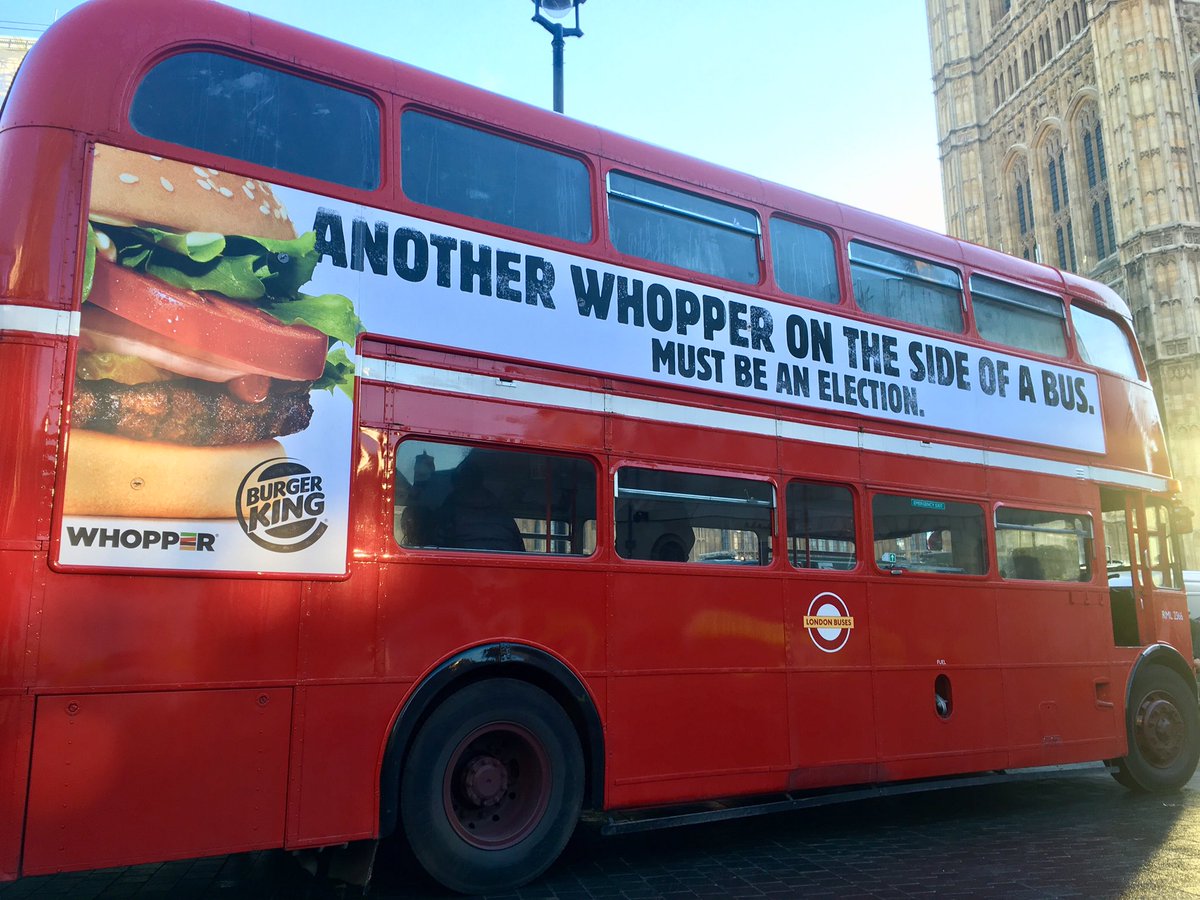
and in December Richard Sambrook reflected on the way that traditional norms of political and media behaviour had been abandoned in the 2019 election campaign:

https://theconversation.com/uk-election-2019-dirty-tricks-wrong-footing-a-media-that-now-faces-a-fight-to-remain-relevant-128326?utm_medium=email&utm_campaign=The%20Weekend%20Conversation%20-%201481214069&utm_content=The%20Weekend%20Conversation%20-%201481214069+CID_ae975b7b58146a2a8760418def4730c6&utm_source=campaign_monitor_uk&utm_term=some%20serious%20reflection%20is%20needed

In November 2019 we had news of the world’s biggest liar:

https://www.theguardian.com/uk-news/2019/nov/22/festival-of-fibs-workington-man-is-crowned-worlds-biggest-liar

Image result for lie word cloud

A happy footnote: the OU documentary in which I took part won the Medea Award, announced in October 2020:

Click to access MEDEA-Awards-2020_press-release_Winners_20201028.pdf

By way of an update, in May 2021 Conservative MP Rory Stewart delivered this assessment of Prime Minister Boris Johnson:
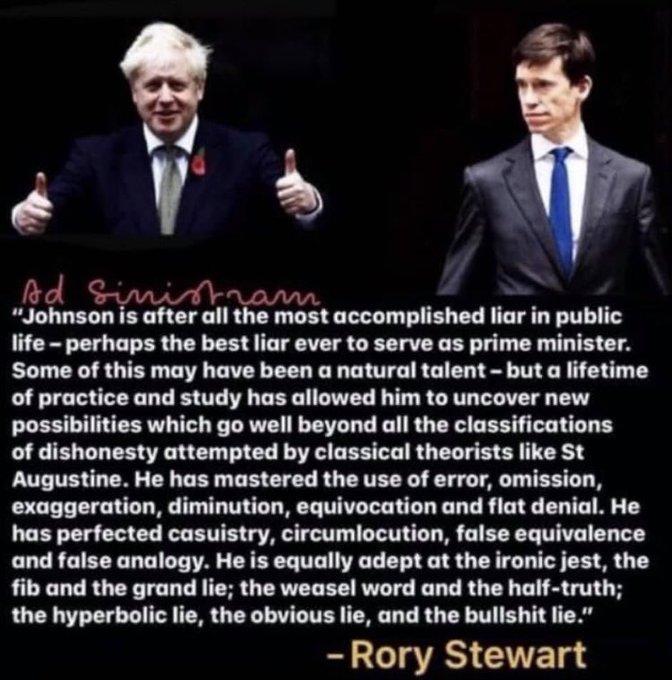
Image

Then, in June…

Image

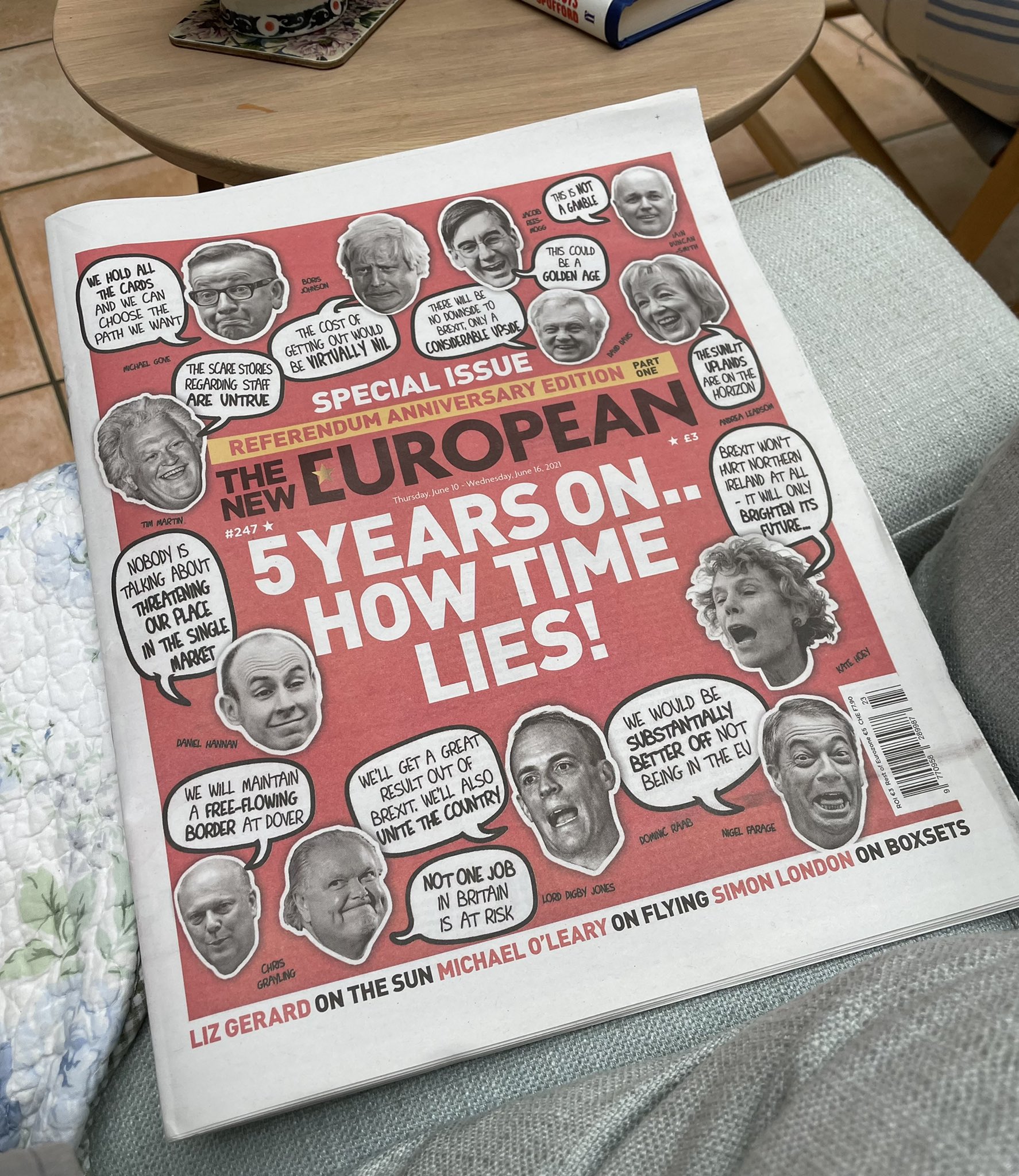
In August 2021 the UK government deployed a comms strategy that commentators referred to variously as ‘spin’, ‘stretching the truth’, ‘newspeak’… and ‘institutional lying’…
Image

In January 2022, as Boris Johnson faced a tide of indignation following revelations of lockdown breaches (the so-called ‘partygate’ scandal), Journalist Peter Oborne published a list of what he charitably termed ‘misleading statements’ made by the Prime Minister and still uncorrected in official records…

https://boris-johnson-lies.com/johnson-in-parliament

In April 2022 The Conversation challenged the view that the UK public were inured to lying by politicians…

BEWARE BIGWIGS – and BIGWIGS BEWARE

Image result for blackadder ridiculous wig


Print, broadcast and social media have a fairly small repertoire of expressions to deploy when fawning over, or seeking to discredit, the bigwigs who lord it over us and, supposedly, lead us. The expression I have just used, hoping for a striking epithet, is first attested in the mid-18th century (already with its tinge of sarcasm, its lack of due deference) when ostentatious wigs were worn by the most important and self-important personages in the land: ‘A new point of discussion for the lawyers, for our big wigs, for their Lordships.’ From the same era and invariably used of Dr Johnson is ‘panjandrum’, from Grand Panjandrum, an invented phrase in a nonsense verse published in 1755 by Samuel Foote*. By the 19th century it had come to refer mockingly to an ‘imposing figure’, especially if puffed-up. Such terms have a comic quality which may not be quite appropriate in the current climate of political rancour, so we revert to the (over) familiar mainstays of journalistic discourse.

Image result for robert maxwell

With recollections of the notorious fraudster press baron Robert Maxwell featuring in post-Epstein press reports the word magnate has been employed by more than a few journalists. It first appeared in Middle English and derives from late Latin magnas, magnat – great man, and it and its translations formerly defined a class of post-feudal nobility in European lands.

While we are at it, grandee (important, influential male in public life, often applied to elderly, retired, invariably hugely wealthy former politicians of a particular stripe) appeared in the late 16th century, from Spanish and Portuguese grande, senior nobles, from Latin grandis, great. The English ending was by association with the originally French-inspired ending -ee, seen in such formulations as ‘devotee’ and ‘debauchee.’


Image result for mughal prince


In the same lexical set of possibly overweening, overstated titles as ‘magnate’ and ‘grandee’ is mogul (as in ‘hedge-fund mogul pedophile’ – a recent press caption) which was originally cognate with ‘mongol’ and referred to the Mughal (the Iranian version) dynasties who ruled India between 1526 and 1857 and were thought by Europeans to have vast stores of treasure at their disposal. The word’s suggestion of limitless power coupled with financial profligacy gave us those journalistic cliches of the 1950s, ‘movie mogul’ and ‘Hollywood moguls.’

‘Mogul’, ‘grandee’, ‘magnate’ share a category with tycoon – Japanese taikun, great lord or prince, from Chinese tai great and kiun lord, a designation of the ruling Japanese Shogun used by respectful foreigners, adopted into English in the 1860s, first as an admiring description of a political figure, then, from the 1920s as journalese shorthand for a prominent business leader and/or entrepreneur, especially if perceived as powerful, dynamic and/or aggressive.

On Twitter J-V Vernay asks ‘How about nabob from Nawab?’ In the colonial era in India the word, which later came to mean a returning colonist who had enormously enriched themselves, originally denoted a deputy governor of a province under the Mogul Empire. It is Anglo-Indian, probably adopted via Portuguese nababo from Hindi and Urdu nabab, from the Arabic plural nuwwab meaning viceroys. A wonderful word in its jaunty sound and in its connotations, perhaps bestowed most memorably in this case:

https://www.amazon.com/Nabob-Sob-Very-Johnnie-1951-57/dp/B01AXLWSBE …

Another rather rare but interestingly loaded term for alpha-males in public life is plutocrat, denoting a wielder of power derived from enormous wealth. ‘Plutocracy’ appeared in English in 1631, from the Greek ploutos wealth and -kratia, meaning rule and was widely used to describe the economic and social dominance exercised by late 19th century and early 20th century industrialists in the USA. Potentate is another resonant label from the politico-journalistic lexicon: it began to be used in the 1400s and is formed from Latin potentatus, dominion, from potent, having and/or exercising power.

I should probably mention in passing the honorific I secretly crave for myself: it’s eminence-grise, describing a ‘power-behind-the-throne’, a hidden manipulator of affairs, an arranger working in the shadows, originally referring to His Eminence François Leclerc du Tremblay, who wore a beige robe when that colour was in French described as grey and was the righthand-man of Cardinal Richelieu.

Image result for eminence grise

In my previous post I listed some of the disapproving epithets for those in public life who wield power and influence and aspire to or affect greatness but, to put it much too kindly, fall far short. Another term associated with scrutiny of these reprobates which has been trending recently is impostor. ‘Impostor syndrome’ (then known as ‘impostor phenomenon’) was first defined in 1978. The word itself was adopted from French in the 16th century, derived via French imposteur from Latin imponere to impose upon, deceive, swindle. An ‘imposture’ denoted a fraudulent display or adoption of a false persona while the imposter or impostor was the perpetrator. Some, of course, who exhibit symptoms of the syndrome – shiftiness, false bonhomie, exaggerated preening – really are impostors.

Image result for impostor


*Foote invented the word, which has echoes of Latin or Asiatic tongues, as part of a sequence to test the memory of a fellow-actor: ‘And there were present the Picninnies, and the Joblillies, and the Garyulies and the Grand Panjandrum himself, with the little round button at the top’

THE REAL WORDS OF THE YEAR – 2018

It has become a tradition for the major dictionary publishers, along with some linguists’ associations, to nominate a ‘word of the year’, a term (or in the case of Oxford’s 2015 crying/laughing emoji a symbol) which supposedly captures the essence of the zeitgeist, and in doing so marks the proposer as someone in tune with the times and with their target audience. The words chosen are rarely actually new, and by the nature of the exercise calculated to provoke disagreement and debate. I have worked with and written about what linguists and anthropologists call ‘cultural keywords’ and have my own ideas on which expressions could be truly emblematic of social change and cultural innovation. The words already nominated by the self-appointed arbiters are discussed at the foot of the page, but here, for what it’s worth, are mine (in order of preference)…


Image result for Artificial intelligence

AI

Yes, strictly speaking it’s two words, but this little initialism looks like a two-letter word and is processed by the brain as a ‘lexeme’ or a single unit of sound and sense. AI, artificial intelligence, is the hottest topic not only in tech-related practices but in fields as (seemingly) diverse as marketing, finance, automotives, medicine and health, education, environmentalism. Zdnet.com has published one of the most useful overviews of AI and its sub-categories and applications:

https://www.zdnet.com/article/what-is-ai-everything-you-need-to-know-about-artificial-intelligence/

Though it is one of the most fashionable and most resonant terms in current conversation, a slogan and a rallying cry as well as a definition, AI is problematic in the same way as two other recent contenders for word-of the moment, CRYPTO and DIGITAL. The former is shorthand for all the very complex, not to say near-incomprehensible elements that have accompanied the invention of crypto-currencies – bitcoins and blockchains in particular. These advances have yet to prove their worth for most ordinary consumers who will often be bemused by new terminology that seems to be traded among experts somewhere beyond their grasp or their reach. In the same way for the last few years ‘digital’ has been a mantra evoking the unstoppable influence of new electronic media, (related SOCIAL was a strong candidate for buzzword of 2017). Digital’s over-use by overexcited marketing professionals, would-be thought-leaders and influencers has been inspiring mockery since 2016, as in the spoof article in the Daily Mash: https://www.thedailymash.co.uk/news/business/nobody-knows-what-digital-supposed-to-mean-20160614109525

To put it almost as crudely as the Daily Mash does, there’s a sense in which almost no layperson knows, or can know fully, what Digital, Crypto and AI really mean, and the same goes for the expressions derived from them – ‘deep learning’ comes to mind. Their power derives from their novelty and their ability to evoke a techutopian future happening now. The phrase artificial intelligence was first employed in 1956 and its abbreviated form has been used by insiders since at least the early 2000s, but it is only now that it, and the concepts it embodies, are coming into their own.


Image result for kimberle crenshaw

INTERSECTIONALITY

At first sight just another over-syllabled buzzword escaping from the confines of academic theory (‘performativity’, ‘superdiversity’ and ‘dimensionality’ are recent examples) into highbrow conversation, intersectionality is actually an important addition to the lexicon of identity studies. It was coined as long ago as 1989 by Kimberlé Crenshaw, a civil rights activist and legal scholar who wrote that traditional feminist ideas and anti-racist policies exclude black women because they face overlapping discrimination that is unique to them.  The word took 26 years to make it into the OED and is still unfamiliar to many, but during 2018 has featured in more and more debates on diversity and discrimination, marking the realisation that, for BAME women and for other marginalised groups, the complexities of oppression and inequality occur in a matrix that incorporates not only gender and ethnicity but such factors as age, sexuality and social class. There are each year a few forbiddingly formal or offputtingly technical expressions that do deserve to cross over into mainstream use. This I think is one of them and no journalist, educationalist, politician or concerned citizen should be unaware of it.

A bad-tempered take on intersectionality as buzzword was provided last year by https://www.theguardian.com/world/2017/sep/30/intersectional-feminism-jargon


Image result for civility politics

CIVILITY

I was intrigued by the sudden appearance (sudden at least by my understanding) earlier this year – its online lookups spiked in June – of a decorous, dignified term in the midst of very undecorous, undignified public debate. This old latinate word’s denotations and connotations were in complete contrast with the ‘skunked terms’ and toxic terminology that I had collected elsewhere on this site. In fact, as is often the case, this word of the moment emerged from a longer tradition, but one largely unknown hitherto outside the US. Its proposer was Professor P.M Forni, who sadly died a couple of weeks ago. In 1997, together with colleagues he established the Johns Hopkins Civility Project — now known as the Civility Initiative — a collaboration of academic disciplines that addressed the significance of civility and manners in modern life. His ideas were seized upon by commentators on this year’s events in the US, with some asserting that the civil rights protests of the past were indeed more civil than today’s rancorous exchanges. Democrat Nancy Pelosi denounced Donald Trump’s ‘daily lack of civility’ but also criticised liberal opponents’ attacks on him and his constituency. Others pointed out that polite debate alone had never prevailed in the struggles against bigotry and violence and that civility was an inadequate, irrelevant response. Cynics inserted their definitions: ‘civility’ = treating white people with respect; ‘political correctness’ = treating everybody else with respect…which prompts the thought that perhaps, in recognition of realities on both sides of the Atlantic, it’s really ‘incivility’ that should be my word of the year.

Image result for keywords

Here, in the Economist, is the ‘Johnson’ column’s perceptive analysis of those other nominations for 2018’s word of the year:

https://www.economist.com/books-and-arts/2018/12/08/the-meaning-of-the-words-of-the-year

While US lexicographer Kory Stamper provides the inside story on the American choices:

https://www.bostonglobe.com/ideas/2018/12/18/language-nerds-worked-really-hard-that-words-year-list/wJgdhIMAQK7xcBvlc2iHOL/story.html?s_camp=bostonglobe:social:sharetools:twitter

Lynne Murphy‘s annual US to UK export/import of the year:

https://separatedbyacommonlanguage.blogspot.com/2018/12/2018-us-to-uk-word-of-year-mainstream.html

And her UK to US counterpart:

https://separatedbyacommonlanguage.blogspot.com/2018/12/2018-uk-to-us-word-of-year-whilst.html

In the New Year the American Dialect Society announced its own word of 2018, a disturbing euphemism employed by the Trump regime and a candidate for my glossary of toxic terminology (see elsewhere on this site):

“Tender-age shelter” is 2018 American Dialect Society word of the year

And from the militantly millennial LinguaBishes, some excellent examples of millennial/Generation Z terms of 2018:

2018 Words of the Year


In October 2019 David Shariatmadari in the Guardian gets his preferences in early:

https://www.theguardian.com/science/2019/oct/14/cancelled-for-sadfishing-the-top-10-words-of-2019


…and, FWIW, I like to think that my own collection of cultural keywords, seeking to define the essence of Englishness back in 2011, is still relevant today:

Image result for the 100 words that make the english tony thorne