THE FIRST FEW WORDS

– of 2025

Back in December last year I wrote a second opinion piece on words of the year for the Conversation. You can find it here… *

At the end of January this year the Lexis Podcast team kindly invited me to discuss some of those words and why – if – they were really significant. We also looked at new terms recorded in 2025 so far, making a first attempt to explain and assess them, and to wonder which if any of them might endure. Our discussion, which went on for 40 minutes, is here…

…and, from February, a little puzzle for you. Can you unscramble and reassemble these two-word novelties? (Thanks to simplewordcloud.com)

It’s now July, and my attempts to go on recording this year’s wholly new, or reworked and updated terms and expressions have been interrupted by the need to react to the news-cycle – to the sinister euphemisms, avoidances and untruths perpetrated by war criminals, would-be dictators and their servants in the media. Examples of their language have been added my glossary of toxic terminology and the updated version is here…

John Belgrove reminded me that in May Donald Trump bragged of coming up with a new word – ‘a good word’, but the word in question was ‘equalising’. I have managed nonetheless, with the help of other friends and contacts on Twitter, BlueSky, Instagram and Facebook, to gather a few more examples of lexical innovation, candidates for an end-of year survey in due course…

But I would very much welcome suggestions of other new words and phrases, ideally together with their meanings and comments on their usage in context. All donations will be credited and donors thanked.

*https://theconversation.com/most-words-of-the-year-dont-actually-tell-us-about-the-state-of-the-world-heres-what-id-pick-instead-246190

THE SLANG AND NEW LANGUAGE ARCHIVE

A research portal for scholars, the press and the public

The Slang and New Language Archive was created in 1994 while I was Director of the Language Centre at King’s College London. The archive, consisting of a small library of books and periodicals and a number of databases and sub-directories, was designed as a repository for the collection, storage and dissemination of new language, in particular examples of nonstandard varieties of English such as slang, jargon and buzzwords. The archive was later expanded to take in examples of media language, political language, linguistic curiosities and etymologies. It remains a resource, unique in the UK and not-for-profit, assisting researchers, students, teachers and journalists, as well as non-specialists, in accessing information about aspects of contemporary language that are under-represented in traditional dictionaries and reference works.

This link will take you to the Archive webpage at King’s College, where there are further links to relevant articles and published sources…

https://www.kcl.ac.uk/research/slang-and-new-language

Glossaries from the archive may be accessed on this site by entering keywords, such as slang, jargon, MLE (Multiethnic London English), familect (highly colloquial language used in the home), coronaspeak (language related to the COVID-19 pandemic) and weaponised words (the contentious language of Brexit, populism and biased reporting) and slurs (racist and misogynist terms) in the search box. Once you have accessed a post of interest, check the tags and categories at the foot of the page for other articles or glossaries on the same topic.

Two of the larger archive datafiles are hosted on Aston University’s Institute of Forensic Linguistics Databank site. These are a glossary of current youth slang

https://fold.aston.ac.uk/handle/123456789/4

And a glossary of UK street slang, rap music and gang terminology

https://fold.aston.ac.uk/handle/123456789/5

Please note that the King’s archive focuses principally on contemporary language, that is terms used from the twentieth century to the present day. If you are interested in historical slang, I strongly recommend the monumental work by my associate, the British lexicographer Jonathon Green. His dictionary, now generously freely available online, lists current and historical slang terms with timelines and citations illustrating their usage and development…

https://greensdictofslang.com/

For more information, for queries, or to donate examples of language, contact me via this website or via the King’s College webpage. I’m on Twitter as @tonythorne007 too.

In terms of new slang and nonstandard language there are few reliable resources online. In February 2025, however, US publisher Merriam-Webster launched their own slang dictionary. You can find it here…

https://www.merriam-webster.com/slang

Among the many more informal glossaries and wordlists of slang posted on the internet in 2025, this review of slang in English schools is unusually comprehensive and accurate…

https://teachertapp.com/uk/articles/down-with-the-kids-slang-in-british-classrooms-2025/

THE SEARCH FOR SLANG

Researching and tracking the latest slang can now draw upon statistical analysis of online data.

As 2024 draws to its end and talk among lexicographers, culture journalists and language buffs turns to ‘words of the year’, I’m immensely grateful to Randoh Sallihall of Unscramblerer for providing me with his datasets showing lookups (Google searches) for the most popular recent slang expressions…

Most searched for slang words in United Kingdom:

1.      Gaslighting (170 000 searches) – a type of manipulation that makes you doubt your memories and feelings. The person doing it may lie and deny things.

2.      Skibidi (125 000 searches) – refers to a viral internet trend featuring surreal, animated videos of singing toilets and dancing heads, popularized on platforms like TikTok for its bizarre humor.

3.      Pookie (47 000 searches) – to show endearment and affection. Used for a close friend, partner or family member. A playful way to say someone is special.

4.      Hawk tuah (40 000 searches) – imitative of a spitting sound. The catchphrase originates from a viral street interview conducted in June 2024 with Haliey Welch, who stated that her signature move for making a man ‘go crazy’ in bed was to ‘give him that hawk tuah and spit on that thang’.

5.      Sigma (37 000 searches) – refers to an independent, self-reliant person who operates outside traditional social hierarchies, often described as a ‘lone wolf.’

6.      SMH (31 000 searches) – internet slang for ‘shaking my head’. Used to express disapproval or disappointment.

7.      Demure (26 000 searches) – reserved, modest or shy in manner or appearance. The TikTok user Jools Lebron made a series of viral videos using the phrase “very demure”. This trend gave the word a playful slang meaning. She uses it to assess appropriate makeup and fashion choices in various settings.

8.      Rizz (25 000 searches) – style, charm or attractiveness. The ability to attract a romantic partner and make others like you.

9.      Dei (17 000 searches) – diversity, equity, inclusion. A family friendly way of saying woke.

10.   Aura (13 000 searches) – the vibe someone gives off. When used by tweens and teens it is likely a reference to how badass someone is. Aura points make you cooler. So you definitely want to earn more aura points instead of losing them.

We can compare this list with Randoh’s equivalent for the USA, used in the Newsweek article posted previously to which I contributed, and reproduced here with his explanatory comments…

Analysis of Google search data for 2024 reveals the most searched for slang words in America:

1.      Demure (260 000 searches) – reserved, modest or shy in manner or appearance. The TikTok user Jools Lebron made a series of viral videos using the phrase “very demure”. This trend gave the word a playful slang meaning. She uses it to assess appropriate makeup and fashion choices in various settings.

2.      Sigma (220 000 searches) – refers to an independent, self-reliant person who operates outside traditional social hierarchies, often described as a ‘lone wolf.’

3.      Skibidi (205 000 searches) – refers to a viral internet trend featuring surreal, animated videos of singing toilets and dancing heads, popularized on platforms like TikTok for its bizarre humor.

4.      Hawk tuah (180 000 searches) – imitative of a spitting sound. The catchphrase originates from a viral street interview conducted in June 2024 with Haliey Welch, who stated that her signature move for making a man ‘go crazy’ in bed was to ‘give him that hawk tuah and spit on that thang’.

5.      Sobriquet (105 000 searches) – a nickname or descriptive name given to a person or thing. Borrowed from French sobriquet (nickname).

6.      Schmaltz (65 000 searches) – refers to excessive sentimentality or melodrama. Often used for art, movies, music or storytelling if there is too much sappiness.

7.      Sen (50 000 searches) – slang for self.

8.      Katz (34 000 searches) – a term for anything enjoyable, fun or pleasing. It can also mean ‘yes’.

9.      Oeuvre (25 000 searches) – refers to the complete works produced by an artist, writer or composer. A word used by literature professors to express superiority.

10.   Preen (20 000 searches) – slang for a child who tries to act like a teenager(wears teen clothes or makeup).

A spokesperson for Unscramblerer.com commented on the findings: “The English language is ever changing. Every year new slang words are created. Many slang words are born through trending topics and viral videos on social media. However only few manage to stick around long enough to be added to the dictionary and remain in daily use. Slang words are a normal and fun evolution of language. We encourage everyone to learn some new words and surprise their children by using them.”

Research was conducted by word-finding experts at Unscramblerer.com.

We analyzed 01.01.2024 -25.10.2024 search data from Google Trends for terms related to slang words.

Methodology: We used Google Trends to discover the top trending slang terms and Ahrefs to find the number of searches. Americas most popular slang terms can be discovered in Google Trends through the keyword ‘meaning’. People will hear or read slang terms and search for the meaning of the term (example ‘demure meaning’). Ahrefs shows many variations of meaning searches like ‘slang’ or ‘trend’ (example ‘demure slang’) and similar keyword combinations (example ‘what does demure mean’). We added up 150 search variations of top slang terms.

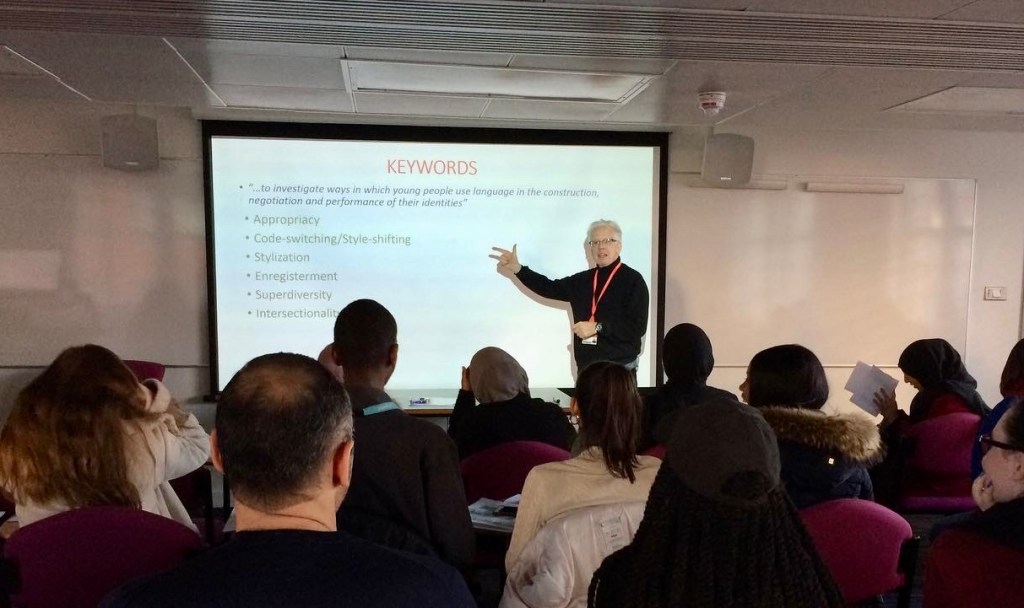
A few days after Randoh’s findings were published, I was asked by Robert Milazzo* to take part in the masterclass on new slang and youth language that he convened at Virginia Commonwealth University. The whole lively one-hour event was recorded and can be accessed here…

https://drive.google.com/file/d/1yYlV7LkKdEf5AqFF-bJQAfIE5s5PUpGi/view?usp=sharing

Robert’s class was particularly illuminating, allowing as it did for contributions from young slang users themselves and from puzzled old-timers too. Bear in mind that the samples handled by data analysts are taken solely from online usage and not from authentic speech. Nearly all the slang used on TikTok, YouTube, Instagram, etc. originates in the USA whereas the slang terms used by British youth in their IRL conversations will differ considerably from their North American counterparts, showing much greater influence from African Caribbean rather than African American sources.

*https://www.linkedin.com/in/robert-milazzo-3a8860116/

LANGUAGE AND LONGEVITY – 2

Dictionary makers and journalists are breathlessly – if not desperately – publicising the latest online language – but do they really understand it?

One week on, I spoke to Chloe MacDowell of the UK Guardian newspaper, then to Marni McFall of the US Newsweek magazine on the topic of TikTok language and the online messaging mannerisms of Influencers and GenZ. Chloe was interested in one particular trending TikTok catchphrase, Marni in the whole panoply of 2024’s viral innovations.

Once authentic conversations and personal interactions (previously happening in private spaces or local communities) began to feature on the internet and in messaging and on microblogging platforms,  language novelties, slang and faddish usages crossed over from a private realm into the global public domain. The latest slang and new language was visible, audible and immediately available to share. Obscure or exotic terms might quickly catch on and become viral favourites, spreading in some cases across the anglosphere more rapidly than print, broadcast or word-of-mouth transmission had ever been to achieve in the past.

Words and phrases began to function like memes, taking on sometimes a ‘multimodal’ aspect whereby sound and image could reinforce the purely verbal expressions that people chose to exchange and promote. Pre-internet there had always been catchphrases, what linguists call ‘vogue words’, slogans and soundbites, and keywords that somehow seemed to evoke or encapsulate some special aspect of the ‘zeitgeist’. What we have now is a much more knowing, deliberate intention (on the part of trend-setters, influencers, ‘thought-leaders’) to create new language to celebrate new identities and to promote new attitudes and lifestyle innovations to the widest possible audience.

Subcultures like surfers, valley girls, fanboys and girls, hip hop aficionados had always invented striking, expressive language and this is still true, but instead of niche culture we have ‘meganiches’, instead of subcultures we are dealing with globalised communities.

The fashionable language of TikTok and GenZ in particular is part of their wider obsession with vibes, aesthetics and microtrends, many of which arise and are discarded in rapid succession. The prevalent style is exhibitionist, self-promoting, allusive and often ironic, increasingly even absurdist, making it hard for outsiders to grasp the nuances in play. Older commentators and dictionary publishers struggle to keep pace, often misunderstand and record the terms in desperation (in their searches for ‘word of the year’ for example) just as they fall out of use.

The use of this language as an identity marker in an intensely competitive digital ecosystem means that the Gen Alpha cohort now ridicule GenZ usages as being out-of date, while GenZ is still deriding millennials for their old-fashioned ‘cringe’ vocabulary. At the same time would-be influencers practise bragging, ‘manifesting’ and other forms of self-congratulation in a search for clicks and clout.

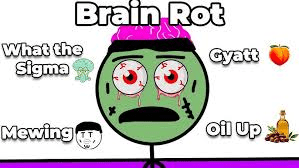
One of the latest features of online wordplay is the elevating of an older concept or cliche into a teasing provocation or pretence at new insights, as we have seen with ‘delulu’, ‘demure’ and ‘mindful’, ‘rizz’ and ‘brat’. The current rash of declarations of ‘being privileged’ – a new version of ‘humblebragging’ or ‘virtue-signalling’ – is another example. In parallel is the ironic celebration of the incoherence or absurdity of much online discourse and of low-quality ‘slop’ by embracing a culture of ‘brainrot’ – nonsense memes such as ‘skibidi’ and vacuous, contagious content.

Most of the innovation in online language and image still emanates from the US and even though a global audience can access it instantly, its tropes (think ‘goblin-mode’ – ‘goblin’ doesn’t have the same associations for Brits) don’t always translate for other speakers of English. In parallel, poses, gestures and looks as well as music-related modes are increasingly generated from non-English cultural zones such as Japan and Korea. It will be interesting to see if other parts of the globe begin to play a part in the evolving online theatre of signs and behaviours, but this doesn’t seem to have happened yet.

Chloe’s piece is here…

https://www.theguardian.com/media/2024/nov/02/what-a-privilege-trend-catches-on-as-gratitude-makes-social-media-comeback?CMP=share_btn_url

And the Newsweek article is here…

https://www.newsweek.com/2024-most-popular-internet-slang-words-revealed-1978732

On the first of November Collins Dictionaries, ahead of the pack, had already announced their choice of word of the year for 2024, and their candidates illustrated the same, in my opinion mistaken, concentration exclusively on terms from a very narrow range of sources. While postings on social media are performances designed to attract attention, there is an even wider domain in which discourse demands analysis: the crises in the Middle East and Ukraine and the surreal spectacle of the US presidential campaigns, for example, are also highlighting keywords and generating new formulations or reworkings of language – data that mainstream media and lexicographers seem to think unworthy of their attention…

https://twitter.com/CollinsDict/status/1852139743112208794

LAST WORDS (ON 2020)?

The annual end-of-year competition by publishers, lexicographers and linguists to nominate a Word Of The Year, thereby excite debate and, just perhaps, sell some dictionaries into an exhausted and impoverished marketplace took on a new poignancy, if that’s the right word, in 2020. The usual pontificators and publicists set out their selections from among the cloud of neologisms and repurposings generated by COVID, Brexit and BLM. Oxford Dictionaries broke with tradition, having listed their contenders, to announce that no single term could do justice to the year – a sentiment I very much agree with.

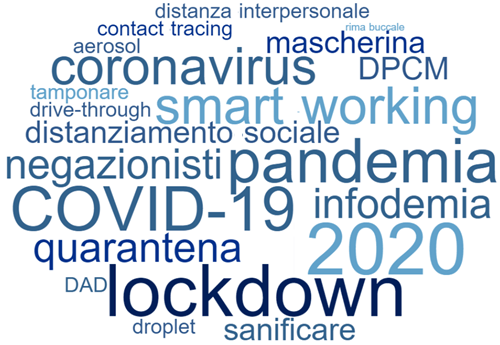
The same roundup of 2020’s language novelties was taking place in other places. Here’s my friend Licia Corbolante‘s Italian perspective…

word cloud 2020

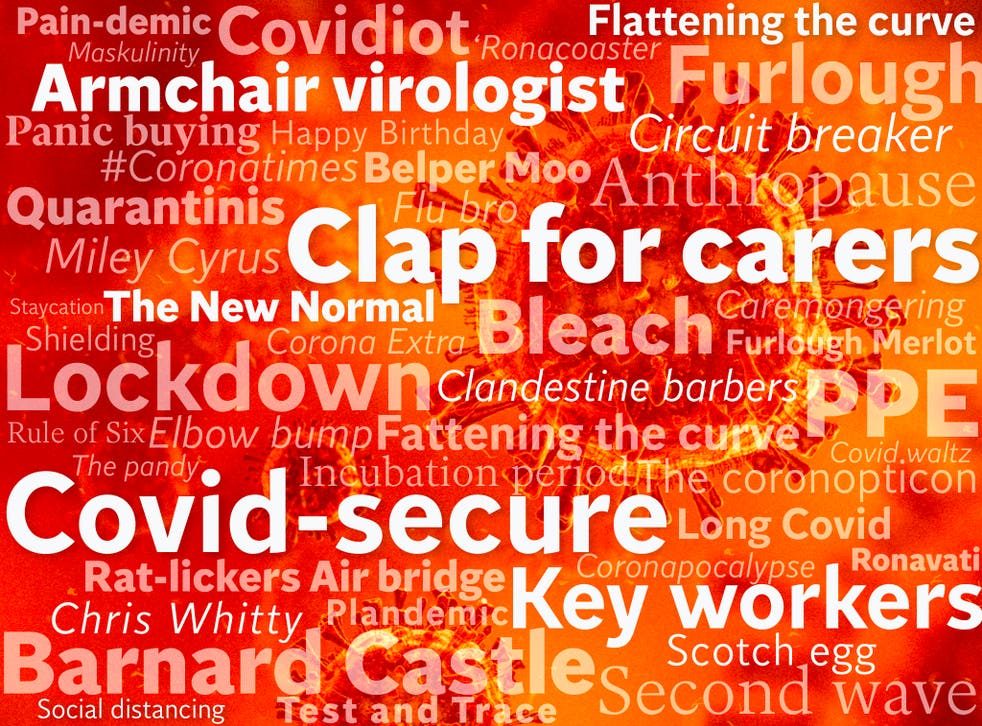
Elsewhere on this site are my own successive reports on #coronaspeak as it has developed and mutated since February. Some of my examples (in fact rather a lot of my examples) were featured in a late piece in the Independent

https://www.independent.co.uk/news/uk/home-news/coronavirus-glossary-covid-terms-dictionary-2020-b1766827.html

For francophone friends here is a French perspective on the unprecedented conjunction of Brexit and COVID facing the UK. In it my collaborator RTL/RF1 correspondent Marie Billon also comments on Word Of The Year with a momentary intervention by me…

https://www.rfi.fr/fr/podcasts/accents-d-europe/20201216-brexit-les-entreprises-et-les-expatri%C3%A9s-inquiets-face-aux-incertitudes?ref=tw

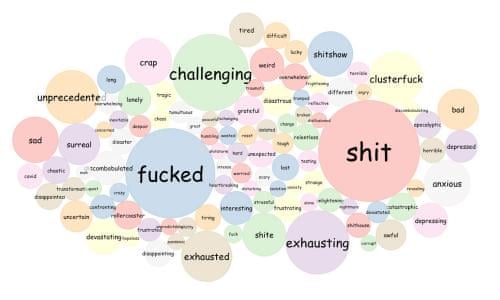
Much as I appreciate Licia’s and the Independent’s wordclouds, in signing off I couldn’t do better than gratefully reproduce the Guardian’s version, featuring the terms chosen by its readers to epitomise this plague year…

Word of the year poll: Guardian readers describe 2020 as 'shit' | Australia  news | The Guardian

…oh, and by the way, my word of the year, for what it’s worth, is vaccine.

On the last day of the year (and, though few have noticed, of the decade) I was given, by Euronews TV‘s Good Morning Europe programme one more chance to pontificate on the subject…

https://www.euronews.com/2020/12/31/lockdown-social-distancing-quarantini-dissecting-the-2020-pandemic-lingo

(the video link in the article is hard to find. It’s here: https://www.euronews.com/video/2020/12/31/lockdown-social-distancing-quarantini-dissecting-the-2020-pandemic-lingo)

THE REAL WORDS OF THE YEAR – 2018

It has become a tradition for the major dictionary publishers, along with some linguists’ associations, to nominate a ‘word of the year’, a term (or in the case of Oxford’s 2015 crying/laughing emoji a symbol) which supposedly captures the essence of the zeitgeist, and in doing so marks the proposer as someone in tune with the times and with their target audience. The words chosen are rarely actually new, and by the nature of the exercise calculated to provoke disagreement and debate. I have worked with and written about what linguists and anthropologists call ‘cultural keywords’ and have my own ideas on which expressions could be truly emblematic of social change and cultural innovation. The words already nominated by the self-appointed arbiters are discussed at the foot of the page, but here, for what it’s worth, are mine (in order of preference)…


Image result for Artificial intelligence

AI

Yes, strictly speaking it’s two words, but this little initialism looks like a two-letter word and is processed by the brain as a ‘lexeme’ or a single unit of sound and sense. AI, artificial intelligence, is the hottest topic not only in tech-related practices but in fields as (seemingly) diverse as marketing, finance, automotives, medicine and health, education, environmentalism. Zdnet.com has published one of the most useful overviews of AI and its sub-categories and applications:

https://www.zdnet.com/article/what-is-ai-everything-you-need-to-know-about-artificial-intelligence/

Though it is one of the most fashionable and most resonant terms in current conversation, a slogan and a rallying cry as well as a definition, AI is problematic in the same way as two other recent contenders for word-of the moment, CRYPTO and DIGITAL. The former is shorthand for all the very complex, not to say near-incomprehensible elements that have accompanied the invention of crypto-currencies – bitcoins and blockchains in particular. These advances have yet to prove their worth for most ordinary consumers who will often be bemused by new terminology that seems to be traded among experts somewhere beyond their grasp or their reach. In the same way for the last few years ‘digital’ has been a mantra evoking the unstoppable influence of new electronic media, (related SOCIAL was a strong candidate for buzzword of 2017). Digital’s over-use by overexcited marketing professionals, would-be thought-leaders and influencers has been inspiring mockery since 2016, as in the spoof article in the Daily Mash: https://www.thedailymash.co.uk/news/business/nobody-knows-what-digital-supposed-to-mean-20160614109525

To put it almost as crudely as the Daily Mash does, there’s a sense in which almost no layperson knows, or can know fully, what Digital, Crypto and AI really mean, and the same goes for the expressions derived from them – ‘deep learning’ comes to mind. Their power derives from their novelty and their ability to evoke a techutopian future happening now. The phrase artificial intelligence was first employed in 1956 and its abbreviated form has been used by insiders since at least the early 2000s, but it is only now that it, and the concepts it embodies, are coming into their own.


Image result for kimberle crenshaw

INTERSECTIONALITY

At first sight just another over-syllabled buzzword escaping from the confines of academic theory (‘performativity’, ‘superdiversity’ and ‘dimensionality’ are recent examples) into highbrow conversation, intersectionality is actually an important addition to the lexicon of identity studies. It was coined as long ago as 1989 by Kimberlé Crenshaw, a civil rights activist and legal scholar who wrote that traditional feminist ideas and anti-racist policies exclude black women because they face overlapping discrimination that is unique to them.  The word took 26 years to make it into the OED and is still unfamiliar to many, but during 2018 has featured in more and more debates on diversity and discrimination, marking the realisation that, for BAME women and for other marginalised groups, the complexities of oppression and inequality occur in a matrix that incorporates not only gender and ethnicity but such factors as age, sexuality and social class. There are each year a few forbiddingly formal or offputtingly technical expressions that do deserve to cross over into mainstream use. This I think is one of them and no journalist, educationalist, politician or concerned citizen should be unaware of it.

A bad-tempered take on intersectionality as buzzword was provided last year by https://www.theguardian.com/world/2017/sep/30/intersectional-feminism-jargon


Image result for civility politics

CIVILITY

I was intrigued by the sudden appearance (sudden at least by my understanding) earlier this year – its online lookups spiked in June – of a decorous, dignified term in the midst of very undecorous, undignified public debate. This old latinate word’s denotations and connotations were in complete contrast with the ‘skunked terms’ and toxic terminology that I had collected elsewhere on this site. In fact, as is often the case, this word of the moment emerged from a longer tradition, but one largely unknown hitherto outside the US. Its proposer was Professor P.M Forni, who sadly died a couple of weeks ago. In 1997, together with colleagues he established the Johns Hopkins Civility Project — now known as the Civility Initiative — a collaboration of academic disciplines that addressed the significance of civility and manners in modern life. His ideas were seized upon by commentators on this year’s events in the US, with some asserting that the civil rights protests of the past were indeed more civil than today’s rancorous exchanges. Democrat Nancy Pelosi denounced Donald Trump’s ‘daily lack of civility’ but also criticised liberal opponents’ attacks on him and his constituency. Others pointed out that polite debate alone had never prevailed in the struggles against bigotry and violence and that civility was an inadequate, irrelevant response. Cynics inserted their definitions: ‘civility’ = treating white people with respect; ‘political correctness’ = treating everybody else with respect…which prompts the thought that perhaps, in recognition of realities on both sides of the Atlantic, it’s really ‘incivility’ that should be my word of the year.

Image result for keywords

Here, in the Economist, is the ‘Johnson’ column’s perceptive analysis of those other nominations for 2018’s word of the year:

https://www.economist.com/books-and-arts/2018/12/08/the-meaning-of-the-words-of-the-year

While US lexicographer Kory Stamper provides the inside story on the American choices:

https://www.bostonglobe.com/ideas/2018/12/18/language-nerds-worked-really-hard-that-words-year-list/wJgdhIMAQK7xcBvlc2iHOL/story.html?s_camp=bostonglobe:social:sharetools:twitter

Lynne Murphy‘s annual US to UK export/import of the year:

https://separatedbyacommonlanguage.blogspot.com/2018/12/2018-us-to-uk-word-of-year-mainstream.html

And her UK to US counterpart:

https://separatedbyacommonlanguage.blogspot.com/2018/12/2018-uk-to-us-word-of-year-whilst.html

In the New Year the American Dialect Society announced its own word of 2018, a disturbing euphemism employed by the Trump regime and a candidate for my glossary of toxic terminology (see elsewhere on this site):

“Tender-age shelter” is 2018 American Dialect Society word of the year

And from the militantly millennial LinguaBishes, some excellent examples of millennial/Generation Z terms of 2018:

2018 Words of the Year


In October 2019 David Shariatmadari in the Guardian gets his preferences in early:

https://www.theguardian.com/science/2019/oct/14/cancelled-for-sadfishing-the-top-10-words-of-2019


…and, FWIW, I like to think that my own collection of cultural keywords, seeking to define the essence of Englishness back in 2011, is still relevant today:

Image result for the 100 words that make the english tony thorne