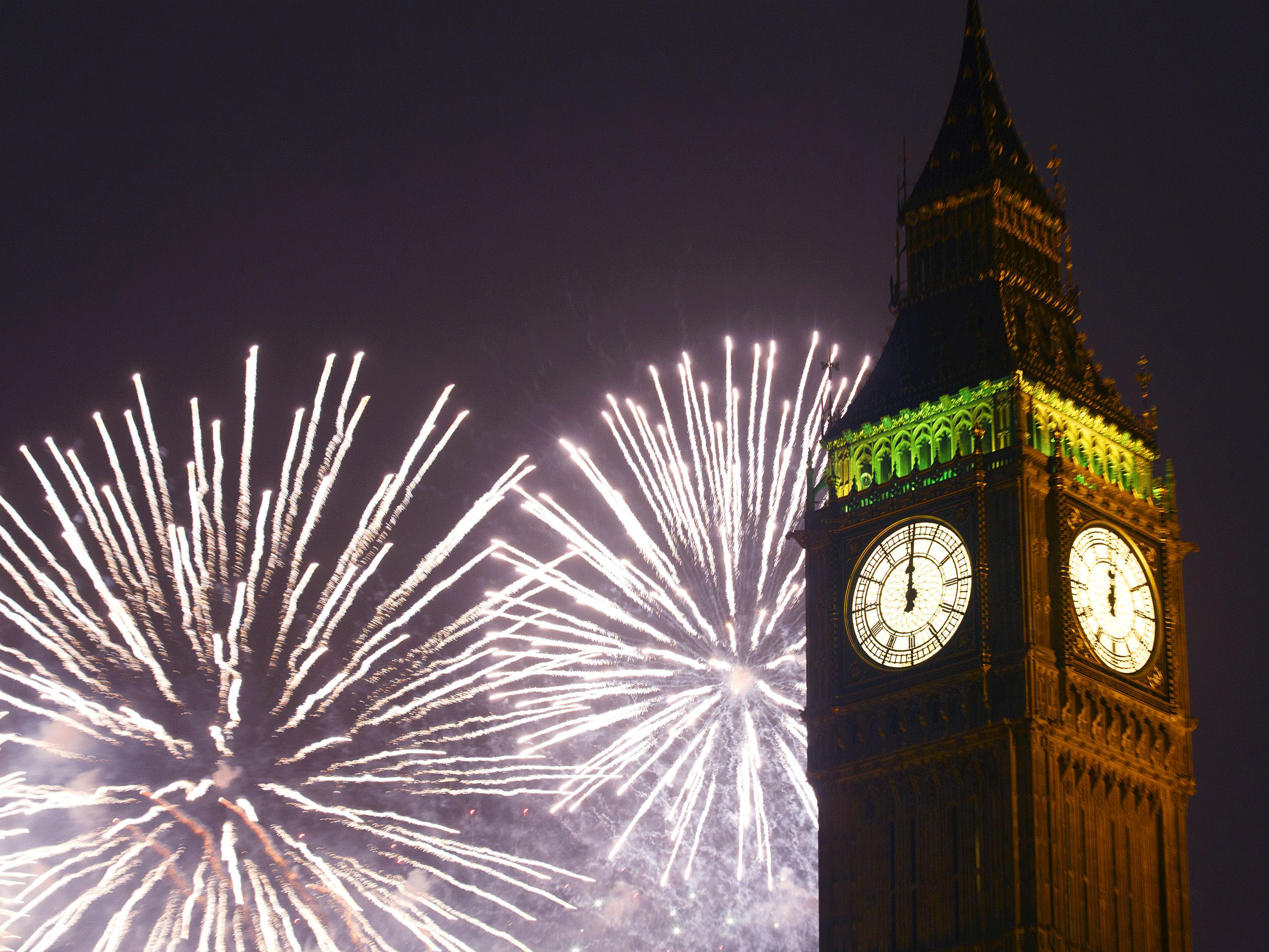
Tonight is Bonfire Night, Firework Night, nowadays usurped by Hallowe’en as the most popular celebration of autumn-to-winter transition, but still a folk festival of note. Many people are aware that the fires and fireworks commemorate the failed gunpowder plot of 1605, but few know more than the name of the terrorist whose effigy we burn on Guy Fawkes night.
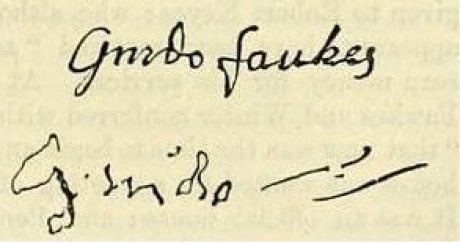
The catholic conspirator Guy Fawkes, who came from from Yorkshire, spoke French when captured and signed himself ‘Guido’, using the Italian or Spanish form of the name (his autograph, before and after torture had been applied, is below). He may have begun the practice when fighting in the Spanish army in the Low Countries, although Italian names were considered fashionable and were sometimes adopted by English gallants. Guy is the French form of old Germanic Wido, either meaning ‘dweller at the forest margin’ or a nickname from ‘wide’ as bodily description or location (an open, flat region).
The English surname Fawkes, also archaically spelled Fauks, Faukes and Fakes, derives from the German name or nickname Falco which probably originally referred to a person thought to resemble a falcon. Falco became Faulques in Norman French and was adopted after the Conquest, the first attestation coming from 1221.
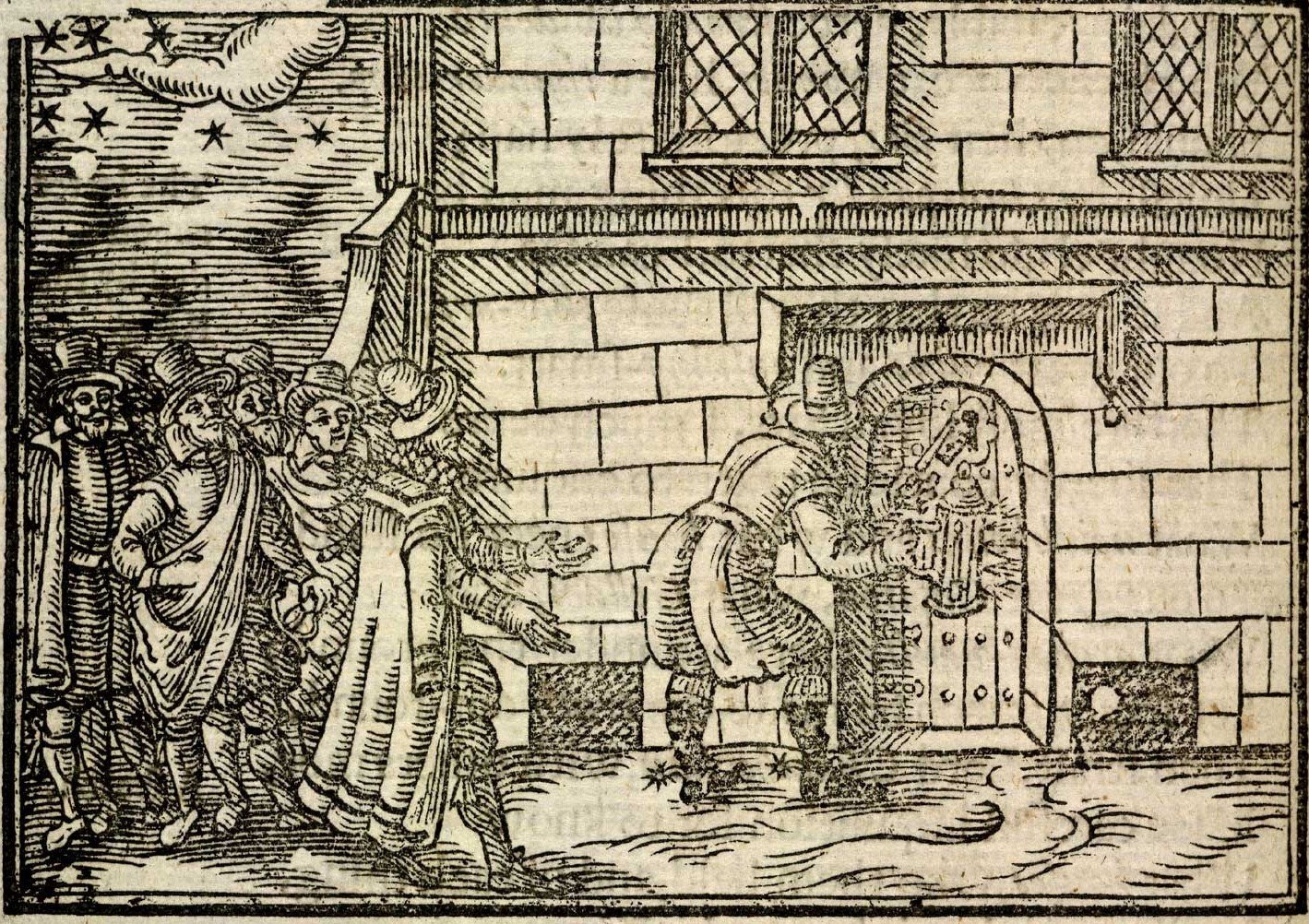
While in London preparing to blow up parliament, Fawkes posed as a servant in the entourage of Thomas Percy, a fellow conspirator who had access to the parliamentary precincts. Fawkes’ less than imaginative choice of alias was ‘John Johnson.’
Guy’s wide-brimmed headgear, crudely imitated on effigies and now caricatured as a ‘V for Vendetta’ hat, is correctly termed a ‘sugarloaf hat’, since its high, flat-topped crown resembled the sugarloafs imported from the colonies in the Stuart period.
Isla Guy Fawkes, or Guy Fawkes Island is actually two small uninhabited islands and two smaller rocks lying in the Pacific Ocean off the Galápagos Islands which are owned by Ecuador. The name might have been given after a fiery volcanic event had been witnessed, but was more probably bestowed by buccaneers who viewed Guy as a hero and one of their own.
Fireworks did not just take off (pun intended) in England after the Gunpowder Plot. They first became popular in the reign of Henry VII. Queen Elizabeth I loved them and appointed a ‘Firemaster of England’ to arrange displays.
Bonfire (first recorded in 1483) is not, as Dr Johnson and others have claimed, French ‘bon feu’, (French would be ‘feu de joie’, ‘grand feu’) but ‘bone-fire’, a collection of burning bones or an open fireplace or outdoor pyre into which bones were thrown, after feasting for instance. By 1581 the word was also being used to refer to a fire in which heretics were burnt. Celebratory fires were ordered to be lit each year to commemorate the failed conspiracy against the Crown, but Guy’s effigy was only placed upon them from the1700s.
Guy himself was not executed by burning, a fate reserved for those found guilty of heresy. He and the other condemned plotters were indeed Catholic dissidents, but the state wanted to avoid civil disturbances so accused them of treason, for which the punishment was hanging, drawing and quartering, carried out at length and in front of spectators. Fawkes managed to cheat the hangman by falling or throwing himself from the ladder leading to the scaffold, breaking his neck.
Guy Fawkes’s first name lived on, coming to mean by 1806 his effigy, then a grotesquely or poorly dressed person or eccentric. By extension a verb form arose (first attested in 1872) meaning to hold (someone) to ridicule. At the end of the 19th century in American colloquial usage the word had come to mean simply ‘a fellow’, from which we get our modern all-purpose, sometimes gender-neutral ‘guy’.
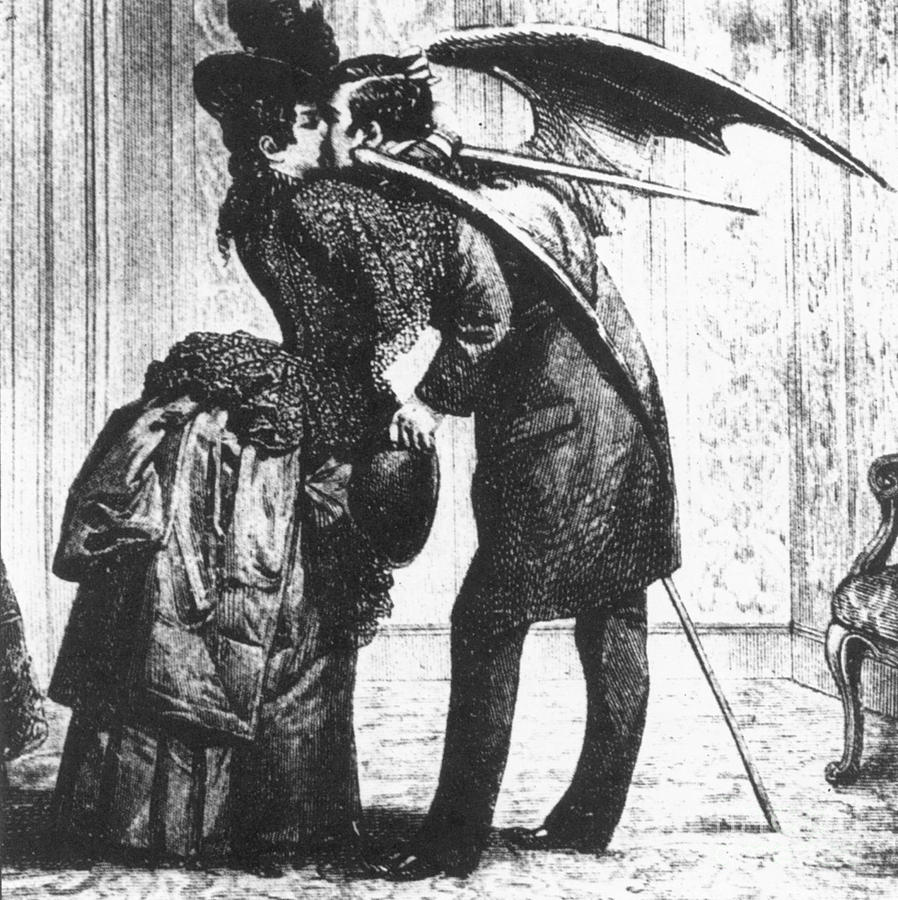
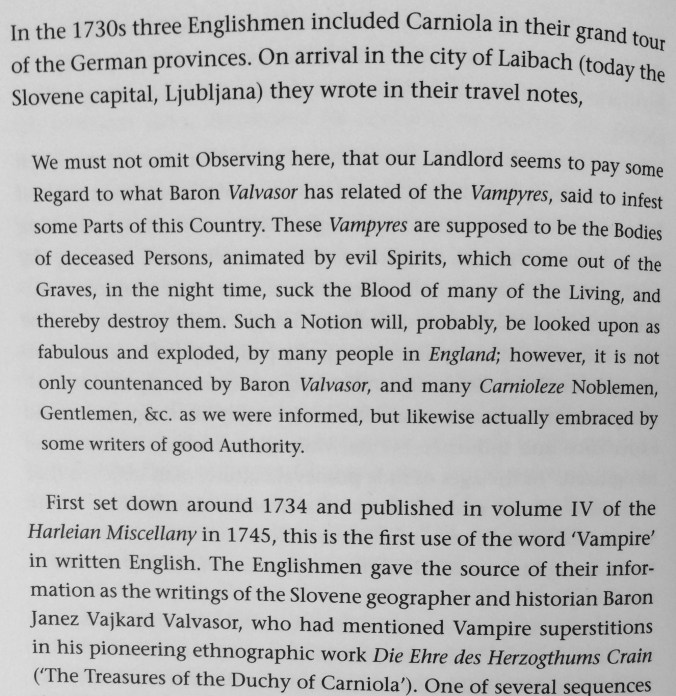
The history of the Vampire – the being and the word that names it – is fascinatingly convoluted. We know that the word came to us in the 18th century via German from Serbian vampir (вампир) but its ultimate origins and meaning are complex. Here, in fragments from a quite old – if not truly ancient – publication are some thoughts on the enduring legend of the thirsty undead…
In fact the figure of the bloodsucking or life-draining revenant is recurrent and attested in almost all prehistoric and most early modern cultures. There are examples from China (so-called ‘hungry ghosts’), Malaysia, the Americas, and, most interestingly from a linguistic point-of-view, the Kipchaks and Karachays of Caucasia and their relatives, the Tatars, and other Turkic-speaking peoples of Anatolia. Their languages give us yet another possible ancestor for the many names, culminating in today’s ‘vampire’, listed above. In modern Turkish obur denotes a glutton or greedy person, but in older folklore the Obur (Tatar Ubyr) was a bloodsucking night-demon that could shapeshift into a cat or dog or a beautiful woman. Here, then, is another possible – and rather plausible – antecedent for later slavonic upirs or vampirs.
Vampire-like creatures were described, too, in classical writings, as Sententiae Antiquae relates here:
Maria Hill: What does S.H.I.E.L.D. stand for, Agent Ward? Grant Ward:Strategic Homeland Intervention, Enforcement and Logistics Division. Maria Hill: And what does that mean to you? Grant Ward: It means someone really wanted our initials to spell out “shield.”
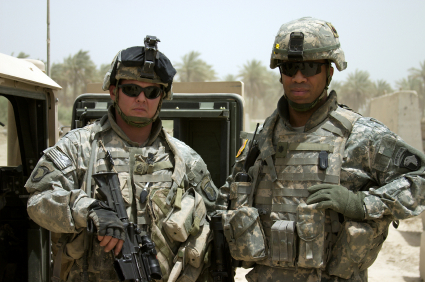
Two days ago the UK press reported that the Minister for Defence Procurement, Welsh Conservative MP Stuart Andrew, had declared war. On acronyms. Confounded and irritated by the number of these abbreviations circulating in his office and beyond, he ordered staff to avoid them at all costs. ‘He got fed up with people coming into his office and reeling off a list of letters and assuming he knew what they were referring to,’ a source close to the minister said. ‘I thought DVD had something to do with movies!’ the hapless minister (who has never served in the armed forces) had quipped at a meeting four weeks earlier. DVD was the name of the event at which he was speaking. It stands for ‘defence vehicle dynamics’.
The flustered politician may have a point – one of the first documents to cross his desk was the latest 402-page guidebook to terminology used in the MOD (Ministry of Defence)*, referencing such titles as AARADCOM – the Army Armament Research and Development Command, and explaining that the initials CCU, for instance, could refer to
Central Control Unit Certificate of Clearance for Use (for software) Cockpit Control Unit Combat Control Unit Common Control Unit Communication Control Unit Computer Crime Unit
In vain did an unnamed MOD spokesperson respond: ‘These terms are used between subject matter experts and not with the general public.’
‘Acronym’ entered English in 1940, as a translation of German akronym, first attested in 1921. It is composed of acro- from Greek akron (tip or top) and the English combining form -onym, from Greek onoma, name. It denotes a word made up of initials or parts of other words, and should be pronounced as a word in its own right. It is not the same as an ‘initialism’ such as BBC or VIP or PC, where the letters are pronounced separately (the minister’s DVD falls into this category), or an abbreviation such as etc. or lb (pound) where the relationship between form and sound is not straightforward. So NATO, AWOL, laser (for ‘light amplification by simulated emission of radiation’, radar (‘radio detection and ranging’) are acronyms: ASAP (‘as soon as possible’) is an acronym if said like a word, BOGOF (‘buy one, get one free’) too, but not when said as separated letters.
Some more modern three-letter combinations are genuine acronyms – SIM (card) from ‘subscriber identity module’, GIF (‘ graphics interchange format’), however you pronounce it, and PIN (‘personal information number’) among them – but those familiar items of business-speak, ROI, SEO, B2B, SME – and now AI – are not, and nor, ironically is the disapproving or jokey shorthand TLA, for ‘three-letter acronym’ itself.
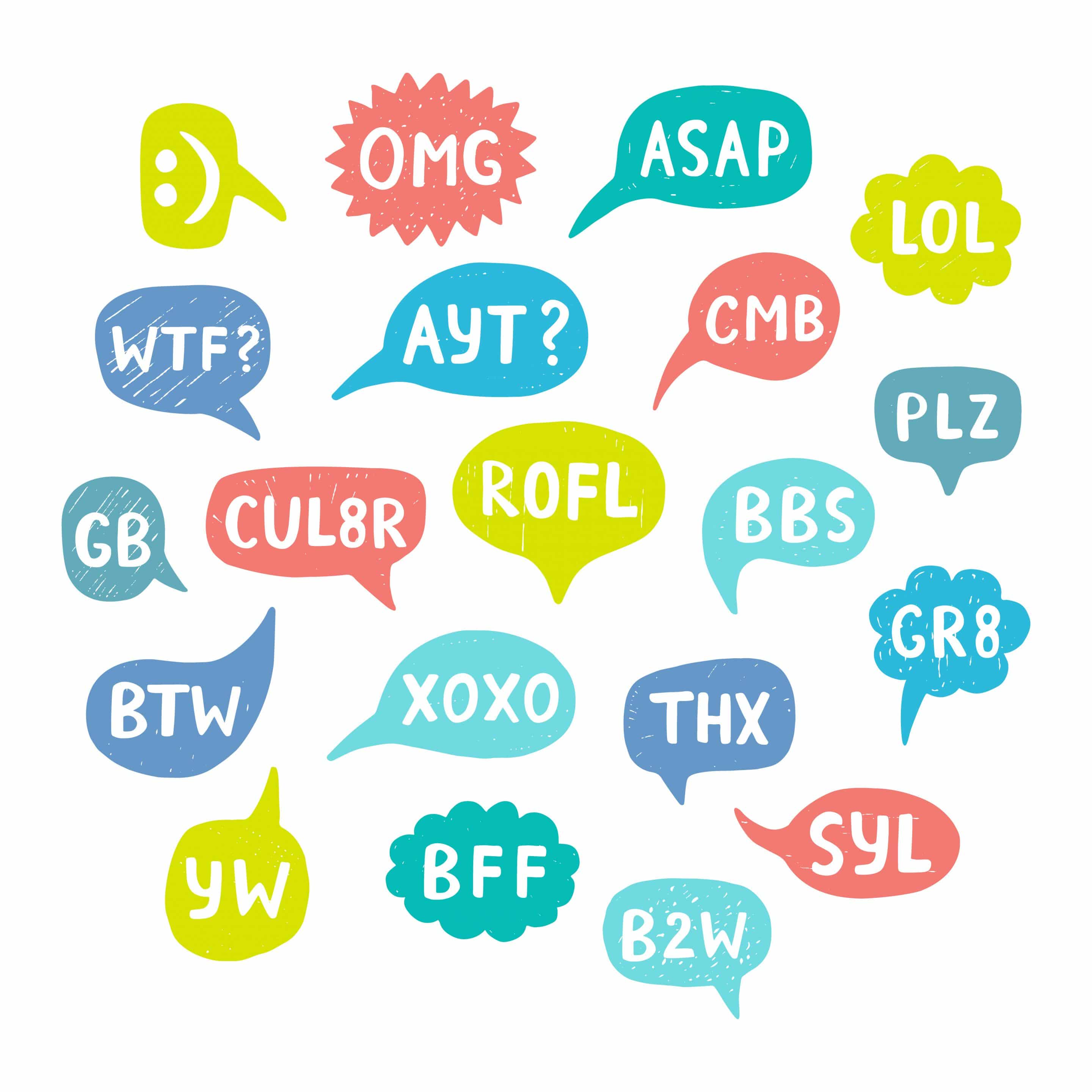
Lighthearted coinages SNAFU (‘situation normal, all fouled up’) or BOHICA (the oppressed officeworker’s injunction to ‘bend over, here it comes again’) are acronyms, but only a few of the so-called acronyms used in messaging and on social media really qualify: BTW, IDK, IMHO, SMH, TL;DR and the rest are strictly speaking initialisms. YOLO, LOL and ROFL, providing they are uttered in full, are among the exceptions.
The reason for the proliferation of acronyms, initialisms and abbreviations, and the justification for their use are obvious. In an accelerated culture they save us from having to – literally – spell out what we have to say or write and at the same time impart an idea of novelty, urgency and dynamism. As my correspondent Graham Guest observed on Twitter in a spoof response to Stuart Andrew’s protestations: ‘Minister, my radio detection and ranging equipment has just picked up a group of sea, air, lands wearing self-contained underwater breathing apparatus diving gear.’
Acronyms are very often controversial, in the same way as jargon and slang, in that they mystify and intimidate those who aren’t familiar with them, and seem to confer prestige and privilege on those who know how to use them. They can reinforce an insider/outsider imbalance in power in the workplace, the seminar – or the ministerial briefing. A very simple test, though, is to try and replace the offending acronym with its full translation or explanation and see if the resulting sequence of speech, or text, sounds or looks viable. If it’s necessary to introduce a new abbreviated form, it must be glossed (translated into simple language) the first time it is used, and, as with all insider codes, should only be employed in a context where interlocutors, partners, stakeholders, clients or audiences will readily understand it.
In April 2019 the BBC tried to forestall mockery of the acronyms peppering the script of its Line of Duty series by posting this synopsis:
‘A UCO is embedded in an OCG who was deployed as a CHIS but is AWOL. The SIO, who loves a REG 15, and his DI and DS from AC-12 are investigating because of the ED905 HGV ambush which the OCG set up as an RTC. They’re hunting H. Let’s go.’#LineOfDuty
You can hear me chatting about the latest acronym wars on BBC5Live radio (the sequence begins at 47 minutes 26 seconds):
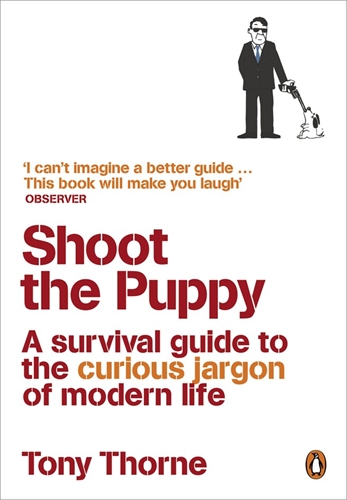
As a footnote, my book of buzzwords and jargon, first published in 2007, contains examples of acronyms and abbreviations, many still in use, together with observations on the status conferred by mastering business-speak…
*An earlier version of it is here if you want to consult it:
Know’st thou not at the fall of the leaf How the soul feels like a dried sheaf Bound up at length for harvesting,
Today, the 22nd day of September (beginning, strictly speaking, at 11.44 am), is for us the Autumn or Autumnal Equinox. For our ancestors, speaking Old English, or ‘Anglo-Saxon,’ the time of emniht or efenniht ‘even-night’, occurs while Hāligmonath, the ‘holy month’ of September, so called because thanksgiving ceremonies for the grain harvest were held, is giving way way to Winterfylleth, the ‘winter full-moon’. In dark-age chronology the new month and the new season began with the first full moon of October. Around this time daylight and darkness are of roughly the same duration (Latin aequi, equal; nox, night), though only exactly at ‘Equilux’ (lux is light in Latin) which falls this year on September 28.
The christian church ignores the equinox, although Michaelmas, held on September 29th, may have been intended to wean pagans from their late-Summer and early-Autumn fertility rites. Modern Wiccans and new age pagans celebrate the feast of Mabon, or Second Harvest, at the Autumn equinox. Some prefer the Irish Gaelic name for this month, Mea’n Fo’mhair, which translates literally as ‘middle harvest’. Festivities may last for a week and involve the venerating and eating of fruits such as apples, blackberries, and nuts. Though derived from supposedly ancient Celtic myth, the acorn and chestnut-strewn altars, the overflowing horns-of-plenty and the russet-coloured robes on display are almost certainly modern inventions, never associated for sure with any historical or supernatural ‘Mabon.’
There was indeed a god of youth in the Celtic pantheon whose name Maponos derived from mapos, a Gaulish word for son or boy, the root mab also denoting son in Welsh, Cornish and Breton. Both come from Proto-Indo European makʷos, son, (which gives us the Mac and Mc used in Scottish and Irish surnames). The figure of Maponos was worshipped by Gallo-Romans on the continent and in Britain who identified him with the Roman god Apollo. Under the name of Mabon the same mythical youth appears in the Welsh Mabinogion legends and the Arthurian romances, but it is not known when in the year Maponos or Mabon were worshipped (there are two inscriptions on record from the end of August) or what rituals were involved.
Autumn, as is well attested, comes to us via Middle English autumpne, from Old French autompne, itself from Latin autumnus which is said to be adapted from a lost Etruscan or Venetic root autu-, but could equally be formed from Italic au(ct)- meaning dry (the notion of drying leaves and grass, in John Clare’s words; The ground parched and cracked is like overbaked bread…the greensward all wracked...) or Latin auctus, increase (the opposing notion of late fruition and abundance, Blake’s laden with fruit, and stainèd With the blood of the grape). As a seasonal name Autumn, first heard in England from the 12th century, was only rarely used here before the 16th century, ‘Harvest’ (Old English hærfest from the same root as Latin carpere to pluck, crop) being the term preferred. ‘Fall’, probably a contraction of ‘fall-of-the-leaf’ was an alternative also used in former times in Britain and it was exported to America with settlers in the 17th century.
Above is Keats’ famous ode, with its first, endlessly quoted, line. But let a later author, Emily Dickinson, have (almost) the last word…
Besides the Autumn poets sing A few prosaic days A little this side of the snow And that side of the Haze
In 2021 I talked to US journalist Keira Wingate about autumnal language differences and her article in USA Today is here…
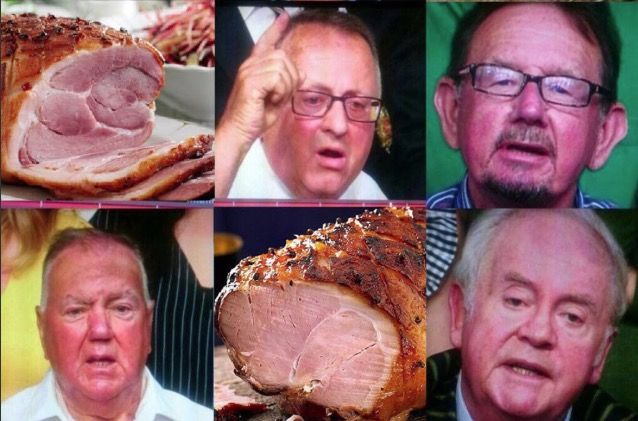
This week, very late in the day, the mainstream UK media and the wider national conversation finally caught up with a social and political slur that had been trending for more than a year already. The insult in question was ‘gammon’, one of only a couple of pejorative labels (the other, slightly more affectionate, being ‘centrist dad’) directed from the left at the right as opposed to the many (‘libtard’, ‘snowflake’, ‘cuck’, etc.) routinely hurled in the other direction.
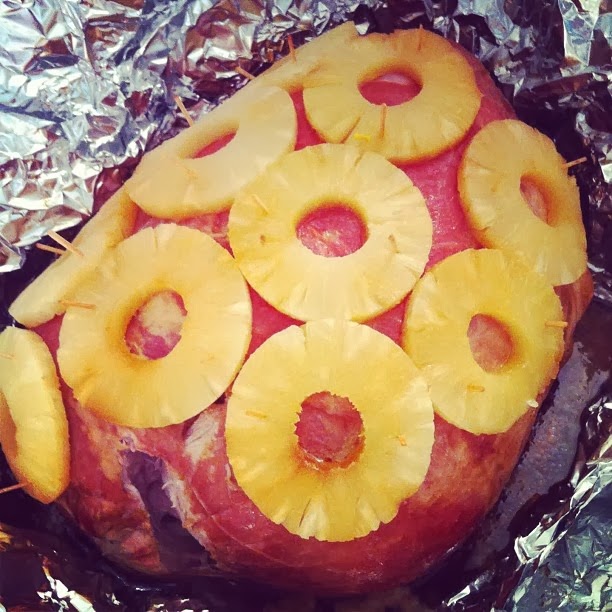
The word itself is British and denotes an orange-coloured side or slice of cooked ham or bacon often proposed as emblematic of the garish-looking, odd-tasting and nutritionally suspect dishes served (warm, with a pineapple garnish) across British tables in the 1970s (when, ironically, ‘gammon rasher’ was rhyming slang for ‘smasher’ in the sense of something superlative). Gammon was adopted from French gambon, from gambe meaning leg, in the 15th century, while backgammon is unrelated and probably comes from an old form of the verb to game.
Following the Times’ , the Expressand the New Statesman’s belated discovery of the word Twitter was a-buzz on May 14, first with protests, many seemingly by gammons themselves, at what were alleged to be its racist and classist implications and then with more coherent attempts to unpack its real denotations and connotations.
Someone with the handle ‘Build a wall, line all the nazis up along it’ explained…
‘Gammon isn’t about class, it describes white ppl who spend a lot of their time being pink because they’re so angry being white doesn’t make them special’
Exasperated by ongoing witless misunderstandings, I added my own two-penn’orth…
‘Nothing to do with class, it denotes florid, loud, usually lardy middle-aged ranting bigots. #simples’
By midday someone else had discovered a reference in Victorian literature that seemed to anticipate the modern usage…
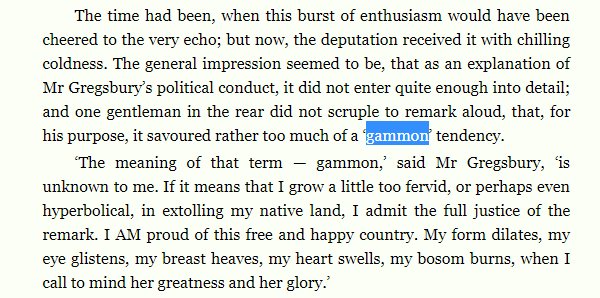
‘My god, he’s right: @Protooptimism has discovered that Dickens used “gammon tendency” as a political insult in Nicholas Nickleby (1838-9):
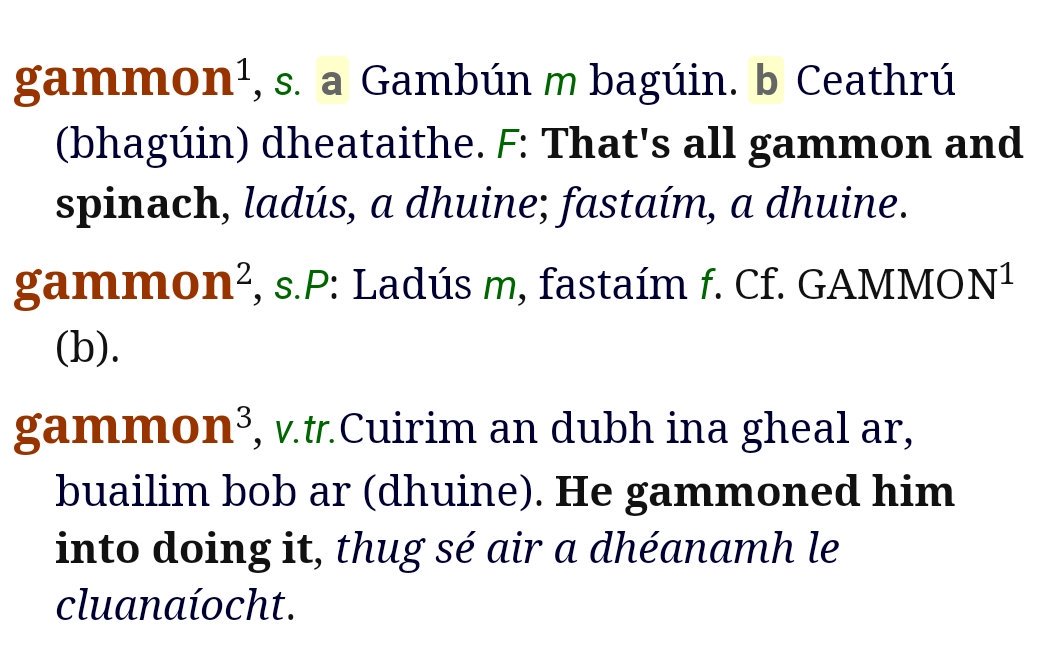
It’s not quite clear whether Dickens’ use of the word relates to the slang sense then prevalent in the underworld, of ‘gammon’, verb and noun, to mean (‘to use) the secret, deceitful language of thieves and tricksters’, hence applicable perhaps to jingoism and bluster on the part of a ‘fervid’ middle-aged blowhard. An intriguing correlation with Irish was noted by another commentator…
(And in 2023 Michaela Perske informed me that ‘funnily enough “gammon” or “gamon” is a term used by Aboriginal people pretty much everywhere in Australia that means means ‘to pretend’, ‘be inauthentic’ or used to describe something as pathetic.’)
No linguists paid much attention at the time to the mutation of gammon from a collective term of abuse for a constituency or persuasion to a label applied to the individual members thereof. The BBC, though, carried a good, level-headed history of the expression’s first post- Brexit referendum appearances and its rise to prominence…
By the end of a long day the furore (by now dubbed ‘gammongate’) had somewhat subsided, leaving a few wry observational tweets…
‘Presume after today, use of a certain type of roasted ham as an insult will be prohibited. Hope there’s a gamnesty on previous usage.’
‘Since the words ‘Tory’ and ‘Whig’ both started as insults, I fully expect British politics to soon be contested between the Gammon Party and the Melt Party.’
‘It’s offensive to call people whose reactionary apoplexy makes them go pink-faced “gammons”. The correct term is “people of choler”.’
And, late news, this, perhaps (but unlikely to be) the last word, again from Twitter, this morning…
‘I’m a 55 year old white thinning cropped haired old punker. #Gammon isn’t racist, it perfectly describes the bigoted tossers of my own age group who turn pink when they get angry about their privilege being challenged. G’wan bust yer blood vessels you rancid foaming dinosaurs.’
…Five days on I discovered this, from the originator of the expression himself…
In November this year Collins Dictionaries listed the g-word among their words of the year. In the GuardianPoppy Noor argued that the left should steer clear of such name-calling…
The latest in a long series of moral panics (the term used by sociologists since the 1970s) exploited by the UK press and now subject of rancorous political debate, the issue of knife-crime and killings by street gangs, mainly in London, is genuinely concerning and is only now receiving the attention and analysis it demands. A side-effect of media interest is that the language used by the gang members and by the music genres that celebrate them is being recorded – haphazardly and not always accurately – for the first time. The musical genre in question is UK Drill, a successor to the ultra-hard-edged Trap Rap (from The Trap, slang nickname for the local area where drugs are dealt) that appeared first in Chicago in the 2000s. Drill (the word can signify shooting but has many other slang senses) has been adopted and adapted by hyperlocal urban communities in the poorer parts of London and, despite their claims, doesn’t just evoke the harsh realities of life on inner-city estates, but often glamorises it and seems to promote an ethos of territoriality, boastful masculinity and murderous retaliatory violence.
So far only very few reporters have managed to penetrate the groups whose members occupy and fiercely defend their microzones, fighting for control, too, of economies based on drug trading. The rappers emerging from the same postcode- or estate-defined enclaves compete and feud electronically, dissing and threatening their rivals in their lyrics – and in a few cases have actually been implicated in killings or woundings on the street.
In May 2018 the Metropolitan Police intensified attempts to ban videos associated with the music genre and the gangs caught up in street violence:
Since beginning this project I have managed to engage with some members of this subculture and find out more about their values and the way they encode them. In the meantime I have begun to assemble a lexicon of the most significant key terms they use, in a slang which mixes US hiphop argot and Caribbean expressions transposed to or reinvented in London (harking back to the Yardie gang culture of the 1980s). So far just a glossary, my list is far from complete, so please help me add more items if you can, or correct my mistakes. Here is this work in progress as it stands, now updated for March 2025, followed by some relevant links…
125 – scooter
3 – free (call to free a respected associate or known person)
Active – dependable associate
– involved in gang activities
Ahk, Akhi – brother, friend (from Arabic)
Axe – ask
Amm – cannabis (abbreviation of Amnesia, a potent strain)
Askari – police (from Arabic and other African languages)
Back out – draw (a weapon)
Bagged – caught by the police
Bagging – stabbing in the lower body
Bally, Bali – balaclava
Bando – abandoned property
Bands – coloured elastic bands tying batches of cash
Banger – hit, successful song
Bap – the sound of a shot or gunfire
– to fire (a gun)
Bars – lyrics
Battle – strength, competitiveness
Bean – head
(A) bean – honest(ly), truthful(ly)
Beef – dispute, feud
Bells – bullets
Bend – patrol(a neighbourhood)
Binned – shot
Birded off, birded up – imprisoned
Bite – steal
– copy
Bitz – one’s neighbourhood
– drugs weighing more than 7 grams
Blam – shoot
Blitz – raid, attack
Blow – leave, escape
– ‘take off’, achieve career success
Blunt – cannabis ‘spliff’
Bones – dead
Booj, buj – heroin
Bookie, buki – suspicious
Bora, borer – knife
Botty – firearm
Bout it – competent, skilled, authentic
Box – prison
Boxed, boxed in, boxed up – imprisoned
Bozz – leader
– excellent
Breeze off – leave town, disappear
Bruck, bruk – broken (down), broke
Bruckshot – sawn-off shotgun
Buj – obnoxious person
Bun – light up (a cannabis cigarette)
– shoot, eliminate
Burner – gun
Burst – shoot
Cabby– cigarette containing cannabis and cocaine or cannabis and crack mix
Cake – crack or cocaine
Cally – cannabis
Can – prison
Car, cah – because
Cat – drug user and/or drug purchaser
CBO – criminal behaviour order
Cheffed (up) – stabbed, killed
Chete – machete
Ching – knife
– to stab
Chinging – chilling and hanging out
– stabbing
Civilian – non-gang-member, non-combatant
Clap – attack, shoot
– steal drugs
Click – shoot
Codes – ‘postcode areas’, zones where gangs dominate
Corn – ammunition
Crash – raid, invade
– shoot
Crashing corn – shooting your gun
Crib – home
Cro – cannabis
Cunch – out-of-town locations where drugs can be sold
Cutter – knife
Cuttin – leaving, running away
– mixing or adulterating illicit drugs
Darg, dargie, dawg – male friend, ‘homie’, male active on the street, gang member
Dark – heroin
Dash – throw
– run (away)
Dasheen – running away, fleeing
Diligent – admirable, brave, cool
– dependable associate
Ding dong – dispute, brawl
also dinger, dinga, ding – cheap car
Dipped – stabbed
Dipper – knife
Don – respected person
Dottie, Dotty, Dotz – shotgun
Doughnut – idiot
Drawn out – involved in gang culture, under pressure from street crime
– lured, rendered vulnerable
Drenched – stabbed
Driller – shooter, gang member
Drilling – attacking, aggressing, invading
Dumpy – shotgun
Dun – kill(ed), punish(ed)
Dunn – friend
Duppy – kill, dead
Eating – succeeding, profiting
Elizabeth – money
Endz – one’s neighbourhood
Factor – important associate
4-door – saloon car
Febreze – spray a place to remove the smell of cannabis
– get rid of evidence of illicit activities
Feds – police
Field – danger-zone, combat area
Fishing – looking for victims
Flake – cocaine
Flashed – stopped, pulled over e.g by police
Flicky – switchblade knife
Flow – fluency, verbal skill
Food – drugs
Fry – shoot (at)
Gassed – excited
g-check – aggressively check someone’s gang credentials
Gem – weak person
Get the drop – acquire necessary information
Giraffe – £1000
Glide – drive into enemy territory
GM – (fellow) gang member
Go cunch/country – leave the city to sell drugs in rural/seaside locations
Got – attacked, robbed
Grubby – authentic, tough (neighbourhood)
Guv – prison officer
Gwop – money
Habsi, hapsi – black person
Hand ting – pistol
Hitter – gunman
Hottie – SIM card
Iron – gun
Jakes – police
Joint – gun
Jump out – undercover police on patrol
– emerge from a vehicle
Juiced – confident, energised
– bloodstained
Khala – black person
Khalas!– ‘that’s enough’, stop!
Ketchup – blood
Kick down doors, kick in doors, kick door – raid a domestic location
Kwef –violence
Kweff, Queff – kill with gun or knife, harm, attack
Kweng – cut, stabbed
Laces – ammunition
Lacking – caught unawares, without backup
Landing – prison, cell
Lane – main street, urban area
Layers – protective clothing
Leggin (it) – escaping, running away
Leng – gun
Let rip – fire a bullet or discharge a firearm
Light – cocaine, crack
Line – a drug-dealing operation or network
Link – contact, source for drugs
– make contact with, meet, collect
Lizzies – money
– mobile phones
Loud – cannabis
– impressive
Lurk – stalk a victim, prowl around
M – murder
Machine – gun
Mac(k) – automatic firearm, Mac -9 or Mac-10 small machine gun
Mains – close companions
– streets, urban zone
Marinate – relax
Mash – gun
Matic – gun
Matrixed – placed on the London Met police gang database
Matta – head
– main focus
Mazza, Mazzaleen – madness, crazy situation
Ments – mental, crazy
Milly – a 9mm pistol
Moist – disgusting, pathetic
– cowardly, weak, afraid
Monkey – £500
Mop – large gun
Motive – activity
Move – criminal operation, raid or attack
Munch – desperate, obsessive person
Nank – knife, stab
Nap nap – kidnap
Need – cannabis
Niff – cocaine
No face – masked, with identity concealed
OJ – ‘on job’, productive and successful in street activities
Old Bill – the police
On papers – on parole or probation
On road – outdoors, active in the streets/neighbourhood(s), eg engaged in selling drugs
On tag – fitted with an electronic surveillance device
On volts – intent on or engaged in violence
Ooters – shooters
– loyal associates
Opps – enemies
Opp-block – enemy territory
OT – ‘out trapping’, ‘out there’ or ‘out of town’, away on business, dealing in urban or country locations
Ox – razor, blade
Pagan, paigon – untrustworthy person, enemy
Paper, papes – money, cash
Passa – dispute, dramatic event
Patch – territory
Pattern – arrange, sort out, set up
Patty – slow-witted, ‘clueless’ or deluded person
– (white) female
Pave – streets
Pay – profitable activity, reward
Pebs, pebbles – pellets or deals of heroin, crack or steroids
Ped – moped
Pen – prison
Pepper – spray with shotgun pellets or bullets, shoot
Plot – plan, set up
– hang around
– conceal
Plug – a contact for drugs
Plugging – hiding drugs in rectum
Poke – stab
Pole – shotgun, gun
Popo – police
Posted up – hanging around, positioned to sell drugs
Pree – to check out, assess (a person)
Proper – excellent, admirable
Ps – money
Push, pusha – bicycle
Put in/on a spliff – killed
Rack – quantity of money, £1000
Rambo – large knife or machete
Rams, Ramsay – knife
Rep – promote or publicly declare for (one’s area, gang)
Ride out for (someone) – to defend, even if guilty
Riding dirty – going out armed and/or in possession of drugs
Rise – aim (a weapon)
Riz – cigarette papers
Rizzle – real
Road – street-smart, active in street culture
Rotty – firearm
Rusty – antique or old firearm
Sam, sams – samurai sword or large knife
Score – kill or injure an enemy
Scoreboard, scorecard – list of enemies killed, injured or defeated
Scram – gun
Scrub – worthless male
Scrum – attractive female, sex
Shank – knife
Sh, shh – ‘don’t mention this’, censored item
Shaved – insulted, humiliated, punished
– stabbed
Sheets – cigarette papers
Shneaky – discreet, secretive
Shoes – guns
Shot – buyer of drugs
Shotting – dealing drugs
Shouts – greetings, acclaim
Skate, skeet – run away
Skeng – knife, gun, weapon
Skududu – rapid gunfire
Slammer – prison
Slatt – cry of affection, respect
Slew – ruin, defeat
Sliding – driving into enemy territory
Slime – friend, associate
Smoke – kill
– disappear
– conflict, violence, hostility
Snitch – informer
Soak – stab
Special K – ketamine
Spinner, spin-ting – revolver
Spinners – petite females
Spitting – rapping
Splash, splash up, splash down – stab
Squirt – spray acid (over someone)
Stacks – large quantities of money
Stain – rob
– an armed robbery
– robbery victim
Stepping on toes – trespassing on or attacking enemy territory
Throwing up signs – making gang-related gestures with fingers
Ting – girl
– gun
Trap – neighbourhood, ‘ghetto’, area where drugs are sold, temporary location for dealing drugs
Trapping – hanging out, selling drugs or waiting for buyers to contact
Treesh – promiscuous person
Trey, tre – pistol
Trill – deserving respect, dependable, authentic
Tum-tum – gun
Tweed – cannabis
24s – all day
V – vehicle
Violating – behaving outrageously
Wap – gun
Warhead – cigarette containing a drug
Wass – stupid person
Weston – handgun
Wetter(s) – knife
Wetting – stabbing, killing
Whip – car
– break down (a drug) into smaller parts
Wok, wok house – prison
Woosh – shoot
Worksy – busy, diligent
Yammed – robbed
Yard – home
Yat – girl
Yay – crack
Yé – personal style, skill
Y.I.C – ‘youngest in charge’, young gang member taking or given responsibility
Yute – young person or young people on the street
Zombie – zombie knife
Zoot – cannabis cigarette
I’m keen to add more authentic terms and for my list to be corrected or commented on by those in the know. I’m very grateful indeed to all those who have already contributed, in particular Josh Jolly, Creative Director for PressPlay Media, Farhaz Janmohamed, George Baker and Nelson Bayomy and to the many students and Drill and Grime aficionados who have donated language.
You can find a dictionary of multi-ethnic London slang and other examples of so called MLE (Multicultural London English) here on my site. I have extensive files of youth language, available to researchers, journalists, etc. on request, and here are some more street slang terms from the UK Rap and Grime milieu, many also used by Drill aficionados:

I have been, all too predictably, seasonally, thinking about the egg, its role in the Easter festivities (the subject of my previous post), but also reexamining the little word itself, so commonplace, so rarely considered.
I’ll look at its etymology* soon, too, but not surprisingly the egg has featured in English slang, at least since the first recorded attestations in the 16th century, but its various slang senses, until very recently, have been disappointingly obvious and unengaging.
The main senses and sub-senses of slang egg can be listed as follows, roughly in order of chronological record, and also in rough order of frequency of use (examples of these usages are listed by my fellow slang specialist and sometime collaborator, Jonathon Green, in his monumental Green’s Dictionary of Slang)
1.
From its physical resemblance, (ovoid, containing viscous fluid, a seed of life): Testicle
From its resemblance, (ovoid, hard surface, hollow, precious content): Head
From resemblance, (hollow container): Bomb
From resemblance, (hollow container or roughly oval pellet): Capsule, Tablet (of an illicit substance)
2.
By extension, from the notion of a unit, organism (heard in the obsolescent expressions in ‘posh’ British English ‘a good egg/bad egg’): Person
Specified, perhaps with reference to simple form (in New Zealand slang this is a common insult, though some claim it is inspired by d. below): Fool
Further specified, perhaps with added reference to fragility: Dupe
Clipped form of the colloquial expression denoting an individual with overdeveloped brain-function/intellectual prowess: Egghead
So far, so unexciting. More recently, though, the same word has been adopted for new purposes, encoding fresh and interesting ideas. These, in no particular order, are:
A transgender personwho hasn’t yet embraced or revealed their identity. The usage plays on the notion of ‘a chick or a cock on the inside’. In August 2017 ‘happycookie’ posted the following on the Urban Dictionary website:
‘…If they’re unsure whether they want to transition they’re a scrambled egg. If they supposedly really dislike transgender people but still constantly talk about them they’re a hard-boiled egg’
The term can also apply to someone who has newly acknowledged their identity, or recently transgendered, by analogy with ‘newly hatched’.
A white person who wishes to be or pretends to be ‘Asian’ (in the American sense of Japanese, Chinese, etc., formerly denoted by ‘oriental’). Urban Dictionary has a first and only mention from 2003, explaining that such a person is ‘white on the outside, yellow on the inside’. But there’s more here:
An anonymous online troll, typically using the Twitter social network. In April 2017 Twitter stopped using the egg-shaped blank as its default avatar and substituted a gender-neutral silhouette, saying that it wished to ‘prompt more self-expression’ but more probably as the word egg had come to signify a malicious, anonymous user, typically male, who harassed other accounts, typically not anonymous and female. Twitter egg had also been used since 2010 as an insult directed at users who retained the egg default because they were too inept to create their own profile picture.
In texting abbreviation and acronyms capitalised EGG has been used for ‘Enlightened Grammar Geek’, ‘Exceedingly Great Grooves’, and by gamers for ‘Elemental Gimmick Gear’
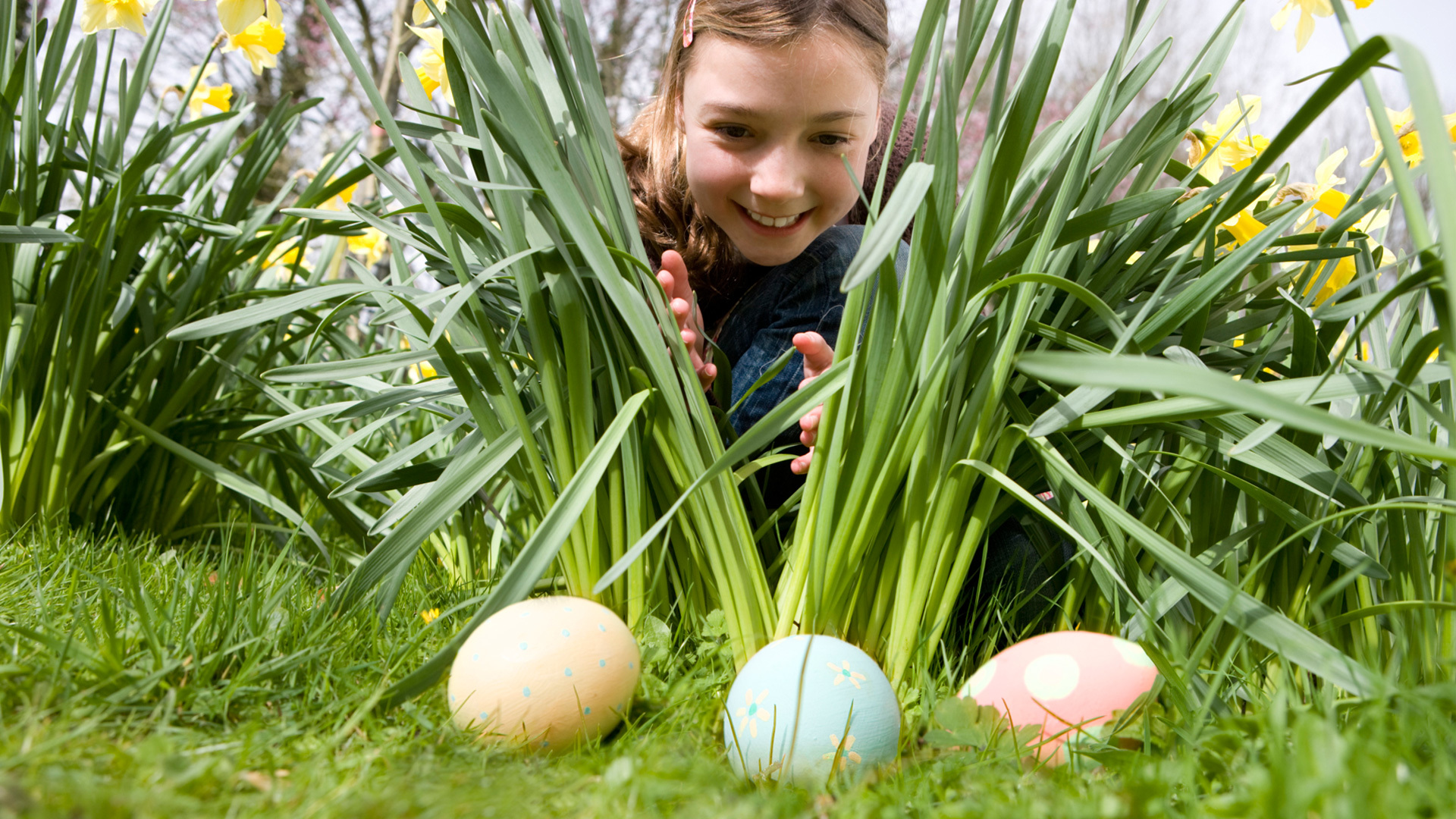
An Easter egg in the jargon of computing, videogaming and video production is an intentional inside joke, hidden message or image, or a secret feature, planted inside a computer program, video game, menu screen or electronic device, for instance, or only accessible by secret commands. The usage derives from having to search for hidden prizes on a traditional Easter egg hunt.
To egg(someone) as a verb is not really slang, but an informal term, originating in British usage, for flinging eggs at a victim, typically as a way of expressing contempt for a public figure. (I’ll deal with the phrase ‘to egg (someone) on’ in the next post.)
The adjective eggy, sometimes eggsy, meaning nervous, agitated or moody, or peculiar, irritating or hostile, heard in US and British slang since the 1980s, is of uncertain origin. It may not be related to eggs, but be an adaptation of the colloquial ‘edgy’ or (putting someone) ‘on edge’.
As adjective eggy can mean also excellent, of which it may be a playful distortion, in UK playground slang, since the 1990s.
In multiethnic British street slang eggs-up can mean intrusive, too curious or nosy. It probably comes from Jamaican ‘patois’ where it can also describe showing off or taking advantage of another person. The connection with actual eggs, if there is one, is unclear.
While on the same subject, Jamaican English often pronounces the word as ‘hegg’, while in Irish slang a yoke is an unnamed object. There must be other senses of the e-word in popular conversation and online use, as yet unrecorded. If you know of any, please do send them to me (and you will be thanked and credited in any future writings).
* In the meantime, here’s a typically comprehensive graphic by Yoïn van Spijk…
In the last post we looked at ways in which women use, and are judged for using, so called ‘bad language’ while earlier posts addressed the n-word and the b-word. Swearing, perennially a contentious topic, has been trending on social media, in the press and, to an extent, has featured in academic discussion, in the UK at least, since the beginning of this year. The ESL teachers’ periodical The EL Gazetteasked me for a short opinion piece on whether and how the subject could be approached in the classroom.
Here is a very slightly longer version of the article they printed…
DON’T LET YOUR STUDENTS DOWN – TEACH THEM SWEAR-WORDS!?@#$~!?
We have to hope that, although as a nation we are famous for ‘effing and blinding’, ‘bad language’ is not the first kind of language our visiting students encounter. Sooner or later, though, many teachers will decide it’s time to broach the topic, or else their students will demand that they do.
For learners trying to grapple with TV and movie dialogue, song lyrics or real-life or electronic conversations we can begin by helping them decode what used to be called the ‘four-letter words’, the ‘f-word’, the ‘sh-word’, the ‘c-word’. Judging by the language trending on social media and in the UK press we may need to add the ‘tw-word’ too. Nowadays, as surveys have shown, in British English ethnic or gendered slurs – the ‘n-word’, the ‘b-word’ in particular – are just as shocking if not more so, especially for a younger generation much less bothered by old-fashioned sexual or religious oaths.
Teachers will need to negotiate cultural sensitivities very carefully while they explain these terms (and students may lack the surrounding language required to make sense of them; the medical terms for parts of the body or sexual activities for example), then perhaps learners can identify equivalents in their own languages and consider the moral or social assumptions that come with them.
But beware: teaching taboo language at anything but the most basic level demands a lot of teachers. They must understand the linguist’s concept of ‘appropriacy’, the fact that the force of a swearword varies according to who uses it and in what circumstances. Expletives may be used in the heat of the moment to express pain or anger, casually to reinforce friendship or shared interests as well as deliberately to insult and provoke. Teaching them presupposes too an awareness of nuances of meaning – the terms don’t mean exactly the same thing for all ages, genders or nationalities. Finally, you must remind your students that while it’s a good idea to understand swearing it’s almost impossible to swear convincingly in a foreign language, and trying to do that is likely to provoke at best mockery, at worst instant physical retaliation.
* * *
I hope to follow this, no more really than a squib, with a more detailed consideration of how this tricky subject can be taught – with strategies, examples and ideas for exploitation – and to consider, too, whether what has been called the ‘aesthetic of expletive avoidance’ – deliberately not using rude words – or finding wittier alternatives to those brutal monosyllables may not in fact be more creative, more fulfilling and more productive for students and instructors.
In the meantime, here are links to some relevant recent articles with a bearing on the subject…
Linguist Stan Carey has written on ‘expletive avoidance’ as a literary device and also on how alternatives to expletives may be deployed in popular culture. He has kindly shared those insights, which are reproduced here…
I talked last week to London journalist Faima Bakar about the varying reactions to ‘bad language’ as manifested by men and women. In her investigations she is still finding that many males routinely chastise females, telling them that swearing is unattractive and inappropriate.
Both genderfluidity and the questioning of gender norms have fundamentally changed perceptions of feminine behaviour and of masculine responses too. At the same time the effects of social media in empowering women and giving them an equal voice have been transformative. But we can see from the messages exchanged on social media that many men have not evolved, cling to macho attitudes whereby – probably because they feel embattled and insecure – they choose to, or pretend to believe in such dated concepts as ‘ladylike women don’t use bad language.’
Swearing as a male trait is definitely embedded in 20th – century and to some extent 21st -century attitudes and assumptions: According to Jay (2000), individuals having high scores on the trait of masculinity will also swear most frequently, and:
Studies have shown that more honest and more intelligent people swear more – which may be a justification, if one is needed, for women’s effing and blinding in the 21st century!
Swearing is the language of power and indulging in it is part of the public or private exercising, or performing of power and of the celebration of it. Women’s language, as formerly perceived, was the language of powerlessness or reticence:
In a patriarchal society men impose taboos, then men claim the power to break those taboos – such as by using profane or offensive language. It’s very interesting to me not just that women are now reclaiming power in society and are swearing but that they are consciously using swearing as a statement of that power. This is evidenced, for example, on Twitter where there are many feisty (I’m aware that the word can be male code for ‘uppity’), witty, outspoken women who boast in their profiles or in their tweets that they are ‘sweary’. These tweeters, who include comedians, actors and writers as well as numerous unknown impresarios of obloquy, tease, mock and criticise offensive or unreconstructed males and use very rude words in doing so.
Here’s Faima’s article, with her own original insights and conclusions, in today’s Metro newspaper:
On a personal note, although I’m a linguist and obliged to treat ‘taboo’ language with absolute objectivity, and although I challenge the right of others to invoke moral or social disapproval, I still, hypocritically perhaps, criticise my own partner (who is not a native speaker of English) and my teenage son for being pottymouths, pointing out that delighting indiscriminately in expletives (which they both do) nearly always implies a lack of respect for hearers. Linguists assert that language can’t be viewed in isolation, but depends always on context, on the speaker or writer’s intent and on audience. Judgements can be made but based on what they call ‘appropriacy’ – the suitability of an utterance to its time, place and to those on the receiving end. If foul language is used, it should be indulged in only in the right setting – between friends who willingly join in, as part of a private conversation, a performance, even a Twitter tirade.
An update: ten days after Faima’s article was published Debbie Cameron responded on her blog:
Christmas is almost upon us, with its more-than-familiar seasonal decorations and traditions. Here are some brief etymologies…
Mistletoe (Viscum album: Latin for ‘sticky white’) is from Old English mistel (mistletoe, birdlime – in modern German Mist means dung or ‘crap) and Old English tan (twig): the ‘toe’ component came about in the Middle English period, probably as a result of scholars misreading the –an of tan as a plural ending.
Roman chronicler Pliny the Elder reported that the Druid shamans encountered in 1st century AD Britain revered the parasitic plant. They used it in sacrificial rituals and ‘believe that mistletoe given in drink will impart fertility to any animal that is barren and that it is an antidote to all poisons’. Later Norse mythology describes the beloved god Baldur being killed by a shaft of mistletoe, the only living thing that had, because of its innocent insignificance, not been sworn to protect him.
The bird known in English as the mistle thrush doesn’t kiss under but snacks upon mistletoe berries. Its Latin name is turdus (thrush) viscivorus from the noun viscum (mistletoe) and the verb devorare (to devour).
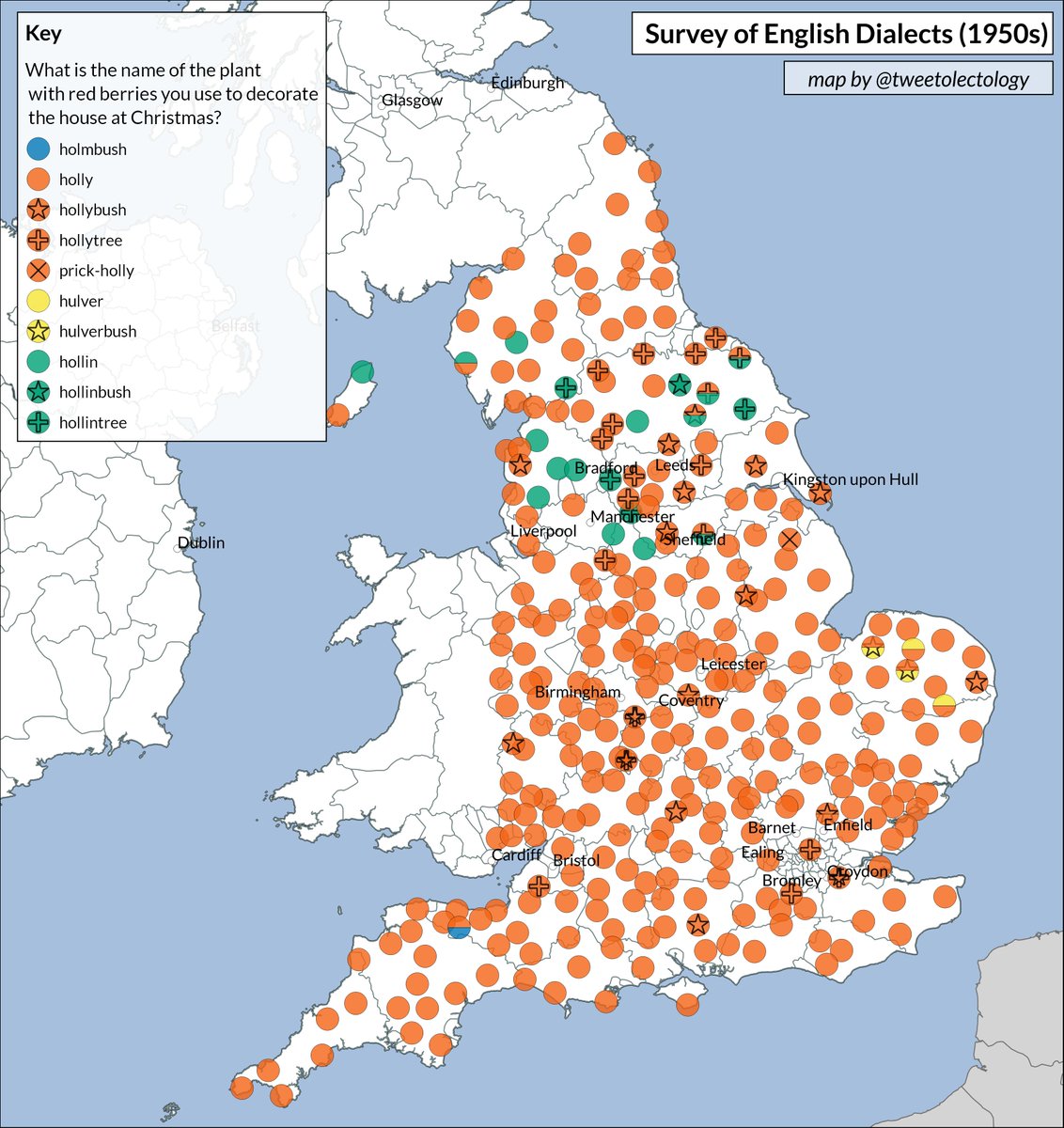
Holly is from Middle English ‘holi’, from Old English hole(g)n, itself from Proto-Germanic *hulin from a posited Proto-IndoEuropean root *kel- meaning prick or cut. We can compare modern Cornish kelynn, Welsh celyn. Holly was once thought to be immune to lightning strikes and legend held that its berries had been white until the blood of Christ dyed them. The plant’s vigour in winter, when most other vegetation had withered or died, led pagans and Christians alike to take it as a sacred token, blending notions of immortality with the suffering symbolised by its prickly leaves. As late as the 1950s there were many different local versions of its name…
Holly’s fellow evergreen, Ivy, is from Middle English ‘ivi’, Old English īfiġ, from Proto-Germanic *ibahs, originating in Proto-IndoEuropean *(h₁)ebʰ-, a word used for several different plants with pointed leaves. Ivy was in mediaeval times believed to be female, and then and later was also thought to ward off the effects of alcohol (tavern drinks were sometimes served in cups made of its wood) and to protect against evil when used as a wreath or garland.
One of the best-known Christmas carols, first published in 1710 but certainly older, memorably unites the two plants…
The holly and the ivy, When they are both full grown Of all the trees that are in the wood The holly bears the crown O the rising of the sun And the running of the deer The playing of the merry organ Sweet singing of the choir
The holly bears a blossom As white as lily flower And Mary bore sweet Jesus Christ To be our sweet Saviour O the rising of the sun And the running of the deer The playing of the merry organ Sweet singing of the choir
The holly bears a berry As red as any blood And Mary bore sweet Jesus Christ To do poor sinners good O the rising of the sun And the running of the deer The playing of the merry organ Sweet singing of the choir
The holly bears a prickle As sharp as any thorn; And Mary bore sweet Jesus Christ On Christmas Day in the morn. O the rising of the sun And the running of the deer The playing of the merry organ Sweet singing of the choir
The holly bears a bark As bitter as any gall; And Mary bore sweet Jesus Christ For to redeem us all. O the rising of the sun And the running of the deer The playing of the merry organ Sweet singing of the choir
The holly and the ivy Now both are full well grown, Of all the trees that are in the wood, The holly bears the crown. O the rising of the sun And the running of the deer The playing of the merry organ Sweet singing of the choir
Carol was adopted from the Old French carole, from Old Italian carola, Latin choraula, a borrowing of Greek χοραυλής (khoraulḗs), the word designating a flute player accompanying a chorus, from χορός (khorós), choir, dance. In French the verb caroler was used in the 14th century of dancing in a circle, while the English noun had come to mean a Christmas ‘hymn of joy’ by 1500.














 tony thorne