BALKANISATION

A word that is bandied about – recently by Boris Johnson among many others – yet rarely examined closely. I have tried to unravel its connotations in two different contexts, once fairly flippantly, once a little more seriously…

Image result for the balkans

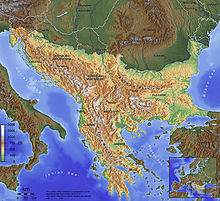
Once used to describe the weakness of tiny, mutually hostile nations with changing borders, this invocation of the troubled Balkan region is now fashionably applied to the banking sector. Balkanisation refers to, in the words of the FT‘s Patrick Jenkins, “the breakdown of cross-border banking as nervous lenders retreat… from the more troubled parts of the Eurozone.”

It is part of the trend towards deglobalisation, financial fragmentation, renationalisation and domestication of debt caused primarily by economic turbulence, prompting banks to introduce more effective safeguards against cyclical changes, aka buffering (another buzzword du jour), but increasingly also due to tighter official regulation. National regulators may now stop banks using deposits in one area to fund debts in another (the ability to shift capital or asset-swap from country to country is known as fungibility), and regulatory intervention can result in the breaking up, or Balkanisation, of the big, diversified financial entities themselves.


Here is a more detailed consideration…(long read) 

Click to access Thorne.pdf


Image result for balkanisation


ANTHROPOCENE

I think this is an example of a (buzz)word whose time has come. I wrote about it in 2009, but it has since emerged into the national – and global – conversation…


Image result for anthropocene


I discovered the other day that we are living through the anthropocene age, a phrase coined by Dutch chemist Paul Crutzen in 2005 to describe human impact on, human management of and hopefully human rescue of the planet, in particular from anthropogenic (ie ‘man’-made) emissions and overconsumption of energy. But if you are thinking of greenshifting or going off-grid/totally unplugged — whether as corporate strategy or on a personal basis (leveraging a synergy of one as they say), you’re going to need to learn greenspeak, a whole new lexicon generated by the green wave and sustainability lobby.

Just cleaning up your act to acceptable standards (technically known as remediation) is not enough. With the help, if necessary, of an eco-concierge, an intermediary consultant, you should move beyond compliance and embed an eco-advantage culture, catering simultaneously for eco-chic and eco-cheap consumers (the former 
are trend-followers, the latter energy-aware scrimpers who couldn’t care less about the environment but are worried by fuel bills, rather as economic vegetarians eschew meat 
on cost grounds).

You can do this by way of promoting eco-iconic products and services, but product designers and process engineers must ‘unpack’ the ecological rucksack — the history of the manufacturing processes undergone by a product or object. Manufacturers need to protect the airshed (by analogy with watershed) by curbing off-gassing pollutants from buildings and installations, measure the embodied energy used in construction and maintenance, and observe waste management imperatives — the so-called waste hierarchy of avoid, reduce, reuse, recycle, reprocess, dispose.

Preconsumer recovery refers to a product recycled before it reaches the consumer, for example factory-floor packaging; postconsumer to a product recycled after use, and 
closing the loop to using a remanufactured product. Reduced energy consumption, measured in so-called negawatts, brings positive PR or earned media, as do carbon offset — buying tradeable eco-credits — and carbon capture and sequestration, turning CO2 into substances like the soil nutrient biochar.

Be aware, though, that environmental awareness can also earn you mockery. Twenty years ago they were ‘tree-huggers’ and ‘duck-squeezers’, but now the label for go-too-far eco-warriors, promoted by US psychiatrist Dr Jack Hirschowitz, is carborexic, a cruel synonym for the extreme green, ecofanatic or dark greenie. Carborexia has also been called eco-anxiety, ecoholism, eco-guilt and ecopathy.

Send your favourite buzzwords, jargon and new and exotic usages to tony.thorne@kcl.ac.uk

LIVING IN THE ANGLOSPHERE

I wrote this in 2006 but it still seems apposite (- this is not a pro-Brexit post!)…


Image result for anglosphere


GLOBAL CONVERSATIONS

When writing about language, there’s a word I constantly invoke – it’s a useful shorthand version of the cumbersome “areas where English is the dominant language”. But this expression (apparently first used in writing by science-fiction writer Neal Stephenson in 1995) may yet turn out to be the defining term of the 21st century’s global order. The word is Anglosphere, denoting not just a group of English-speaking nations, but a sphere – or set of interconnected spheres – of influence.

According to US businessman and technologist James C Bennett, it “implies far more than merely the sum of all persons who employ English as a first or second language. To be part of the Anglosphere requires adherence to the fundamental customs and values that form the core of English-speaking cultures.”

Primary among these are individualism, openness and the honouring of contracts. Just doing business in English doesn’t qualify you. You have to have internalised the hidden system of behaviours and assumptions that Anglos implicitly embrace, thereby gaining membership in what Bennett calls a network civilisation or network commonwealth. Other fashionable buzzwords associated with the phenomenon are collectivity, commonality and commensurability.

At the rarefied level of international politics, Anglosphere can mean a geopolitical conversation for insiders only. In terms of innovation in technology, law and commerce, it encourages pathfinder cultures to cooperate seamlessly. To some anti-globalisers and multiculturalists this smacks of ethnocentrism, cultural imperialism and linguicism (language-based racism), or at the very least a shared superiority complex on the part of largely rightwing commentators. Part of the potency of the idea is certainly that it offers Brits, and Canadians, Australians and New Zealanders, too, the prospect of world domination, alongside the US, and despite the looming presence of China and India. Others protest that this is all simply stating the obvious – that English speakers communicate easily with one another. But perhaps they are missing the essential point: the real potential of the Anglosphere lies not just in instantaneous information-sharing but in the millions of informal, often unnoticed relationships and collaborations that amount to a much more unified power-bloc than any artificially created entity – the EU springs to mind.

Send your favourite buzzwords, jargon or new and exotic usages 
to tony.thorne@kcl.ac.uk

Image result for speech

BIZWORDS AND BUZZWORDS


The business world is responsible for – or guilty of – generating a constant stream of new terminology, buzzwords and jargon. I have been tracking such exoticisms for more than a decade in my Bizword column in British Airways Business Life magazine…

FOLLOWERSHIP

Image result for people following leaders


After decades of analysing the qualities associated with the various styles of leadership, management theory has given us a new buzzword-by-analogy. Originating in 1988 and trending in business schools 20 years later, the term is entering everyday corporate jargon. The concept of followership, we are told, is not just looking at hierarchy relationships from a new angle but reinterpreting group dynamics so that subordinates can learn how best to follow while leaders learn exactly how to cultivate them. There is, of course, a danger in focusing on following rather than leading: the role sounds less heroic or proactive. But newly identified types of empowered follower not only practise the key skills of taking or ignoring instruction, identifying expectations and goals, ego-management and performing as team players, but can exert coercive push, manipulating their bosses and enabling the wider organisation to excel.


LEAD-MAGNET

Image result for marketing funnel lead-magnet


Digital marketing is a nonstop – and seemingly unstoppable – generator of new terminology, so agencies must help novices to keep up by posting glossaries of the latest buzzwords. Turning prospects into leads into actual customers involves, in the jargon, directing traffic to your landing page (ideally frictionless) or welcome gate, which is likely to feature a lead-magnet, aka opt-in bribe, a benefit such as a free consultation, free trial, discount offer, or a content-upgrade such as a toolkit or guide to induce the visitor to give you their contact details. That is a conversion, the start of a relationship with the site visitor who should then go on to register with you, follow you on social media and/or purchase something. (Measure success by your conversion rate, failure by your bounce-rate). The series of steps you use to draw in the customer, from ads via webpages through interactions all the way to payment is known as the funnel.


You can find many more more Bizwords at


http://businesslife.ba.com/TagSearch.html?For=bizwords&PageNumber=1&SortBy=Relevance


Send your buzzwords, jargon and new and exotic usages to

tony.thorne@kcl.ac.uk


MILLENNIALS 2.0

Most Millennials Resist the 'Millennial' Label | Pew Research Center

Only four years ago I was introducing a new demographic to readers of British Airways’ BUSINESS LIFE magazine…

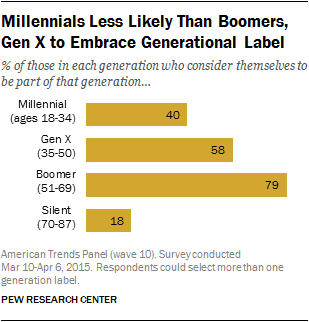
“We’ve seen the rise of babyboomers and yuppies, then of the former slackers known as Generation X. This newest generational label (aka Generation Y or the Echo Boomers) refers to youngsters born between 1981 and 1999. Their coming of age has spawned a slew of articles in both specialist journals and popular media. Commentators detail how they differ from predecessors in their collective attitudes, and describe how to manage them in the workplace. What’s provable is that millennials are the most ethnically diverse, digitally aware and empowered group yet to emerge. On their other characteristics, though, opinions differ sharply. In the UK some employers have castigated them as workshy, semiliterate, needy and narcissistic while US behavioural ‘experts’ laud their ability to multitask, their skill in balancing work and leisure, their respect for elders and leaders and their trust in institutions and allegiance to teams.”

Here, in the Independent, Mollie Goodfellow and I continue this year’s exploration of millennials’ language

http://www.independent.co.uk/arts-entertainment/the-five-things-millennials-will-never-say-a6820751.html

While (by kind permission of Marketing Week magazine) Mark Ritson offers a business perspective

https://www.marketingweek.com/2015/11/11/mark-ritson-millennials-are-out-blah-blahs-are-your-next-target-group/

LOVE IT? LOATHE IT? ENGAGE WITH IT!

Here’s an article, written for British and American professionals, that discusses the question of jargon…

Learning a new language can mean something different in today’s world of work.

 TONY THORNE

Image result for corporate life

 ‘We’ve got to monetise our visibility and maximise brand awareness’ says the boss. ‘I’ll get across it ASAP and keep an eye on collateral,’ responds the loyal subordinate with one eye on promotion and the other, if this is physically possible, on their back. Meanwhile the CEO announces that the organisation is ‘increasing its leveraging of intangibles and disruptive technologies to cope with sector turbulence’ and the shareholders nod sagely, whether they have understood what he’s talking about or not. English may be the international language but there’s another, more powerful and all-pervasive language at work here – a pressing reason for us to become bilingual or risk being left behind as the corporate and professional worlds evolve. One name for this code is BS. No – not that – it stands for Business-Speak, known also as office jargon, management-speak, buzzwords and biz-words, even sometimes in progressive circles as ‘digital discourse.’

Whatever you call it, biz-speak gets a bad press. Lucy Kellaway’s columns in the Financial Times have been parodying it for a decade, the UK’s Plain English Campaign regularly denounces it and not long ago MPs waded into the debate, chastising their civil servants for using phrases like ‘challenging growth trajectories’ and ‘driving up quality’. The Local Government Association even tried to ban a long list of terms including the awful ‘coterminous engagement’ and ‘predictors of beaconicity’, but also the – to my mind – quite innocent ‘synergy’, ‘benchmark’ and ‘initiative’. At the same time a raft of surveys by pollsters, HR agencies and academics have canvassed workers’ grievances and identified the use of jargon by bosses as the number one irritant. These studies revealed that junior executives and office workers in particular felt intimidated and excluded by managers’ obscure and pretentious language, suspecting, too, that this is often employed to conceal incompetence, or disguise unpalatable truths.

But despite all the surveys I’m not at all sure that we should automatically disapprove of jargon. When speakers strive to find new ways of describing genuinely new ideas, and when they play creatively with the possibilities of the language, they enrich our vocabulary, expand our capacity to express ourselves; to use a controversial word they empower us. As for technical terms – learn them! If your colleagues are referencing ‘portals’, ‘silos’, ‘inflows’, you ought to know what they are. New processes and new ways of consuming require new terminology and always have done. Key finance concepts like ‘sub-prime’ and ‘QE’ sound offputting, but try explaining them in different words in less than ten minutes; ‘onshoring’ is the neatest way of explaining that you have had to reverse your ‘outsourcing’ and ‘offshoring.’ BS can also inject a little drama and humour into the working day, so the slight recovery after a crash is better described as a ‘dead cat bounce’, taking a brave and unpopular decision is ‘shooting the puppy’, a pleasing upward curve is a ‘J-Lo’, the consultant you had to engage is a ‘hired gun’ or a ‘killer bee’.

Image result for corporate life

If you do decide to embrace this new lingo there are some crucial points to remember. Where BS is concerned the cardinal sins are:

  • Using too much of it in one conversation: unfamiliar terms are processed more slowly by the listener’s brain, so don’t overload them with ‘let’s move from a hub-and-spoke to a many-to-many peered distribution model.’
  • Using it to avoid straight-speaking: you won’t be popular if you substitute ‘transitioned’ for kicked out, ‘lateralled’ for moved sideways, ‘backfilled’ for replaced or, if you’re a government, ‘deficit levy’ for tax. And she’s a receptionist, by the way, not a ‘data hub facilitator.’
  • Not understanding what you are saying: a new way of saying all-inclusive is the skiing term ‘across the piste’, but some hapless professionals trying to impress are coming out with with ‘across the piece,’ one or two, excruciatingly, with ‘across the beast.’
  • Relying on clichés: some expressions have simply been done to death, with ‘going forward’, ‘reaching out’ and ‘thinking outside the box’ among the worst offenders.
  • Using it in completely the wrong setting: Don’t say ‘we’re thinking of co-curating our downtime and sourcing a leisure solution’, say ‘we’re planning to book a holiday’, and don’t ‘recalibrate the work-life balance’, just ‘relax.’

Critics need to realise that specialist language isn’t just about naming and describing, it’s about credibility, about bonding and belonging, about brevity and freshness, as much as about bamboozling or bluster. Knowing how to deploy (I like that word) this vocabulary marks you out as a member of a team or a community sharing common professional aims. OK, if I see ‘deliverables’ or ‘ownership’ or hear ‘alignment’ one more time, I’ll probably scream – but come on, let’s get buy-in from all stakeholders, embed a culture of innovation and maximise linguistic functionality.  Or to put it more brutally, if you don’t like the heat, stay out of the kitchen.

tony.thorne@kcl.ac.uk

Twitter: @tonythorne007

Here are some links to articles referring to business jargon:


http://www.dailymail.co.uk/news/article-3377306/Survey-reveals-10-infuriating-business-phrases.html

http://www.languagemonitor.com/business-buzzwords/top-trending-business-buzzwords-for-global-english-in-2015/

http://www.fastcodesign.com/3054366/pentagram-unleashes-a-tirade-against-corporate-jargon-in-a-rap-video?partner=rss&utm_source=feedburner&utm_medium=feed&utm_campaign=Feed%3A+fastcodesign%2Ffeed+%28Co.Design%29

http://www.inc.com/kimberly-weisul/the-very-worst-business-jargon-of-2015.html

http://realbusiness.co.uk/article/26350-50-office-jargon-phrases-we-hate

http://www.theguardian.com/careers/careers-blog/worst-office-jargon-phrases-staff-love-hate-management-speak

http://etheses.bham.ac.uk/4706/