READ MY LIPS – a Catchphrase is forever

Man is a creature who lives not upon bread alone, but primarily by catchwords.

– Robert Louis Stevenson 

Image result for old catchphrases

In the end, Mr. Trump’s simple promise to ‘Make America Great Again,’ a catchphrase Mrs. Clinton dismissed as a vow to return to a racist past already long disappeared, would draw enough white Americans to the polls to make up for his low minority support.

– Amy Chozick, New York Times, November 9, 2016


Image result for old catchphrases


A poll of 2000 representative adult citizens has just revealed, according to surrounding publicity, the British public’s fifty favourite catchphrases. I was asked to comment on the survey and its findings and have expanded on those first thoughts here…

  1. Linguists describe the catchphrase as a ‘pre-formed lexical unit’, a component of the lexical repertoire shared by individual speakers and wider social groups. A catchphrase is ‘disseminated’ – spread – by repeated media usage and by word of mouth repetition.
  2. A catchphrase is typically a sequence of several words which works in memory and in conversation as a single unit. It triggers recognition because it is used repeatedly across society and this recognition in turn triggers the pleasure of sharing a cultural allusion with other people.
  3. Catchphrases, like proverbs, slogans or clichés (not to mention adages, maxims, platitudes, sayings and mottos), work because they encode ideas that are wise or funny or inspiring – sometimes all three at once. They also work well in interactions because they are information shortcuts or emotional prompts that can be slipped into conversations instead of having to explain interesting or complex ideas at length. In the digital and visual sphere hashtags and memes share many of the catchphrase’s attributes.
  4. A catchphrase such as ‘I don’t believe it!’ expresses a mix of exasperation, world-weary resignation and fatalistic humour that will be familiar from many people’s personal experience. ‘Don’t panic!’ is a piece of urgent advice that fits almost all of the traumas that life inflicts upon us. (The same words were memorably used in the cult TV series The Hitchhiker’s Guide to the Galaxy’)
  5. The psychology of using a catchphrase is similar to that of telling a joke or repeating a famous quote: it not only conveys an opinion or information but forms a social bond of intimacy between the user and whoever they are talking to.
  6. Many catchphrases are associated with a particular performer, celebrity or public figure and so have a double impact in evoking that person’s trademark persona and attributes as well as the ideas they originally expressed. Catchphrases from much-loved shows lodge in the listener’s mind and stay with them as pleasurable memories to replay over and over again.
  7. Some catchphrases – ‘it is what it is’, for example, mimic a philosopher or sage expressing universal truths in simple language. The repetition used drives home the idea and its finality is effective in closing down a discussion – but at the same time this kind of catchphrase (like its abrupt synonym ‘end of’) can irritate the hearer if it is thought to be meaningless or stating the obvious or falsely affecting profundity. ‘Simples’, on the other hand is inoffensive and works especially well because it is itself as simple as it can be, as well as teasingly funny and associated with a lovable, if fictionalised and Russian-accented creature.
  8. Catchphrases derive their power from compressing quite complex ideas into short sequences and reinforce their power by employing unexpected juxtapositions and by using striking or clever combinations of sound (‘phonaesthetics’ or ‘sound symbolism’) that work just as in poetry or literature to arouse feelings in the listener. A very short expression such as ‘beermunch’ (the product name associated with the poll promotion in question) brings two already very familiar words together for the first time and combines two short, sharp contrasting sounds, sounds that for many will evoke the act of imbibing a stimulating liquid and the act of ‘chomping’ on delicious snack food.
  9. Catchphrases are a key component of popular culture as they connect the world of entertainment and consumption with the everyday concerns of real people – their feelings and experiences, their shared pleasures and their struggles and frustrations, and especially their triumphs over adversity.
  10. Some catchphrases (like buzzwords, linguists call these ‘vogue terms) quickly fall out of use or soon begin to sound dated and embarrassing. What is notable in the latest list, however, is how many of the expressions chosen are decades old and still in favour. It seems that certain phrases reverberate across generations, becoming part of the shared vocabulary of family members and neighbours (more technically ‘familect’).

Image result for old catchphrases

So here are…

 THE NATION’S TOP 50 CATCHPHRASES – as of September 2019 

  1. I don’t believe it! – Victor Meldrew
  2. Simples – Compare the Market
  3. Don’t panic! – Lance-Corporal Jones/Dad’s Army
  4. Lovely jubbly – Del Boy/Only Fools and Horses
  5. I had a cunning plan! – Tony Robinson / Blackadder
  6. To me, to you – Chuckle Brothers
  7. I’ll be back – Arnold Schwarzenegger / Terminator 2
  8. Nice to see you – to see you nice – Bruce Forsyth
  9. Only me! – Harry Enfield
  10. Rodney, you plonker! Del Boy/Only Fools and Horses
  11. Cheeky Nando’s
  12. How YOU doin’? Joey from FRIENDS
  13. Listen very carefully, I shall say this only once – ‘Allo ‘Allo
  14. Computer says no – Little Britain
  15. Garlic bread! – Peter Kay
  16. Should’ve gone to Specsavers – Specsavers
  17. D’oh! – Homer Simpson
  18. Am I bovvered? Catherine Tate
  19. The name’s Bond… James Bond – James Bond
  20. Beam me up, Scotty – Star Trek
  21. It is what it is – Love Island
  22. Aha! – I’m Alan Partridge
  23. What’s occurring? – Gavin and Stacey
  24. I’ve started so I’ll finish – Mastermind presenter
  25. It’s goodnight from me, and it’s goodnight from him – The Two Ronnies
  26. I’m free! – Mr Humphries/Are You Being Served
  27. Ooh Betty – Frank Spencer
  28. You dirty old man! – Steptoe and Son
  29. Lads lads lads – and everybody! – Ladbrokes
  30. Exterminate! – Dalek
  31. Live Long and Prosper – Star Trek
  32. We’re going out-out – Mickey Flanagan
  33. I’ll make him an offer he can’t refuse – The Godfather
  34. Have a break, have a Kit Kat – Kit Kat
  35. Scorchio! – The Fast Show
  36. Because I’m worth it – L’Oreal
  37. Bazinga! – The Big Bang Theory
  38. It’s good, but it’s not right – Roy Walker/Catchphrase
  39. Who loves ya, baby! – Kojak
  40. I ain’t getting’ on no plane! – Mr T/The A Team
  41. I’m Lovin’ It – McDonald’s
  42. Shut that door – Larry Grayson
  43. Smokin’! – Jim Carrey – The Mask
  44. On that bombshell… – Jeremy Clarkson / Top Gear
  45. You are the weakest link – goodbye! – Anne Robinson / The Weakest Link
  46. You’ll like this – not a lot – Paul Daniels
  47. …Which was nice – The Fast Show
  48. No likey, no lighty! – Take Me Out
  49. Whatchoo talkin’ ’bout, Willis? – Diff’rent Strokes
  50. Giggity – Quagmire / Family Guy

Image result for old catchphrases

And here is how the poll results were relayed to a waiting public…

https://www.dailymail.co.uk/news/article-7520653/I-dont-believe-Victor-Meldrews-catchphrase-voted-nations-favourite-time.html


 Grumpy Victor Meldrew's catchphrase topped the list


THE REAL WORDS OF THE YEAR – 2018

It has become a tradition for the major dictionary publishers, along with some linguists’ associations, to nominate a ‘word of the year’, a term (or in the case of Oxford’s 2015 crying/laughing emoji a symbol) which supposedly captures the essence of the zeitgeist, and in doing so marks the proposer as someone in tune with the times and with their target audience. The words chosen are rarely actually new, and by the nature of the exercise calculated to provoke disagreement and debate. I have worked with and written about what linguists and anthropologists call ‘cultural keywords’ and have my own ideas on which expressions could be truly emblematic of social change and cultural innovation. The words already nominated by the self-appointed arbiters are discussed at the foot of the page, but here, for what it’s worth, are mine (in order of preference)…


Image result for Artificial intelligence

AI

Yes, strictly speaking it’s two words, but this little initialism looks like a two-letter word and is processed by the brain as a ‘lexeme’ or a single unit of sound and sense. AI, artificial intelligence, is the hottest topic not only in tech-related practices but in fields as (seemingly) diverse as marketing, finance, automotives, medicine and health, education, environmentalism. Zdnet.com has published one of the most useful overviews of AI and its sub-categories and applications:

https://www.zdnet.com/article/what-is-ai-everything-you-need-to-know-about-artificial-intelligence/

Though it is one of the most fashionable and most resonant terms in current conversation, a slogan and a rallying cry as well as a definition, AI is problematic in the same way as two other recent contenders for word-of the moment, CRYPTO and DIGITAL. The former is shorthand for all the very complex, not to say near-incomprehensible elements that have accompanied the invention of crypto-currencies – bitcoins and blockchains in particular. These advances have yet to prove their worth for most ordinary consumers who will often be bemused by new terminology that seems to be traded among experts somewhere beyond their grasp or their reach. In the same way for the last few years ‘digital’ has been a mantra evoking the unstoppable influence of new electronic media, (related SOCIAL was a strong candidate for buzzword of 2017). Digital’s over-use by overexcited marketing professionals, would-be thought-leaders and influencers has been inspiring mockery since 2016, as in the spoof article in the Daily Mash: https://www.thedailymash.co.uk/news/business/nobody-knows-what-digital-supposed-to-mean-20160614109525

To put it almost as crudely as the Daily Mash does, there’s a sense in which almost no layperson knows, or can know fully, what Digital, Crypto and AI really mean, and the same goes for the expressions derived from them – ‘deep learning’ comes to mind. Their power derives from their novelty and their ability to evoke a techutopian future happening now. The phrase artificial intelligence was first employed in 1956 and its abbreviated form has been used by insiders since at least the early 2000s, but it is only now that it, and the concepts it embodies, are coming into their own.


Image result for kimberle crenshaw

INTERSECTIONALITY

At first sight just another over-syllabled buzzword escaping from the confines of academic theory (‘performativity’, ‘superdiversity’ and ‘dimensionality’ are recent examples) into highbrow conversation, intersectionality is actually an important addition to the lexicon of identity studies. It was coined as long ago as 1989 by Kimberlé Crenshaw, a civil rights activist and legal scholar who wrote that traditional feminist ideas and anti-racist policies exclude black women because they face overlapping discrimination that is unique to them.  The word took 26 years to make it into the OED and is still unfamiliar to many, but during 2018 has featured in more and more debates on diversity and discrimination, marking the realisation that, for BAME women and for other marginalised groups, the complexities of oppression and inequality occur in a matrix that incorporates not only gender and ethnicity but such factors as age, sexuality and social class. There are each year a few forbiddingly formal or offputtingly technical expressions that do deserve to cross over into mainstream use. This I think is one of them and no journalist, educationalist, politician or concerned citizen should be unaware of it.

A bad-tempered take on intersectionality as buzzword was provided last year by https://www.theguardian.com/world/2017/sep/30/intersectional-feminism-jargon


Image result for civility politics

CIVILITY

I was intrigued by the sudden appearance (sudden at least by my understanding) earlier this year – its online lookups spiked in June – of a decorous, dignified term in the midst of very undecorous, undignified public debate. This old latinate word’s denotations and connotations were in complete contrast with the ‘skunked terms’ and toxic terminology that I had collected elsewhere on this site. In fact, as is often the case, this word of the moment emerged from a longer tradition, but one largely unknown hitherto outside the US. Its proposer was Professor P.M Forni, who sadly died a couple of weeks ago. In 1997, together with colleagues he established the Johns Hopkins Civility Project — now known as the Civility Initiative — a collaboration of academic disciplines that addressed the significance of civility and manners in modern life. His ideas were seized upon by commentators on this year’s events in the US, with some asserting that the civil rights protests of the past were indeed more civil than today’s rancorous exchanges. Democrat Nancy Pelosi denounced Donald Trump’s ‘daily lack of civility’ but also criticised liberal opponents’ attacks on him and his constituency. Others pointed out that polite debate alone had never prevailed in the struggles against bigotry and violence and that civility was an inadequate, irrelevant response. Cynics inserted their definitions: ‘civility’ = treating white people with respect; ‘political correctness’ = treating everybody else with respect…which prompts the thought that perhaps, in recognition of realities on both sides of the Atlantic, it’s really ‘incivility’ that should be my word of the year.

Image result for keywords

Here, in the Economist, is the ‘Johnson’ column’s perceptive analysis of those other nominations for 2018’s word of the year:

https://www.economist.com/books-and-arts/2018/12/08/the-meaning-of-the-words-of-the-year

While US lexicographer Kory Stamper provides the inside story on the American choices:

https://www.bostonglobe.com/ideas/2018/12/18/language-nerds-worked-really-hard-that-words-year-list/wJgdhIMAQK7xcBvlc2iHOL/story.html?s_camp=bostonglobe:social:sharetools:twitter

Lynne Murphy‘s annual US to UK export/import of the year:

https://separatedbyacommonlanguage.blogspot.com/2018/12/2018-us-to-uk-word-of-year-mainstream.html

And her UK to US counterpart:

https://separatedbyacommonlanguage.blogspot.com/2018/12/2018-uk-to-us-word-of-year-whilst.html

In the New Year the American Dialect Society announced its own word of 2018, a disturbing euphemism employed by the Trump regime and a candidate for my glossary of toxic terminology (see elsewhere on this site):

“Tender-age shelter” is 2018 American Dialect Society word of the year

And from the militantly millennial LinguaBishes, some excellent examples of millennial/Generation Z terms of 2018:

2018 Words of the Year


In October 2019 David Shariatmadari in the Guardian gets his preferences in early:

https://www.theguardian.com/science/2019/oct/14/cancelled-for-sadfishing-the-top-10-words-of-2019


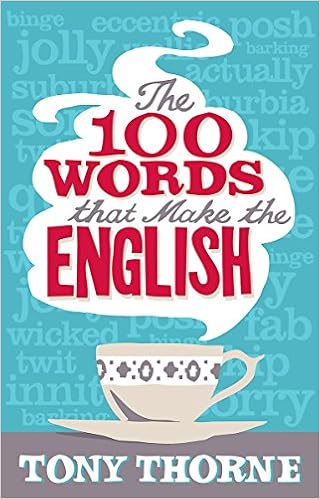
…and, FWIW, I like to think that my own collection of cultural keywords, seeking to define the essence of Englishness back in 2011, is still relevant today:

Image result for the 100 words that make the english tony thorne