FESTIVE SLANG

It’s already the Autumn Equinox in the Northern Hemisphere, and memories of this year’s summertime festivals are fast fading…

An Autumn days view

You can nevertheless re-live those hedonistic outdoor excesses by browsing my Festival Dictionary, produced for Lucozade two summers ago and still offering a snapshot of the latest slang, catchphrases, keywords and catcalls to accompany the traffic jams, the endless toilet queues, the muddied tents and the eventual collective euphoria…

The Lucozade Yes Moment Festival Dictionary is free and obtainable here…

https://www.lulu.com/shop/tony-thorne/the-yes-moment-festival-dictionary/ebook/product-21791651.html?q=Yes+moment+dictionary+tony+thorne&page=1&pageSize=4

TALKING LIKE A PIRATE

Today, September 19, is, in the calendar of spoof and parody, International Talk Like A Pirate Day, so here is a first note on pirate language…more to follow…

PIRATE TALES AND PIRATE TALK

Meet the real pirates of the Caribbean—and the Carolinas

The pirate is one of the most enduring icons of folklore and popular culture across the English-speaking world and beyond. Nowadays a ‘piratical’ boss may strike fear into the hearts of his workers and ‘pirated’ goods have to be avoided, but everything else about these intrepid marauders is tinged with romance. The word itself is from Latin pirata, derived from Greek peiran, to attack: the associated ‘buccaneering’ and ‘swashbuckling’ are terms of admiration, evoking a devilishly determined rogue who is villain and hero at the same time. It was England’s first Queen Elizabeth who launched the privateers, as they became known, on their way when she licensed 16th-century explorers like Francis Drake, Walter Raleigh and John Hawkins to take foreign ships and plunder the treasure houses of the Americas. But the pirates’ golden age came later, in the 17th and 18th centuries, when they operated freely in their hundreds across the seven seas, even establishing their own pirate state on the islands of Hispaniola and Tortuga in the Caribbean. The real lives of Blackbeard, Calico Jack, Irishwoman Ann Bonny and the rest were first recorded – and considerably embellished – in Captain Charles Johnson’s A General History of the Robberies and Murders of the most notorious Pyrates, published in 1724.

While pirates made their mark on history and on fiction, for hundreds of years the sea and its sailors were a very real presence for ordinary Britons, whose family members, whether fishermen, naval mariners  – or perhaps smugglers or slavers – struggled to make their fortunes at sea, risking their lives and enduring months or years away. The language of the sea penetrated the language used at home, to such an extent that we have forgotten the nautical origins of many of our everyday expressions…

All at sea

A shot across the bows

Batten down the hatches

Clear the decks

Dead in the water

Flagship

Fly the flag/show your true colours/nail your colours to the mast/with flying colours

Give someone a wide berth

Hit the deck

Loose cannon

On an even keel

Plain sailing

Safe haven

Sail close to the wind

Show someone the ropes

Take on board

The coast is clear

Weather the storm

URBAN LONDON SLANG

By kind permission of Natalie King, here’s her blog post for Oxford University Press on the sort of youth language to be encountered in the streets of London today. I can vouch for the authenticity of all the expressions she mentions, but it’s notable that this account bears out my own investigations: these examples of ‘youth-speak‘ or Multiethnic London English have all been used by teens and younger adults for at least five years, some for more than a decade. Slang is not as ephemeral as many people think…

Urban London slang: an introduction for hipsters

THE RETURN OF THE COUNTESS


The face of a woman who killed more than 100 young girls.


A fascination with language can lead to writing about language itself of course, but can also prompt excursions into subjects, themes and real places that are all but inaccessible for Anglophone monoglots. In 1997 I wrote Countess Dracula, the life of the 17th century Hungarian Countess Elisabeth Bathory. The evidence in this sensational and controversial story of serial murder, such as it is, exists only in Hungarian, Latin, Slovak and German. The verdicts arrived at at the time are still being questioned centuries later and the whole affair is periodically revived in novels, film, opera and in rival biographies and press articles. I plan to revisit the haunts of the Countess in Austria, Slovakia and Hungary soon, to search for the new information that I am sure awaits discovery there. In the meantime, here is an article from 2008 marking one such celebration of her infamy…

http://www.telegraph.co.uk/culture/film/3555482/Countess-Elizabeth-Bathory-icon-of-evil.html

HOW MANY IS A BANKER’S DOZEN?

Banker’s dozen

This is why a baker's dozen is 13 - EverybodyCraves

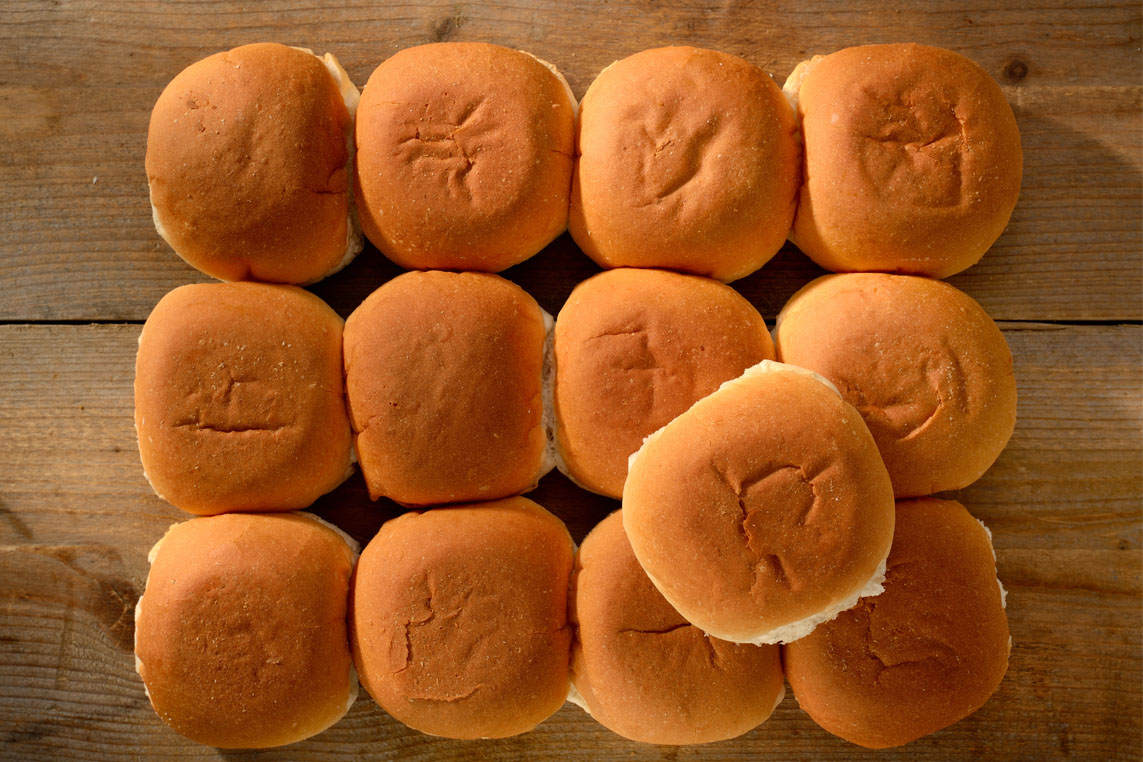
A baker’s dozen traditionally includes one extra bun

A ‘baker’s dozen’ is where a baker slips a gratis 13th bun into a customer’s order. (Also known as a long dozen, the phrase dates from 1599, but may refer to a much older practice of adding something to a batch to seem generous.) The banker’s dozen, by contrast, is much more recent. It can mean literally one less than the full dozen, ie 11 items instead of the expected 12: sometimes it just means a short measure of any kind.

More technically, the phrase may refer to a method of lending where interest or penalties are deducted before the loan is transferred, so the debtor borrows ten pounds but receives only nine. This topical reference to financiers’ avarice is probably the inspiration for a trader’s dozen which, in City of London slang, means a dozen drinks in quick succession on a Friday lunchtime (per person, that is), typically charged covertly to a client or employer.

Send buzzwords, jargon and new and exotic usages to  tony.thorne@kcl.ac.uk.

PRONOUNCING (ON) PEDANTRY

John Walker (1732-1807) did for pronunciation what Dr Johnson had done for vocabulary. He published the ‘idea’ for his pronouncing dictionary as early as 1774, along with an unusual advertisement asking ‘a few men of reflexion’ to communicate to him ‘whatever may have occurred to them.’ The book finally appeared in 1791 with the resounding title:

A Critical Pronouncing Dictionary and Expositor of the English Language: to which are prefixed Principles of English Pronunciation: rules to be Observed by the Natives of Scotland, Ireland and London, for Avoiding their Respective Peculiarities; and Directions to Foreigners for Acquiring a Knowledge of the Use of this Dictionary.

Walker was strongly prescriptive. The accent of cultured London, he told his readers, is ‘undoubtedly the best.’ Everyone else is mispronouncing the English language, especially those who are ‘at a considerable distance from the capital’, meaning the Scots and Irish. London Cockney, however, is ‘a thousand times more offensive and disgusting’ than those provincial varieties. ‘Elocution Walker’ became a household name in Britain and in North America, and his book went through more than a hundred editions. It provided the public, hungry for prescriptions to guarantee the social safety of their language, with an immovable authority, and helped to create a new climate of ‘linguistic correctness’ out of which emerged the elite forms of speech that came to dominate the nineteenth and twentieth centuries.

‘Pronunciation…is a sort of proof that a person has kept good company, and on that account is sought after by all, who wish to be considered as fashionable people or members of the beau monde…All other dialects are sure marks, either of a provincial, rustic, pedantic or mechanic education; and therefore have some degree of disgrace annexed to them.’ Thomas Sheridan (1719 – 1788)

This sometime actor and teacher of elocution (father of the dramatist Richard Brinsley Sheridan) wrote the extraordinarily verbose (and that’s just the title) British Education: Or, The source of the Disorders of Great Britain. Being an Essay towards proving, that the Immorality, Ignorance, and false Taste, which so generally prevail, are the natural and necessary Consequences of the present to defective System of Education. With an attempt to shew, that a revival of the Art of Speaking, and the Study of Our Own Language, might contribute, in a great measure, to the Cure of those Evils (1756).

He developed his ideas in A Course of Lectures on Elocution. Less bothered by the supposed mispronunciation of words, he fulminated against what he saw as a lack of eloquence – particularly the correct level of dramatic delivery –in public speaking. Central to Sheridan’s work was his emphasis on the importance of ‘tones’ to eloquence. These tones, which correlated with the expressive effects one can give to their speaking, were something Sheridan considered an important part of persuasion. He stated, ‘The tones expressive of sorrow, lamentation, mirth, joy, hatred, anger, love, &c. are the same in all nations, and consequently can excite emotions in us analogous to those passions, when accompanying words which we do not understand: nay the very tones themselves, independent of words, will produce the same effects.’ For Sheridan, how a message was communicated, whether by an actor, a preacher or an ordinary speaker, was as important as the message itself. He used the example of someone saying in a calm demeanour, ‘My rage is rouzed to a pitch of frenzy, I can not command it: Avoid me, be gone this moment, or I shall tear you to pieces’ to show the importance of tones…

…While nineteenth century schoolteachers tired their pupils out with rote-learning of sounds and chanting, the twentieth century saw more ingenious confections, ostensibly designed to instruct and practice, actually intentionally or unintentionally a source of torment. The first is often used, to tantalise, and then to teach, speakers of other languages who are hoping to get to grips with ours…

I take it you already know
Of tough and bough and cough and dough?
Others may stumble, but not you
On hiccough, thorough, slough, and through.
Well done! And now you wish, perhaps,
To learn of less familiar traps.
Beware of heard, a dreadful word
That looks like beard but sounds like bird.
And dead: it’s said like bed, not bead,
For goodness sake don’t call it deed!
Watch out for meat and great and threat
(They rhyme with suite and straight and debt).
A moth is not a moth as in mother
Nor both as in bother, nor broth as in brother,
And here is not a match for there,
Nor dear and fear, for bear and pear.
And then there’s dose and rose and lose–
Just look them up–and goose and choose
And cork and work and card and ward
And font and front and word and sword
And do and go, then thwart and cart,
Come, come! I’ve hardly made a start.
A dreadful Language? Man alive!
I mastered it when I was five.


I have used this poem myself with visiting students from abroad and have become used to the expressions on their faces as I read it aloud. The polite amusement and gentle puzzlement giving way slowly to a mélange of incredulity and fear, settling into a sort of resigned misery.

So now for something quite a lot more vexatious…another ‘poem’, this time for you the native to attempt…

Dearest creature in creation,
Study English pronunciation.
I will teach you in my verse
Sounds like corpse, corps, horse, and worse.
I will keep you, Suzy, busy,
Make your head with heat grow dizzy.
Tear in eye, your dress will tear.
So shall I! Oh hear my prayer.
Just compare heart, beard, and heard,
Dies and diet, lord and word,
Sword and sward, retain and Britain.
(Mind the latter, how it’s written.)
Now I surely will not plague you
With such words as plaque and ague.
But be careful how you speak:
Say break and steak, but bleak and streak;
Cloven, oven, how and low,…

…Ask, grasp, wasp, and cork and work.
Pronunciation (think of Psyche!)
Is a paling stout and spikey?
Won’t it make you lose your wits,
Writing groats and saying grits?
It’s a dark abyss or tunnel:
Strewn with stones, stowed, solace, gunwale,
Islington and Isle of Wight,
Housewife, verdict and indict.
Finally, which rhymes with enough,
Though, through, plough, or dough, or cough?
Hiccough has the sound of cup.
My advice is to give up!!!

This tongue-twisting mind-bender, which is reputed to have cost a number of native-speakers their sanity (perhaps they tried to derive some meaning from it?), is an excerpt from the poem The Chaos. It was written in 1920 by ‘Charivarius’, the pen-name of Dr Gerard Nolst Trenité (1870-1946). The doctor was, like other keen observers of the foibles of the English, Dutch, (just like Dr G.J Renier, author of The English: Are They Human and P. Boogaart who wrote The A272: An Ode to a Road). What is more he was himself a puzzle, in that he was said to pronounce Charivarius (it means a cacophonous, mocking serenade or a series of discordant noises and comes, tellingly, from the Latin for ‘headache’) in several different ways, none of them acceptable in normal English, while he never told anyone how to pronounce his surnames…

‘…the best speakers of standard English are those whose pronunciation, and language generally, least betray their locality’.Henry Sweet (1845-1912)

The Edwardian Henry Sweet, to be very uncharitable, was, in a stuffy age, one of our stuffiest linguistic prescriptivists, a dry old stick who quite lacked the saving silliness of Nolst Trenité. But his theme has again become part of the public conversation in recent times. Elocution lessons enjoyed a resurgence in popularity following the success of Oscar-winning film The King’s Speech, in which King George VI overcomes his battle with a lifelong stammer thanks to help from a therapist.  George Bernard Shaw famously claimed that ‘It is impossible for an Englishman to open his mouth without making some other Englishman hate or despise him’. Carol Walker probably wouldn’t go that far. But as head of Sacred Heart Primary School in Middlesbrough, she insisted in 2013 that pupils moderate their Teesside accents and local dialect – to drop the ‘nowt’ and ‘yous’ and ‘gizit ’ere’ – in order to improve their chances in life.

What was perhaps most interesting about this story was that when it surfaced in the national press the sky failed to fall in. A few years ago, Mrs Walker would have been accused of cultural discrimination – of imposing arbitrary standards of ‘proper’ English on her poor charges. Of course, the idea of RP was always something of a fraud: if you listen to recordings of Gladstone, his tones are pure Scouse (and we learnt recently that Richard III may have plotted his villainy in a Brummie twang). And today’s favoured TV accent is more Brian Cox than David Attenborough. Yet as Mrs Walker’s decision suggests, there is still such a thing as ‘Standard English’ – it’s just that the definition is a bit broader. Her kids don’t need to start chanting ‘The rain in Spain’, but they do need to be able to make their way in the wider world.

It was only one year earlier that a primary school in Essex became one of the first in recent history to offer its pupils elocution lessons to help them lose their accents. Pupils at Cherry Tree Primary School in Basildon, are being taught to ditch their Essex accents during weekly lessons from a private tutor. Teachers say they have seen a vast improvement in their pupils’ spelling and writing since the lessons were introduced – with some parents even admitting they are now corrected on their pronunciation at home by their own children. The Essex accent has been thrown under the spotlight around the country following the success of the reality TV show The Only Way is Essex. However, Terri Chudleigh, English literacy coordinator, who first came up with the idea, said, ‘This is not about being ashamed of the Essex accent. I have an Essex accent and there’s nothing wrong with it. It’s about helping the children to speak properly so they can improve their reading and writing and obviously have a better education. I really wanted to get someone in because I noticed the children weren’t saying words correctly and were therefore misspelling them. We had lots of youngsters writing ‘sbort’ instead of ‘sport’ and ‘wellw’ instead of ‘well’.’ During weekly sessions at the school, children run through fun speech exercises with names like ‘ho hum’, ‘stifled smile’ and ‘tongue boot camp’ before being encouraged to experiment with ‘posh voices’…


SOUNDS, SENSES AND THE SELF


 A good friend of mine died young, of a surprise heart attack, at fifty. If I were reminiscing I could dig out one of many photographs to remind myself of his face, but no need. It is his voice that stays with me always. The utterly distinct tough-guy accent (unlike my father’s never modulated according to hearer), confounding class categorisations by blending his native Geordie and alma mater Magdalene College, Cambridge (pronounced, he would scathingly remind us, ‘maudlin’, of which much more later); the urgent hectoring tone used to denounce barmen when the ale was off, or friends who had failed to vote for Old Labour. Here in print, or even by imitating them out loud, I can’t do justice to the nuances of their accents, evoke their individuality with real precision: I wish so much that I had recorded them both, and all the other now silenced voices, when they were still alive.

A baby’s gurgling laugh elides into the sound of water trickling over pebbles; lovers ‘bill and coo’, share ‘sweet nothings’; girls’ eager conversation echoes flocking birdsong; revivalists’ ‘speaking in tongues’ reaches to the spirit language of the upper air; the rattling ‘doom-roar’ of a Death Metal band dissolves into rolling thunder. We respond to the affecting cadences of language, from the simplicity of lullaby via the complexities of poetry and rhetoric, back to the elemental vocalising of holy chant and mantra. We may look at linguists’ theories of the origins of language itself and discover that they are far from definitive. Commonsense connections between volume and aggression, speed and stress, for instance, satisfy us well enough, but science has yet to explain the precise relationship between phonology and psychology: why some words evoke reactions that are seemingly quite at odds with literal meaning. We learn that the unique sound of a loved one’s conversation may linger in the mind when even their face has disappeared from memory.

Having a sound knowledge of your own native language should be quite straightforward, even instinctive, but the English language is something special. Its convoluted history means that even the most common terms may be pronounced in different ways; linguists disagree among themselves on the rules that we should apply, while the many accents of English trigger widely different responses – from fawning admiration through polite puzzlement to knee-jerk hostility – in those who hear them…

 …When we move from words to longer examples of intonation, rhythm and pitch, it can be a mixture of supposed familiarity – we recognise the same sounds from a different context such as baby-talk or comic exaggeration – and unfamiliarity – we don’t know what it means – that leads us to find the sound of the Dutch language funny for example.

Where other accents – the regional British variants among them – are concerned, studies have found that people react positively or negatively first according to how closely the accent resembles their own and secondly to its associations, usually which prominent figures – typically actors, newsreaders, footballers – employ it and in which contexts it has been encountered, so a Northern Irish accent, once evoking the language of the Troubles is now, like the Scottish Connery lilt, linked to actors who charm and don’t threaten. Only rarely does a truly unusual, unplaceable accent arrest our attention, scramble our responses. My late friend’s was one such: its unfashionably precise articulation and its stern delivery was intimidating, but its sonorous qualities (worthy, someone said, of a [Richard] Burton or a [John] Gielgud) could overwhelm the hearer in other ways, to persuade, enchant, bamboozle, seduce…

It’s hard to imagine a cultural phenomenon that’s more important than the development of language. And yet no human attribute offers less conclusive evidence regarding its origins. The oldest and best-known theories of how language began all depend on sounds and how they are interpreted, refashioned and manipulated:

The Bow-Wow Theory

According to this influential theory, endorsed by Rousseau among others, language began when our ancestors started imitating the natural sounds around them. The first speech was onomatopoeic, marked by echoic words such as moo, meow, splash, cuckoo, and bang.

BUT…

Relatively few words in any language are actually onomatopoeic, and these words vary from one language to another. For instance, a dog’s bark is heard as au au in Brazil, ham ham in Albania, and wang, wang in China. In addition, many onomatopoeic words are of recent origin, and not all are derived from natural sounds.

The Mama Theory

This theory posits that language began with the easiest syllables attached to the most significant objects.

BUT…

Once we move beyond the most primal connections, such as that between suckling baby and mother, the theory falls short of explaining anything.

The Ding-Dong Theory

This theory, sometimes ascribed to Plato and Pythagoras, maintains that speech arose in response to the essential qualities of objects in the environment. The original sounds people made were supposedly in harmony with the world around them.

BUT…

Apart from some rare instances there’s no absolutely conclusive evidence in any language of an innate connection between sound and meaning.

The La-La Theory

The eminent Danish linguist Otto Jespersen suggested that language may have developed from sounds associated with love, play, and especially song.

BUT…

As Professor David Crystal notes in How Language Works, this theory still fails to account for “the gap between the emotional and the rational aspects of speech expression.”

The Pooh-Pooh Theory

This theory holds that speech began with interjections – spontaneous cries of pain (“Ouch!”), surprise (“Oh!”), and other emotions (the teenager’s “Meh” of indifference).

BUT…

No language contains very many interjections, and, Crystal points out, “the clicks, intakes of breath, and other noises which are used in this way bear little relationship to the vowels and consonants found in phonology.”

The Ta-ta Theory

Sir Richard Paget, influenced by Darwin, believed that body movement preceded language. Language began as an unconscious vocal imitation of these movements, like the way a child’s mouth will move when they use scissors, or my tongue sticks out when I try to play the guitar. This evolved into the popular idea that language may have derived from gestures.

BUT…

Once again, the theory fails to prove an unarguable connection between more than a very few instances of such a link.

The Yo-He-Ho Theory

According to this theory, language evolved from the grunts, groans, and snorts evoked by heavy physical labour, or the rhythmic chants of those engaged in it.

BUT…

Though this notion may account for some of the rhythmic features of language, it doesn’t go very far in explaining where the extraordinary range of words quite unassociated with work come from.


THE LANGUAGE OF YOUTH – 2

Anyone wanting to learn more, or to teach about slang and youth language might be interested in the following. I’ll update this material soon, to include reference to the concepts of enregisterment and stylisation, and will also put an updated bibliography on these pages shortly…

napoleon-dynamite-gif

YOUTH CULTURE AND ITS LEXICON


Tony Thorne


Sub-varieties of language developed by young people may be celebrated (by the media) or stigmatised (by educators and prescriptivists). This extract looks at the forms, functions and social implications of so-called youth slang(s).


SLANG AND YOUTH

While slang was formerly associated with the underworld, and later the armed forces and institutions such as universities or the English public schools, teenagers and young adults are currently thought to be the most prolific linguistic innovators and users of slang in English.

In the USA Teresa Labov (1982), Eckert (1989) and Eble (1996) have studied the use of slang by street gangs, high-school and college students respectively, describing its role in defining member categories in the microsocial order and in ethnic demarcations, and its centrality in dynamic social interactions. Younger slang users are evidently aware of and interested in their own linguistic practices as evidenced by Urban Dictionary, a collaborative user-generated online compilation of over a million items (Damaso and Cotter 2007).

The features ascribed by Halliday in 1978 to anti-languages apply to modern slangs. These are lexical innovation – producing neologisms or reworkings to fill lexical gaps in the language; relexicalisation, or finding novel terms to replace existing ones, and overlexicalisation or hypersynonymy, the coining of a large number of terms for the same or similar concept. Examples are the many nicknames for their weapons of choice used by criminal gangs and the multiple synonyms –‘carnaged’, wazzed’, ‘hamstered’, trolleyed’, etc. – for ‘intoxicated by drink or drugs’ traded by adolescents and young adults.

Slang can be approached by focusing firstly on its social or sociolinguistic functions, then on its lexico-semantic features, that is the ways in which it manipulates language in terms of structure and meaning.


FUNCTIONS

There is a consensus as to the principal functions of slang in socialising processes and social interactions. The ability to understand and deploy slang is an important symbolic element in the construction and negotiation of individual and group identities, enabling bonding, affiliation and expressions of solidarity and engagement. It performs the important function for an in-group of providing a criterion for inclusion of members and exclusion of outsiders. It is at the same time a means (primarily but not only for younger speakers) of signalling ‘coolness’ and indulging in playfulness. The slang vocabulary may be part of a self-referential system of signs, a semiotic repertoire of self-presentation or stylization which can also include dress and accessorizing, body-decoration, gesture, physical stance, etc. It therefore functions not only as a lexicon or linguistic resource but on an ideological level of affect, belief, etc.


FORMS

From a lexico–semantic perspective slang is of interest in the way it both imaginatively invents and reworks according to the semantic possibilities of a language, and forms expressions according to its morphological potential. Slang employs the standard processes of word-formation in English, among the most common being compounding (‘pie-hole’ for mouth), blending, (‘chill (out)’ and ‘relax’ become ‘chillax’); affixation (‘über-nerd’ which is also a rare instance of borrowing, combining with an earlier slang term), change of part of speech or functional shift (‘weirding’, behaving erratically); clipping (‘za’ for pizza, ‘bab’ for kebab), abbreviation and acronymy (‘FOFFOF’ for ‘fair of figure, foul of face’). For further examples see Sornig (1981) and Eble (1996). Slang makes use of more unusual devices such as re-spelling (‘phat’ for fat in the sense of excellent); punning (‘babia majora’ for an attractive female, ‘married alive’ meaning trapped in a relationship), the insertion of a word or element between syllables or tmesis, sometimes called infixing, as in ‘fanfreakingtastic! It employs phonology-based manipulations such as rhyme and reduplication (‘drink-link’, a cash dispenser), and assonance or onomatopoeia (‘clumping’, attacking with fists or feet).

Arbitrary coinages –completely unprecedented inventions – are extremely rare and difficult to substantiate: even the most unusual- looking expressions are usually derived from some linguistic precedent: ‘bazeracked’ and ‘bosfotick’, UK student synonyms for drunk or exhausted, for instance, employ phonosemy or sound symbolism and imitate other multisyllabics denoting destroyed, damaged or confounded. Some words of unknown origin become popular –‘gak’ for cocaine is one such; others like ‘mahoodally’, a term used by some London students to mean ugly, remain in limited circulation.

Slang makes extensive use of metaphorical manipulation, playing on and with meaning and associations in the mind. Sornig (1981) lists the processes involved, drawing examples from German and other languages. Eble (1996) uses US campus slang to show how a range of rhetorical figures is mobilised in the same way as in poetry or literature. These include metaphor (‘beast’ can denote an aggressive law enforcer, male seducer or unattractive female); metonymy (‘anorak’, later ‘cagoule’, the supposedly typical garment standing for the earnest, unfashionable wearer), synecdoche (‘wheels’ for a car); fanciful comparison (‘as dumb as a box of hair’, i.e very stupid); amelioration and pejoration whereby words acquire a more positive (‘chronic’ now denotes wonderful) or negative (neutral ‘random’ comes to mean bad) sense, generalisation and specialisation in which terms extend or narrow down their meanings so that ‘dude’ denotes merely a person while ‘the man’ refers to an agent of oppression; indirect reference whereby ‘her indoors’ denotes one’s wife and ‘the chilled article’ a cold beer. Peculiar to slang is ironic reversal whereby ‘wicked’, ‘sick’ and ‘brutal’ become terms of approbation.


ASSUMPTIONS ABOUT SLANG

That slang is in any way inherently deficient cannot be demonstrated according to linguistic principles. Slang usage is not necessarily ‘impoverished’, though in many in-groups a small number of items may dominate (quasi-kinship terms, greetings and farewells, terms of approbation, insults, chants) and be repeated constantly. Halliday and others have used the term pathological (more often applied to impaired language or speakers) when referring to unorthodox varieties; Sornig calls slang a ‘substandard’ language, and Andersson and Trudgill perpetuate a questionable if common hierarchical discrimination in observing that slang is ‘language use below the level of neutral language usage’ (italics mine). Many linguists are nowadays wary of hierarchies of language or of generalising based on the notions of ‘standard’ or ‘nonstandard’ varieties, and sociolinguists are finding the negotiating of roles, relationships, status and power through language, at least by young speakers, to be far more subtle and fluid than previously suggested.

Slang users may be virtuosos of style-switching and crossing (mixing different ethnic varieties), and may be acutely aware of appropriacy – fitting style to context, or may simply use the occasional expression to liven up conversation (many young people of course use little or no slang and Bucholtz (1999) has shown how deliberate avoidance of ‘cool’ slang can itself be an act of identity). They may also question mainly middle-aged researchers’ theorising of their behaviour in terms of prestige, power and class, when these are not necessarily realistic constructs for them, and prefer to invoke notions of a shared, dynamic alternative culture with a special claim to ‘authenticity’.

Transience is often thought to be a defining characteristic of slang, and there is a rapid replacement rate in certain semantic fields and functional categories, but complete obsolescence generally takes a minimum of several years and some terms remain in the language, still in highly informal usage, for many years (‘punk’, which was used in the 17th century and which now means to dupe or humiliate, is one such), or are recycled, as in the case of the 1960s and 70s terms of approbation, ‘fab’ and ‘wicked’. Some cryptic slangs, such as those of drug-users, and slang used by those afraid of obsolescence – the fashion and music industries for example – have a very high turnover of vogue terms, but others – those of taxi-drivers and street-market traders for instance – may retain some core elements for a long time. In secondary or generalised slang, too, terms may persist, ‘shrink’ meaning a psychiatrist and ‘dosh’, for money being examples.


CONCLUSION

In a multilingual setting, such as a metropolitan secondary school, where standard forms are not the norm and many different first languages are represented, a shifting variegated slang may be the most convenient, accessible (and indeed, locally prestigious) shared style of discourse. Slang is an important component of what linguists such as Cheshire and Kerswill (2004) have identified as an emerging social dialect based on ‘youth’, known as Multicultural London English or ‘multiethnic youth vernacular’. There are suggestions that this variety may impact significantly upon the mainstream. In future what might be viewed as part of a developmental phase in socialisation may have to be reconsidered: the abandoning of the language of adolescence that accompanies full entry into the adult social order may no longer take place to the same extent. Slang’s users are no longer confined to subordinate cultures and, in that it is not nowadays excluded from general conversation or media discourse, slang, at least secondary slang, is no longer a stigmatised variety, yet as part of its function it must retain or at least mimic ‘outsider’ status.


***


  • extracted from K. Malmkjaer, ed. Routledge Linguistics Encyclopedia 3, (2010), London: Routledge


FAMILY LANGUAGE

“STOP PLOITERING AND GRAB THE MELLY!”

I’ve long been interested by the inventive, jokey, sometimes ludicrous expressions that arise within the family and only very occasionally emerge into the speech of the wider community. This variety is sometimes known as family slang or familect, otherwise, by the English Project at Winchester University, as kitchen-table lingo.

The following article gives some examples of these lighthearted, eccentric expressions…

http://www.dailymail.co.uk/news/article-2571693/Fancy-blish-Its-new-slang-nice-cuppa-New-list-gibberish-words-used-families-country-published.html

PR specialist Hamish Thompson has been working on his own glossary of family language and was kind enough to send me his introduction, acknowledgements and a selection of entries:

Most families have an invented vocabulary – the words that grow out of mishearing, misspelling, kids’ early attempts at talking or things that you might have seen that have become folkloric.

One of my kids coined the term ‘argubating’, which means arguing a point in a self-indulgent, unproductive way.  We also have ‘wookthack’, which for complicated reasons means ‘a rucksack from Derbyshire’.

And then there’s ‘scrapey’, which is a disappointing texture, named for the moment that my daughter, aged about 5, jumped the fence at the Postman Pat Village at Longleat to touch Mrs Goggins’ hair.

I asked people on Facebook last week whether they had any words that were part of their family vocabulary and I got some lovely responses.

I like the idea of a new dictionary, which I’m going to call ‘Famguage’ (thanks Alex Johnson).  I heard my son talking to his girlfriend about some of our words the other day. Clanguage is something that you’re eventually introduced to when you really enter a family.

I’d love to hear yours and add them to this list.  Tweet me at @HamishMThompson or email me at hthompson@houstonpr.co.uk and I’ll add them here.  Acknowledgements below.’

‪Alligator – a moving staircase.

‪Angipodes – crawly insect

‪Apogetic – opposite of energetic

‪Argubating – self indulgent row

‪Bantry – basement pantry

‪Bisgusting – poor personal habits

‪Bishee bishee Barnarbee – ladybird

Bleenger – someone who keeps losing something

‪Bonger – TV remote control)

‪Boop and bamwhiches – nutritious lunch

Cake Out – a stake out with bought cakes

‪Calm chowder – popular meal for kids in New England

‪Cat-flap – have a big panic or over fussy reaction to something

‪Chish and fips – Fish and Chips

Cluckston – generic term for chicken, hen, rooster, cockrell etc. “It’s some kind of cluckston.” See also, crucially, ‘Quackston’

‪Complify – opposite of simplify

‪Daddy’s soda – beer

‪Dinger- TV remote control

‪Embuggery – embroidery

‪Fi (pronounced like hi) plural of foxes

‪Forgettabox. Floatycoat. Windy man (fart)

‪Goggy for the favorite blankets the boys used when they were little.

‪Graunch – the scraping of furniture on a wooden floor when moving it improperly.

Gruncle and Graunt – great uncle and aunt

‪Gruntled – happy

Hairochopter – helicopter

‪Hangry – annoyed because of lack of food.

‪’Have you forgotten how to English?’

Iforloafer – falling over

In a little minute – buying a bit more time before bed

‪Industriocity – busy / va va voom “hoy lad, it’s time you showed a bit of industriocity”

‪Marshmellons – soft sweet

‪Merangutans – Meringues

‪Miseratating – so constantly miserable you are irritating

Nicknames – Lewie, Boogle, Doodie, Moomin

Nommelin – omelette

‪Nonk – milk

‪On the roof – imminent danger

Ploitering about – piddling about and loitering

‪Pokey pola – Coca-cola

Quackston – a duck (see also ‘cluckston’)

Scrapey – unpleasant texture (after jumping the fence at the Longleat Postman Pat Village to touch Mrs Goggins’ hair)

‪Sidey the table – sit around the table for dinner

Sluggerbaths – kids that dawdle in the bath until the water gets cold

‪Smaggy – horrible

Spudy – a spare bedroom that doubles as a study

‪Stinging lentils – weeds to be avoided

‪Swimpamool – the place you go for a swim in the summer

Tahairnairhair – proximity of a friend called Tahir

‪The Feli – two Felixes – my son and his best friend

‪The Ho Ho Hos – the seven dwarves

‪Till donk – the thing supermarkets use to separate your shopping from another customer on the conveyor at the register.

Tootles – toilets

Tryer trick – trousers falling down to a point that makes walking difficult

‪Veggybubbles – veg

Voulez-vous –  vol au vent.

Wice – wood lice

‪Wish dosher – a machine for cleaning crockery

Wookthack – rucksack from Derbyshire

“Yes then!” – exclamation when receiving good news or when a cunning plan is formed

‪Yippers – indoor footwear

With thanks (so far) to: Kellie Evans, Nicola Texeira, Tamzin Benjamin, Shaun Andrews, David Johnson, Clare Corbet, Vanessa Potts, Michael Cullen, Nick Higham, Michael Moran, Rene Wright, Lynne Clark, Cam Ross, Steve Dring, Alex Johnson, Dawn Murray, Chris Winstanley, Helen Hobbs, Jean Harbilas, Tracey Holmes-Reynolds, Elizabeth Varley, Jenny Hodge, Caroline Lavelle, Andy Ravenscroft, Vivien Patterson, Sharon Rasker, Leroy Bingham, Alex Thomson, Donal McCabe, Duncan Wisbey, Gina Jones, Jim Boulden, Joanna Oliver, Peppi Wilson, Mark Webb, Susanna Voyle, MoiOfRa, Jane Symons, Tyler Massie, Rebecca McKie, Dr Decadence Marple.

More from 2013 in the Guardian

https://www.theguardian.com/media/mind-your-language/2013/jul/19/mind-your-language-family-slang

…and January 2018, an excellent article that includes personal reflections by Caroline Baum also in the Guardian newspaper…

https://www.theguardian.com/lifeandstyle/2018/jan/03/shnibble-gunzle-dolltalk-share-your-familys-invented-words

In August 2020 the BBC appealed for examples of family-only expressions. They received a good response on Twitter…

@BBCRadio4
Is there a word, or phrase, that only you or your family use?

Bruce Hiscock
@BruceHiscock

Replying to

‘Boys names’ – whenever one of us can’t be bothered to answer. Our youngest son c 4 and a half on returning from his first day at school was asked whether he had a nice day. He said ‘yes’ . Did you make some friends ‘yes’ . What are their names? Answer ‘boys names’!

Sarah Hagger-Holt
@SarahHaggerHolt

Replying to

Coolth (opposite of warmth)

Lord Tim Moon of Glencoe
@TimMoonMusic

Replying to

More betterer.

Sue Goldman
@SueGoldman1

Replying to

Cowlets = calves
Alastair Schwarz
@riot_salad

Replying to

‘bangers’ – not fit for purpose

Reynold Forman, M.Ed.
@ReynoldLeTreaux

Replying to

Dawn squirt, bagel peel
Jackie Smith
@alassmith

Replying to

Eggy-weggy

Kellie Fisher
@Coastineer
Replying to

We used to live in Australia and were fascinated by the way ‘o’ gets added to the end of words. As a result we invented the term ‘umbo’ for umbrella. Even though it’s made up and not Australian at all we still use it!

Alex.Robinson
@_Star_Tron
Replying to

GIF
alan hendrix
@Siralanhe

Replying to

shambolic

boardman
@hawkstonpark

Replying to

Nor
It’s interesting that some of these words are actually in widespread colloquial usage, though those donating them think that they, their family members or friends invented them. Four years on and the topic was attracting renewed interest, from my friend Professor Richard Norquist for one…