‘POOR TOM’S A-COLD’

 English below freezing

How the cold weather has hit trains ...

[It’s only January 5 now, in 2026, but extreme weather conditions and hyperbolic weather words are trending anew…]

Writer Melissa Harrison was intrigued when I posted on Twitter last night that ‘It’s pretty nipply out there.’ I was referring in facetious fashion to this January’s latest cold front – ‘cold snap’ has described a cold spell or sudden sharp frost since the 1740s – but the more literal nipply has been substituted by wags for the colloquial nippy (used in this sense since the 19th century) only since the 1990s.

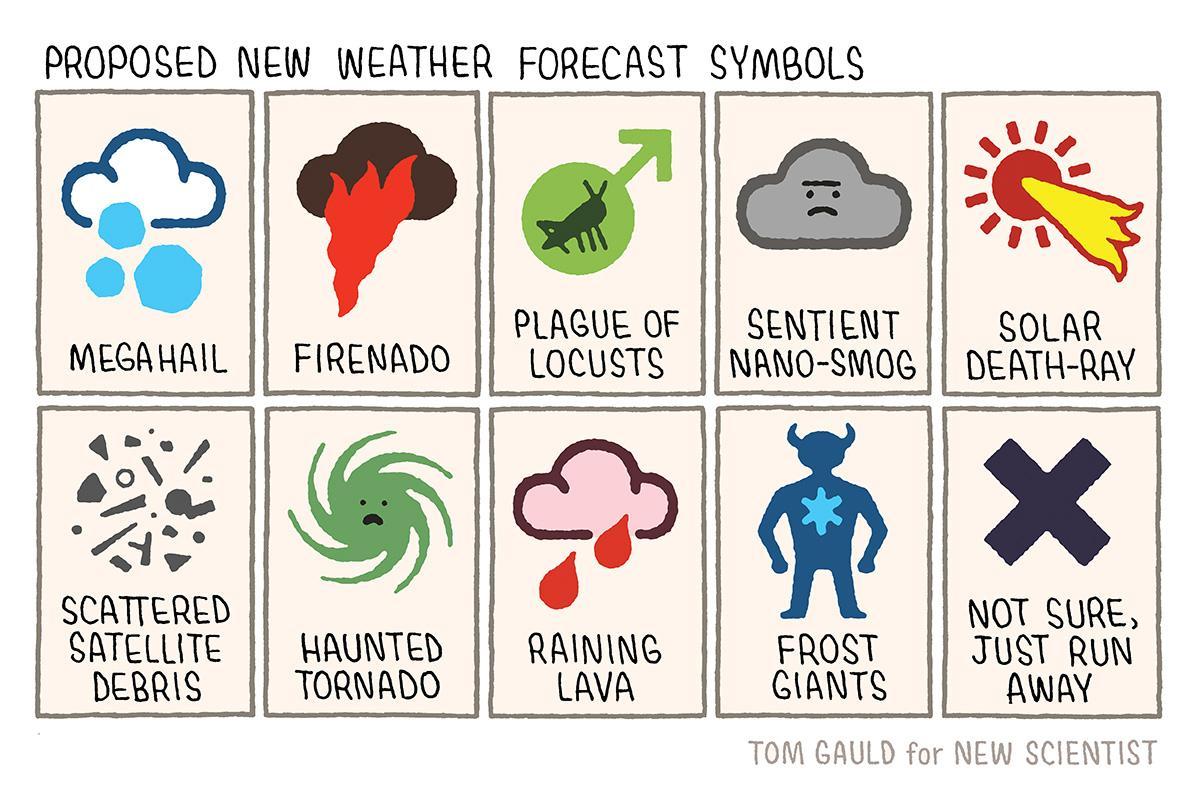
We are bombarded at this time of the year by journalese hyperbole –  the threat of thundersnow, the imminent arrival of The Beast from the East, the Siberian blast or even Snowmageddon. In January 2021 the UK press passed on warnings from the Met Office of  a SSW – a Sudden Stratospheric Warming event, caused by a reversal in the direction of polar winds: at the end of November an Arctic Shot –  a band of intense cold and high winds moving south and east – was announced. The need for Brits to try and keep abreast of their capricious and wayward climate changes, coupled with our love of flippancy and understatement has thrown up a number of quaint and folksy expressions treating the notion of ‘bloody freezing’, some of which risk leaving foreigners at a loss.

Image result for potatoes in the mould

‘It’s a bit taters out there, I can tell you.’ Can still be heard, as I related in my Dictionary of Slang, in the ‘respectable jocular speech’ of older people, though it’s a shortening of the archaic Cockney rhyming slang ‘taters in the mold’ as rhyme for cold, originally describing not potatoes in a cooking tray, as I long thought, but potatoes lying in bed of loose earth (the ‘mold’) ready for harvesting. From a similar age-group and given the notoriously bad insulation of British buildings, you might still hear ‘There’s a terrible George Raft in here!’, the rhyme for draught borrowing the name of the Hollywood actor of the 1940s, famous for his stylish tough-guy roles on and off screen.

Image result for george Raft

More modern colloquialisms for ‘cold’ are arctic and Baltic, the latter sounding like a slightly rude double entendre. Common in Scotland, it might just reference the cold weather systems that sweep towards the UK from that region, but since the 1990s has been heard on US campuses too, and in Northern Irish slang where it means both freezing and fashionably ‘cool’ or ‘chilled.’ More obscure is brick as adjective for chilly, cold, freezing, heard in American English, where the better known cold as a witch’s tit and colder than a well-digger’s ass originated.

Image result for three brass monkeys

On being met by a blast of freezing air the expression, or exclamation, brass monkeys is entirely appropriate. Baffled hearers will likely be told that this is a shortening of the vulgar expression ‘cold enough to freeze the balls off a brass monkey’ and, if their informer is better informed, that the brass monkeys in question were the racks of cannonballs stored on the decks of warships. This is, though, almost certainly a false, folk etymology. A more likely source is that novelty brass monkeys were sold in sets of three as desk or mantelpiece decorations from Victorian times. Each monkey’s hands were clasped to hide a part of the body and in some cases one was covering his – or her – genital area.*

Another very British way of understating the intense, unbearable cold is ‘it’s rather parky isn’t it.’ The word has been used, particularly in middle-class speech since before the First World War, but its origin remains obscure. It might be a dialect pronunciation of ‘perky’ in the sense of sharp and fresh, or from the word ‘park’ as used by gamekeepers to mean ‘(the cold) outdoors’. Nowadays in lighthearted family conversation it’s sometimes elaborated to parquet-flooring or Parkinson – the name of a well-known elderly TV presenter. The more emphatic perishing used to be rendered by Peregrine Worsthorne, the name of a journalist cruelly nicknamed ‘Perishing Worthless’ by Private Eye magazine. @the TuesdayMan on Twitter tells us that it’s Perez de Cuellar in his household.

Image result for freezing weather

Out in the frozen fields, away from the southern conurbations, another old dialect term still flourishes. Nesh can mean cold, or weak and susceptible to cold (hence also cowardly or contemptible) and still crops up in northern conversations. In Old English it was hnesce, weak or infirm and may derive ultimately from a Proto-IndoEuropean word for scrape or scratch. In the Potteries district  in Staffordshire they still use starvin’ to mean feeling cold, and my friend and colleague Jonathon Green reminds me that the English Dialect Dictionary also lists as synonyms for chilly airish, chillery, chilpy, coldrife, cuthrie, dead, lash, oorie, rear, snelly and urly. From Grimsby John Mooney reports a local usage is ‘it’s a bit hunch, usually with a dropped aitch, meaning really cold’ while @fairfaaye on Twitter contributes an Ulster Scots expression: founthered (also foundered): meaning ‘chilled to the bone’; as in ‘thon day would founther ye’, I’m founthered wi tha caul’ or ‘he got a wile founther’. From Old Scots fundy, to suffer a chill, originally Old French enfondre, to be chilled.

Prompted by the breakdown of my central heating system I reposted all this on 22 January 2020 and The English Voice Bank on Twitter has responded with some new cold weather terms from the British Library’s Evolving English WordBank. One, recorded in Hull, is nithered, another is thanda,  ‘a wonderful example of Punjabi-English code-switching supplied by a contributor from the West Midlands’. From Derby comes an example of rhyming slang:

https://blogs.bl.uk/sound-and-vision/2019/01/recording-of-the-week-its-a-bit-derby.html

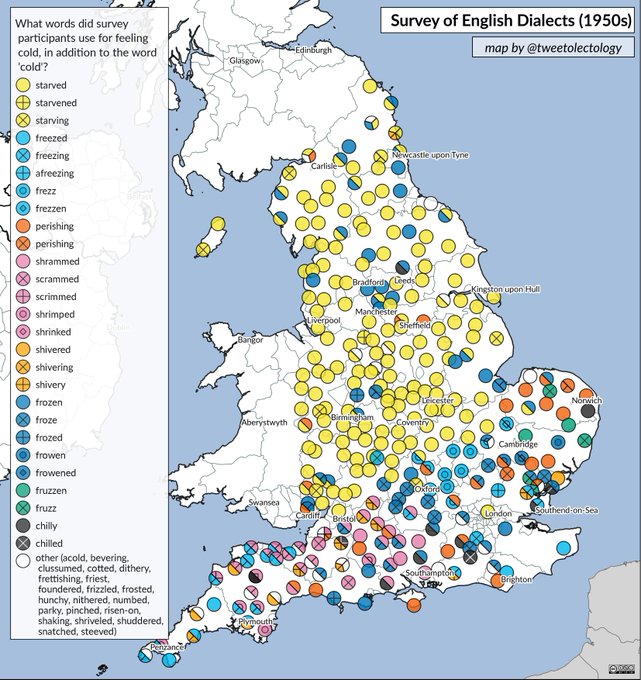
In September 2020, as an Indian summer receded, @Tweetolectology posted this reminder:

Image

* In April 2021 Angela White contacted me with more details on the ‘brass monkey’ derivation. I gratefully reproduce her observations here…

In your discussion about ‘brass monkeys’, you dismiss the idea of it relating to naval usage, the brass monkey was a cannon and the ‘tail’ was a lever used to aim the cannon. The same cannons were also referred to as ‘dogs’ and ‘drakes’. This is attested in: “short brass munkeys, alias dogs” from an inventory, ‘The articles of the rendition of Edenburgh-Castle to the Lord Generall Cromwel (1650)’ and “Twenty eight brass monkeys alias dogs” from Flagellum by J Heath (1663). in the 19th century, the phrase ‘cold enough to freeze the tail off a brass monkey’ emerged: “Whew, ain’t it blowing ‘Jehosaphat Bumstead & cold’, it would freeze the tail off of a brass monkey.” from ‘Before the Mast in the Clippers, the diary of Charles Augustus Abbey (1857).
At the same time, a range of other ‘brass monkey’ phrases emerged such as ‘as cheeky as a brass monkey’, ‘talk the leg off a brass monkey’ and ‘hot enough to singe the hair off a brass monkey’ etc. These probably originated from the popularity of brass monkey souvenirs from the Far East which depicted the three wise monkeys. [My Great-grandfather served in the British Army in the Far East in the late 19th century, so he may have brought back such a souvenir.]
In 20th century USA, the phrase changed to the current expression: ” Ernest said ‘It would freeze the balls off a brass monkey – that’s how cold it gets.’ from the notebooks of Thomas Wolfe (1900-1938). From a letter by Zelda Fitzgerald dated 1921, she writes: “This damned place is 18 below zero and I go around thanking God that, anatomically and proverbially speaking, I am safe from the awful fate of the monkey.” which was referred to in ‘The Far Side of Paradise’, a biography of F Scott Fitzgerald by Arthur Mizener (1951). This suggests that the phrase was in common usage by this time.
At the end of January 2022 the BBC report of a weather event in the USA introduced two new terms to its readers and viewers:
‘Experts say the storm will undergo bombogenesis, meaning that colder air is expected to mix with warmer sea air, leading to a swift drop in atmospheric pressure. The process leads to a so-called bomb cyclone.’
In early December 2022 the Daily Mirror specified the 10th of the month as the ‘Exact date weather monster ‘Troll from Trondheim‘ to blanket UK in wintry snow’
Four years later, and an early warning of the return of the Beast from the East:

If you’re familiar with any other slang, dialect or humorous, colourful terms for this season’s weather, please let me know. You will be gratefully credited.

THE REAL WORDS OF THE YEAR – 2018

It has become a tradition for the major dictionary publishers, along with some linguists’ associations, to nominate a ‘word of the year’, a term (or in the case of Oxford’s 2015 crying/laughing emoji a symbol) which supposedly captures the essence of the zeitgeist, and in doing so marks the proposer as someone in tune with the times and with their target audience. The words chosen are rarely actually new, and by the nature of the exercise calculated to provoke disagreement and debate. I have worked with and written about what linguists and anthropologists call ‘cultural keywords’ and have my own ideas on which expressions could be truly emblematic of social change and cultural innovation. The words already nominated by the self-appointed arbiters are discussed at the foot of the page, but here, for what it’s worth, are mine (in order of preference)…


Image result for Artificial intelligence

AI

Yes, strictly speaking it’s two words, but this little initialism looks like a two-letter word and is processed by the brain as a ‘lexeme’ or a single unit of sound and sense. AI, artificial intelligence, is the hottest topic not only in tech-related practices but in fields as (seemingly) diverse as marketing, finance, automotives, medicine and health, education, environmentalism. Zdnet.com has published one of the most useful overviews of AI and its sub-categories and applications:

https://www.zdnet.com/article/what-is-ai-everything-you-need-to-know-about-artificial-intelligence/

Though it is one of the most fashionable and most resonant terms in current conversation, a slogan and a rallying cry as well as a definition, AI is problematic in the same way as two other recent contenders for word-of the moment, CRYPTO and DIGITAL. The former is shorthand for all the very complex, not to say near-incomprehensible elements that have accompanied the invention of crypto-currencies – bitcoins and blockchains in particular. These advances have yet to prove their worth for most ordinary consumers who will often be bemused by new terminology that seems to be traded among experts somewhere beyond their grasp or their reach. In the same way for the last few years ‘digital’ has been a mantra evoking the unstoppable influence of new electronic media, (related SOCIAL was a strong candidate for buzzword of 2017). Digital’s over-use by overexcited marketing professionals, would-be thought-leaders and influencers has been inspiring mockery since 2016, as in the spoof article in the Daily Mash: https://www.thedailymash.co.uk/news/business/nobody-knows-what-digital-supposed-to-mean-20160614109525

To put it almost as crudely as the Daily Mash does, there’s a sense in which almost no layperson knows, or can know fully, what Digital, Crypto and AI really mean, and the same goes for the expressions derived from them – ‘deep learning’ comes to mind. Their power derives from their novelty and their ability to evoke a techutopian future happening now. The phrase artificial intelligence was first employed in 1956 and its abbreviated form has been used by insiders since at least the early 2000s, but it is only now that it, and the concepts it embodies, are coming into their own.


Image result for kimberle crenshaw

INTERSECTIONALITY

At first sight just another over-syllabled buzzword escaping from the confines of academic theory (‘performativity’, ‘superdiversity’ and ‘dimensionality’ are recent examples) into highbrow conversation, intersectionality is actually an important addition to the lexicon of identity studies. It was coined as long ago as 1989 by Kimberlé Crenshaw, a civil rights activist and legal scholar who wrote that traditional feminist ideas and anti-racist policies exclude black women because they face overlapping discrimination that is unique to them.  The word took 26 years to make it into the OED and is still unfamiliar to many, but during 2018 has featured in more and more debates on diversity and discrimination, marking the realisation that, for BAME women and for other marginalised groups, the complexities of oppression and inequality occur in a matrix that incorporates not only gender and ethnicity but such factors as age, sexuality and social class. There are each year a few forbiddingly formal or offputtingly technical expressions that do deserve to cross over into mainstream use. This I think is one of them and no journalist, educationalist, politician or concerned citizen should be unaware of it.

A bad-tempered take on intersectionality as buzzword was provided last year by https://www.theguardian.com/world/2017/sep/30/intersectional-feminism-jargon


Image result for civility politics

CIVILITY

I was intrigued by the sudden appearance (sudden at least by my understanding) earlier this year – its online lookups spiked in June – of a decorous, dignified term in the midst of very undecorous, undignified public debate. This old latinate word’s denotations and connotations were in complete contrast with the ‘skunked terms’ and toxic terminology that I had collected elsewhere on this site. In fact, as is often the case, this word of the moment emerged from a longer tradition, but one largely unknown hitherto outside the US. Its proposer was Professor P.M Forni, who sadly died a couple of weeks ago. In 1997, together with colleagues he established the Johns Hopkins Civility Project — now known as the Civility Initiative — a collaboration of academic disciplines that addressed the significance of civility and manners in modern life. His ideas were seized upon by commentators on this year’s events in the US, with some asserting that the civil rights protests of the past were indeed more civil than today’s rancorous exchanges. Democrat Nancy Pelosi denounced Donald Trump’s ‘daily lack of civility’ but also criticised liberal opponents’ attacks on him and his constituency. Others pointed out that polite debate alone had never prevailed in the struggles against bigotry and violence and that civility was an inadequate, irrelevant response. Cynics inserted their definitions: ‘civility’ = treating white people with respect; ‘political correctness’ = treating everybody else with respect…which prompts the thought that perhaps, in recognition of realities on both sides of the Atlantic, it’s really ‘incivility’ that should be my word of the year.

Image result for keywords

Here, in the Economist, is the ‘Johnson’ column’s perceptive analysis of those other nominations for 2018’s word of the year:

https://www.economist.com/books-and-arts/2018/12/08/the-meaning-of-the-words-of-the-year

While US lexicographer Kory Stamper provides the inside story on the American choices:

https://www.bostonglobe.com/ideas/2018/12/18/language-nerds-worked-really-hard-that-words-year-list/wJgdhIMAQK7xcBvlc2iHOL/story.html?s_camp=bostonglobe:social:sharetools:twitter

Lynne Murphy‘s annual US to UK export/import of the year:

https://separatedbyacommonlanguage.blogspot.com/2018/12/2018-us-to-uk-word-of-year-mainstream.html

And her UK to US counterpart:

https://separatedbyacommonlanguage.blogspot.com/2018/12/2018-uk-to-us-word-of-year-whilst.html

In the New Year the American Dialect Society announced its own word of 2018, a disturbing euphemism employed by the Trump regime and a candidate for my glossary of toxic terminology (see elsewhere on this site):

“Tender-age shelter” is 2018 American Dialect Society word of the year

And from the militantly millennial LinguaBishes, some excellent examples of millennial/Generation Z terms of 2018:

2018 Words of the Year


In October 2019 David Shariatmadari in the Guardian gets his preferences in early:

https://www.theguardian.com/science/2019/oct/14/cancelled-for-sadfishing-the-top-10-words-of-2019


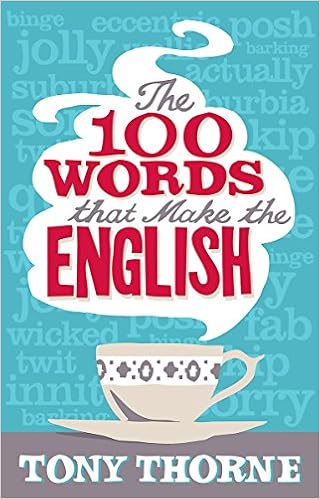
…and, FWIW, I like to think that my own collection of cultural keywords, seeking to define the essence of Englishness back in 2011, is still relevant today:

Image result for the 100 words that make the english tony thorne

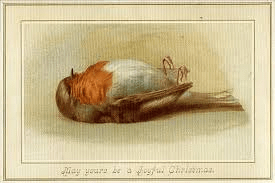
CHRISTMAS, ON THE CARDS

Image result for christmas cards traditional display

‘I am a poor man, but I would gladly give ten shillings
To find out who sent me the insulting Christmas card 
I received this morning.’

George Grossmith – The Diary of a Nobody

The tradition of sending Christmas cards by post has declined, though in a 2017 survey British respondents said they still preferred paper to texts or emails, while self-styled experts on etiquette dismiss the electronic ‘card’ as vulgar. Most of the cards I receive now come from charities soliciting donations or estate agents promoting retirement homes, nevertheless…

Sole example of a proto-Christmas card, a Rosicrucian manuscript on folded paper, decorated with a rose-sceptre, was presented to King James VI of Scotland and I of England at Christmas in 1611. It was inscribed as follows…

‘…a gesture of joyful celebration of the Birthday of the Lord, in most joy and fortune, we enter into the new auspicious year 1612. Dedicated and consecrated with humble service and submission, from Michael Maier, German, Count Palatine, Doctor of Medicine and Philosophy, Knight and Poet Laureate…’

Joy comes via Middle English from Old French joie, which could mean joy or jewel, itself from Latin gaudia, gaudium, from Proto-IndoEuropean *geh₂widéh₁yeti, from the verb *geh₂u , to rejoice.

Glad tidings combines the Old English word for bright or cheerful, from an Old Germanic term for smooth, with the Old English and Old Norse words for happenings, occurrences, tidung and  tiðendi , which derive ultimately from the IndoEuropean root *di-ti, meaning divide, as into time-frames. The -tide of Christmastide or Yuletide has the same source.

Noel was nowel in Middle English, an anglicisation of French noël, from Latin natalis, shorthand for birthday. Latin nātīvitās, birth, became Old English Nātiuiteð, one of the earliest names for Christmas, and gives us modern nativity.

A particular favourite, thought for several centuries to describe an essence of Englishness, is of course Merry

  1. joyous, cheery, gleeful, of good spirit
  2. mirthful, convivial, affected by gaiety, as by festive spirit
  3. Colloq tiddly, squiffy, somewhat inebriated, as if by seasonal spirits

ME merye, from OE myrige, delightful, pleasing, sweet, from Proto-Germanic *murg(i)jaz, fleeting, from Proto-IndoEuropean *mreg(h)us,short

  • make merry behave in a frolicsome, boisterous, unconstrained manner, eg dad-dancing, shattering wine-glasses during toasts, communal bellowing of sentimental songs, flirting at the office party (syn: ‘attempting to pull a cracker’) etc.
  • Slang merry-bout an act of copulation (1780) merry-got a bastard (1785) merry-legs a harlot (19C) merry old soul an arsehole (20C rhyming)

POOR GUY – a Fawkesian miscellany

Tonight is Bonfire Night, Firework Night, nowadays usurped by Hallowe’en as the most popular celebration of autumn-to-winter transition, but still a folk festival of note. Many people are aware that the fires and fireworks commemorate the failed gunpowder plot of 1605, but few know more than the name of the terrorist whose effigy we burn on Guy Fawkes night.

Image result for gunpowder plot

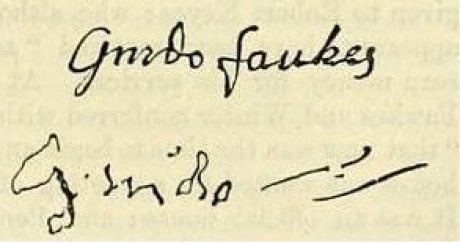
The catholic conspirator Guy Fawkes, who came from from Yorkshire, spoke French when captured and signed himself  ‘Guido’, using the Italian or Spanish form of the name (his autograph, before and after torture had been applied, is below). He may have begun the practice when fighting in the Spanish army in the Low Countries, although Italian names were considered fashionable and were sometimes adopted by English gallants. Guy is the French form of old Germanic Wido, either meaning ‘dweller at the forest margin’ or a nickname from ‘wide’ as bodily description or location (an open, flat region).

Image result for guy fawkes signature

The English surname Fawkes, also archaically spelled Fauks, Faukes and Fakes, derives from the German name or nickname Falco which probably originally referred to a person thought to resemble a falcon. Falco became Faulques in Norman French and was adopted after the Conquest, the first attestation coming from 1221.

While in London preparing to blow up parliament, Fawkes posed as a servant in the entourage of Thomas Percy, a fellow conspirator who had access to the parliamentary precincts. Fawkes’ less than imaginative choice of alias was ‘John Johnson.’

Image result for gunpowder plot

Guy’s wide-brimmed headgear, crudely imitated on effigies and now caricatured as a ‘V for Vendetta’ hat, is correctly termed a ‘sugarloaf hat’, since its high, flat-topped crown resembled the sugarloafs imported from the colonies in the Stuart period.

Isla Guy Fawkes, or Guy Fawkes Island is actually two small uninhabited islands and two smaller rocks lying in the Pacific Ocean off the Galápagos Islands which are owned by Ecuador. The name might have been given after a fiery volcanic event had been witnessed, but was more probably bestowed by buccaneers who viewed Guy as a hero and one of their own.

Image result for Bonfire night

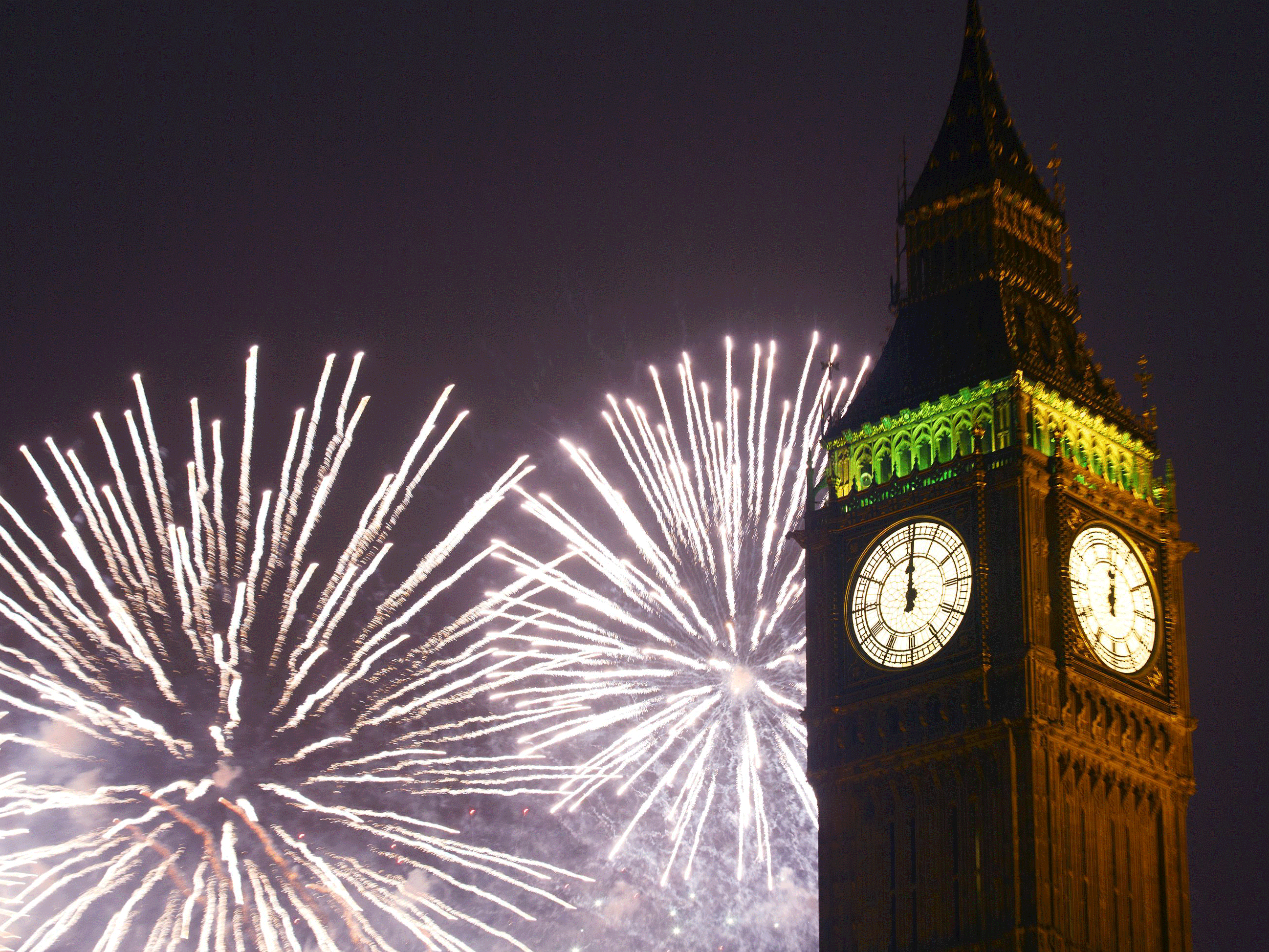
Fireworks did not just take off (pun intended) in England after the Gunpowder Plot. They first became popular in the reign of Henry VII. Queen Elizabeth I loved them and appointed a ‘Firemaster of England’ to arrange displays.

Image result for Bonfire night

Bonfire (first recorded in 1483) is not, as Dr Johnson and others have claimed, French ‘bon feu’, (French would be ‘feu de joie’, ‘grand feu’) but ‘bone-fire’, a collection of burning bones or an open fireplace or outdoor pyre into which bones were thrown, after feasting for instance. By 1581 the word was also being used to refer to a fire in which heretics were burnt. Celebratory fires were ordered to be lit each year to commemorate the failed conspiracy against the Crown, but Guy’s effigy was only placed upon them from the1700s.

Guy himself was not executed by burning, a fate reserved for those found guilty of heresy.  He and the other condemned plotters were indeed Catholic dissidents, but the state wanted to avoid civil disturbances so accused them of treason, for which the punishment was hanging, drawing and quartering, carried out at length and in front of spectators. Fawkes managed to cheat the hangman by falling or throwing himself from the ladder leading to the scaffold, breaking his neck.

Guy Fawkes’s first name lived on, coming to mean by 1806 his effigy, then a grotesquely or poorly dressed person or eccentric. By extension a verb form arose (first attested in 1872) meaning to hold (someone) to ridicule. At the end of the 19th century in American colloquial usage the word had come to mean simply ‘a fellow’, from which we get our modern all-purpose, sometimes gender-neutral ‘guy’.

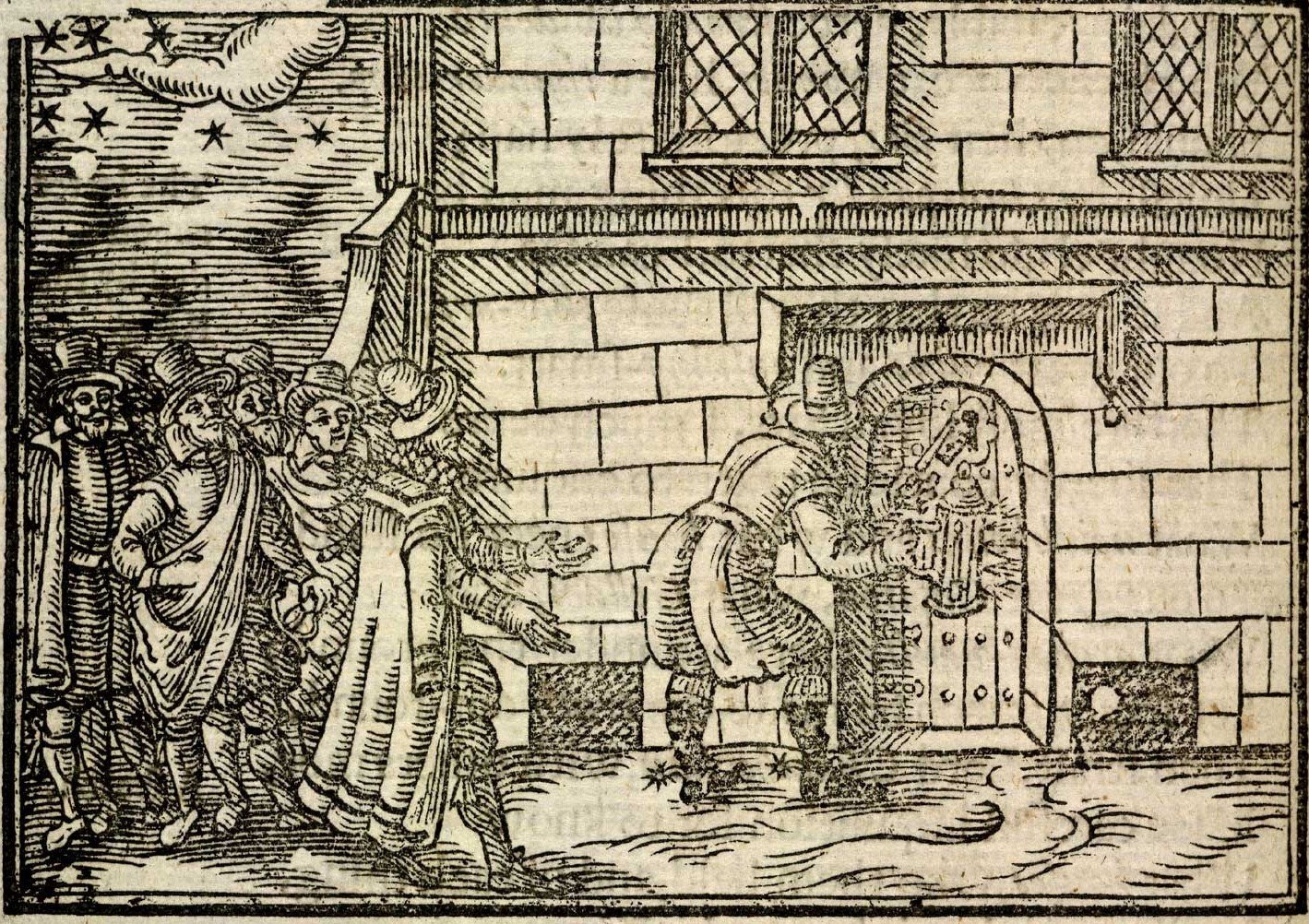
Illustration from 'Mischeefes mysterie London'

THE VAMPIRE AND ITS LINEAGE

Related image


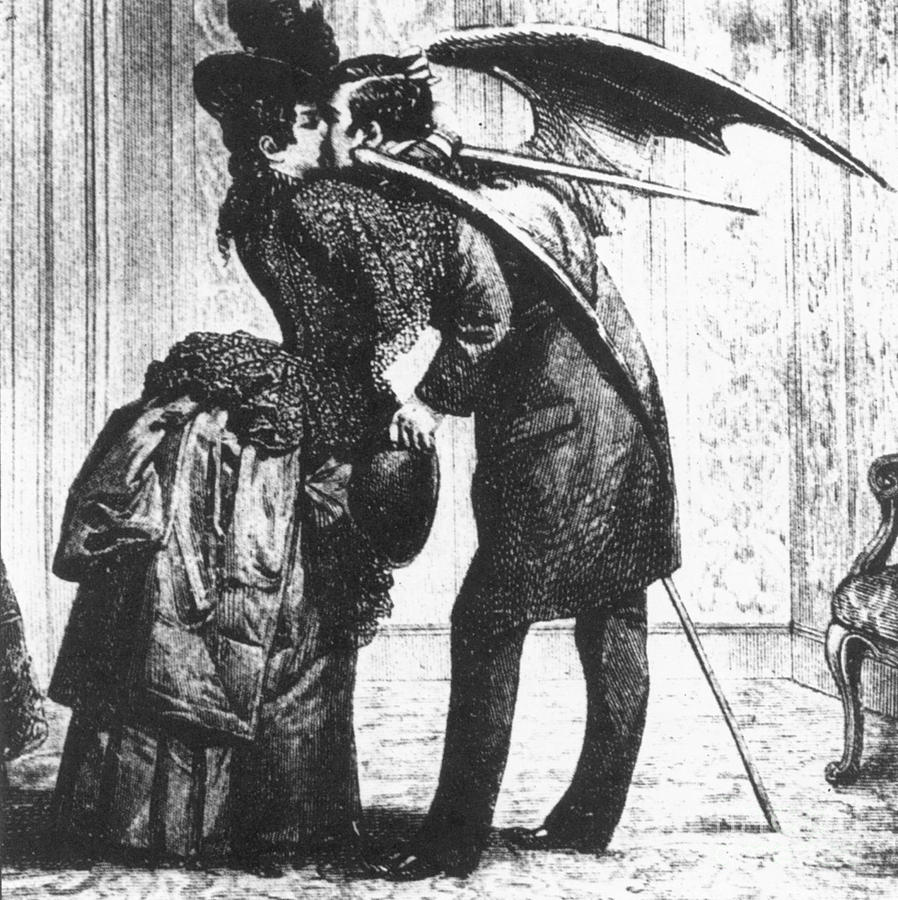
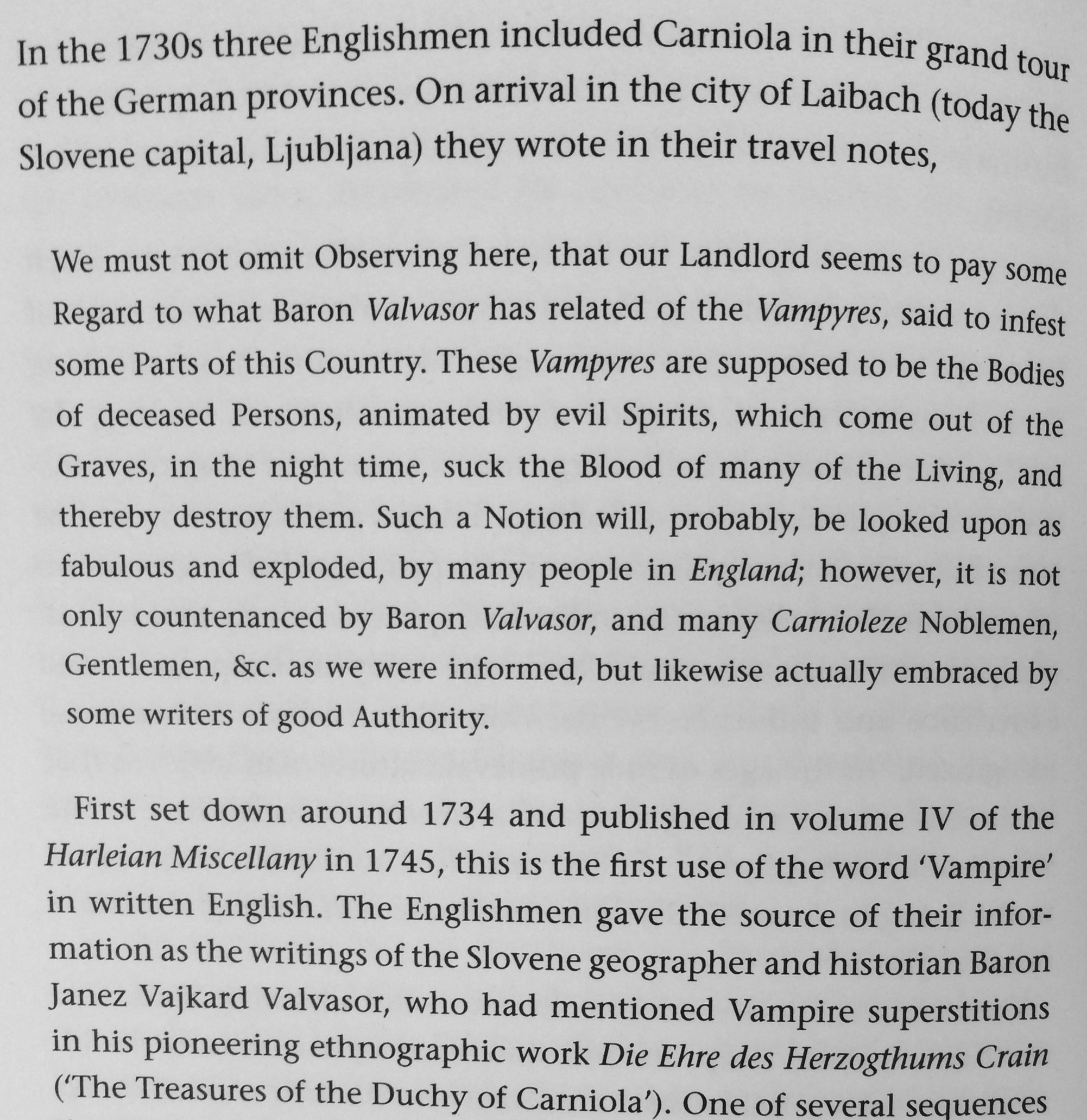
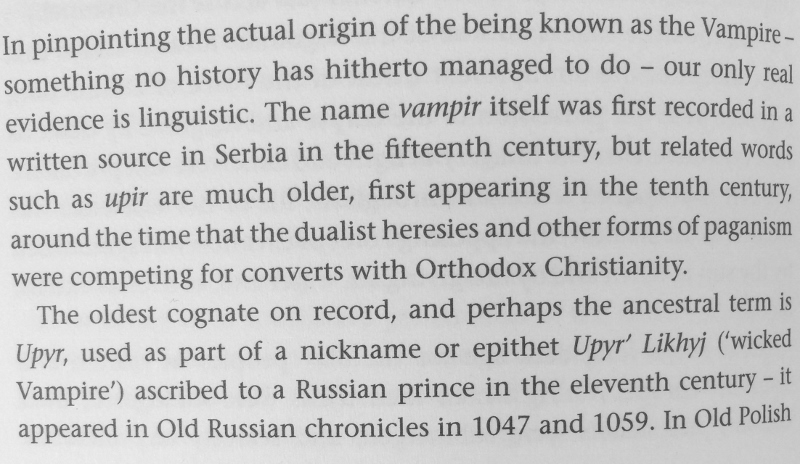
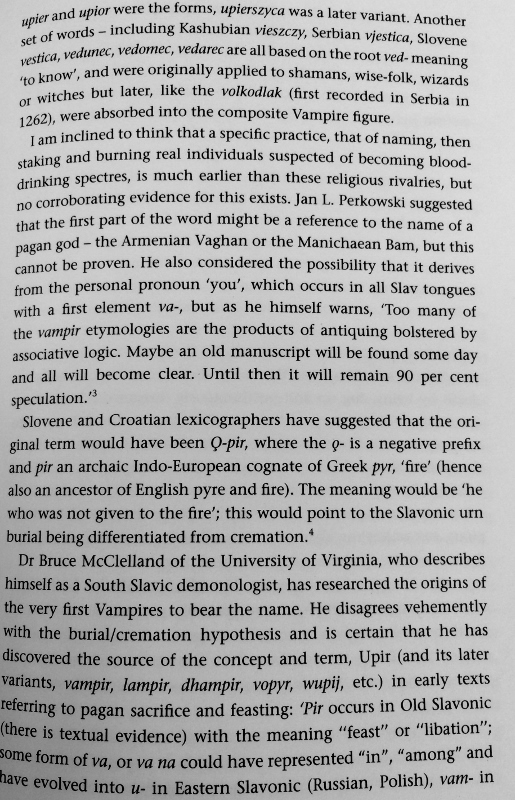
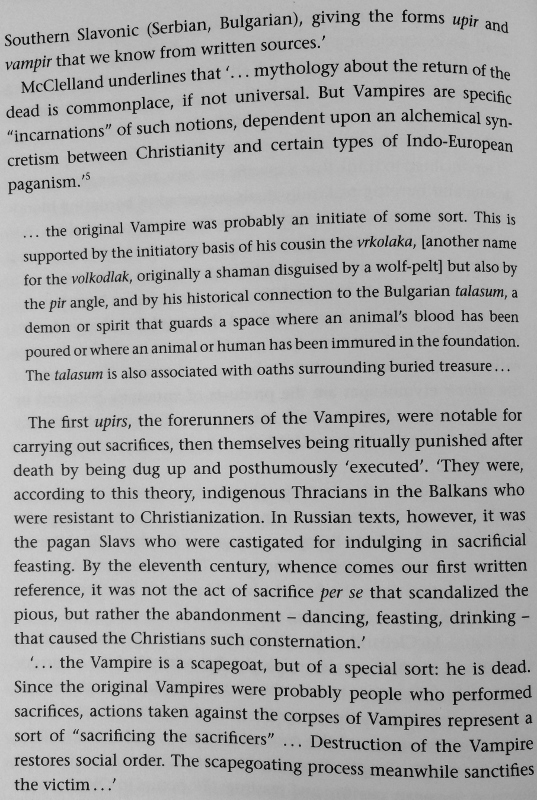
The history of the Vampire – the being and the word that names it – is fascinatingly convoluted. We know that the word came to us in the 18th century via German from Serbian vampir (вампир) but its ultimate origins and meaning are complex. Here, in fragments from a quite old – if not truly ancient –  publication are some thoughts on the enduring legend of the thirsty undead…


IMG_3570


IMG_3567 (800x464)

IMG_3566 (515x800)

IMG_3568 (537x800)


In fact the figure of the bloodsucking or life-draining revenant is recurrent and attested in almost all prehistoric and most early modern cultures. There are examples from China (so-called ‘hungry ghosts’), Malaysia, the Americas, and, most interestingly from a linguistic point-of-view, the Kipchaks and Karachays of Caucasia and their relatives, the Tatars, and other Turkic-speaking peoples of Anatolia. Their languages give us yet another possible ancestor for the many names, culminating in today’s ‘vampire’, listed above. In modern Turkish obur denotes a glutton or greedy person, but in older folklore the Obur (Tatar Ubyr) was a bloodsucking night-demon that could shapeshift into a cat or dog or a beautiful woman. Here, then, is another possible – and rather plausible – antecedent for later slavonic upirs or vampirs.


Image result for Turkish obur vampire


Vampire-like creatures were described, too, in classical writings, as Sententiae Antiquae relates here:

Ancient Greek Vampires 1: Empousa


The ‘old book’ extracts above are from my own 1999 title, Children of the Night:

AT WAR WITH ‘ACRONYMS’ – TMI via TLA


Maria Hill: What does S.H.I.E.L.D. stand for, Agent Ward?
Grant Ward: Strategic Homeland Intervention, Enforcement and Logistics Division.
Maria Hill: And what does that mean to you?
Grant Ward: It means someone really wanted our initials to spell out “shield.”

— Agents of S.H.I.E.L.D. pilot episode


Stuart Andrew  MP


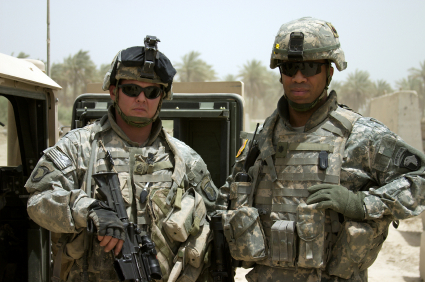
Two days ago the UK press reported that the Minister for Defence Procurement, Welsh Conservative MP Stuart Andrew, had declared war. On acronyms. Confounded and irritated by the number of these abbreviations circulating in his office and beyond, he ordered staff to avoid them at all costs. ‘He got fed up with people coming into his office and reeling off a list of letters and assuming he knew what they were referring to,’ a source close to the minister said. ‘I thought DVD had something to do with movies!’ the hapless minister (who has never served in the armed forces) had quipped at a meeting four weeks earlier. DVD was the name of the event at which he was speaking. It stands for ‘defence vehicle dynamics’.

Image result for military acronyms word cloud

The flustered politician may have a point – one of the first documents to cross his desk was the latest 402-page guidebook to terminology used in the MOD (Ministry of Defence)*, referencing such titles as AARADCOM – the Army Armament Research and Development Command, and explaining that the initials CCU, for instance, could refer to

Central Control Unit
Certificate of Clearance for Use (for software)
Cockpit Control Unit
Combat Control Unit
Common Control Unit
Communication Control Unit
Computer Crime Unit

In vain did an unnamed MOD spokesperson respond: ‘These terms are used between subject matter experts and not with the general public.’


Image result for military acronyms


‘Acronym’ entered English in 1940, as a translation of German akronym, first attested in 1921. It is composed of acro- from Greek akron (tip or top) and the English combining form  -onym, from Greek onoma, name. It denotes a word made up of initials or parts of other words, and should be pronounced as a word in its own right. It is not the same as an ‘initialism’ such as BBC or VIP or PC, where the letters are pronounced separately (the minister’s DVD falls into this category), or an abbreviation such as etc. or  lb (pound) where the relationship between form and sound is not straightforward. So NATO, AWOL, laser (for ‘light amplification by simulated emission of radiation’, radar (‘radio detection and ranging’) are acronyms: ASAP (‘as soon as possible’) is an acronym if said like a word, BOGOF (‘buy one, get one free’) too, but not when said as separated letters.

Some more modern three-letter combinations are genuine acronyms – SIM (card) from ‘subscriber identity module’, GIF (‘ graphics interchange format’), however you pronounce it,  and PIN (‘personal information number’) among them – but those familiar items of business-speak, ROI, SEO, B2B, SME – and now AI – are not, and nor, ironically is the disapproving or jokey shorthand TLA, for ‘three-letter acronym’ itself.

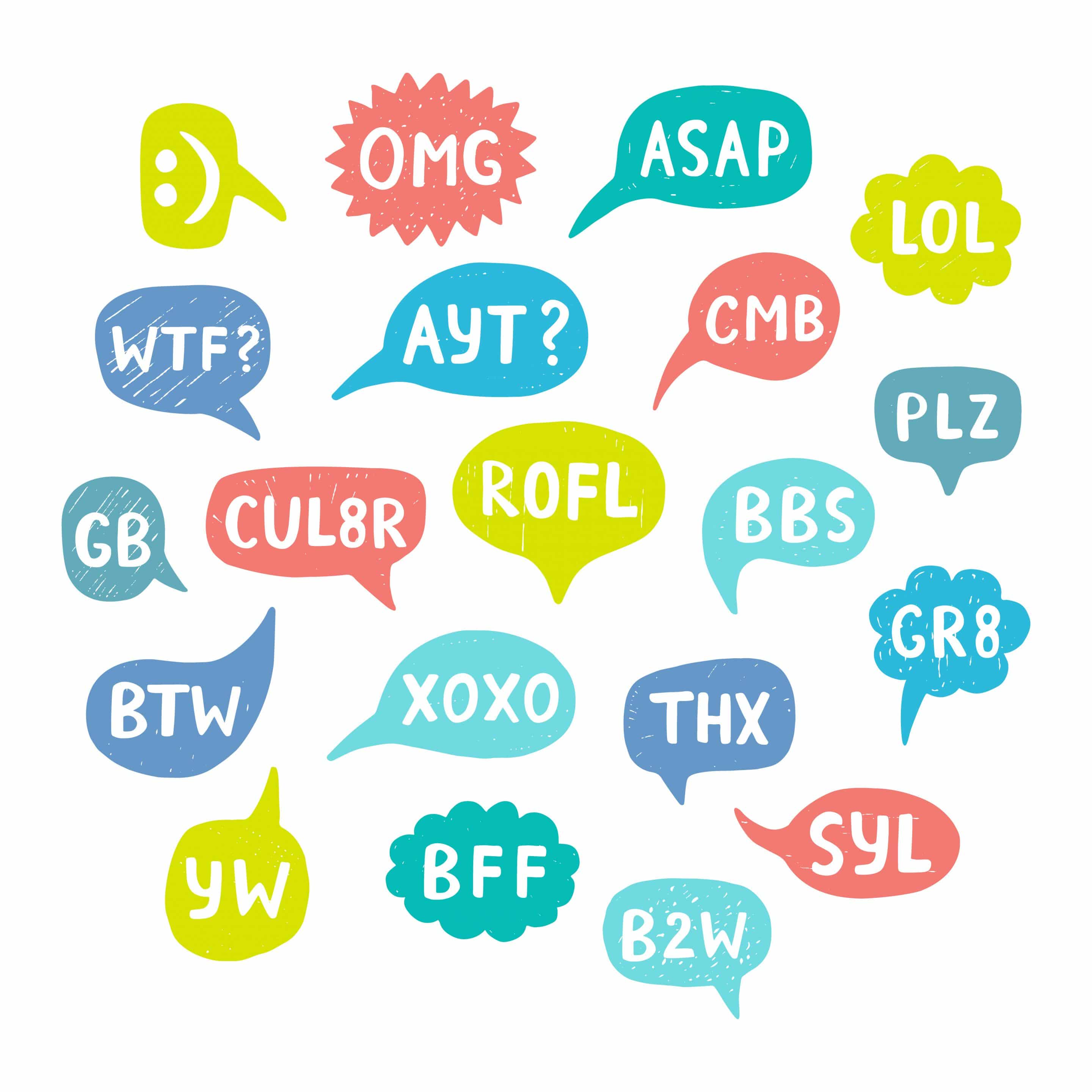
Lighthearted coinages SNAFU (‘situation normal, all fouled up’) or BOHICA (the oppressed officeworker’s injunction to ‘bend over, here it comes again’) are acronyms, but only a few of the so-called acronyms used in messaging and on social media really qualify: BTW, IDK, IMHO, SMH, TL;DR and the rest are strictly speaking initialisms. YOLO, LOL and ROFL, providing they are uttered in full, are among the exceptions.

The reason for the proliferation of acronyms, initialisms and abbreviations, and the justification for their use are obvious. In an accelerated culture they save us from having to – literally – spell out what we have to say or write and at the same time impart an idea of novelty, urgency and dynamism. As my correspondent Graham Guest observed on Twitter in a spoof response to Stuart Andrew’s protestations: ‘Minister, my radio detection and ranging equipment has just picked up a group of sea, air, lands wearing self-contained underwater breathing apparatus diving gear.’

Acronyms are very often controversial, in the same way as jargon and slang, in that they mystify and intimidate those who aren’t familiar with them, and seem to confer prestige and privilege on those who know how to use them. They can reinforce an insider/outsider imbalance in power in the workplace, the seminar –  or the ministerial briefing. A very simple test, though, is to try and replace the offending acronym with its full translation or explanation and see if the resulting sequence of speech, or text, sounds or looks viable. If it’s necessary to introduce a new abbreviated form, it must be glossed  (translated into simple language) the first time it is used, and, as with all insider codes, should only be employed in a context where interlocutors, partners, stakeholders, clients or audiences will readily understand it.

In April 2019 the BBC tried to forestall mockery of the acronyms peppering the script of its Line of Duty series by posting this synopsis:

‘A UCO is embedded in an OCG who was deployed as a CHIS but is AWOL. The SIO, who loves a REG 15, and his DI and DS from AC-12 are investigating because of the ED905 HGV ambush which the OCG set up as an RTC. They’re hunting H. Let’s go.’


Image result for acronyms


You can hear me chatting about the latest acronym wars on BBC5Live radio (the sequence begins at 47 minutes 26 seconds):

https://www.bbc.co.uk/radio/play/m0000pvp


As a footnote, my book of buzzwords and jargon, first published in 2007, contains examples of acronyms and abbreviations, many still in use, together with observations on the status conferred by mastering business-speak…


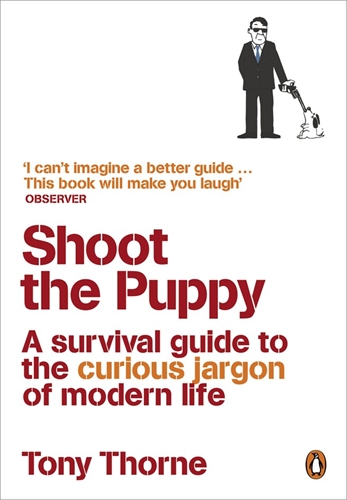
Shoot the Puppy


*An earlier version of it is here if you want to consult it:

Click to access acronyms_and_abbreviations_dec08.pdf

AUTUMN FALLS TODAY

Know’st thou not at the fall of the leaf
How the soul feels like a dried sheaf
Bound up at length for harvesting,

Image result for autumn

Today, the 22nd day of September (beginning, strictly speaking, at 11.44 am), is for us the Autumn or Autumnal Equinox. For our ancestors, speaking Old English, or ‘Anglo-Saxon,’ the time of emniht or efenniht ‘even-night’, occurs while Hāligmonath, the ‘holy month’ of September, so called because thanksgiving ceremonies for the grain harvest were held, is giving way way to Winterfylleth, the ‘winter full-moon’. In dark-age chronology the new month and the new season began with the first full moon of October. Around this time daylight and darkness are of roughly the same duration (Latin aequi, equal; nox, night), though only exactly at ‘Equilux’ (lux is light in Latin) which falls this year on September 28.

The christian church ignores the equinox, although Michaelmas, held on September 29th, may have been intended to wean pagans from their late-Summer and early-Autumn fertility rites. Modern Wiccans and new age pagans celebrate the feast of Mabon, or Second Harvest, at the Autumn equinox. Some prefer the Irish Gaelic name for this month, Mea’n Fo’mhair, which translates literally as ‘middle harvest’. Festivities may last for a week and involve the venerating and eating of fruits such as apples, blackberries, and nuts. Though derived from supposedly ancient Celtic myth, the acorn and chestnut-strewn altars, the overflowing horns-of-plenty and the russet-coloured robes on display are almost certainly modern inventions, never associated for sure with any historical or supernatural ‘Mabon.’

Image result for god maponos

There was indeed a god of youth in the Celtic pantheon whose name Maponos derived from mapos, a Gaulish word for son or boy, the root mab also denoting son in Welsh, Cornish and Breton. Both come from Proto-Indo European makʷos, son, (which gives us the Mac and Mc used in Scottish and Irish surnames). The figure of Maponos was worshipped by Gallo-Romans on the continent and in Britain who identified him with the Roman god Apollo. Under the name of Mabon the same mythical youth appears in the Welsh Mabinogion legends and the Arthurian romances, but it is not known when in the year Maponos or Mabon were worshipped (there are two inscriptions on record from the end of August) or what rituals were involved.

Autumn, as is well attested, comes to us via Middle English autumpne, from Old French autompne, itself from Latin autumnus which is said to be adapted from a lost Etruscan or Venetic root autu-, but could equally be formed from Italic au(ct)- meaning dry (the notion of drying leaves and grass, in John Clare’s words; The ground parched and cracked is like overbaked bread…the greensward all wracked...) or Latin auctus, increase (the opposing notion of late fruition and abundance, Blake’s laden with fruit, and stainèd
With the blood of the grape). As a seasonal name Autumn, first heard in England from the 12th century, was only rarely used here before the 16th century, ‘Harvest’ (Old English hærfest from the same root as Latin carpere to pluck, crop) being the term preferred. ‘Fall’, probably a contraction of ‘fall-of-the-leaf’ was an alternative also used in former times in Britain and it was exported to America with settlers in the 17th century.

Above is Keats’ famous ode, with its first, endlessly quoted, line. But let a later author, Emily Dickinson, have (almost) the last word…

Besides the Autumn poets sing
A few prosaic days
A little this side of the snow
And that side of the Haze

In 2021 I talked to US journalist Keira Wingate about autumnal language differences and her article in USA Today is here…

https://eu.usatoday.com/story/news/nation/2021/09/22/autumnal-equinox-summer-fall-autumn/5799271001/

image by Atelier Arabesque

GAMMON – UP AGAINST THE WALL

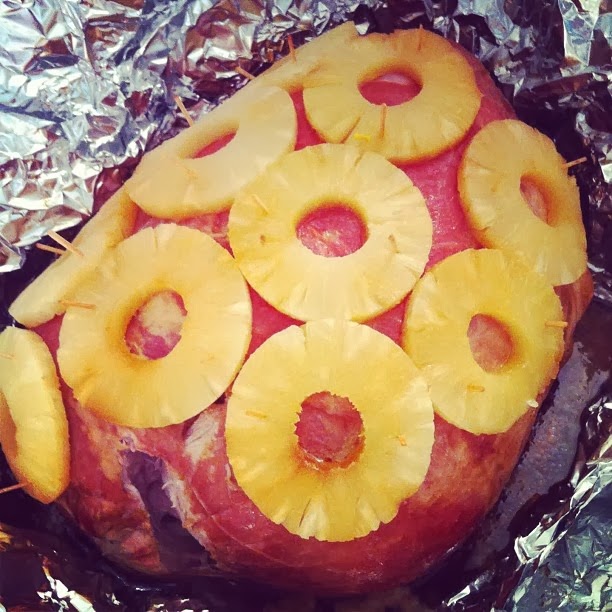
Image result for gammon and pineapple 1970s

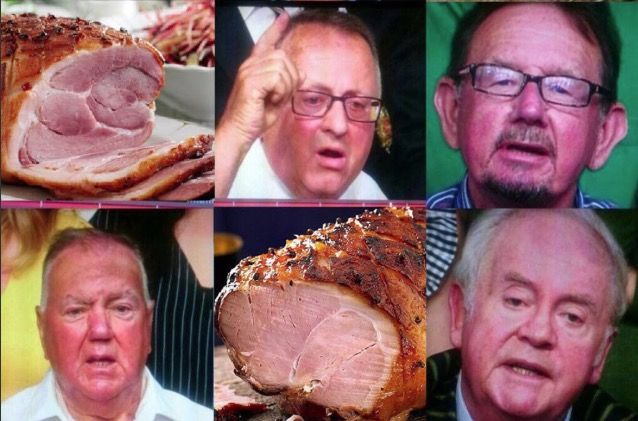
This week, very late in the day, the mainstream UK media and the wider national conversation finally caught up with a social and political slur that had been trending for more than a year already. The insult in question was ‘gammon’, one of only a couple of pejorative labels (the other, slightly more affectionate, being ‘centrist dad’) directed from the left at the right as opposed to the many (‘libtard’, ‘snowflake’, ‘cuck’, etc.) routinely hurled in the other direction.

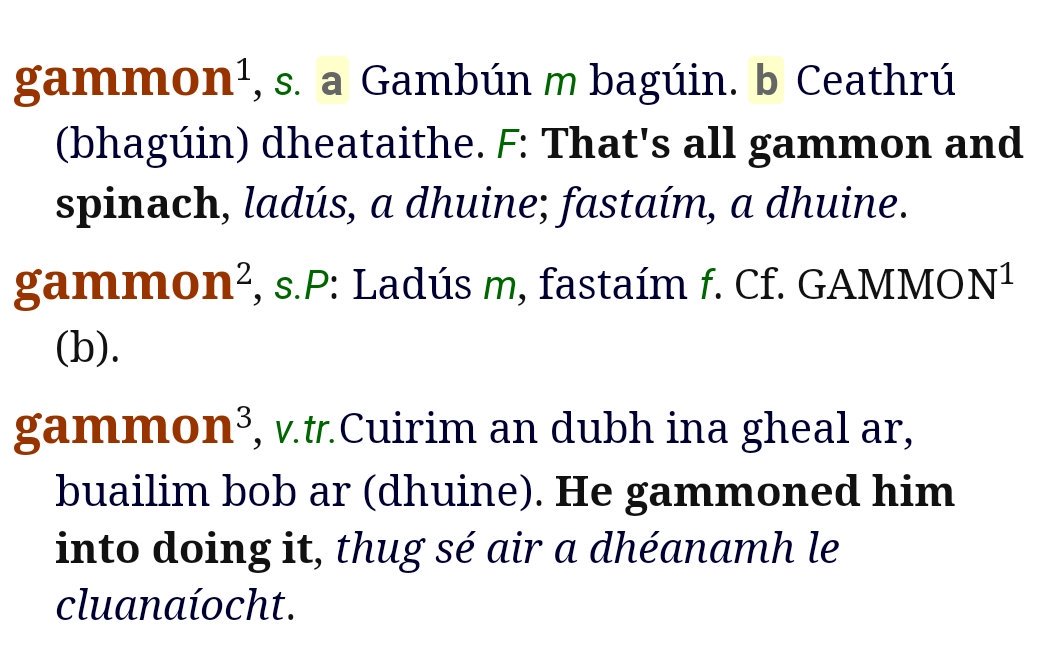
The word itself is British and denotes an orange-coloured side or slice of cooked ham or bacon often proposed as emblematic of the garish-looking, odd-tasting and nutritionally suspect dishes served (warm, with a pineapple garnish) across British tables in the 1970s (when, ironically, ‘gammon rasher’ was rhyming slang for ‘smasher’ in the sense of something superlative). Gammon was adopted from French gambon, from gambe meaning leg, in the 15th century, while backgammon is unrelated and probably comes from an old form of the verb to game.

Following the Times’ , the Express and the New Statesman’s belated discovery of the word Twitter was a-buzz on May 14, first with protests, many seemingly by gammons themselves, at what were alleged to be its racist and classist implications and then with more coherent attempts to unpack its real denotations and connotations.

Someone with the handle ‘Build a wall, line all the nazis up along it’ explained…

‘Gammon isn’t about class, it describes white ppl who spend a lot of their time being pink because they’re so angry being white doesn’t make them special’

Exasperated by ongoing witless misunderstandings, I added my own two-penn’orth…

‘Nothing to do with class, it denotes florid, loud, usually lardy middle-aged ranting bigots. #simples

By midday someone else had discovered a reference in Victorian literature that seemed to anticipate the modern usage…

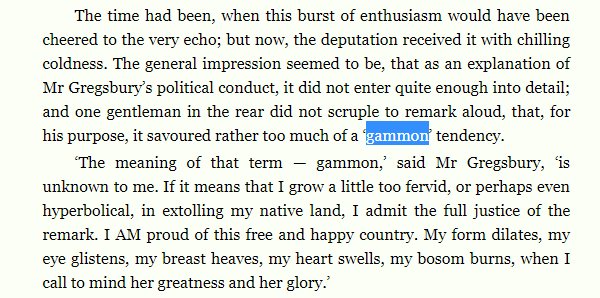
My god, he’s right: @Protooptimism has discovered that Dickens used “gammon tendency” as a political insult in Nicholas Nickleby (1838-9):

It’s not quite clear whether Dickens’ use of the word relates to the slang sense then prevalent in the underworld, of ‘gammon’, verb and noun, to mean (‘to use) the secret, deceitful language of thieves and tricksters’, hence applicable perhaps to jingoism and bluster on the part of a ‘fervid’ middle-aged blowhard. An intriguing correlation with Irish was noted by another commentator…

(And in 2023 Michaela Perske informed me that ‘funnily enough “gammon” or “gamon” is a term used by Aboriginal people pretty much everywhere in Australia that means means ‘to pretend’, ‘be inauthentic’ or used to describe something as pathetic.’)

No linguists paid much attention at the time to the mutation of gammon from a collective term of abuse for a constituency or persuasion to a label applied to the individual members thereof. The BBC, though, carried a good, level-headed history of the expression’s first post- Brexit referendum appearances and its rise to prominence…

http://www.bbc.com/news/blogs-trending-44108080

Urban Dictionary‘s original entry, if you can find it,  could be commended, but it seems subsequently to have been cosmeticised by a gammonista…

https://www.urbandictionary.com/define.php?term=Gammon

By the end of a long day the furore (by now dubbed ‘gammongate’) had somewhat subsided, leaving a few wry observational tweets…

Presume after today, use of a certain type of roasted ham as an insult will be prohibited. Hope there’s a gamnesty on previous usage.’

‘Since the words ‘Tory’ and ‘Whig’ both started as insults, I fully expect British politics to soon be contested between the Gammon Party and the Melt Party.’

‘It’s offensive to call people whose reactionary apoplexy makes them go pink-faced “gammons”. The correct term is “people of choler”.’

And, late news, this, perhaps (but unlikely to be) the last word, again from Twitter, this morning…

JamieJones77‏ @JamieJones77

‘I’m a 55 year old white thinning cropped haired old punker. #Gammon isn’t racist, it perfectly describes the bigoted tossers of my own age group who turn pink when they get angry about their privilege being challenged. G’wan bust yer blood vessels you rancid foaming dinosaurs.’

…Five days on I discovered this, from the originator of the expression himself…

https://www.independent.co.uk/voices/gammon-brexiteers-angry-white-men-middle-age-immigration-a8352141.html

…and, very belatedly indeed, I was reminded of this excellent summary by A-level teacher and language buff Dan Clayton

http://englishlangsfx.blogspot.com/2018/06/telling-porkies-about-gammon.html

Image result for gammon insult

In November this year Collins Dictionaries listed the g-word among their words of the year. In the Guardian Poppy Noor argued that the left should steer clear of such name-calling…

https://www.theguardian.com/commentisfree/2018/nov/07/gammon-playground-insult-words-of-2018

A DRILL DICTIONARY

By their keywords shall thee know them?

Image result for drill music

The latest in a long series of moral panics (the term used by sociologists since the 1970s) exploited by the UK press and now subject of rancorous political debate, the issue of knife-crime and killings by street gangs, mainly in London, is genuinely concerning and is only now receiving the attention and analysis it demands. A side-effect of media interest is that the language used by the gang members and by the music genres that celebrate them is being recorded – haphazardly and not always accurately – for the first time. The musical genre in question is UK Drill, a successor to the ultra-hard-edged Trap Rap (from The Trap, slang nickname for the local area where drugs are dealt) that appeared first in Chicago in the 2000s. Drill (the word can signify shooting but has many other slang senses) has been adopted and adapted by hyperlocal urban communities in the poorer parts of London and, despite their claims, doesn’t just evoke the harsh realities of life on inner-city estates, but often glamorises it and seems to promote an ethos of territoriality, boastful masculinity and murderous retaliatory violence.

Edges Magazine Issue 45 - Is knife ...

So far only very few reporters have managed to penetrate the groups whose members occupy and fiercely defend their microzones, fighting for control, too, of economies based on drug trading. The rappers emerging from the same postcode- or estate-defined enclaves compete and feud electronically, dissing and threatening their rivals in their lyrics – and in a few cases have actually been implicated in killings or woundings on the street.

In May 2018 the Metropolitan Police intensified attempts to ban videos associated with the music genre and the gangs caught up in street violence:

https://www.independent.co.uk/news/uk/crime/drill-music-stabbings-london-youtube-violence-police-knife-crime-gangs-a8373241.html

Since beginning this project I have managed to engage with some members of this subculture and find out more about their values and the way they encode them. In the meantime I have begun to assemble a lexicon of the most significant key terms they use, in a slang which mixes US hiphop argot and Caribbean expressions transposed to or reinvented in London (harking back to the Yardie gang culture of the 1980s). So far just a glossary, my list is far from complete, so please help me add more items if you can, or correct my mistakes. Here is this work in progress as it stands, now updated for March 2025, followed by some relevant links…

125 – scooter

3free (call to free a respected associate or known person)

Active dependable associate

involved in gang activities

Ahk, Akhibrother, friend (from Arabic)

Axeask

Ammcannabis (abbreviation of Amnesia, a potent strain)

Askaripolice (from Arabic and other African languages)

Back outdraw (a weapon)

Baggedcaught by the police

Baggingstabbing in the lower body

Bally, Balibalaclava

Bandoabandoned property

Bandscoloured elastic bands tying batches of cash

Bangerhit, successful song

Bapthe sound of  a shot or gunfire

 – to fire (a gun)

Barslyrics

Battlestrength, competitiveness

Beanhead

(A) beanhonest(ly), truthful(ly)

Beefdispute, feud

Bellsbullets

Bendpatrol(a neighbourhood)

Binned shot

Birded off, birded up  –  imprisoned

Bitesteal

         – copy

Bitzone’s neighbourhood

drugs weighing more than 7 grams

Blamshoot

Blitzraid, attack

Blowleave, escape

‘take off’, achieve career success

Bluntcannabis ‘spliff’

Bonesdead

Booj, bujheroin

Bookie, bukisuspicious

Bora, borerknife

Botty – firearm

Bout itcompetent, skilled, authentic

Boxprison

Boxed, boxed in, boxed upimprisoned

Bozzleader

excellent

Breeze offleave town, disappear

Bruck, brukbroken (down), broke

Bruckshotsawn-off shotgun

Buj – obnoxious person

Bunlight up (a cannabis cigarette)

 – shoot, eliminate

Burnergun

Burstshoot

Cabby – cigarette containing cannabis and cocaine or cannabis and crack mix

Cakecrack or cocaine

Callycannabis

Canprison

Car, cahbecause

Catdrug user and/or drug purchaser

CBOcriminal behaviour order

Cheffed (up)stabbed, killed

Chetemachete

Chingknife

to stab

Chingingchilling and hanging out

stabbing

Civilian non-gang-member, non-combatant

Clapattack, shoot

– steal drugs

Clickshoot

Codes‘postcode areas’, zones where gangs dominate

Cornammunition

Crashraid, invade

shoot

Crashing cornshooting your gun

Cribhome

Crocannabis

Cunchout-of-town locations where drugs can be sold

Cutterknife

Cuttinleaving, running away

mixing or adulterating illicit drugs

Darg, dargie, dawg – male friend, ‘homie’, male active on the street, gang member

Darkheroin

Dashthrow

run (away)

Dasheenrunning away, fleeing

Diligentadmirable, brave, cool

dependable associate

Ding dongdispute, brawl

also dinger, dinga, dingcheap car

Dippedstabbed

Dipperknife

Donrespected person

Dottie, Dotty, Dotzshotgun

Doughnutidiot

Drawn outinvolved in gang culture, under pressure from street crime

lured, rendered vulnerable

Drenchedstabbed

Drillershooter, gang member

Drillingattacking, aggressing, invading

Dumpyshotgun

Dunkill(ed), punish(ed)

Dunnfriend

Duppykill, dead

Eatingsucceeding, profiting

Elizabethmoney

Endzone’s neighbourhood

Factorimportant associate

4-doorsaloon car

Febrezespray a place to remove the smell of cannabis

              – get rid of evidence of illicit activities

Fedspolice

Fielddanger-zone, combat area

Fishinglooking for victims

Flakecocaine

Flashedstopped, pulled over e.g by police

Flickyswitchblade knife

Flowfluency, verbal skill

Fooddrugs

Fryshoot (at)

Gassedexcited

g-checkaggressively check someone’s gang credentials

Gemweak person

Get the dropacquire necessary information

Giraffe£1000

Glidedrive into enemy territory

GM(fellow) gang member

Go cunch/countryleave the city to sell drugs in rural/seaside locations

Gotattacked, robbed

Grubbyauthentic, tough (neighbourhood)

Guvprison officer

Gwopmoney

Habsi, hapsiblack person

Hand tingpistol

Hittergunman

HottieSIM card

Iron  – gun

Jakespolice

Jointgun

Jump outundercover police on patrol

emerge from a vehicle

Juicedconfident, energised

bloodstained

Khalablack person

Khalas!  – ‘that’s enough’, stop!

Ketchupblood

Kick down doors, kick in doors, kick doorraid a domestic location

Kwef – violence

Kweff, Queffkill with gun or knife, harm, attack

Kwengcut, stabbed

Lacesammunition

Lackingcaught unawares, without backup

Landingprison, cell

Lanemain street, urban area

Layersprotective clothing

Leggin (it) – escaping, running away

Lenggun

Let ripfire a bullet or discharge a firearm

Lightcocaine, crack

Linea drug-dealing operation or network

Linkcontact, source for drugs

make contact with, meet, collect

Lizziesmoney

           – mobile phones

Loud  – cannabis

             – impressive

Lurkstalk a victim, prowl around

Mmurder

Machinegun

Mac(k)automatic firearm, Mac -9 or Mac-10 small machine gun

Mainsclose companions

streets, urban zone

Marinaterelax

Mashgun

Maticgun

Matrixedplaced on the London Met police gang database

Mattahead

           – main focus

Mazza, Mazzaleenmadness, crazy situation

Mentsmental, crazy

Millya 9mm pistol

Moistdisgusting, pathetic

cowardly, weak, afraid

Monkey£500

Moplarge gun

Motiveactivity

Move  – criminal operation, raid or attack

Munchdesperate, obsessive person

Nankknife, stab

Nap napkidnap

Needcannabis

Niffcocaine

No facemasked, with identity concealed

OJ‘on job’, productive and successful in street activities

Old Billthe police

On paperson parole or probation

On roadoutdoors, active in the streets/neighbourhood(s), eg engaged in selling drugs

On tagfitted with an electronic surveillance device

On voltsintent on or engaged in violence

Ootersshooters

 – loyal associates

Oppsenemies

Opp-blockenemy territory

OT‘out trapping’, ‘out there’ or ‘out of town’, away on business, dealing in urban or country locations

Oxrazor, blade

Pagan, paigonuntrustworthy person, enemy

Paper, papesmoney, cash

Passadispute, dramatic event

Patchterritory

Patternarrange, sort out, set up

Pattyslow-witted, ‘clueless’ or deluded person

(white) female

Pavestreets

Pay profitable activity, reward

Pebs, pebblespellets or deals of heroin, crack or steroids

Pedmoped

Penprison

Pepperspray with shotgun pellets or bullets, shoot

Plotplan, set up

hang around

conceal

Plug –  a contact for drugs

Plugginghiding drugs in rectum

Poke stab

Poleshotgun, gun

Popopolice

Posted uphanging around, positioned to sell drugs

Preeto check out, assess (a person)

Properexcellent, admirable

Psmoney

Push, pushabicycle

Put in/on a spliff killed

Rack – quantity of money, £1000

Rambolarge knife or machete

Rams, Ramsayknife

Reppromote or publicly declare for (one’s area, gang)

Ride out for (someone)to defend, even if guilty

Riding dirtygoing out armed and/or in possession of drugs

Riseaim (a weapon)

Riz cigarette papers

Rizzlereal

Roadstreet-smart, active in street culture

Rotty – firearm

Rustyantique or old firearm

Sam, samssamurai sword or large knife

Score kill or injure an enemy

Scoreboard, scorecardlist of enemies killed, injured or defeated

Scramgun

Scrubworthless male

Scrumattractive female, sex

Shankknife

Sh, shh‘don’t mention this’, censored item

Shavedinsulted, humiliated, punished

stabbed

Sheets  – cigarette papers

Shneakydiscreet, secretive

Shoesguns

Shotbuyer of drugs

Shotting  – dealing drugs

Shoutsgreetings, acclaim

Skate, skeetrun away

Skengknifegun, weapon

Skududurapid gunfire

Slammerprison

Slattcry of affection, respect

Slewruin, defeat

Slidingdriving into enemy territory

Slime  – friend, associate

Smokekill

disappear

conflict, violence, hostility

Snitchinformer

Soak  – stab

Special Kketamine

Spinner, spin-tingrevolver

Spinnerspetite females

Spittingrapping

Splash, splash up, splash downstab

Squirtspray acid (over someone)

Stackslarge quantities of money

Stainrob

– an armed robbery

 – robbery victim

Stepping on toestrespassing on or attacking enemy territory

Stickgun

Stickydangerous

Stizzygun

Stonesbullets, pellets of crack

Strallygun

Strapgun

Striparea where drugs are traded

Swimmingstabbed

Swingwield (a knife), stab

Swordknife

Tanturn red, stain with blood

Tapped  – tired, off-guard

Tec, tek, tekkyhandgun, Tec-9 semi-automatic pistol

Ten toesrun away, escape, invade, on foot

Throwing up signsmaking gang-related gestures with fingers

Tinggirl

gun

Trapneighbourhood, ‘ghetto’, area where drugs are sold, temporary location for dealing drugs

Trappinghanging out, selling drugs or waiting for buyers to contact

Treeshpromiscuous person

Trey, trepistol

Trilldeserving respect, dependable, authentic

Tum-tumgun

Tweedcannabis

24sall day

Vvehicle

Violatingbehaving outrageously

Wapgun

Warheadcigarette containing a drug

Wassstupid person

Westonhandgun

Wetter(s)knife

Wettingstabbing, killing

Whipcar

– break down (a drug) into smaller parts

Wok, wok house – prison

Wooshshoot

Worksybusy, diligent

Yammed  – robbed

Yardhome

Yatgirl

Yaycrack

personal style, skill

Y.I.C‘youngest in charge’, young gang member taking or given responsibility

Yuteyoung person or young people on the street

Zombie zombie knife

Zootcannabis cigarette

I’m keen to add more authentic terms and for my list to be corrected or commented on by those in the know. I’m very grateful indeed to all those who have already contributed, in particular Josh Jolly,  Creative Director for PressPlay Media, Farhaz Janmohamed, George Baker and Nelson Bayomy and to the many students and Drill and Grime aficionados who have donated language.

You can find a dictionary of multi-ethnic London slang and other examples of so called MLE (Multicultural London English) here on my site. I have extensive files of youth language, available to researchers, journalists, etc. on request, and here are some more street slang terms from the UK Rap and Grime milieu, many also used by Drill aficionados:

https://genius.com/15983458

https://pigeonsandplanes.com/in-depth/2013/08/british-rap-slang/draw

And from the mouths of the Drillers themselves:

https://www.youtube.com/watch?v=ZnGZRWUHGh4

The only useful information on alleged links between drill and crime comes from commentators with a street-level perspective:

http://www.gal-dem.com/uk-drill-music-london-gang-violence/

https://pigeonsandplanes.com/in-depth/2018/01/uk-drill-sl-harlem-spartans-67-essay

Belatedly aware that Drill is worthy of attention (‘demonic’ was The Times‘ characterisation), the mainstream press began to investigate:

https://www.independent.co.uk/arts-entertainment/music/features/drill-music-london-stabbings-shootings-rap-67-abra-cadabra-comment-government-a8305516.html

https://www.theguardian.com/music/2018/apr/09/uk-drill-music-london-wave-violent-crime

One successful attempt to get inside the world of the gangs reveals the frustrations and futilities of life in ‘the bits’:

http://www.channel5.com/show/inside-the-gang/

As does this short film:

The lyrics to Ban Drill, essential reading/listening for anyone struggling to untangle the unresolved complexities of the issue are here:

https://beelyrics.net/music/12136-krept-konan/4628167-ban-drill-lyrics.html

And here, from Dazed magazine, is a small selection of some real peoples’ views (they resolutely absolve the music):

http://www.dazeddigital.com/politics/article/39960/1/knife-crime-young-people-east-london?utm_source=newzmate&utm_medium=email&utm_campaign=dazed_daily

In June 2018 this important piece, from youth worker Ciaran Thapar in the New Statesman:

https://www.newstatesman.com/culture/music-theatre/2018/06/treating-drill-rappers-terrorists-colossal-mistake

…And here, also from June 2018, a timely review of all Black UK music genres from Yomi Adegoke:

https://www.theguardian.com/music/2018/jun/01/grime-afro-bashment-drill-how-black-british-music-became-more-fertile-than-ever

View at Medium.com

In October 2018, Channel 4 TV commissioned a music video in which drill music is combined with language used by British politicians:

https://www.channel4.com/news/what-do-drill-musicians-make-of-mps-violent-rhetoric-watch-the-music-video

Here is an update on the subject from the Guardian:

https://www.theguardian.com/commentisfree/2019/feb/06/dont-censor-drill-music-listen-skengdo-am

In July 2019, from the Telegraph;

https://www.telegraph.co.uk/politics/2019/07/11/youtube-will-keep-drill-rap-videos-platform-despite-links-gang/

And in August Irena Barker reported in the Guardian on a scheme using drill with a positive spin:

https://www.theguardian.com/society/2019/aug/21/knife-crime-drill-music-tackle-gang-culture-young-people

More from Ciaran Thapar, also in the Guardian, on rappers OFB:

https://www.theguardian.com/music/2019/sep/06/uk-drill-rappers-ofb-no-one-helps-us-round-here-music-is-the-only-way?CMP=share_btn_tw

In October 2019 the slang words themselves were highlighted in the sentencing of a rapper:

https://www.dailymail.co.uk/news/article-7594837/Drill-rapper-banned-using-drug-related-slang-words-performing.html

In August 2020 Tortoise published a very detailed history of US Drill also by Ciaran Thapar, focusing on its Chicago origins:

https://members.tortoisemedia.com/2020/08/31/200831-drill-long-read/content.html#utm_source=twitter&utm_medium=social&utm_campaign=drill-pain-music

In the same month Vice magazine printed an important review by Kamila Rymajdo of the prosecuting and criminalising of Drill and some of its adherents:

https://www.vice.com/en/article/4ayp5d/drill-lyrics-used-against-young-black-men-court-uk

In January 2021 Elliott Kime wrote in the Economist about UK Grime and Drill music as vehicles for exporting UK street language and slang:

https://www.economist.com/britain/2021/01/30/grime-and-uk-drill-are-exporting-multicultural-london-english?fbclid=IwAR2VaFkDOBEjH7NSypk0P80huvEKBcmtGvbv1zXobfzyHzRvRENcil-lPWE

And more on the cross-influences between UK and US Drill from Kit Mackintosh in August 2021:

IN ONE BASKET – OF THE EGG, AT EASTER

27 Egg Idioms & Phrases (Meaning & Examples)

I have been, all too predictably, seasonally, thinking about the egg, its role in the Easter festivities (the subject of my previous post), but also reexamining the little word itself, so commonplace, so rarely considered.

Image result for easter humpty dumpty

I’ll look at its etymology* soon, too, but not surprisingly the egg has featured in English slang, at least since the first recorded attestations in the 16th century, but its various slang senses, until very recently, have been disappointingly obvious and unengaging.

The main senses and sub-senses of slang egg can be listed as follows, roughly in order of chronological record, and also in rough order of frequency of use (examples of these usages are listed by my fellow slang specialist and sometime collaborator, Jonathon Green, in his monumental Green’s Dictionary of Slang)

1.

  • From its physical resemblance, (ovoid, containing viscous fluid, a seed of life): Testicle 
  • From its resemblance, (ovoid, hard surface, hollow, precious content): Head
  • From resemblance, (hollow container): Bomb
  • From resemblance, (hollow container or roughly oval pellet): Capsule, Tablet (of an illicit substance)

2.

  • By extension, from the notion of a unit, organism (heard in the obsolescent expressions in ‘posh’ British English ‘a good egg/bad egg’): Person
  • Specified, perhaps with reference to simple form (in New Zealand slang this is a common insult, though some claim it is inspired by d. below): Fool
  • Further specified, perhaps with added reference to fragility: Dupe
  • Clipped form of the colloquial expression denoting an individual with overdeveloped brain-function/intellectual prowess: Egghead

So far, so unexciting. More recently, though, the same word has been adopted for new purposes, encoding fresh and interesting ideas. These, in no particular order, are:

  1. A transgender person who hasn’t yet embraced or revealed their identity. The usage plays on the notion of ‘a chick or a cock on the inside’. In August 2017 ‘happycookie’ posted the following on the Urban Dictionary website:

     ‘…If they’re unsure whether they want to transition they’re a scrambled egg. If they                    supposedly really dislike transgender people but still constantly talk about them                    they’re a hard-boiled egg’

          The term can also apply to someone who has newly acknowledged their identity,                or recently transgendered, by analogy with ‘newly hatched’.

  1. A white person who wishes to be or pretends to be ‘Asian’ (in the American sense of Japanese, Chinese, etc., formerly denoted by ‘oriental’). Urban Dictionary has a first and only mention from 2003, explaining that such a person is ‘white on the outside, yellow on the inside’. But there’s more here:
  1. An anonymous online troll, typically using the Twitter social network. In April 2017 Twitter stopped using the egg-shaped blank as its default avatar and substituted a gender-neutral silhouette, saying that it wished to ‘prompt more self-expression’ but more probably as the word egg had come to signify a malicious, anonymous user, typically male, who harassed other accounts, typically not anonymous and female. Twitter egg had also been used since 2010 as an insult directed at users who retained the egg default because they were too inept to create their own profile picture.
  1. In texting abbreviation and acronyms capitalised EGG has been used for ‘Enlightened Grammar Geek’, ‘Exceedingly Great Grooves’, and by gamers for ‘Elemental Gimmick Gear’
  1. An Easter egg in the jargon of computing, videogaming and video production is an intentional inside joke, hidden message or image, or a secret feature, planted inside a computer program, video game, menu screen or electronic device, for instance, or only accessible by secret commands. The usage derives from having to search for hidden prizes on a traditional Easter egg hunt.

Image result for easter egg hunt

  1. To egg (someone) as a verb is not really slang, but an informal term, originating in British usage, for flinging eggs at a victim, typically as a way of expressing contempt for a public figure. (I’ll deal with the phrase ‘to egg (someone) on’ in the next post.)
  1. The adjective eggy, sometimes eggsy, meaning nervous, agitated or moody, or peculiar, irritating or hostile, heard in US and British slang since the 1980s, is of uncertain origin. It may not be related to eggs, but be an adaptation of the colloquial ‘edgy’ or (putting someone) ‘on edge’.
  1. As adjective eggy can mean also excellent, of which it may be a playful distortion, in UK playground slang, since the 1990s.

Open - Android Egg Emoji Transparent PNG - 2000x2000 - Free Download on  NicePNG

  1. In multiethnic British street slang eggs-up can mean intrusive, too curious or nosy. It probably comes from Jamaican ‘patois’ where it can also describe showing off or taking advantage of another person. The connection with actual eggs, if there is one, is unclear.
  1. While on the same subject, Jamaican English often pronounces the word as ‘hegg’, while in Irish slang a yoke is an unnamed object. There must be other senses of the e-word in popular conversation and online use, as yet unrecorded. If you know of any, please do send them to me (and you will be thanked and credited in any future writings).


* In the meantime, here’s a typically comprehensive graphic by Yoïn van Spijk