THE BREXICON – updated and translated

Image result for brexit language


My project to create a glossary of Brexitspeak and the toxic terminology of Trumpism and populism* has thankfully attracted media attention and contributions from many specialists, writers and members of the wider public. I am very grateful and absolutely delighted to reproduce here the lexicon compiled by students on the MA in Translation and Professional Language Skills Programme 2019-20 at the University of Bath and their teacher Teresa Lander


Image result for Brexit cartoons from abroad


Their glossary not only brings together some of the latest expressions thrown up by rancorous, divisive debate, but adds a multilingual element, including as it does Brexit-related slang from neighbouring languages…

Glossary of slang terms/insults regarding Brexit 

Brexecution


“The resulting conversational punishment received when disagreeing with a supporter of the [B]rexit movement”


Source: https://www.urbandictionary.com/define.php?term=brexecution


Brexiteer


“A person who is in favour of the United Kingdom withdrawing from the European Union” Source: https://www.lexico.com/en/definition/brexiteer

French translation: Brexiteur/Brexiteuse

Source: https://en.bab.la/dictionary/english-french/brexiteer


Spanish translation: Partidario/Partidoria del brexit

Source: https://www.collinsdictionary.com/dictionary/english-spanish/brexiteer


Brexiting


“Saying goodbye to everyone at a party and then proceeding to stick around” (Urban Dictionary)


Source: https://www.urbandictionary.com/define.php?term=Brexiting


German translation: Britischer Abgang (British farewell); this is a play on the older German term polnischer Abgang (Polish farewell), meaning to leave a party without saying goodbye.

Source: https://www.mundmische.de/bedeutung/43499-britischen_Abgang_machen


Russian translation: брексить (breksit) Source:

https://blogs.spectator.co.uk/2019/04/some-russians-think-britains-bungled-brexit-is-just- an-illusion/


Brexiety


“State of anxiety about Brexit experienced by opponents of Brexit”.


https://www.independent.co.uk/voices/brexit-hard-soft-boris-johnson-theresa-may-article- 50-brexchosis-a8221566.html


Brexiter


“A person who is in favour of the United Kingdom withdrawing from the European Union”.


Source: https://www.lexico.com/en/definition/brexiter


Gammon


“A person who likely supports Brexit, and his habitual rantings about immigration and the scourge of political correctness have caused him to turn so red as to resemble a

pan-fried slab of ham (hence, a gammon)”


Source:

https://www.theatlantic.com/international/archive/2018/05/is-gammon-racist/560507/


Neverendum

“Holding multiple referenda to ‘force’ an unpopular decision” Source:

https://www.lexology.com/library/detail.aspx?g=90758cab-a7a2-46fb-bc0e-8cf615f230d0


Regrexit


“Regretting the decision to vote for Brexit. First used the day after the 2016 referendum”


Source:https://www.independent.co.uk/voices/brexit-hard-soft-boris-johnson-theresa-ma y-article-50-brexchosis-a8221566.html


Quitling


Someone, similar to a Brexiter, who is in favour of Britain leaving the European Union


Sources: https://twitter.com/search?q=%23quitling%20%23brexit&src=typed_query https://www.urbandictionary.com/define.php?term=Quitling


Remoaner


“A person who is outraged and frustrated over the result of the European Union membership referendum in the United Kingdom which the vote took place on the 23rd of June of 2016 and relies on protests against the UK government and for the EU to prevent Brexit”.


Source: https://www.urbandictionary.com/define.php?term=Remoaner


Saboteur


“Unelected members of the House of Lords, and the 48% of the country who failed to vote for Brexit”


Source:

https://www.theguardian.com/media/2017/apr/19/crush-the-saboteurs-british-newspaper s-react-to-general-election


Spanish translation: saboteador

Source: https://www.wordreference.com/es/translation.asp?tranword=saboteur


Strong and stable


“British prime minister Theresa May called a snap election in April 2017 saying the UK needed a “strong and stable” government because of Brexit. It is an expression she would live to regret after she lost her majority and was forced to rely on the Democratic Unionist Party to prop up her minority government”

Often used ironically Source:

https://www.irishtimes.com/news/politics/brexit-an-idiot-s-guide-to-the-united-kingdom-le

aving-the-european-union-1.3781560


German insults regarding Brexit:


Kleinbritannien’ (small Britain rather than Great Britain) – referring to our loss of status due to Brexit.

Source:https://www.spiegel.de/wirtschaft/soziales/brexit-wie-sich-grossbritannien-verrannt-hat-k olumne-a-1258166.html


Nein-Sager’ (No-sayers) – referring to all of the rejected deals and compromises by the EU Source:

https://www.bild.de/politik/ausland/politik-ausland/evp-chef-weber-schimpft-auf-brexit-briten-nur- noch-nein-sager-60636350.bild.html
 

Russian slang regarding Brexit:


Dramaturgia’ (no translation) – “a carefully-choreographed spectacle of apparent haplessness and impending chaos intended as eleventh-hour and fifty-ninth-minute gamesmanship with Brussels”

Source:https://blogs.spectator.co.uk/2019/04/some-russians-think-britains-bungled-brexit-is-just- an-illusion/


Ministropad’ (no translation) – “a cascade of ministerial resignations,” (Rosenburg, 2018). “The term literally translates as “ministerfall.” Styled after the Russian word for “waterfall” (vodopad), it swaps out “water” (voda) for “minister” (ministr)”.

Source: https://qz.com/1467198/russian-media-captured-brexit-chaos-in-one-perfect-word/


Spanish slang regarding Brexit:


Un brexit salvaje’/’un brexit a las bravas’/’un brexit por las malas’ (a wild Brexit/a Brexit by force/a crooked Brexit) – referring to a no-deal scenario, a contrast to the less positive spin than English terms such as a ‘clean break’ Brexit

Sources:

https://www.elperiodico.com/es/internacional/20190828/el-gobierno-britanico-pedira-a-isabel-ii-q ue-suspenda-el-parlamento-hasta-mediados-de-octubre-7609291 https://elpais.com/economia/2019/02/16/actualidad/1550332885_907808.html https://www.europapress.es/internacional/noticia-may-intenta-aplacar-partido-impedir-brexit-mal as-20190331142623.html


Una vacuna contra el euroescepticismo’ (a vaccine against euroscepticism) – referring to the difficulty and mishandling of the Brexit process, that has caused support for outright leaving the EU to sink according to opinion polls in other member states

Source:

https://laprensa.peru.com/actualidad/noticia-brexit-ha-sido-vacuna-contra-euroescepticismo-dic e-tusk-nnda-nnrt-88628


French terms/insults regarding Brexit:


‘Le Royaume-Désuni’ (divided kingdom) – a play on words of the French term ‘le Royaume-Uni’ (United Kingdom) – used in the context of Brexit to refer to the way in which it has severely divided the UK population and threatened the overall unity of the country, particularly in relation to Ireland and Scotland.

https://www.touteleurope.eu/actualite/brexit-quel-avenir-pour-le-royaume-desuni.html


‘brexit’ (common noun – lower case ‘b’) – a tongue-in-cheek term proposed by French journalist Bernard Pivot, resulting from the Brexit strife, that would be used to signify any row, debate, negotiation or meeting that proves insoluble and shambolic. (e.g. l’assemblée des copropriétaires s’est achevée en brexit.)

https://www.thelocal.fr/20190911/lets-add-brexit-to-french-language-to-mean-terrible-mess-says

-leading-intellectual https://twitter.com/bernardpivot1/status/1171651030444118016?lang=en


‘Quel brexit!’ (alternative to ‘quel bordel’ – ‘what a shambles/mess!’) – a very tongue-in-cheek term proposed by French natives in response to Bernard Pivot’s ‘brexit’. In this instance, ‘brexit’ would convey the same meaning as French term ‘bordel’, meaning ‘shambles’ or ‘mess’, and would be used in any shambolic situation.

https://uk.reuters.com/article/us-britain-eu-france-lexicon/french-literati-ponder-brexit-dictionary- entry-idUKKCN1VW1IZ


‘Le bateau ivre’ (term originating from a poem by Arthur Rimbaud relating to the drifting and sinking of a boat lost at sea) – used metaphorically in the context of Brexit to refer to its lack of direction and absence of satisfactory leadership.

“Les partisans du Brexit ont réduit le Royaume-Uni à l’état de bateau ivre, sans cap ni capitaine.”

https://www.nicolasbaverez.com/2018/07/05/a-bord-royaume-uni-bateau-ivre/


Image result for Brexit cartoons from abroad


Finally, on election day, December 12 2019, this broadcast by London correspondent Marie Billon was aired on French Radio RF1 (my comments on Brexitspeak in the third sequence):

http://www.rfi.fr/emission/20191212-entre-orient-occident-le-piano-donne-le
 

* https://language-and-innovation.com/2018/08/23/a-glossary-of-skunked-terms-brexitspeak-and-the-toxic-terminology-of-populism/


DE-CODING SUPER SATURDAY’S BREXIT MOMENT

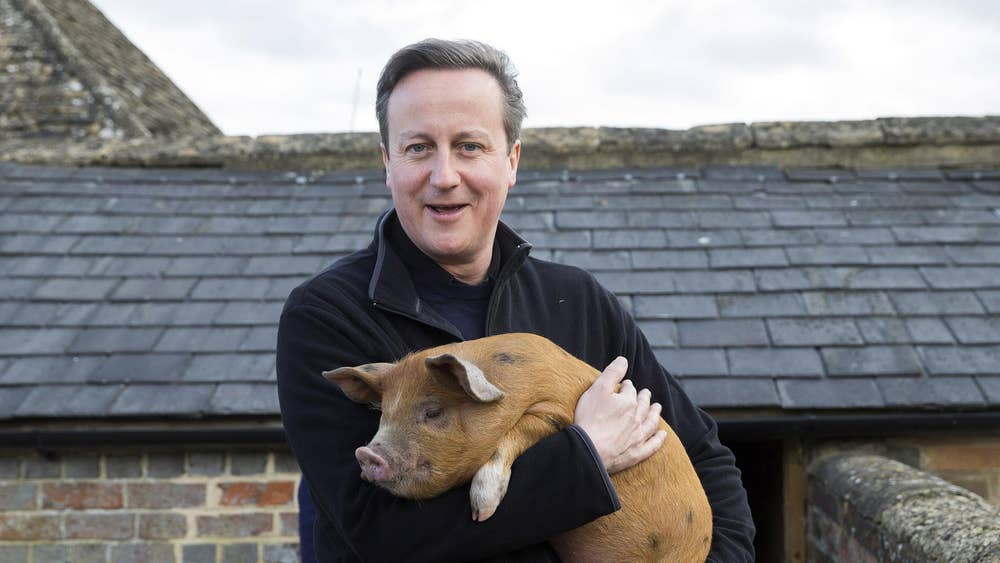
Today, we are told, is ‘Super Saturday’: not the last Saturday before Christmas, a bumper time for retailers, but an extraordinary weekend sitting of the UK parliament, only the third since the outbreak of World War 2 and this time to debate what one commentator has risked dubbing the ‘Brexit Moment’. Connoisseurs of new and exotic language can add to Super Saturday and Brexit Moment a pair of novel expressions trending in the same context: ‘greased piglet’ was the epithet bestowed by former PM David Cameron on his successor, explaining  that ‘the thing about the greased piglet is that he manages to slip through other people’s hands where mere mortals fail.’ The piglet himself appealed this morning for our ‘better angels’ to heal divisions (and do his bidding), a slightly puzzling evocation of Abraham Lincoln’s ringing words: ‘We are not enemies, but friends. We must not be enemies. Though passion may have strained, it must not break our bonds of affection. The mystic chords of memory will swell when again touched, as surely they will be, by the better angels of our nature.’

Image result for greased piglet

To accompany this morning’s unfolding developments RTE Radio asked me to record a commentary on these and other language innovations for their Irish listeners, and this is what I said…

https://www.rte.ie/radio/radioplayer/html5/#/radio1/21639391

A slightly longer version of the script…

In struggling to keep abreast of the momentous events, the dramatic political developments generated recently by populism on both sides of the Atlantic, we have all of us  had to contend, too, with a rising tide of new language – exotic and unfamiliar new terms, old terms repurposed and weaponised, slang, jargon, catchphrases and slogans coming at us on a scale and at a speed not seen before in my lifetime.

I have been collecting the language of Trumpism, of Brexit and of the new alignments in politics, society and the media. I’m doing this because, as a linguist and a dictionary-maker it’s my responsibility not only to record but to make sense of new language, not only looking at its simple definitions but at its deeper, sometimes hidden implications and the hidden agendas and real intentions of the people who are using it.

I’m compiling what I call a glossary of the toxic terminology of populism*, a list of over 400 words and expressions which is growing by the day. Just a few moments ago I added the phrase ‘mediaeval methods’, a euphemism for torture used yesterday by the UK government to describe what they intend to apply to get MPs to back their latest Brexit deal.

George Orwell long ago exposed the twisting of truth and the hypocrisies of political language, but he was living in a much much simpler world. The language I am working with – novel notions like the Backstop, new idioms like dog-whistle and dogpile, jargon like identitarian, pathocracy or factuality – is not straightforward and not neutral or innocent. These are expressions designed to describe a changing social landscape, but also often designed to baffle, to bamboozle and confuse, to manipulate us. This of course is not new – the language of advertising and of politics has been doing this for a long time, but the multichannels, platforms and outlets and the multimedia techniques employed are far more pervasive and sophisticated than ever before.

Americans refer to words as ‘skunked’ if their meanings have become distorted and they become toxified, so that elite, metropolitan and cosmopolitan, snowflake and melt become slurs; libertarian, which once meant progressive, now refers to the far right, politically correct and social justice warrior and virtue-signalling are insults. When Boris Johnson calls his predecessor a girly swot, accuses a critic of humbug, the cosy, dated words are uttered with barely concealed venom.

Image result for girly swot molesworth

In the UK we still prize a sense of humour and some terms do sound lighthearted: cakeism is wanting to have your cake and eat it  – this time used by the EU against the UK for once – when Jeremy Corbyn is described as a magic grandpa or the absolute boy, the comments are double-edged to say the least. The so-called centrist dad (I’m probably one myself) is not just an ageing moderate but a feeble, cowardly enabler of the far right; magic money tree and unicorn are definitely not meant to be funny, and gammon** describes a ruddy-faced apopleptic male, invariably a Brexit supporter, but the word is an expression of genuine hate by the left.

There are some ironic phrases I find funny despite their serious intent: one is ‘Airfix Patriotism’ – Airfix sold plastic kits in the 50s and 60s for making model warplanes, and dads and kids would buy them and stick them together  with glue, evoking the heroic actions of pilots in the second world war – the patriotic rantings of the right today have been seen as based not on any understanding of our history but on a caricatured, kitsch vision of a heroic past. In the same way Ladybird libertarians base their false memories of an idyllic England on the beautiful watercolour illustrations in the Ladybird childrens books and on comics and tea-towels rather than social realities.

The terms that irritate me, though, are the clichés, catchphrases and slogans endlessly repeated; take back control, get it done, the will of the people, Brexit means Brexit…

There are scientific, technical-sounding words being bandied about which actually describe frightening changes in power relations: ethnonationalism, nativism, pathocracy (the rule of sociopaths and psychopaths), sadopopulism (strongman rulers who end up victimising even their own supporters) and even homonationalism – the co-opting of LGBT issues to advance a racist ideology.

Donald Trump is famous for the crudity of his language, but the metaphors used in political discourse in the UK have also moved further and further into the realm of conflict, warfare, occupation and collaboration: first directed at our supposed enemies in the EU, traitor, betrayal, saboteur are now aimed at anyone at home – quitlings or quislings – rabble – who fails to toe the party line with enough enthusiasm. Academics in the US and UK are analysing the rhetoric and the metaphors but tend to discuss these things with each other I want to talk to the public, to make people more aware.

Of course new circumstances do demand new language and some expressions just fill what linguists call a ‘lexical gap’ in the language: both-sidesism, whataboutery, de-platforming, cancel culture all were coined to describe concepts that didn’t exist or weren’t so important in the past, the whole vocabulary of Brexit, including the word itself is unprecedented. It sometimes feels as if our whole reality is unprecedented, and we, whether we lean to the right or to the left, just wish it would stop, but it’s not over yet: inevitably there will be much more verbiage, rhetoric, toxic terminology, to come…

*https://language-and-innovation.com/2018/08/23/a-glossary-of-skunked-terms-brexitspeak-and-the-toxic-terminology-of-populism/

**https://language-and-innovation.com/2018/05/15/gammon-up-against-the-wall/


Image result for greased piglet

BEWARE BIGWIGS – and BIGWIGS BEWARE

Image result for blackadder ridiculous wig


Print, broadcast and social media have a fairly small repertoire of expressions to deploy when fawning over, or seeking to discredit, the bigwigs who lord it over us and, supposedly, lead us. The expression I have just used, hoping for a striking epithet, is first attested in the mid-18th century (already with its tinge of sarcasm, its lack of due deference) when ostentatious wigs were worn by the most important and self-important personages in the land: ‘A new point of discussion for the lawyers, for our big wigs, for their Lordships.’ From the same era and invariably used of Dr Johnson is ‘panjandrum’, from Grand Panjandrum, an invented phrase in a nonsense verse published in 1755 by Samuel Foote*. By the 19th century it had come to refer mockingly to an ‘imposing figure’, especially if puffed-up. Such terms have a comic quality which may not be quite appropriate in the current climate of political rancour, so we revert to the (over) familiar mainstays of journalistic discourse.

Image result for robert maxwell

With recollections of the notorious fraudster press baron Robert Maxwell featuring in post-Epstein press reports the word magnate has been employed by more than a few journalists. It first appeared in Middle English and derives from late Latin magnas, magnat – great man, and it and its translations formerly defined a class of post-feudal nobility in European lands.

While we are at it, grandee (important, influential male in public life, often applied to elderly, retired, invariably hugely wealthy former politicians of a particular stripe) appeared in the late 16th century, from Spanish and Portuguese grande, senior nobles, from Latin grandis, great. The English ending was by association with the originally French-inspired ending -ee, seen in such formulations as ‘devotee’ and ‘debauchee.’


Image result for mughal prince


In the same lexical set of possibly overweening, overstated titles as ‘magnate’ and ‘grandee’ is mogul (as in ‘hedge-fund mogul pedophile’ – a recent press caption) which was originally cognate with ‘mongol’ and referred to the Mughal (the Iranian version) dynasties who ruled India between 1526 and 1857 and were thought by Europeans to have vast stores of treasure at their disposal. The word’s suggestion of limitless power coupled with financial profligacy gave us those journalistic cliches of the 1950s, ‘movie mogul’ and ‘Hollywood moguls.’

‘Mogul’, ‘grandee’, ‘magnate’ share a category with tycoon – Japanese taikun, great lord or prince, from Chinese tai great and kiun lord, a designation of the ruling Japanese Shogun used by respectful foreigners, adopted into English in the 1860s, first as an admiring description of a political figure, then, from the 1920s as journalese shorthand for a prominent business leader and/or entrepreneur, especially if perceived as powerful, dynamic and/or aggressive.

On Twitter J-V Vernay asks ‘How about nabob from Nawab?’ In the colonial era in India the word, which later came to mean a returning colonist who had enormously enriched themselves, originally denoted a deputy governor of a province under the Mogul Empire. It is Anglo-Indian, probably adopted via Portuguese nababo from Hindi and Urdu nabab, from the Arabic plural nuwwab meaning viceroys. A wonderful word in its jaunty sound and in its connotations, perhaps bestowed most memorably in this case:

https://www.amazon.com/Nabob-Sob-Very-Johnnie-1951-57/dp/B01AXLWSBE …

Another rather rare but interestingly loaded term for alpha-males in public life is plutocrat, denoting a wielder of power derived from enormous wealth. ‘Plutocracy’ appeared in English in 1631, from the Greek ploutos wealth and -kratia, meaning rule and was widely used to describe the economic and social dominance exercised by late 19th century and early 20th century industrialists in the USA. Potentate is another resonant label from the politico-journalistic lexicon: it began to be used in the 1400s and is formed from Latin potentatus, dominion, from potent, having and/or exercising power.

I should probably mention in passing the honorific I secretly crave for myself: it’s eminence-grise, describing a ‘power-behind-the-throne’, a hidden manipulator of affairs, an arranger working in the shadows, originally referring to His Eminence François Leclerc du Tremblay, who wore a beige robe when that colour was in French described as grey and was the righthand-man of Cardinal Richelieu.

Image result for eminence grise

In my previous post I listed some of the disapproving epithets for those in public life who wield power and influence and aspire to or affect greatness but, to put it much too kindly, fall far short. Another term associated with scrutiny of these reprobates which has been trending recently is impostor. ‘Impostor syndrome’ (then known as ‘impostor phenomenon’) was first defined in 1978. The word itself was adopted from French in the 16th century, derived via French imposteur from Latin imponere to impose upon, deceive, swindle. An ‘imposture’ denoted a fraudulent display or adoption of a false persona while the imposter or impostor was the perpetrator. Some, of course, who exhibit symptoms of the syndrome – shiftiness, false bonhomie, exaggerated preening – really are impostors.

Image result for impostor


*Foote invented the word, which has echoes of Latin or Asiatic tongues, as part of a sequence to test the memory of a fellow-actor: ‘And there were present the Picninnies, and the Joblillies, and the Garyulies and the Grand Panjandrum himself, with the little round button at the top’

THE REAL WORDS OF THE YEAR – 2018

It has become a tradition for the major dictionary publishers, along with some linguists’ associations, to nominate a ‘word of the year’, a term (or in the case of Oxford’s 2015 crying/laughing emoji a symbol) which supposedly captures the essence of the zeitgeist, and in doing so marks the proposer as someone in tune with the times and with their target audience. The words chosen are rarely actually new, and by the nature of the exercise calculated to provoke disagreement and debate. I have worked with and written about what linguists and anthropologists call ‘cultural keywords’ and have my own ideas on which expressions could be truly emblematic of social change and cultural innovation. The words already nominated by the self-appointed arbiters are discussed at the foot of the page, but here, for what it’s worth, are mine (in order of preference)…


Image result for Artificial intelligence

AI

Yes, strictly speaking it’s two words, but this little initialism looks like a two-letter word and is processed by the brain as a ‘lexeme’ or a single unit of sound and sense. AI, artificial intelligence, is the hottest topic not only in tech-related practices but in fields as (seemingly) diverse as marketing, finance, automotives, medicine and health, education, environmentalism. Zdnet.com has published one of the most useful overviews of AI and its sub-categories and applications:

https://www.zdnet.com/article/what-is-ai-everything-you-need-to-know-about-artificial-intelligence/

Though it is one of the most fashionable and most resonant terms in current conversation, a slogan and a rallying cry as well as a definition, AI is problematic in the same way as two other recent contenders for word-of the moment, CRYPTO and DIGITAL. The former is shorthand for all the very complex, not to say near-incomprehensible elements that have accompanied the invention of crypto-currencies – bitcoins and blockchains in particular. These advances have yet to prove their worth for most ordinary consumers who will often be bemused by new terminology that seems to be traded among experts somewhere beyond their grasp or their reach. In the same way for the last few years ‘digital’ has been a mantra evoking the unstoppable influence of new electronic media, (related SOCIAL was a strong candidate for buzzword of 2017). Digital’s over-use by overexcited marketing professionals, would-be thought-leaders and influencers has been inspiring mockery since 2016, as in the spoof article in the Daily Mash: https://www.thedailymash.co.uk/news/business/nobody-knows-what-digital-supposed-to-mean-20160614109525

To put it almost as crudely as the Daily Mash does, there’s a sense in which almost no layperson knows, or can know fully, what Digital, Crypto and AI really mean, and the same goes for the expressions derived from them – ‘deep learning’ comes to mind. Their power derives from their novelty and their ability to evoke a techutopian future happening now. The phrase artificial intelligence was first employed in 1956 and its abbreviated form has been used by insiders since at least the early 2000s, but it is only now that it, and the concepts it embodies, are coming into their own.


Image result for kimberle crenshaw

INTERSECTIONALITY

At first sight just another over-syllabled buzzword escaping from the confines of academic theory (‘performativity’, ‘superdiversity’ and ‘dimensionality’ are recent examples) into highbrow conversation, intersectionality is actually an important addition to the lexicon of identity studies. It was coined as long ago as 1989 by Kimberlé Crenshaw, a civil rights activist and legal scholar who wrote that traditional feminist ideas and anti-racist policies exclude black women because they face overlapping discrimination that is unique to them.  The word took 26 years to make it into the OED and is still unfamiliar to many, but during 2018 has featured in more and more debates on diversity and discrimination, marking the realisation that, for BAME women and for other marginalised groups, the complexities of oppression and inequality occur in a matrix that incorporates not only gender and ethnicity but such factors as age, sexuality and social class. There are each year a few forbiddingly formal or offputtingly technical expressions that do deserve to cross over into mainstream use. This I think is one of them and no journalist, educationalist, politician or concerned citizen should be unaware of it.

A bad-tempered take on intersectionality as buzzword was provided last year by https://www.theguardian.com/world/2017/sep/30/intersectional-feminism-jargon


Image result for civility politics

CIVILITY

I was intrigued by the sudden appearance (sudden at least by my understanding) earlier this year – its online lookups spiked in June – of a decorous, dignified term in the midst of very undecorous, undignified public debate. This old latinate word’s denotations and connotations were in complete contrast with the ‘skunked terms’ and toxic terminology that I had collected elsewhere on this site. In fact, as is often the case, this word of the moment emerged from a longer tradition, but one largely unknown hitherto outside the US. Its proposer was Professor P.M Forni, who sadly died a couple of weeks ago. In 1997, together with colleagues he established the Johns Hopkins Civility Project — now known as the Civility Initiative — a collaboration of academic disciplines that addressed the significance of civility and manners in modern life. His ideas were seized upon by commentators on this year’s events in the US, with some asserting that the civil rights protests of the past were indeed more civil than today’s rancorous exchanges. Democrat Nancy Pelosi denounced Donald Trump’s ‘daily lack of civility’ but also criticised liberal opponents’ attacks on him and his constituency. Others pointed out that polite debate alone had never prevailed in the struggles against bigotry and violence and that civility was an inadequate, irrelevant response. Cynics inserted their definitions: ‘civility’ = treating white people with respect; ‘political correctness’ = treating everybody else with respect…which prompts the thought that perhaps, in recognition of realities on both sides of the Atlantic, it’s really ‘incivility’ that should be my word of the year.

Image result for keywords

Here, in the Economist, is the ‘Johnson’ column’s perceptive analysis of those other nominations for 2018’s word of the year:

https://www.economist.com/books-and-arts/2018/12/08/the-meaning-of-the-words-of-the-year

While US lexicographer Kory Stamper provides the inside story on the American choices:

https://www.bostonglobe.com/ideas/2018/12/18/language-nerds-worked-really-hard-that-words-year-list/wJgdhIMAQK7xcBvlc2iHOL/story.html?s_camp=bostonglobe:social:sharetools:twitter

Lynne Murphy‘s annual US to UK export/import of the year:

https://separatedbyacommonlanguage.blogspot.com/2018/12/2018-us-to-uk-word-of-year-mainstream.html

And her UK to US counterpart:

https://separatedbyacommonlanguage.blogspot.com/2018/12/2018-uk-to-us-word-of-year-whilst.html

In the New Year the American Dialect Society announced its own word of 2018, a disturbing euphemism employed by the Trump regime and a candidate for my glossary of toxic terminology (see elsewhere on this site):

“Tender-age shelter” is 2018 American Dialect Society word of the year

And from the militantly millennial LinguaBishes, some excellent examples of millennial/Generation Z terms of 2018:

2018 Words of the Year


In October 2019 David Shariatmadari in the Guardian gets his preferences in early:

https://www.theguardian.com/science/2019/oct/14/cancelled-for-sadfishing-the-top-10-words-of-2019


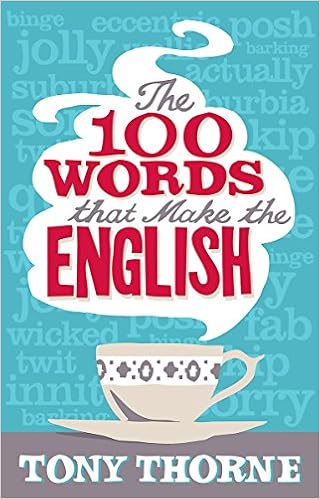
…and, FWIW, I like to think that my own collection of cultural keywords, seeking to define the essence of Englishness back in 2011, is still relevant today:

Image result for the 100 words that make the english tony thorne

AT WAR WITH ‘ACRONYMS’ – TMI via TLA


Maria Hill: What does S.H.I.E.L.D. stand for, Agent Ward?
Grant Ward: Strategic Homeland Intervention, Enforcement and Logistics Division.
Maria Hill: And what does that mean to you?
Grant Ward: It means someone really wanted our initials to spell out “shield.”

— Agents of S.H.I.E.L.D. pilot episode


Stuart Andrew  MP


Two days ago the UK press reported that the Minister for Defence Procurement, Welsh Conservative MP Stuart Andrew, had declared war. On acronyms. Confounded and irritated by the number of these abbreviations circulating in his office and beyond, he ordered staff to avoid them at all costs. ‘He got fed up with people coming into his office and reeling off a list of letters and assuming he knew what they were referring to,’ a source close to the minister said. ‘I thought DVD had something to do with movies!’ the hapless minister (who has never served in the armed forces) had quipped at a meeting four weeks earlier. DVD was the name of the event at which he was speaking. It stands for ‘defence vehicle dynamics’.

Image result for military acronyms word cloud

The flustered politician may have a point – one of the first documents to cross his desk was the latest 402-page guidebook to terminology used in the MOD (Ministry of Defence)*, referencing such titles as AARADCOM – the Army Armament Research and Development Command, and explaining that the initials CCU, for instance, could refer to

Central Control Unit
Certificate of Clearance for Use (for software)
Cockpit Control Unit
Combat Control Unit
Common Control Unit
Communication Control Unit
Computer Crime Unit

In vain did an unnamed MOD spokesperson respond: ‘These terms are used between subject matter experts and not with the general public.’


Image result for military acronyms


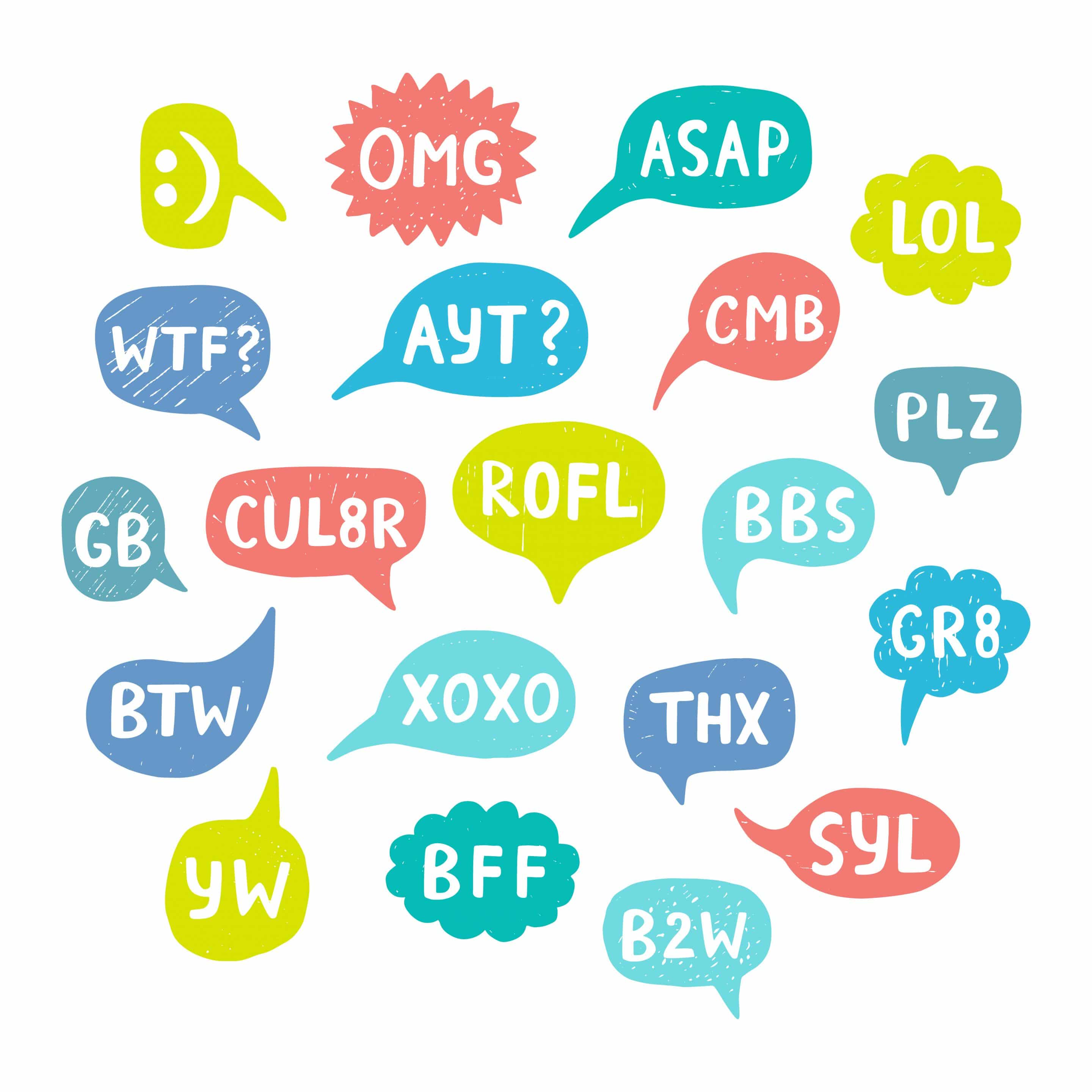
‘Acronym’ entered English in 1940, as a translation of German akronym, first attested in 1921. It is composed of acro- from Greek akron (tip or top) and the English combining form  -onym, from Greek onoma, name. It denotes a word made up of initials or parts of other words, and should be pronounced as a word in its own right. It is not the same as an ‘initialism’ such as BBC or VIP or PC, where the letters are pronounced separately (the minister’s DVD falls into this category), or an abbreviation such as etc. or  lb (pound) where the relationship between form and sound is not straightforward. So NATO, AWOL, laser (for ‘light amplification by simulated emission of radiation’, radar (‘radio detection and ranging’) are acronyms: ASAP (‘as soon as possible’) is an acronym if said like a word, BOGOF (‘buy one, get one free’) too, but not when said as separated letters.

Some more modern three-letter combinations are genuine acronyms – SIM (card) from ‘subscriber identity module’, GIF (‘ graphics interchange format’), however you pronounce it,  and PIN (‘personal information number’) among them – but those familiar items of business-speak, ROI, SEO, B2B, SME – and now AI – are not, and nor, ironically is the disapproving or jokey shorthand TLA, for ‘three-letter acronym’ itself.

Lighthearted coinages SNAFU (‘situation normal, all fouled up’) or BOHICA (the oppressed officeworker’s injunction to ‘bend over, here it comes again’) are acronyms, but only a few of the so-called acronyms used in messaging and on social media really qualify: BTW, IDK, IMHO, SMH, TL;DR and the rest are strictly speaking initialisms. YOLO, LOL and ROFL, providing they are uttered in full, are among the exceptions.

The reason for the proliferation of acronyms, initialisms and abbreviations, and the justification for their use are obvious. In an accelerated culture they save us from having to – literally – spell out what we have to say or write and at the same time impart an idea of novelty, urgency and dynamism. As my correspondent Graham Guest observed on Twitter in a spoof response to Stuart Andrew’s protestations: ‘Minister, my radio detection and ranging equipment has just picked up a group of sea, air, lands wearing self-contained underwater breathing apparatus diving gear.’

Acronyms are very often controversial, in the same way as jargon and slang, in that they mystify and intimidate those who aren’t familiar with them, and seem to confer prestige and privilege on those who know how to use them. They can reinforce an insider/outsider imbalance in power in the workplace, the seminar –  or the ministerial briefing. A very simple test, though, is to try and replace the offending acronym with its full translation or explanation and see if the resulting sequence of speech, or text, sounds or looks viable. If it’s necessary to introduce a new abbreviated form, it must be glossed  (translated into simple language) the first time it is used, and, as with all insider codes, should only be employed in a context where interlocutors, partners, stakeholders, clients or audiences will readily understand it.

In April 2019 the BBC tried to forestall mockery of the acronyms peppering the script of its Line of Duty series by posting this synopsis:

‘A UCO is embedded in an OCG who was deployed as a CHIS but is AWOL. The SIO, who loves a REG 15, and his DI and DS from AC-12 are investigating because of the ED905 HGV ambush which the OCG set up as an RTC. They’re hunting H. Let’s go.’


Image result for acronyms


You can hear me chatting about the latest acronym wars on BBC5Live radio (the sequence begins at 47 minutes 26 seconds):

https://www.bbc.co.uk/radio/play/m0000pvp


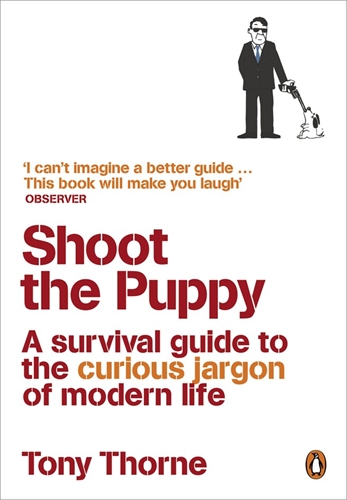
As a footnote, my book of buzzwords and jargon, first published in 2007, contains examples of acronyms and abbreviations, many still in use, together with observations on the status conferred by mastering business-speak…


Shoot the Puppy


*An earlier version of it is here if you want to consult it:

Click to access acronyms_and_abbreviations_dec08.pdf

THE ART OF BUSINESS JARGON


Image result for reinvent the wheel


Business jargon – the buzzwords, catchphrasesclichés and mantras of corporate life – manages to be perennially fascinating and endlessly irritating. Many of the better-known expressions have an air of novelty despite being in existence for many years, and survey after survey lists the same serial offenders as the triggers of office rage, headdesking and facepalming. The very latest take on this subject, visualising the metaphors we take for granted, is provided here, courtesy of Citrix ShareFile‘s illustrator David Doran, writer Kevin Hill and by kind permission of Search Laboratory’s Senior Media Specialist Jennie Lindehoff…


https://www.sharefile.com/blog/illustrated-business-jargon-by-david-doran/


A SINGLE CURRENCY? – the status of English post-Juncker and post-Europe


President of the European Commission, Eurocrat par excellence and Brexiteers’ bugbear, Jean-Claude Juncker raised a laugh in Florence a couple of weeks ago with his public provocation, opining that post-Brexit the English language would lose its status as the EU’s de facto lingua franca. IMVHO he’s probably wrong: even in his native Luxembourg (first language Luxembourgish, a Mosel-Franconian dialect of German) one fifth of the population currently claim to use English for everyday communication and three quarters say they speak it fluently.

In the wider EU 46m Germans and 23m French citizens are estimated to have a good command of English, 38% of the remaining nationalities, too. Only 12% over-all claim fluency in French and 11% in German. In Brussels and Strasbourg,  the cities where EU business is primarily carried out, English is, in the Eurocrats’ jargon a relay language, an intermediate code used in meetings, in corridors and in cafes by those for whom it is a second or third language. This is especially the case for those coming from the more recent member states who are generally reluctant to embark on learning French or German when English is already familiar from school, university and from exposure to popular culture.

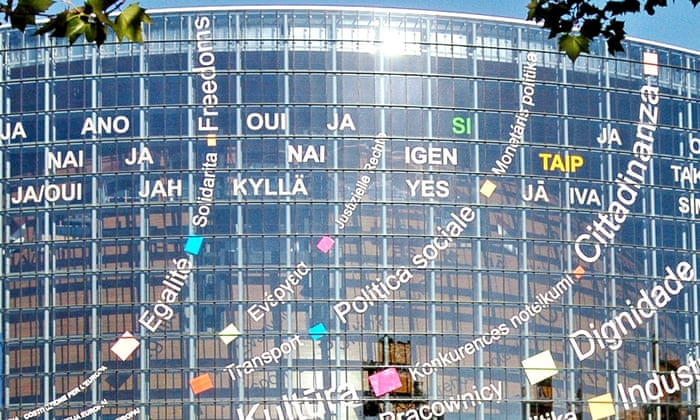
In fact, the language actually used beyond the formal speeches and official documents is an odd sort of English-based hybrid sometimes known as Euro-speak, laced with ‘continental’ usages (alien to native speaker English but common to other European tongues) whereby terms like subsidiarity, conditionality and conventionality are exchanged and standard English words shift in meaning so that control comes to mean check, assist means attend, execute means carry out, actual replaces current and resume can mean both re-start and sum up. Perhaps in time it is this dialect which will come to dominate in practice while the official languages remain as they are today. Well-meaning attempts to introduce an alternative common language have so far come to nothing. A petition calling for the artificial language Esperanto to be added to the official list has received only 12, 383 signatures to date – in an EU population of around 450m.

In the Guardian this week Tess Reidy has been considering the fate of English post-Brexit and pace Juncker, with the help of experts and some contributions by me. Her article is here…

https://www.theguardian.com/education/2017/may/24/which-language-would-ease-our-way-in-the-post-brexit-world

Last year Mike MacKechnie listed some of the Euro-English terms that puzzled ‘native-speakers’ have to contend with:

10 Funny Euro-English Words We Might Hear More Often If The UK Leaves the EU

The EU is well aware of the peculiarities and idiosyncrasies of its own communication practices, as evidenced by its recognition of the jargon issue…

http://termcoord.eu/2014/06/eurojargon/

Though it took the BBC to decode the global English jargon of the Davos summit:

http://www.bbc.co.uk/news/business-42791874

Here from the European Court of Auditors is a very useful guide to EU misuses of the English language…

https://wordstodeeds.com/2017/06/02/guide-to-misuse-of-english/

Here are some further thoughts from Marko Modiano of Gävle University, published in September 2017…

http://onlinelibrary.wiley.com/doi/10.1111/weng.12264/full


And, in November 2017, a challenging, if possibly slightly tongue-in-cheek suggestion from Italy…

http://www.telegraph.co.uk/news/2017/11/25/eu-should-force-uk-give-us-english-language-brexit-former-italian/

Michael Swan took issue last year with the way the notion of ‘English as a Lingua Franca (ELF)’ is often presented…

http://www.eltresearchbites.com/201802-rethinking-english-as-a-lingua-franca/#comments

Here, should there be any doubt, is the confirmation, from Esther Bond writing in slator,  that English is not about to lose its official status…

https://slator.com/demand-drivers/eu-provides-clarity-on-post-brexit-future-for-english-language/

For any readers who are actively engaging with EU and other terminology (as translators, interpreters or proofreaders for example), here’s a useful list of online resources…

http://albionlanguages.com/best-online-terminology-resources/

And finally, for now, from November 2019, an article by EU translator Hannah Critoph addressing the difference between ‘Eurish’, ‘Globish’ and ‘natural English’…

Click to access Subject-brief-Hannah-Critoph.pdf