My un-asked for, scrambled words of the year for 2025 appear in the wordcloud above. Not based on statistical surveys, frequency scans or media prominence, but on the instincts and intuition of a logophile and lexicographer. The words of the year chosen and promoted by the Dictionary publishers* are worthy in their way, once again favouring expressions generated by tech innovation and social media, but they reflect inevitably the perspective of a cohort (aging dictionary editors and their target market) who are at one remove from the language actually being coined or repurposed by what linguists call ‘expert users’. As I write I realise that my own final selection has left out some important last-minute candidates, now featuring in the end-of-year online discourse: vice-signalling, shroud-waving, microshifting and tablescaping, plus a runner-up, sponcon (= sponsored content) for example. The familiar youth slang term of address unc** has just, belatedly, been noticed by the mainstream media, while the terms flow state, in the zone and locked in, used by influencers, content creators and gamers, all meaning focusing intently on an activity, are not yet on the old person radar.
As the winter solstice came and went I was quoted in a few of mainstream media’s reviews of the year’s language…
In Lane Greene‘s discussion of slang and its significance…
…and lastly I promise, a last word before Christmas Day: treatonomics, also known as Little Treat Culture, describes the trend for affordable indulgences, small, emotionally satisfying purchases that offer ‘guilt-free joy’
Back in December last year I wrote a second opinion piece on words of the year for the Conversation. You can find it here… *
At the end of January this year the Lexis Podcast team kindly invited me to discuss some of those words and why – if – they were really significant. We also looked at new terms recorded in 2025 so far, making a first attempt to explain and assess them, and to wonder which if any of them might endure. Our discussion, which went on for 40 minutes, is here…
…and, from February, a little puzzle for you. Can you unscramble and reassemble these two-word novelties? (Thanks to simplewordcloud.com)
It’s now July, and my attempts to go on recording this year’s wholly new, or reworked and updated termsand expressions have been interrupted by the need to react to the news-cycle – to the sinister euphemisms, avoidances and untruths perpetrated by war criminals, would-be dictators and their servants in the media. Examples of their language have been added my glossary of toxic terminology and the updated version is here…
John Belgrove reminded me that in May Donald Trump bragged of coming up with a new word – ‘a good word’, but the word in question was ‘equalising’. I have managed nonetheless, with the help of other friends and contacts on Twitter, BlueSky, Instagram and Facebook, to gather a few more examples of lexical innovation, candidates for an end-of year survey in due course…
But I would very much welcome suggestions of other new words and phrases, ideally together with their meanings and comments on their usage in context. All donations will be credited and donors thanked.
In 2018 I began collecting new and controversial languagegenerated by the rise of conservative populism in the US and the UK, by pro- and anti-Trump sentiment in the US and by the divisions resulting from the UK’s Brexit vote. This is still a work in progress: the list of terms as it stands is below. An ideal glossary or lexicon would include detailed definitions and comments (for example, the second word in the list is my own invention, intended to describe a statement, act or policy showing effrontery, and itself a deliberate affront to a section of the population), dates of first use where traceable and a ‘lexical’ categorisation (into ‘jargon’, ‘slang, ‘catchphrase’, cliché, for instance).This more exhaustive treatment is beyond my resources for now, but googling the term in question will throw up examples which may be accompanied by dates and useful commentary.
In January 2024 I began to add words and phrases used by combatants and commentators in connection with the continuing ‘conflict’ in Israel, Palestine and Lebanon.Exactly one year later the ‘coup’, as some described it, enacted in the USA by Donald Trump and Elon Musk, featured new examples of distortion, euphemism and the language of rancour.
***Please do contact me with new examples, with comments and with criticism, which will be gratefully acknowledged and credited.***
Accelerationist
Accommodationist
Administrative detention
Affrontery
Agitators
Airfix patriotism
Alpha
Alt-centre
Alt-right
Amalek
Anglosphere
Annexationist
Anticipatory compliance/obedience
Antifa
Anti-growth coalition
Anywheres
Armed intervention
Asset
Astroturfing
Asylum shopping
Attitudinarian
Australia-style deal
Autohagiography
Backstop
Bad actors
Based
Basement dwellers
Bed-wetting
Beta
Beyond satire
Bike-shedding
Birtherism
Bitterites
Black hole
Black ops
The Blob
Blowback
Body count
Boomerslop
Bot
Both-sidesism
Bourgeois
Breadcrumbs
Brectum
Bregressive
Bregret(s)
Bremain
Brengland
Brexiles
Brexit dividend
Brexiteer
Brexit means Brexit
Brexit ultras
Brexmageddon
Brexmas
Brexodus
Brexomertà
Brexpats
Brexshit
Brextension
Briefcases
BRINO
Britain deserves better
Bubble
Butthurt
Cakeism
Calling out
Canada plus plus plus
Cancel culture
Candour deficit
Canzuk union
Casino capitalism
Centrist dad
Cherry-picking
Children of light
Chilling
Chumocracy
Churnalism
Civics
Civilian Security teams
Civility
Classist
Cliff-edge
Clown car
Clown country/state
Clusterbùrach
Coerced migration
Coercive diplomacy
Cognitive elite
Cognitive warfare
Collateral
Collective narcissism
Combative
Combat propaganda operative
Compassion deficit
Competing narratives
Concern(ed)
Concierge class
Confected fury
Conflicting accounts
Consequence culture
Copaganda
Cosmopolitan
Corbynista
Corporatocracy
Coup
Coup Klux Klan
Courtier journalists
Crash out
Cronyvirus
Crowdstrike
Crybaby
Cuck
Culturalism
Cultural marxist
Culturally coherent
Culture warrior
Dark forces
Datagrab
Dead cat strategy
Death cult
Deepfake
Deep state
Defund
DEI (Diversity, Equity, Inclusion)
DEI items
Delegitimizer
Demilitarization
Democide
Deplorables
Detained
DEXEU
‘Dies’
Disappeared
Disaster capitalism
Discourse engineering
Disinformation
Divorce bill
Do-gooder
Dogpile
Dog-whistle
Doom loop
Double down
Doxxing
Drain the swamp
DREAMer
Dumpster fire
Echo-chamber
Economic nationalism
Economically inactive
Educide
Elite
Empty chair
Enablers
Enemies of the people
English exceptionalism
Ergo decedo
Establishment
Ethnics
Ethnonationalist
Ethno-state
Exchange of fire
Expert
Factuality
Fake news
Fall off a cliff
False flag operation
Fash-adjacent
Fashy
Fauxlanthropist
FBPE
Feminazi
Fifth column
Finger-sniffer
Firehosing
Flextension
Flooding the zone
FluTruxKlan
Fractionate
Fractious
Fratriarchy
Frictionless
Frit
Frontlash
FUD
Gammon
Gammonista
Gangster state
Genocide Joe
Get it done
Getting the barnacles off the boat
Gimmegrant
Girly swot
Global Britain
Globalist
GNU
Grievance studies
Grindcore
Grumpy retiree
Guardianista
Hard Brexit
Hate goblin
Hatriot
Headroom
Headwinds
Henry VIII powers
Heterophobic
High-vis nazis
Hobbit
Homonationalism
Hopepunk
Hose it down
Humanitarian bridge
Hybrid threats
Identitarian
Idiocracy
Illuminati
Incel
Indications
Indicative vote
Individual-1
Intentional explosion
Intifada
Irrational exuberance
Jambon jaunes
Jexodus
Kayfabe
Keirmacht
Kicking the can down the road
Kindercoup
King baby
Kipper
Kipper moment
Kleptofascist
Kompromat
Lamestream media
Lanyardism
Lawfare
Leave means leave
Leftwaffe
Legitimate concerns
Lentil-weaving
Lesser mortals
Lethal aid
Level up
Lexit
Libertarian
Libtard
Loss of life
“Lost their lives”
Limited ground operation
Limousine liberal
Limp-wristed
Little Englander
Lolcow
Londongrad
Londonistan
Long Corbyn
Long coup
Low-energy
Luftwaffle
MAGA
Magic Grandpa
Magic money tree
Majoritarian
Man-baby
Mangina
Manosphere
Manufactured consent
Masculinist
Matrixed
Maybot
Meaningful vote
Meat wave(s)
Mediaeval methods
Melt
Meninist
Mercurial
Metropolitan
Microaggression
Militarised nostalgia
Milkshake(d)
Mindless compassion
Ming vase
Mischievous
Mishap
Missing
Momtifa
Moral clarity
Moral emptiness
Moral grandstanding
MSM
Nakba 2
Nanny state
Narrative engineering
Nativist
Necrocapitalism
Necropolitics
Neglexit
Negotiated exit
Neon nazis
Nerd Reich
Neurotic elite
Neutrollization
No-deal
No-platforming
Normie
Nudgism
Obey in advance
Offence archaeology
Operational matter
Operation Red Meat
Operation Save Big Dog
Optics
Ordeals
Ostentatious meekness
Oven-ready
Over-briefed
Overly purist
Overton window
Palaeoconservative
Partygate
Pearl-clutching
Penumbral jobs
People’s vote
Performative allyship
Performative cruelty
Pile on
Political correctness
Political gospel
Polycrisis
Post apocalyptic warlord
Post-liberal
Postmodern
Posttext
Post-truth
Poverty porn
Prebunking
Pre-emptive strike
Price cap
Project Fear
Protesters
Prozac leadership
Pugnacious
Punchy
Purity of arms
Push (BBC euphemism for armed incursion, invasion)
Pushback
Put/stick that on the side of a bus
QAnon
Quitlings
Rabble
Race to the bottom
Rage bait
Rage farming
Rampdown
Red lines
Red pill
Red wall
Regrexit
Rejoiner
Re-leaver
Relocate
Remainiacs
Remain plus
Remigration
Remoanathon
Remoaner
Remove kebab
Replacement theory
Reply deboosting
Reputation laundering
Resistance
Restorative nostalgia
Retconning
Revoker
Roll back
Rootless
Row back
Russian asset
Saboteur
Sadopopulism
Safe space
Scumbag centrism
#ScumMedia
Sealioning
Sectarian
Sensitivity reader
Shadow blocking
Shadow war
Shallowfake
Shill
Shire
Shitposting
Shitshow
Showboating
Shylock
Sick-note culture
Singapore-on-Thames
SJW social justice warrior
Skilling up
Skunked term**
Slave populace
Sleaze
Slopaganda
Slopulism
Snowflake
Sobersides
Sockpuppet
Soft border
Soft Brexit
Somewheres
Sovereignty
Soy-boy
Spartan phalanx
Spiv
Star Chamber
Starmergeddon
Stenographer
Sticking point
Strategic self-abasement
Stunning proposal
Sunlit uplands
Supermajority
Surgical strike
Svengali
SWERF
TACO
Taking back control
Tankie
Targeted individual
Targeted strike
Technofeudalism
Tender-age shelter
“Tensions rise”
Terf
Terminability
Testy
The other team
Throw under the bus
#tfg, ‘the former guy’
Tick tock
Tigger
Tofu-eating
Tone deaf
Tone policing
Tory scum
Toxic positivity
Transactional
Transition period
Trexit
Triangulation
Tribal(ism)
Trickle-down pathology
Troll farm/factory
Trumpcession
Trump slump
Truth-squadding
Tufton Street
Tu quoque
Two-tier policing
Unconfirmed reports
Unicorns
Unpopulism
Unrest
Unspin
Urban
Values voter
Vassal state
Verbal incontinence
Vice-signalling
Vigilante journalism
Village idiot
Virtue-signalling
Voluntary emigration
Walk back
War cabinet
War of extraordinary civilian casualties (Guardian euphemism for genocide)
Watch-list
Weaponised*
Wedge issues
West(s)plaining
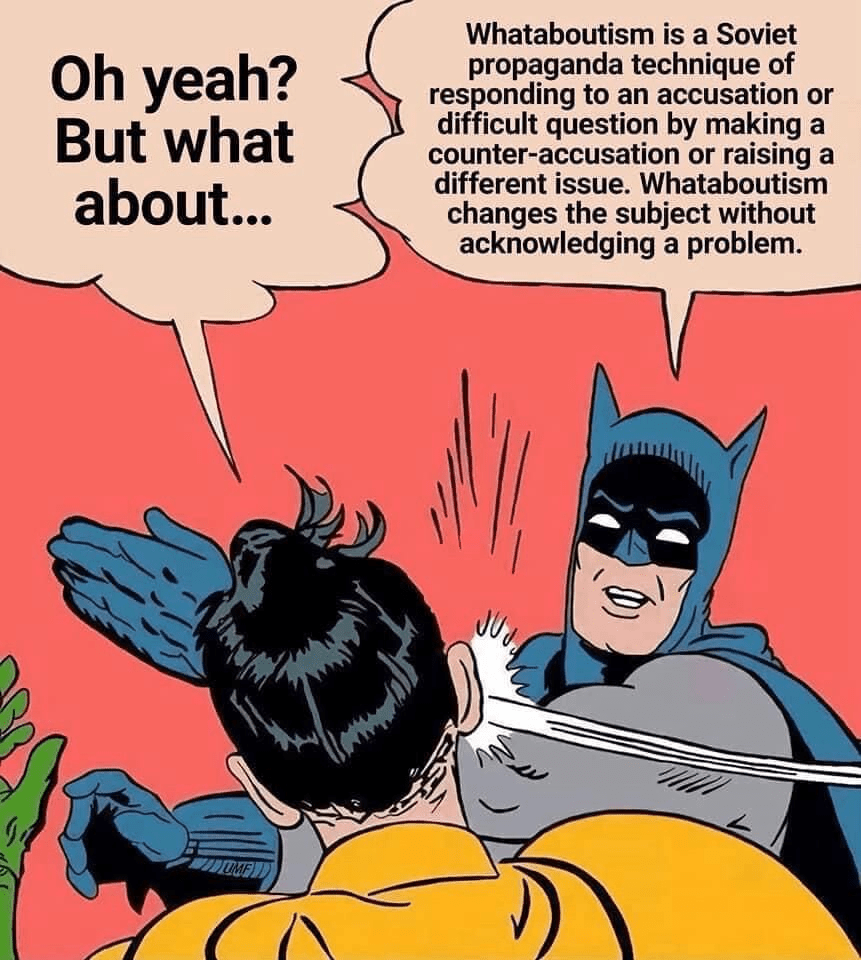
Whataboutery
White supremacist
Will of the people
With a heavy heart
Woke
Woke mind virus
Wokerati
Wokescold
Woketard
Woke warriors
Woke-washing
Womp womp
Workington man
Yoghurt-knitting
Zealot
I’m grateful especially to the many contacts on Twitterwho have already contributed to this modest project, particularly Duncan Reynolds @duncanr2, and will credit them all by name/handle when a final version is published.
I’m also very grateful to Rob Booth and the Guardian who, in October 2019, wrote about the glossary and its topicality in increasingly conflicted times:
In November 2018 The Guardian published a useful ‘jargon-buster’ guide to the terms being used at this late stage of (or impasse in, if you prefer) UK-EU negotiations:
I have only just come across this perceptive essay from 2017, by Otto English on his Pinprick blog, in which he coins the terms Ladybird libertarian and Ronseal academic:
**’Skunked terms’ are words or expressions undergoing a controversial change in meaning. Examples are ‘liberal’ and ‘libertarian’ which have transitioned from referring to leftist, progressive or centrist positions to denote neo-conservative or alt-right affiliations. Nearly two years on from my original post the useful designation ‘anglosphere’, describing English-speaking nations with shared cultural features, has been co-opted by far-right nativists in the UK to promote a supremacist ideology.
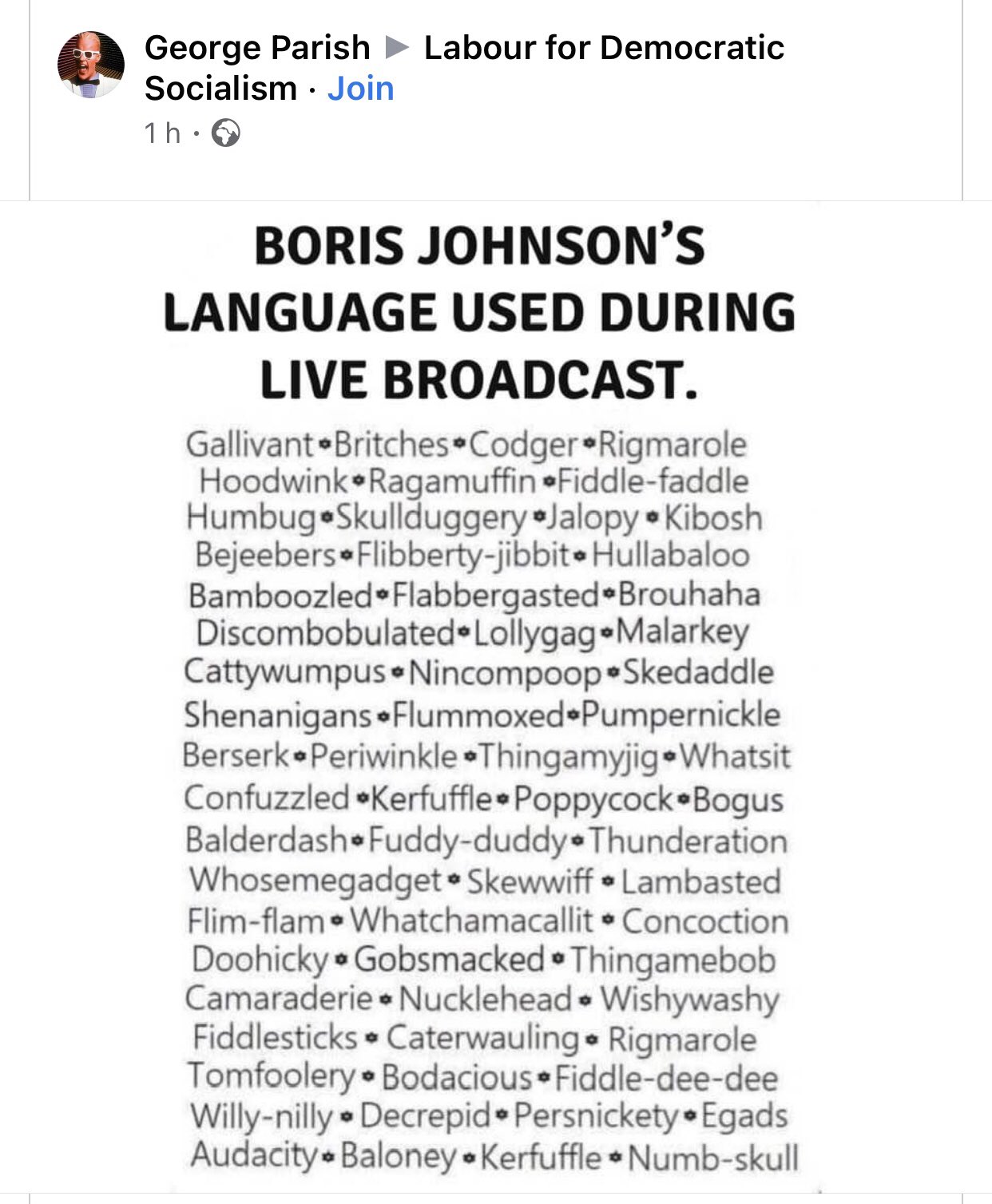
As a further footnote, this from Twitter in November 2020 (thanks to Alan Pulverness), a reminder that weaponised words may also be frivolous – even puerile:
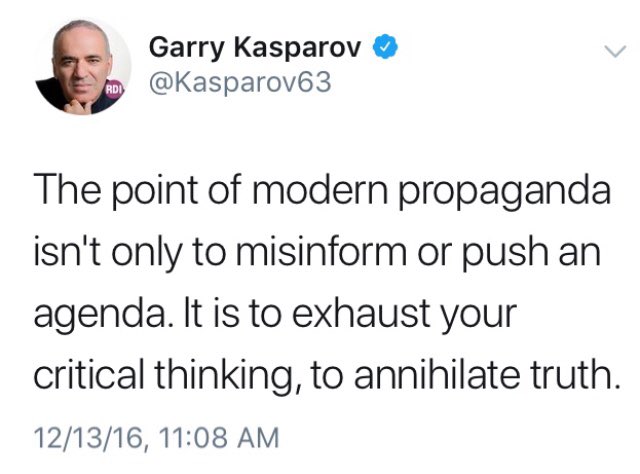
Looking back to 2016, a prescient tweet by Gary Kasparov:
At the end of 2022 my friend and collaborator Dan Clayton wrote, for Byline Times, about the latest iteration of toxic terminology and rhetoric: the demonising of refugees and migrants:
In early 2024 I belatedly learned of an interestingly tendentious and sententious glossary purporting to list and explain the words used by the ‘woke’. This, compiled by Dr James Lindsay, critically examines key terms relating to gender studies, critical race theory and identity politics in the US context:
Later in June, as Israel and Iran exchanged fire, Assal Rad noted the double standards employed in reports of the conflict:
The language of manufacturing consent:
: Preemptive strikes
: Escalation
: Warns
: Threatens
: Targets
: Attacks
: Government
: Regime
: Right to self-defense
: Condemnations
: Sophisticated military (has nukes)
: Nuclear threat (has no nukes)
Most recently, in January 2026, for Byline Times, my friend and collaborator Dan Clayton wrote a penetrating analysis of the way the US right and the media had manipulated the language of the ICE atrocities in Minnesota…
Dictionary makers and journalists are breathlessly – if not desperately – publicising the latest online language – but do they really understand it?
One week on, I spoke to Chloe MacDowell of the UK Guardian newspaper, then to Marni McFall of the US Newsweek magazine on the topic of TikTok language and the online messaging mannerisms of Influencers and GenZ. Chloe was interested in one particular trending TikTok catchphrase, Marni in the whole panoply of 2024’s viral innovations.
Once authentic conversations and personal interactions (previously happening in private spaces or local communities) began to feature on the internet and in messaging and on microblogging platforms, language novelties, slang and faddish usages crossed over from a private realm into the global public domain. The latest slang and new language was visible, audible and immediately available to share. Obscure or exotic terms might quickly catch on and become viral favourites, spreading in some cases across the anglosphere more rapidly than print, broadcast or word-of-mouth transmission had ever been to achieve in the past.
Words and phrases began to function like memes, taking on sometimes a ‘multimodal’ aspect whereby sound and image could reinforce the purely verbal expressions that people chose to exchange and promote. Pre-internet there had always been catchphrases, what linguists call ‘vogue words’, slogans and soundbites, and keywords that somehow seemed to evoke or encapsulate some special aspect of the ‘zeitgeist’. What we have now is a much more knowing, deliberate intention (on the part of trend-setters, influencers, ‘thought-leaders’) to create new language to celebrate new identities and to promote new attitudes and lifestyle innovations to the widest possible audience.
Subcultures like surfers, valley girls, fanboys and girls, hip hop aficionados had always invented striking, expressive language and this is still true, but instead of niche culture we have ‘meganiches’, instead of subcultures we are dealing with globalised communities.
The fashionable language of TikTok and GenZ in particular is part of their wider obsession with vibes, aesthetics and microtrends, many of which arise and are discarded in rapid succession. The prevalent style is exhibitionist, self-promoting, allusive and often ironic, increasingly even absurdist, making it hard for outsiders to grasp the nuances in play. Older commentators and dictionary publishers struggle to keep pace, often misunderstand and record the terms in desperation (in their searches for ‘word of the year’ for example) just as they fall out of use.
The use of this language as an identity marker in an intensely competitive digital ecosystem means that the Gen Alpha cohort now ridicule GenZ usages as being out-of date, while GenZ is still deriding millennials for their old-fashioned ‘cringe’ vocabulary. At the same time would-be influencers practise bragging, ‘manifesting’ and other forms of self-congratulation in a search for clicks and clout.
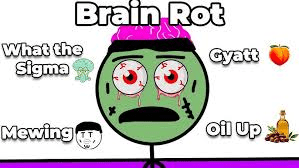
One of the latest features of online wordplay is the elevating of an older concept or cliche into a teasing provocation or pretence at new insights, as we have seen with ‘delulu’, ‘demure’ and ‘mindful’, ‘rizz’ and ‘brat’. The current rash of declarations of ‘being privileged’ – a new version of ‘humblebragging’ or ‘virtue-signalling’ – is another example. In parallel is the ironic celebration of the incoherence or absurdity of much online discourse and of low-quality ‘slop’ by embracing a culture of ‘brainrot’ – nonsense memes such as ‘skibidi’ and vacuous, contagious content.
Most of the innovation in online language and image still emanates from the US and even though a global audience can access it instantly, its tropes (think ‘goblin-mode’ – ‘goblin’ doesn’t have the same associations for Brits) don’t always translate for other speakers of English. In parallel, poses, gestures and looks as well as music-related modes are increasingly generated from non-English cultural zones such as Japan and Korea. It will be interesting to see if other parts of the globe begin to play a part in the evolving online theatre of signs and behaviours, but this doesn’t seem to have happened yet.
On the first of November Collins Dictionaries, ahead of the pack, had already announced their choice of word of the year for 2024, and their candidates illustrated the same, in my opinion mistaken, concentration exclusively on terms from a very narrow range of sources. While postings on social media are performances designed to attract attention, there is an even wider domain in which discourse demands analysis: the crises in the Middle East and Ukraine and the surreal spectacle of the US presidential campaigns, for example, are also highlighting keywords and generating new formulations or reworkings of language – data that mainstream media and lexicographers seem to think unworthy of their attention…
Digital media enables language change and innovation – of course, but how much and for how long?
I spoke to Caitlin Talbot, Culture Researcher for the Economist magazine, who asked me about the effect of TikTok talk and the slang, catchphrases and viral puns invented by Gen Z. Caitlin wondered how many new terms were actually being added to the global conversation each year, and whether these novelties would last.
My own solo attempts to record new language and to understand and comment on its sources rely on fairly haphazard, old-fashioned techniques, so it’s not possible for me to quantify the lexical items, locutions, expressions and longer elements of discourse that I come across. The major dictionary publishers do have access to powerful and sophisticated electronic methods of scanning, scraping (‘aggregating’ as it should more properly be termed) raw linguistic data from across the internet. This material can be categorised to a certain extent and entered into giant databanks from which lexicographers can select the terms they periodically admit into published dictionaries.
Attempts to amass and analyse examples of language in use are nonetheless hampered by several considerations: the language in question is primarily in the form of text, rather than authentic speech, and the texts in question are largely recoverable from published sources and media platforms, only to a limited extent from personal messages. Tracking their use over time is possible, and the popularity of some usages can be subjected to frequency counts and represented on timelines, but private use and communications by local and specialist communities is far harder to assess. One of the more interesting challenges to the lexicographer is to predict which novel terms may become embedded in the national conversation and which drop out of use – some almost immediately and others over time. In fact my experience (since I began to collect slang in the 1980s) proves that it’s impossible to predict, let alone to speculate as to why this happens.
Caitlin’s article, with useful links, is here…(if it is paywalled for you, go to here *)
In speculating about the number of new terms generated (and the playful, sometimes absurdist tendencies featuring on social media involve not only inventing new terms but reworking and re-purposing existing language like ‘demure’, ‘babygirl’, ‘millennial pause’, etc.) we can only fall back on subjective, anecdotal, incomplete accounts, even if these may be interesting and informative in their way…
THE WORD “demure” is old—it describes the sort of modest lady Victorians esteemed—but it is freshly fashionable. There are some 800,000 posts on TikTok with the tag #demure. Youngsters today are using the word with lashings of irony, invoking it to describe everything from Saturn to sunset to New York City’s bin service.
TikTok is changing how young people talk. Other fusty words, such as “coquette”, are fashionable again. Colloquialisms are on the rise: members of Gen Z say “yapping” instead of “talking” and trim “delusional” to “delulu”. New words have also become popular. Take “skibidi”, a term popularised by a meme of an animated head singing in a toilet; it means “cool”, “bad” or “very”, depending on the context.
On social media words spread far and fast. At least 100 English words are produced, or given new meaning, on TikTok a year, reckons Tony Thorne, director of the Slang and New Language Archive at King’s College London. Some linguists think the platform is changing not just what youngsters are saying, but how they are saying it. A “TikTok accent”, which includes “uptalk”, an intonation that rises at the end of sentences, may be spreading.
The platform’s versatility encourages experimentation. Users can combine audio, text and video in a single post. That means words that sound especially satisfying can go viral, as well as those that are memorable in written form. Linguistic code has emerged, dubbed “algospeak”, to dodge content-moderation algorithms. It includes euphemisms (sex workers are called “accountants”), and misspellings (“seggs” instead of sex).
The mutation of language on TikTok is also due, in large part, to the age of its users. Most are 18-34 years old. That matters because “Young people are language innovators,” says Christian Ilbury, a linguist at the University of Edinburgh. For decades youngsters have created words to distinguish themselves from adults. On social media such neologisms find a big audience. Mr Ilbury describes this as “linguistic identity work”; parents have long called it attention-seeking.
The platform brings together fan groups and communities, from #kpopfans (people who like Korean pop music) to #booktokers (people who love reading). These groups create their own slang, says Adam Aleksic, a linguist and influencer. Some of it leaks into the mainstream. Other slang comes from specific groups: black people have innovated and spread hundreds of English words over the years, from “cool” to “tea” (gossip). Journalists and screenwriters popularise such words; now TikTokers do, too.
*For help in understanding the language and online mannerisms of TikTok and GenZ, I’m grateful to my daughter, Daisy Thorne Mrak*
It has become a tradition for the major dictionary publishers, along with some linguists’ associations, to nominate a ‘word of the year’, a term (or in the case of Oxford’s 2015 crying/laughing emoji a symbol) which supposedly captures the essence of the zeitgeist, and in doing so marks the proposer as someone in tune with the times and with their target audience. The words chosen are rarely actually new, and by the nature of the exercise calculated to provoke disagreement and debate. I have worked with and written about what linguists and anthropologists call ‘cultural keywords’ and have my own ideas on which expressions could be truly emblematic of social change and cultural innovation. The words already nominated by the self-appointed arbiters are discussed at the foot of the page, but here, for what it’s worth, are mine (in order of preference)…
AI
Yes, strictly speaking it’s two words, but this little initialism looks like a two-letter word and is processed by the brain as a ‘lexeme’ or a single unit of sound and sense. AI, artificial intelligence, is the hottest topic not only in tech-related practices but in fields as (seemingly) diverse as marketing, finance, automotives, medicine and health, education, environmentalism. Zdnet.com has published one of the most useful overviews of AI and its sub-categories and applications:
Though it is one of the most fashionable and most resonant terms in current conversation, a slogan and a rallying cry as well as a definition, AI is problematic in the same way as two other recent contenders for word-of the moment, CRYPTO and DIGITAL. The former is shorthand for all the very complex, not to say near-incomprehensible elements that have accompanied the invention of crypto-currencies – bitcoins and blockchains in particular. These advances have yet to prove their worth for most ordinary consumers who will often be bemused by new terminology that seems to be traded among experts somewhere beyond their grasp or their reach. In the same way for the last few years ‘digital’ has been a mantra evoking the unstoppable influence of new electronic media, (related SOCIAL was a strong candidate for buzzword of 2017). Digital’s over-use by overexcited marketing professionals, would-be thought-leaders and influencers has been inspiring mockery since 2016, as in the spoof article in the Daily Mash: https://www.thedailymash.co.uk/news/business/nobody-knows-what-digital-supposed-to-mean-20160614109525
To put it almost as crudely as the Daily Mash does, there’s a sense in which almost no layperson knows, or can know fully, what Digital, Crypto and AI really mean, and the same goes for the expressions derived from them – ‘deep learning’ comes to mind. Their power derives from their novelty and their ability to evoke a techutopian future happening now. The phrase artificial intelligence was first employed in 1956 and its abbreviated form has been used by insiders since at least the early 2000s, but it is only now that it, and the concepts it embodies, are coming into their own.
INTERSECTIONALITY
At first sight just another over-syllabled buzzword escaping from the confines of academic theory (‘performativity’, ‘superdiversity’ and ‘dimensionality’ are recent examples) into highbrow conversation, intersectionality is actually an important addition to the lexicon of identity studies. It was coined as long ago as 1989 by Kimberlé Crenshaw, a civil rights activist and legal scholar who wrote that traditional feminist ideas and anti-racist policies exclude black women because they face overlapping discrimination that is unique to them. The word took 26 years to make it into the OED and is still unfamiliar to many, but during 2018 has featured in more and more debates on diversity and discrimination, marking the realisation that, for BAME women and for other marginalised groups, the complexities of oppression and inequality occur in a matrix that incorporates not only gender and ethnicity but such factors as age, sexuality and social class. There are each year a few forbiddingly formal or offputtingly technical expressions that do deserve to cross over into mainstream use. This I think is one of them and no journalist, educationalist, politician or concerned citizen should be unaware of it.
I was intrigued by the sudden appearance (sudden at least by my understanding) earlier this year – its online lookups spiked in June – of a decorous, dignified term in the midst of very undecorous, undignified public debate. This old latinate word’s denotations and connotations were in complete contrast with the ‘skunked terms’ and toxic terminology that I had collected elsewhere on this site. In fact, as is often the case, this word of the moment emerged from a longer tradition, but one largely unknown hitherto outside the US. Its proposer was Professor P.M Forni, who sadly died a couple of weeks ago. In 1997, together with colleagues he established the Johns Hopkins Civility Project — now known as the Civility Initiative — a collaboration of academic disciplines that addressed the significance of civility and manners in modern life. His ideas were seized upon by commentators on this year’s events in the US, with some asserting that the civil rights protests of the past were indeed more civil than today’s rancorous exchanges. Democrat Nancy Pelosi denounced Donald Trump’s ‘daily lack of civility’ but also criticised liberal opponents’ attacks on him and his constituency. Others pointed out that polite debate alone had never prevailed in the struggles against bigotry and violence and that civility was an inadequate, irrelevant response. Cynics inserted their definitions: ‘civility’ = treating white people with respect; ‘political correctness’ = treating everybody else with respect…which prompts the thought that perhaps, in recognition of realities on both sides of the Atlantic, it’s really ‘incivility’ that should be my word of the year.
Here, in the Economist, is the ‘Johnson’ column’s perceptive analysis of those other nominations for 2018’s word of the year:
In the New Year the American Dialect Society announced its own word of 2018, a disturbing euphemism employed by the Trump regime and a candidate for my glossary of toxic terminology (see elsewhere on this site):
…and, FWIW, I like to think that my own collection of cultural keywords, seeking to define the essence of Englishness back in 2011, is still relevant today:
In my last post I looked at the names of a range of Hallowe’en creatures and investigated their origins. Let’s now consider, too, the practitioners of magic – whether supernatural or real – impersonated in today’s festivities.
The most familiar of these, the witch, derives its modern name, in use since the 16th century, from the Old English wicce (the feminine form) or wicca (the masculine), first attested as long ago as 890 CE, or perhaps was coined later from the verb to bewitch, descending from Old English wiccian. Many commentators have proposed a prehistoric origin for the English terms, but have not managed to agree on what that origin might be. Middle Low German, the nearest neighbouring language to ours, had wicken and wicheln for bewitch, but there are no other contemporary cognates (provably related words) recorded elsewhere in mediaeval Europe.
Attempts have been made to connect the Germanic witch-words with Indo-European roots denoting contorting (as when shamans are performing incantations), waking (the dead for instance) or casting lots (to determine destiny), but these are unconvincing. There is an unproven but more plausible link with Slav words derived from the Old Slavonic verbs meaning ‘to know’ which use the root ved- or wied-. Female witches were, in English too, described as ‘wise’ women, as in the equivalent Slovenian vedomec, or Polish wiedźma. The modern German name for witch, hexe, is probably, but again not provably, related to English hag, (Old English haegtesse) an ancient word which persisted in use among the superstitious in the United States, who also adopted ‘hex’ in the 19th century from Pennsylvanian German as a synonym for curse.
(Our relatively innocent domestic companion, the cat, could also double as a witch’s evil familiar, and nowadays as a Hallowe’en character in its own right. Its name, catte in Old English, is obviously related to Dutch kat and German Katze and more distantly to the earlier Latin cattus and Greek catta. Intriguingly, though, the word’s origin might not be Indo-European at all but Afro-Asiatic; in the Nubian language it is kadis, for Berbers kaddîska, and in Arabic qitt.)
The witch’s male counterpart, the wizard, certainly does derive his name from wisdom or knowing. Wisard, from Old English wys, wise and the suffix (originally French) -ard meaning person, first described a sage or a philosopher before mutating in the 16th century into the practitioner of magic we nowadays caricature in pointed hat and robe. The synonyms sorcerer or sorceress come from French sorcier, enchanter or magician, itself from Latin sors meaning fate, oracular pronouncement, from an Indo-European root denoting binding and sorting.
I’m personally highly resistant to clowns in any form, but particularly the grotesque killer clowns that have been running amok in popular literature, cinema and even public places for the last couple of years. Forgive me, then, if I limit myself to etymology. The noun clowne (cloyne was a variant that has since disappeared) appeared in English in the 1560s, the verb form in 1600. The word originally signified a rustic, a clumsy peasant or simpleton. It is not clear exactly where it came from – some eminent authorities have tried to link it to the Latin colonnus, a farmer or settler, but it seems to others – and to me – that it’s no coincidence that similar-sounding words existed in Scandinavian and Low German usage, all related to our own ‘clod’ and ‘clump’ and evoking something lumpy, dense and crude. English dialects and the English of the tavern often adopted colloquialisms from other parts of Northwest Europe in the Early Modern period. Clown was first used to describe a costumed and painted circus performer in the 1720s and other languages including Welsh, French, Swedish and Slovenian subsequently borrowed the English word in this sense.
...for 2017’s festival, Marketing Week gave usa snapshot of the commercial implications:
The reanimated (it had virtually disappeared in Britain until revived in the 1980s in its American incarnation) festival of Hallowe’en draws ever nearer, and its ghastly avatars begin to assemble in the darkness. Wearyingly familiar though their images have become, thanks to commercialisation, the origins of these bugbears’ names are not always straightforward. The lurid orange pumpkin has mutated, its modern name an alteration of ‘pompone’ and ‘pumpion’ which could designate either melon or pumpkin in the 1540s. The English word was adopted from French pompon, from Latin peponem, meaning only melon, from the earlier Greek pepon. The ‘-kin’ suffix, meaning little or cute, was borrowed from Middle Dutch, the ‘pom/pum/pep’ component probably an example of prehistoric sound symbolism whereby the puffing required to say the words imitates the inflation of the bulbous object itself.
In fact it was more often the turnip that was hollowed out and illuminated in England, Scotland (where they are known as ‘tumshies’) and Ireland until recently, pumpkins being an American favourite. But there is a very odd connection between two of Hallowe’en’s most potent symbols in a 19th-century report by the Slovene folklorist Wiesthaler who writes that superstitious Balkan Gypsies believed that pumpkins (and watermelons too) could become possessed and exhibit vampiric characteristics.
Hobgoblin (the ‘hob-‘ is a familiarising nickname, from Hobbe, a variant form of Robbe or Robin) or goblin appeared in English in the 14th century with the sense of mischievous ugly devil or fairy. It was probably borrowed from 12th century French gobelin which is thought to be related to mediaeval German kobold, a household or subterranean sprite, and possibly to the older Greek kobalos which denoted an impudent rogue. Sprite, incidentally, is a modern pronunciation of the Middle English ‘sprit’, a shortened form of spirit, while spook, borrowed by Americans from Dutch in the early 19th century has cognates in German, Swedish and Norwegian and probably comes from an ancient Germanic term for wizardry. Imp has meant little devil since the later 16th century, from the notion of a being that was the ‘offspring of satan’. In Old English ‘impa’ referred to a graft or shoot from a plant, coming to us via Latin impotus, from Greek emphytos, implant, ultimately from a presumed IndoEuropean word *bheu, grow.
Ghosts* are named from Old English gast which meant spirit or soul and could also mean breath. The ‘h’ was added in the 15th century, probably by printers influenced by the Flemish or Middle Dutch form of the word, gheest. Both are related to German geist, spirit, which comes from the presumed proto-Germanic *gaistaz, itself from a presumed Indo-European root *gheis– used to form terms conveying amazement and/or fright. In the same category are the phantom, from Greek phantasma (unreal image, apparition) which became Old French fantosme before being borrowed by English, the spectre retains the French form of a Latin word for an apparition, spectrum, from the verb specere, to see. Wraith, on the other hand, is a Scottish word, recorded in the 15th century but of unknown provenance. It has been suggested that it is related to writhe or to wrath, or to an Old Norse word, vǫrðr, a guardian spirit or watcher.
Though its spelling now makes it look like a relative of ghost, ghoul was originally Arabic غول gul, the name of an evil spirit, a desert demon recorded in Islamic folklore and said to haunt cemeteries, devour newly-buried cadavers, abduct children and attack travellers. Its root is a verb meaning to seize and it is probably related to galla, a very ancient Akkadian and Sumerian term for a fiend from the netherworlds. The word was anglicised, first as ‘ghul’, in the late 18th century.
Zombie, first recorded in English in an 1819 guidebook to Brazil and popularised in movies of the 1930s, comes via the Haitian Creole word zonbi and Caribbean French zombi, denoting an animated corpse, a staple of voodoo folklore, transplanted from zumbi, fetish and n-zumbi, originally the name of a snake god, in the Kumbunu and Kikongo languages of West Africa.
The werewolf combines the ancient name of the ravenous animal – wulf, later wolf – with the Old English wer, man, which shares an origin with Latin vir (from which we get virile, manly). In the 13th century wer fell out of usage, but the compound expression survived, as it did in other Germanic languages.
For me, though, because I have studied it, and because it is the most complex, the most protean of these beings, it is the vampire whose attributes and incarnations are the most fascinating. The bat was, in Old English, until the 14th century, the bakke, related to Old Scandinavian words such as natbakka, literally ‘nightflapper.’ By 1570, however, ‘bat’, a country dialect alternative, had become the preferred form.
The bat, however, is only one version of the protean vampire. That monster’s many other incarnations are discussed elsewhere on this site.
The venerable ancestors of our modern shapeshifters, from the classical era, are discussed in this two-part blog by Sententiae Antiquae:
In November 2002 the Sun newspaper reported that footballer’s wife ‘Posh Spice’ Victoria Beckham had launched a legal bid to stop second division football club Peterborough United from registering its nickname Posh as a trademark. The former Spice Girl claimed the word had become synonymous with her. ‘Sun readers, the paper affirmed, ‘back the club, which has used the name for eighty years.’ This little word epitomises both the English obsession with status distinctions and the jokey tone in which such a contentious subject is often addressed.
Fictional characters in the novel Diary of a Nobody, published in 1892 and the musical Lady Madcap, playing in London in 1904, sported the name Posh, and in a 1918 Punch cartoon a young swell is seen explaining that it is ‘slang for swish’. The first use of the word in the Times newspaper was in a crime report from May 1923, headlined ‘The Taxicab Murder’. ‘A walking stick was left at the scene of the crime, which the murderer left behind after shooting the driver, which belonged to his friend Eddie Vivian. He said…that he went out with Eddie’s stick because he wanted to be ‘posh’.’ In 1935 in the same paper the use of the word, which still appeared between quotation marks, was excused as ‘inevitably the idiom of the younger generation creeps in’.
The popular derivation, from the initial letters of ‘Port Out, Starboard Home’ allegedly affixed to the cabin doors of first-class passengers on P&O Orient Line steamships, is certainly false, as demonstrated by, among others, word-buff Michael Quinion in his 2005 book which took the phrase as its title. Posh seems to have been used in low-life slang for some time before it was first recorded in a dictionary of 1889 with the principal meaning ‘money’ and the subsidiary sense of ‘dandy’. It may be the same word, in the form ‘push’, meaning ‘swanky, showy’, that featured in Edwardian upper-class student slang (‘quite the most push thing at Cambridge’ was P.G Wodehouse’s description of a fancy waistcoat, from 1903). The ultimate origin, then, is obscure: in the Romany language which was a rich source of pre-20th century argot, posh could mean ‘half’, often referring to half a shilling/crown/sovereign, etc. so may have come to denote money in general, then the trappings of wealth.
In 1966 Michael Aspel was carpeted by the BBC for selling records of elocution lessons featuring his voice and that of Jean Metcalfe (whose obituary in 2000 noted her ‘deep, cultivated voice’, the ads for which implied, the corporation said, that broadcasting required a posh voice. Like class-consciousness itself, and like the assertively upper-class accents it often described, the word posh seemed to fall out of fashion after the end of the 1960s, only to reassert itself at the new millennium. At the end of the ‘noughties’, it took on a renewed importance with David Cameron’s accession to the leadership of the Tory party and fellow Old Etonian Alexander Boris de Pfeffel Johnson’s election as London mayor. As a literal synonym of privileged/wealthy/upmarket it is usefully inoffensive. Very frequently, however, it is used ironically, as in references to ‘posh nosh’ (typically very expensive sausages), and what online gossip site Popbitch dubs the ‘too-posh-to-push brigade’ – pampered mothers who opt for caesareans at private hospitals rather than natural births.
Reviewing Joanna Lumley mocking her own accent in a 2005 TV commercial, the Independent on Sunday commented, ‘In the 1960s, After Eights, Harvey’s Sherry and Cockburn’s Port were sold to Mrs Bucket’s everywhere on class – the idea that posh people bought them…if you want to do posh now it has to be spoofy and retro.’
In pop culture contexts posh has proved to be handy as an antonym of chav, especially in the numerous test-yourself quizzes in tabloids and online claiming to assess the underclass/toff-factor. From around 2000, ‘posho’ in UK campus slang has denoted a fellow-student perceived as from a wealthy or privileged background, while the litigious Victoria Beckham should note that in the same circles ‘Posh ‘n Becks’ is rhyming slang for sex.
Where accents are concerned the tide has seemed to flow in only one direction: in 2013 another broadcaster, the Radio 4 announcer Charlotte Green, accepted voluntary redundancy, declaring ‘received pronunciation, or accent-less accent [sic], is on the wane. The BBC’s days of employing people who sound like me are more or less over.’ She had once been voted the most attractive female voice on radio, that voice described as ‘a marvel, something to make one feel safe and secure, like being tucked up in bed with a hot water bottle.’ These days Cameron and Johnson play down their patrician tones to some extent, but fellow OE Jacob Rees Mogg incorporates a mannered, punctilious accent into his repertoire of self-presentation, adding to what the Sun terms ‘his ultra-posh exterior’ (the p-word is routinely applied to him by all sections of the media) and signalling to some the resurgence of a fogeyism that is either picturesque or (‘Please-Flog’ was one of the least offensive nicknames suggested in a Twitter poll) unsettlingly sinister.
I have been asked by students and colleagues to write, very belatedly perhaps, about emoji. While searching for something novel and meaningful to say about the phenomenon, and looking for a stance to adopt in the (sometimes tedious) ‘is/are emoji a language?’ debate, I thought I would share some first thoughts and a list of references (a personal selection from the mass of material recently published), to provide a shortcut for anyone else studying the subject…
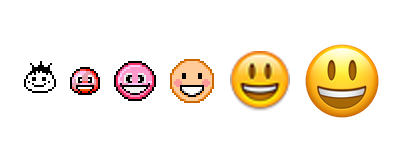
AN EMOJI TIMELINE
1964 – the smiley face 😊 symbol invented by Harvey Ross Ball
1982 – (11.44am, September 19) Scott Fahlman of Carnegie Mellon University in the USA posts the first emoticon: : – )
1989 – Internet acronyms (such as LOL, LMAO, WTF), having appeared on message-boards and in chatrooms since the mid-80s, spread rapidly across the anglosphere via text-messaging and email
1991 – the Unicode Consortium is founded to develop universal standards for Internet text-processing
They insert punctuating ‘mood-breaks’ into conventional sentences😠 in a sort of ‘bimodal codeswitching’
They are to written communication what nonverbal cues – paralinguistic ‘phatic-communion’ (70% of emotion in real-life interactions is communicated nonverbally)– are to spoken communication, occupying the ‘space between word and gesture’, enabling ‘visual small-talk’
They are ‘tone-markers’, introducing irony, sarcasm and emotion/’emotivity’ to otherwise impoverished digital texts😍
They are ‘gestural’, functioning similarly to two categories of physical gesture: ’emblematic’ which, like a thumbs-up or middle finger, are symbolic and culturally specific, and ‘illustrative’ which imitate real objects or movements
They (like graffiti, memes, GIFs), exploit an inherent human need for ‘visuality’, along with a more recent requirement for empathy, cultural allusion, humour and positive play😎 to create a new hybrid or multimodal digital literacy
DO EMOJI HAVE ANY LASTING SIGNIFICANCE?
Can a hybrid transnational code help to change consciousness?
Do emoji reinforce (hyper)individualism and the establishing of hyperlocal communities of practice/microniches/meganiches?
Or could emoji move us further towards a collective global intelligence, a ‘virtual communal brain’?
Are emoji ‘hegemonic’ in that they reinforce the priorities and power-relationships of consumer capitalism (they have after all already been appropriated by/commodified for marketing, advertising and manufacturing)?
Or are they ‘antihegemonic’/subversive in that they disrupt😈 traditional discourse, empower individuals and new collectivities?
One of the best histories and overviews of the subject was provided by WIREDmagazine earlier this year:













 tony thorne