In a rather breathless 2015 podcast from the Pod Academy I talk around the subject of slang…
In a rather breathless 2015 podcast from the Pod Academy I talk around the subject of slang…
THE 100 WORDS THAT MAKE THE ENGLISH
– AN INTRODUCTION
Tony Thorne’s collection of cultural keywords, The 100 Words That Make The English, was published by Abacus in 2011
At the very moment of writing I’ve glanced at the Daily Telegraph newspaper (I buy it for the Court Circular) and noticed one of those ongoing debates on the letters page, triggered this time by a reader’s claim that social class can be judged by the texture of the marmalade on the breakfast table, thick-cut being favoured by patricians, medium, aptly, by Middle England and thin, less aptly, by the lumpen masses. The mainly good-humoured reactions include observations by ‘deviant’ lovers of (inevitably thin-cut) lemon marmalade, of thick-cut spread on fried eggs, an assertion that ‘the best people have honey’, and a slight digression by a Mr Mansfield of Chelmsford: ‘Sir – Is it also true that crumpets are consumed by the working class and muffins by the middle class, while ownership of a toasting fork is deemed upper class?’ which begs a number of questions. The eponymous crumpet is discussed in this book, so no more of that here. The traditional English griddle-cake muffin (probably from Muffe, 18th century Low German for a small cake) is now a rarity, and I don’t think the spongey American-style fruit or chocolate flavoured cupcakes of the same name (which gave us the slang ‘muffin-top’ for a bulging midriff) are what the correspondent had in mind. The only toasting forks I have seen recently have been used for cooking marshmallows over campfires – another American custom – but perhaps I’m moving in the wrong circles. And the other members of what a lexicologist would term a ‘lexical set’, the teacake and the scone – where do they stand?
Three days ago broadcaster Edward Stourton (sometime presenter of the Today programme, usually characterised as ‘Old Etonian’, ‘posh’ or ‘toff’ or a combination thereof) confirmed persistent rumours that the late Queen Elizabeth the Queen Mother, the nation’s favourite grannie, habitually referred to our fellow EU members as ‘Huns, wops and dagos’. Today he has had to apologise for referring to her as ‘a ghastly old bigot’ (borrowed from French in the 16th century, bigot was, perhaps appropriately here, a rude nickname for the hegemonic Normans: it is also, of course, the word that helped bring down Gordon Brown). Although it’s now November, I’ve noticed that a nearby pub has been flying the flag of England, the red and white cross of St George, something that makes me slightly uneasy. It either means that I’ve missed some crucial international footballing fixture or else that the pub has become a haven for what sociologists have started to call ‘nativists’, in other words English ultra-patriots, in many cases, not to mince words, ghastly bigots. Freely associating brings back memories of Euro 2004 when, before England’s game against France in Portugal, 30 million of these flags were sold, ‘to be’ according to our jingoistic press, ‘set fluttering from every shade and model of car, driven by English men and women of every age, religion, culture and class’. The red and white banner is still regularly to be seen on the back of Vauxhall cars or flying above churches on St George’s Day, and there’s another connection: I remember comedian Russell Brand, (a very different sort of national treasure, before being disgraced for lewd behaviour on air, then resurrected as a Hollywood star), apologising earlier this year for being absent from the country on St George’s Day which he was celebrating in the USA. He did graciously confide that he was proud to be English, ‘But we can’t go around, draped in the flag, dressed as Pearly Kings and Queens, belting out Vera Lynn songs.’ As if expecting the perennial argy-bargy (a 19th-century reduplication of Scottish dialect ‘argle’, argue) over defining Englishness to kick in he added, ‘We know what it is to be English.’
It’s these seemingly trivial cultural flurries that THE 100 WORDS delights in. Crumpets, the Hun, flag-waving and Pearly Kings are tokens that we reach for when we reassert our membership of, to use the very latest jargon, a ‘community of circumstance’ calling itself for convenience ‘the English’. Senior royals (in everyday vernacular the upstart ‘royals’ supplanted ‘the royal family’ in the mid-1990s and has since appeared 33000 times in the Daily Mirror alone), and virtuosos of smut (from Middle English ‘smitte’ and ‘smot’, meaning ‘stain’ and related to ‘smudge’) in the Max Wall tradition are among the ‘beacons of iconicity’ (an abomination perpetrated by publicists for the 2012 Olympics…or was it ‘icons of beaconicity’?), folklore figures that seem to symbolise the conflicted national character.
Since the mid-1990s, arguments about what it means to be ‘British’ or ‘English’ have intensified, prompted both by ‘top-down’ political edicts on devolution and citizenship and by ‘bottom-up’ agitations from a disoriented public. In writing about Englishness and the English cultural analysts refer to abstracts such as the well-known ‘deference’, ‘reticence’, ‘scepticism’ and ‘deferred gratification’ (all in their estimations gone or endangered) and the less predictable, hence more interesting, ‘narcissism, ‘self-importance’ and ‘imaginary’ (as noun, not adjective, by which they mean something like ‘collective fantasy’). They pontificate about shifts in attitude using labels like ‘hedonism’, ‘consumerism’ or (a nice recent example) ‘pathological individualism’, to suggest that we have abandoned one set of behaviours for a radically different one. Occasionally they neologise in an attempt to get at an elusive truth, as with anthropologist Kate Fox’s ‘dis-ease’; collective anxiety stemming from a lack of social skills and fear of intimacy, or ‘cognitive polyphasia’, MORI opinion pollster Ben Page’s term for the condition of holding multiple contradictory beliefs at the same time. Lifestyle journalists, like Decca Aitkenhead writing in 1997, love to generalise in a more conversational style: ‘They wear clothes they are painfully unsure about, dance uneasily to music they don’t know and tell each other bad jokes they heard on Radio 1…’
Though a few loaded keywords like ‘class’ and ‘decency’ are shared with the commentariat, attempts by ‘ordinary’ members of the public to define Englishness usually have a very different flavour. A trawl of postings and interviews throws up: ‘Englishness: the Queen, fairness, tolerance, strawberries & cream, support the underdog’ (– Anon): ‘this is england and curry is not an english tradition i am just preparing sunday lunch roast beef with all trimmings i have been to church singing beautiful english hymns this is england at its best’ (- Val S. Oxon, in the original spelling), and ‘I know I need foreign help to keep farming and Ukip will put an end to those workers coming here, but Englishness is a delicate tree and I think, if we need to pollard a few branches to protect the rest, it is worth it.’ (- Gary Andrews, Cotswold farmer and UK Independence Party supporter). ‘We don’t know who we are: we’re not British, we’re not Scottish or Welsh: we’re partly the powerful nation of yore and partly dispossessed’ laments an English football fan without a nation state to cling to, adding ‘it’s an extraordinary position to be in’. Despite the agonising by pundits and proles it seems that the quest for the essence of Englishness is futile. It’s like a question to which no adequate answer can be given, but that doesn’t mean that we will stop asking, even when the question is fatuous (17th century, from Latin fatuus, ‘gaping’). A recent poll of young Asians required them to quantify how British they felt ‘as a percentage’, without any attention being paid to what ‘Asian’, ‘British’, ‘young’ or ‘felt’ might mean, let alone whether one’s feeling of allegiance or belonging to something so hard to define might vary from day to day.
It’s absurd to look for Englishness in ethnicity, in DNA, as Daniel Defoe pointed out as along ago as 1703. Recollecting the ebb and flow of invaders and mercenaries pre-1066 he quipped, ‘From this amphibious ill-born mob began/
That vain ill-natured thing, an Englishman…/In eager rapes and furious lust begot/ Betwixt a painted Briton and a Scot…/ From whence a mongrel half-bred race there came/ With neither name nor nation, speech nor fame.’ At different times in the same verse satire Defoe both anticipated the celebrating of diversity: ‘…the multitudes of foreign nations who have taken sanctuary here have been the greatest additions to the wealth and strength of the nation,’ and adopted the voice of the anti-immigration xenophobe: ‘We have been Europe’s sink, the jakes [toilet] where she/ Voids all her offal outcast progeny.’
We could simply dismiss all the verbiage and the bluster (15th century from Low German blüsteren, ‘to storm’), as two recent commentators have done, ‘…to truly belong in a country and be committed to it only requires that you respect the rule of law and see the government and its civic institutions as the legitimate instruments for making and implementing those laws.’ (philosopher Julian Baggini), ‘Give me a nation of people who pay their taxes, honour democracy and treat each other with respect and I couldn’t care less how British they ‘feel’’. (journalist Dave Hill).
At a more rarefied level proponents of cultural theory, which is largely based on ideas from linguistics, have an agenda. They want to clear away our preconceptions and demonstrate that a ‘liberal’ world-view based on ideas of nationhood, the ‘grand narratives’ of heritage and history and the autonomous individual are illusory. They prefer to say that culture and identity are symbolic representations formed of, or in, ‘discourse’ – that is language in its widest sense. Culture is an interplay of different discourses: public discourse, the language of government and officialdom; media discourses, the language of show business, broadcasting, the press (including ‘journalese’ – the short sharp headline words, the clichés and stylistic quirks favoured by journalists) and advertising; private discourse, the language of ordinary people in everyday situations – difficult to access but identifiable in readers’ letters to newspapers, published diaries, Internet chat-rooms and txt msgs. In a ‘technologised’ society based on ‘hyperconnectivity’ it’s increasingly difficult to differentiate these varieties or styles, as the audience – the public – borrows from the media who themselves have borrowed from the street or the club, and everyone becomes complicit in the national conversation, shot through as it is by the jargon of fashion, music, therapy and business. Although their attempts to deconstruct the idea of national identity are attempts to destabilise, devalue, ultimately to discredit it, the cultural theorists are right about one thing. If we are looking for Englishness, it is in language that we will find it.
And so in getting to grips with Englishness THE 100 WORDS focuses on language, more specifically on individual words, though larger ‘lexical units’ such as slogans and catchphrases are mentioned in passing. Words, even the brusquest ones, are not one-dimensional things, but complex bundles of meanings and associations. The relatively uncomplicated word ‘stallion’, for instance, has within it two essential semantic components, combining the base ideas ‘horse’ and ‘male’. But any close-up analysis would have to consider the word’s additional connotations of ‘virile’, ‘strong’, ‘spirited’. Stallion, used figuratively rather than as a neutral description, with its suggestion of impressive dominance, might be contrasted with ‘mare’, a word that in the combination ‘brood-mare’ emphasises a passive, one-dimensional, purely procreative function, and in English working-class slang has always been derogatory, denoting a drab, wearisome female…taking us from semantics to gender controversies in a couple of steps. Words are unstable, too, in the sense that they may have meant different things at different times, or may be interpreted in different ways according to their user and her/his audience. In offering definitions, comments on typical usage and etymologies, dictionary-makers have to affect a cheerful omniscience, but know that they cannot finally be objective. Words are part of the psychic furniture of tens of millions of individuals, for each one of whom any individual word may have quite unique resonances. The language teacher’s two reductionist benchmarks for determining acceptable usage; ‘intelligibility’ (can it be understood?) and ‘appropriacy’ (is it suitable for its context?) don’t fully take account of the fact that ‘lexemes’ (words, phrases and longer formulations) may also encode values and allegiances, determine behaviour, trigger emotions, and these ‘affective’ aspects are precisely what this book deals in.
It’s artificial, too, to do what dictionary format demands and treat words in isolation, as, in practice in their real-world settings of speech and writing, they are found alongside ‘co-text’, the language that surrounds them. Single instances or sequences of language operate within a mosaic or web known as ‘intertextuality’, the whole interpenetrating influence of prior expressions, forms of expression, rules for expressing. Anyone scripting a sitcom or soap set in wartime, for instance, is likely to draw upon pre-existing stock characters and situations, verbal and visual allusions to other genres such as newsreels, documentaries and ‘Boy’s Own’ adventure books, to quote, to paraphrase or to parody famous speeches, to repeat jokes, proverbs and received opinions. Linguists also see words as part of ‘semantic fields’, the cluster of terms in any given language that are closest to them in meaning, so focusing, for example, on yob should entail a sideways glance at the equally well-established ‘hooligan’, ‘lout’, and ‘layabout’, together with the more recent ‘ASBO’ and ‘hoodie’. In the same way looking at ‘collocations’, the way certain words are routinely combined in a particular language can lead us into intriguing complexities. To ‘lay down one’s life’ (eg ‘for one’s country’) looks like a natural formulation to us, but French uses instead the verb ‘sacrifice’, evoking an image of personal heroism, rather than ‘lay down’, once perhaps referring to prostrating oneself on an altar or block, but now suggesting surrender of weapons, making the pun ‘to lay down one’s wife for one’s country’ (supposedly demanded of aristocratic English husbands by the heir to the throne) even more taxing to translate. Too few of us have a command of any other linguistic system, let alone an ability to shift in and out of different ways of encoding our experiences – what linguists call ‘code-switching’ or ‘crossing’ between languages or dialects. So translation is another way of defamiliarising or ‘de-centring’ a concept in order to try and objectify it – how do the French express the ideas we encode by way of the word gentle for instance? Despite the fact that we took the word from them centuries ago, there is now no single term in French that does justice to the nuances our word has acquired. Matching our keywords with their equivalents or lack thereof in other languages can enable us to highlight, compare and contrast cultural attitudes and peculiarities. Linguists have shown that clusters of words which describe the most essential social relationships, such as the synonyms for ‘friend’; chum, ‘pal’, or ‘mate’ in English, don’t have precise equivalents in other languages and even convey different senses when used by English speakers outside the UK. Some ethnolinguists and semanticists – notably the Polish-Australian Anna Wierzbicka – have grappled with culture-specific concepts and the supposedly ‘untranslatable’ keywords (Russian pošlost’ which covers a spectrum of meaning from ‘shameful’, through ‘commonplace’ to naff; the many native Australian words for sand, not one of which equates to the English word, etc.) that embody them in attempts to explain the inner workings and inner life of a people to outsiders. THE 100 WORDS adopts this approach with English and Englishness, largely for the benefit of ‘natives’ this time, but not by way of a technical or academic study. The book is designed for the ‘general reader’ – the broadminded and curious explorer willing to fight their way through a hotchpotch of references and allusions, a smattering of quotations, a series of collisions between scholarly inquiry and wilful frivolity. Although entries are in alphabetical order, this is not a traditional reference book; it is biased, opinionated and selective.
How brands get it wrong – and occasionally right: an article from 2015…
THE WORD ON THE STREET? ADVERTISERS SHOULD MIND THEIR LANGUAGE IF THEY WANT TO CONNECT

Aiming at the widest possible audience means, logically enough, that advertising usually goes for the most accessible kind of language. It’s when it doesn’t do this, and heads off-piste towards the wilder realms of slang, text-speak or dialect that especially interests a linguist like me. Some recent examples show how a focus on language can work when it’s done judiciously and targeted properly. Honda’s speed-reading captions (‘Keep pushing and get to better faster.’) that go with the slogan ‘Keep Up’ have drawn admiring comments from its target audience. The ad uses highly conversational catchphrases rather than street slang and challenges viewers to keep pace with its high-speed delivery.
The Royal Navy’s latest recruitment ads feature a voiceover in strong Geordie accent, colloquial phrases like ‘up my game’, but work since their fictional speaker looks and sounds authentic, not condescending or trying too hard. Adidas, too, gets it right with its ‘haters’ ad: hiphop beats and street catchphrases like ‘take you out’, ‘score all the girls’ delivered in a multi-ethnic accent go with a message – haters will envy you, but you don’t care – that a youngish demographic is sure to embrace. Using both slang and hashtag Money Supermarket’s #epic strut car insurance campaign works because the visuals – hapless Dave struts his stuff in hotpants and heels – are so silly you fall for it. Soundtrack is once again hiphop, but street-speak is kept to the bare minimum ‘Dave feels epic.’
Other recent attempts to combine funky speech and street style have prompted mixed reactions. Sport England’s This Girl Can campaign, aimed at empowering women to exercise, featured phrases like ‘feelin like a fox,’ ‘damned right I look hot’ and ‘knackered’ to a soundtrack of Missy Elliott’s Get Ur Freak On. Judging by online comments it impressed many of its target group but was blasted by Guardian feminists for calling women ‘girls’ and focusing on close-ups of flesh.
Perceived ‘bad language’ is still an issue for UK consumers, as witness Booking.com’s 2015 TV and cinema ad, scrutinised by the ASA after it received 2345 complaints that ‘booking’ had been substituted for ‘f***ing’ in its voiceover, ‘…you got it booking right…it doesn’t get any booking better…exactly what you booking needed…’ The ASA ruling cleared the brand of wrongdoing: ‘Although we acknowledged that the placement of the word was redolent of the use of expletives, we noted that the ad did not expressly use any explicit language and therefore concluded that, although some viewers might find the connotation and word-play distasteful, it was unlikely that the ad would cause serious or widespread offence.’ Burger King’s 2010 ‘King Great’ slogan was allowed too, but furniture outlet Sofa King’s ‘Sofa King Low (prices)’ was banned. Lloyds Pharmacy wasn’t sanctioned but upset more than a few London underground commuters in 2013 with its poster campaign picturing a defensive line of uncomfortable-looking footballers above the double-entendre ‘Harder Tackle’. The ads were promoting erectile dysfunction treatment with pills ‘for better keepy-uppie.’
Another travel brand, Expedia this time, tried imitating rhyming slang and regional dialect in a 2012 campaign, provoking derision from professional linguists and not a few consumers, too. A trip to London was described in cringe-making ‘cockney’ as follows; ‘I booked in a Bob Murray so I saved maw bees an oney’ (supposedly translating as ‘I booked in a hurry so I saved more money’). Another ad reported on visiting Dublin in a bizarre attempt at Irish pronunciation; ‘It cast nex ter nuttin an we ad a tap noight oyt.’ What were they thinking?

There have been other campaigns over the years in which using unorthodox language has had mixed results. Tourism Australia’s ‘Where the bloody hell are you?’ slogan bombed in the conservative US. Jaguar, in its New Zealand billboard campaign, mystifyingly used the line ‘WTXF?’ to advertise its XF model. The abbreviation was highlighted in city centres across New Zealand and on online banners, presumably to the mystification of the brand’s mainly middle-aged and elderly targets. Jaguar nonetheless insists that the tactic did help to raise its profile in a new market. Back in the UK the official Twitter feed for London’s Victoria Line managed to offend many customers when it used texting slang to apologise for serious delays. Their tweet: ‘Hi all, just a quick chirp to let you know Victoria Line is all good this morning. Soz about yesterday! Hope you’re commute/journey goes well.’ Prompted one customer to tweet back: ‘Soz??? Are you kidding? Soz isn’t an appropriate word when your screwup causes thousands of people to get home from work late.’
In the US, where advertisers pioneered casual speech as in Budweiser’s ‘Whassup?’, McDonald’s ‘I’m Lovin’ It,’ Apple’s ‘Think Creative’ and the Dairy industry’s ‘Got Milk?’, it’s commonplace now to reach out to the youth market by using teen-talk and text-speak in campaigns. Brandwatch this year recorded 17000 recent mentions by brands of the key teen slang terms ‘bae’ (sweetheart) and ‘fleek’ (cool, successful), among them Taco Bell, Burger King, Pizza Hut and AT&T. It’s interesting to track reactions from young consumers, who, surprisingly to this Brit cynic, seem largely to accept their elders getting down with the kids, judging the brands on their merits rather than the lingo used.
O2 did the same thing successfully in the UK, surprising many when it started to talk to its social media consumers in their own language. When @Tunde24_7 tweeted ‘@O2 b*****d big man ting I swear direct me to your owner what happened to my internet connection fam – mans having to use wifi and dat’, O2 replied: “@Tunde24_7 Have you tried to reset the router ting fam, so mans can use the wifi and dat?’ The exchanges went viral, with 90% of comments positive.
While using slang or internet abbreviations on traditional platforms can be fraught with danger for advertisers, it seems that digital slang in narratives and conversations can pay off if used on the right social channels in the right way. But there are other ways to exploit the public’s fascination with exotic language, and here the noble Brit tradition of spoof and parody comes into play again. I was involved with three separate media campaigns last year which used slang and quirky lingo in original ways to engage a range of audiences.
Spitfire Ale, whose ads had previously featured Armstrong and Millers’ slang-speaking RAF pilots, took over the posh Horse and Groom pub in London’s Belgravia and refitted it with graffiti, street slang signage and menus translated into the latest argot: the pilots made personal appearances and broadcasts, and takeaway consisted of a free e-dictionary of street slang, published to coincide with the event. In the same way, Lucozade published a ‘Festival Dictionary’ for the summer season containing youth language, musicians’ slang and technical terminology, packaged either as a wearable camping accessory or online e-book. Authenticity was guaranteed not by me, an ancient babyboomer, but with co-curating by DJs, street stylists and kids. Captain Morgan Rum, meanwhile, used International Talk Like a Pirate Day, which falls in October, to translate a range of the latest tech terms into pirate–speak in a manual (electronic and free to access) resembling a ship’s log.
Street slang, local dialect, yoofspeak or teen-talk, initials and hashtags are what linguists call ‘nonstandard varieties’ of English: by definition not part of the mainstream, they must be deployed with care and skill, if at all. My own research suggest that sweary ads amuse momentarily but don’t leave a lasting positive impression of a brand. My respondents confirm that the odd example of bad grammar (‘Eat Fresh’) will be excused as long as it’s not too flagrant, and pop culture catchphrases (‘Go For The Burn,’ ‘Make It Real’) do confer impact and authenticity, but only when used sparingly. The UK teens I have worked with are more suspicious than their US counterparts, wary of an older generation trying to replicate their private, intimate slang (so shun any use of #YOLO –type abbreviations, Xtreme-type re-spellings). Against this there is evidence that Generation Y and Z members actually view brands online as the equivalent of people they can trust, so it’s the sincerity of the message they value above all else – hence O2’s success. Proliferating blogs, vlogs and print articles highlight the fact that, in a hyper-self-aware market, language itself is a hot topic across all segments right now. There is vast potential for advertisers to move beyond slogans and straplines, to key into the debates about good and bad grammar, fascination with accents, curiosity about dialects and slang, exploiting the digital ecosystem of new platforms and channels as well as traditional media and established push/pull techniques.
This article first appeared in the Beak Street Bugle
And another more recent example of misjudged language…
If you are looking forward to the music festival season, here’s my dictionary, produced for Lucozade…
Why do academic professionals masquerade as tongue-tied dullards? In an article a decade ago Tony Thorne demanded a return to donnish wit.
I’ve more than once complained to colleagues that, in the eighteen or so years since I returned to higher education, I have yet to come across an example of ‘high-table wit’. Indeed I’m hard put to recall a single on-campus laugh, let alone a bon mot or jeu d’esprit, in all that time. Colleagues cheerfully riposted that even if there were a High Table, I would be unlikely to be seated at it, and anyway, in a world constrained by critical theory, funding shortfalls and dignity-at-work procedures, what is there to be witty about?
We are hobbled by the mateyness of the tutorial, the robotspeak of the audit culture, not to mention the overemphasis, in Russell Group institutions at least, on mute research, not teaching, as the noblest calling. Levity, in HE, is verboten.
Sophisticated usages, complicated syntax are seen as threats to equal opportunities for the inarticulate. Because we have come to realise that language can disempower, it doesn’t follow that we should muzzle ourselves: if ‘rhetoric’ is widely distrusted as flim-flam and trickery, it doesn’t mean that we should forget its huge (re-)empowering potential.
During one exchange not so long ago a student accused me of having swallowed a dictionary. I not-very-wittily replied that it was probably the Longman Dictionary of Contemporary English which I helped edit, but the point is that he was astonished that I dared to strain for eloquence. Many more students have complained to me of the uninspiring delivery of lectures, the numbing aridity of powerpoint-dependent presentations: why, they ask, are their teachers so desperately embracing a geek demotic?
In 1916 the leading literary scholar and writer Sir Arthur Quiller-Couch upbraided those he termed ‘scientific men’, the technocrats of his day, for undervaluing refinement in language, remarking that ‘the sharper the chisel, the more ice it is likely to cut.’ To borrow his (slightly mixed) metaphor, it’s a point well made, and still to the point.
Of course old-style ‘high-table wit’ is an unsustainable cliché, part of a mythology of the academy which is cultivated mainly by those outside it. Who would wish to revive the amusing speech impairments of the poor Reverend Spooner or the effete waspishness of Warden John Sparrow?
The very idea of donnishness – the mystique of the virtuoso lecturer, the unworldly worldliness of the professoriate – is an anachronism, and the tradition of academic witticisms seems to have expired sometime in the 1960s, a decade in which, in Joseph Losey’s film Accident, the acerbic don (Dirk Bogarde) still lived in a sprawling rectory, drove a new Jaguar, and knew all about port.
And yet, and yet… the notion nags at me. I’m really arguing for the sense of self-worth that makes indulgence in humour and the bravura use of language possible, and I guess I’m targeting VCs, VPs as well as practitioners in the humanities, whose rhetorical skills should provide models for their students. Now that the sermon and the debating society are moribund, who else is to take the lead? George Galloway? Stephen Fry? On their own??
Quips around the high table rarely went beyond their immediate audience, but we should be thinking more ambitiously, of a discourse style that can make its user heard above the soundbites and the earnest browbeatings of public debate and restore the right of university teachers to influence opinion on a wider scale
It could be said that this already happens in terms of science and technology, whose public and social influence is unarguable, and there are signs at least that other academic voices are being raised, in the interdisciplinary public debates taking place in London right now for instance, where arts and social science specialists contend with luminaries from the second and third estates.
Let’s pray not just for piety and conviction in those debates, but for repartee and badinage, because the other key component of wit is a sense of humour. Not gallows humour, born of desperation, but what Aristotle defined as ‘cultured insolence’, the byproduct of quick thinking and a keen combativeness; qualities, along with verbal facility, that seem to me to be essential for the survival of a still undervalued and self-effacing academy. Montaigne said wit was a dangerous weapon; in fact it’s not so much the equivalent of Sir Arthur’s little ice-pick as our own sector’s Weapon of Mass Seduction. And it’s time we deployed it.
A version of this article appeared in the Times Higher in September 2006
The Fourth Edition of Tony Thorne’s Dictionary of Contemporary Slang was published by Bloomsbury in 2014. This light piece introduces some of the themes featured in the new edition.
Slang is by definition the most disreputable aspect of our language, but at the same time the most inventive and most colourful, deriving its power from its novelty and revelling in disapproval. Traditionally associated with the enclosed communities of the prison, the army barracks, the factory floor and the older public schools, more recently slang has escaped its boundaries and is running wild.
There are signs everywhere that ordinary people are claiming ownership of language, no longer abiding by the conventions of standard English, but inventing or borrowing their own exotic expressions to add humour, spice and shock-value to conversations. In a society reflecting what academics call ‘superdiversity’, where social classes, ethnicities and regional loyalties are all mixed up, we are all, even traditionally monoglot Brits, in danger of becoming multilingual.
Anyone unfortunate enough to have a teen in the house will know that today’s yoof prefer to communicate in a foreign tongue. Or rather a number of different private languages: there’s the gushing over-dramatising favoured by younger females, whereby slightly inconvenienced translates as ‘totes devz’ (from ‘totally devastated’), moderately interesting is ‘amazeballs’ and really rather good is ‘like, just the nipples.’ Other things the young ones say (and write) are not words at all, just noises: ‘nim-nim-nim’ mocks the boring background sound of adult conversation, ‘meh’ is a verbal shrug of indifference, ‘woop-woop’ a cry of joy.
And then there are the hundreds of abbreviations, used typically for communicating in social media and also creeping, alarmingly, into the classroom. YOLO – ‘you only live once’ was last year’s most irritating slogan, LOL has mutated into LMAO – ‘laughing my ass off’ and TL:DR ‘too long, didn’t read’ into TB: DL, ‘too boring, didn’t listen.’ Abbreviations are spoken, too: when asked to tidy the bedroom, the defiant retort ‘ceebs!’ is a version of ‘CBA’ –‘can’t be arsed.’
The older generation is no longer immune, as postings on social media sites testify. On the Mumsnet website shorthand terms like ‘boyf’, ‘hubz’ and ‘soz’ for sorry are exchanged, while Twitter users in particular vie with one another to coin the most picturesque insults, ‘twatbadger’, ‘arsebiscuit’ and ‘fudgenugget’ being some of the more printable examples. Linguists have only recently uncovered a whole new category of informal speech consisting of the nicknames, in-jokes and witticisms used inside the home. Known as family slang or ‘kitchen-table lingo’ it injects a note of silliness into the domestic routine and names things that otherwise go unnamed. Examples are the dozens of words (‘blabber’, ‘zapper’, ‘melly’, ‘dawicki’) for the TV remote control, ‘trunklements’ meaning grandad’s personal possessions or bits and pieces and ‘Blenkinsop’, the sliding plastic tab on a self-sealing freezer bag.
‘Lemon meringue’ or rhyming slang, whose death has often been announced, is actually still around, though now in the mouths of non-Cockneys, students, journalists and in the home, too where you dry yourself with a ‘Simon (Cowell)’ before putting on your ‘Baracks (Obamas)’.
For linguists the new sound of the street which they call ‘multiethnic urban vernacular’ or MLE (multiethnic London English), and others deride as ‘Jafaican’ or ‘ghetto-speak,’ is an interesting and important phenomenon. Its edgy vocabulary; ‘bare’ (lots), ‘blad’ (friend), ‘choong’ (attractive), ‘merk’ (kill or humiliate), ‘inna’ (nosey or intrusive) may not survive into middle age, but its rhythm and accent show signs of influencing mainstream English.
Of course slang’s traditional users haven’t abandoned it. Criminals still need a secret code (‘stralley’ is a firearm, the police are ‘stabz’) with which to keep the outside world at bay; the police, the army, taxi-drivers, market traders, plumbers, techies, gamers and fashionistas, in fact any group with a special interest, will develop a set of words and phrases with which to baffle outsiders and admit insiders to the group. What has changed is that this kind of language is no longer clandestine, no longer automatically avoided or excluded by the media or shunned by ‘respectable’ people, even if conservatives lament its effect on literacy and traditionalists are, quite understandably, unsettled by it. Irreverent, silly, sometimes disturbing, ‘Chitty Chitty Bang Bang’ is, as one linguist called it, ‘the people’s poetry’ (technically it operates just like poetry or literature but is more flexible and creative than either) and at the same time, serves important functions in our day-to-day interactions. It now belongs to everyone and anyone and it’s not going to go away.
SOME EXAMPLES OF RECENT SLANG
Adorkable meaning: clumsy but cute. The blend of ‘adorable’ and ‘dorky’ is currently a term of affection and admiration among teenagers.
BONGO meaning: a lazy, inert colleague. In UK police slang the term uses the initials of ‘books on, never goes out.’
Fatboy Slim meaning: the gym. ‘I’m off down the Fatboy,’ says hubz. ‘Don’t fall on your Mylene (Klass)’ says his better half.
Jinnelz meaning: a swindler or fraud. This exotic-looking word is originally from Caribbean speech where it referred to a ladies-man or conman who was overly ‘congenial.’
Stabby meaning: irritated to the point of violence. A favourite of harassed housewives and mothers, seen increasingly on Mumsnet.
Wasteman meaning: a worthless individual. This all-purpose criticism or insult, based on the notion of ‘a waste of time/space’, is used as a taunt by street-gang members as well as schoolkids.
TONY THORNE
A version of this article appeared on the Sunday Times website in March 2014
Here’s an article, written for British and American professionals, that discusses the question of jargon…
Learning a new language can mean something different in today’s world of work.
TONY THORNE
‘We’ve got to monetise our visibility and maximise brand awareness’ says the boss. ‘I’ll get across it ASAP and keep an eye on collateral,’ responds the loyal subordinate with one eye on promotion and the other, if this is physically possible, on their back. Meanwhile the CEO announces that the organisation is ‘increasing its leveraging of intangibles and disruptive technologies to cope with sector turbulence’ and the shareholders nod sagely, whether they have understood what he’s talking about or not. English may be the international language but there’s another, more powerful and all-pervasive language at work here – a pressing reason for us to become bilingual or risk being left behind as the corporate and professional worlds evolve. One name for this code is BS. No – not that – it stands for Business-Speak, known also as office jargon, management-speak, buzzwords and biz-words, even sometimes in progressive circles as ‘digital discourse.’
Whatever you call it, biz-speak gets a bad press. Lucy Kellaway’s columns in the Financial Times have been parodying it for a decade, the UK’s Plain English Campaign regularly denounces it and not long ago MPs waded into the debate, chastising their civil servants for using phrases like ‘challenging growth trajectories’ and ‘driving up quality’. The Local Government Association even tried to ban a long list of terms including the awful ‘coterminous engagement’ and ‘predictors of beaconicity’, but also the – to my mind – quite innocent ‘synergy’, ‘benchmark’ and ‘initiative’. At the same time a raft of surveys by pollsters, HR agencies and academics have canvassed workers’ grievances and identified the use of jargon by bosses as the number one irritant. These studies revealed that junior executives and office workers in particular felt intimidated and excluded by managers’ obscure and pretentious language, suspecting, too, that this is often employed to conceal incompetence, or disguise unpalatable truths.
But despite all the surveys I’m not at all sure that we should automatically disapprove of jargon. When speakers strive to find new ways of describing genuinely new ideas, and when they play creatively with the possibilities of the language, they enrich our vocabulary, expand our capacity to express ourselves; to use a controversial word they empower us. As for technical terms – learn them! If your colleagues are referencing ‘portals’, ‘silos’, ‘inflows’, you ought to know what they are. New processes and new ways of consuming require new terminology and always have done. Key finance concepts like ‘sub-prime’ and ‘QE’ sound offputting, but try explaining them in different words in less than ten minutes; ‘onshoring’ is the neatest way of explaining that you have had to reverse your ‘outsourcing’ and ‘offshoring.’ BS can also inject a little drama and humour into the working day, so the slight recovery after a crash is better described as a ‘dead cat bounce’, taking a brave and unpopular decision is ‘shooting the puppy’, a pleasing upward curve is a ‘J-Lo’, the consultant you had to engage is a ‘hired gun’ or a ‘killer bee’.
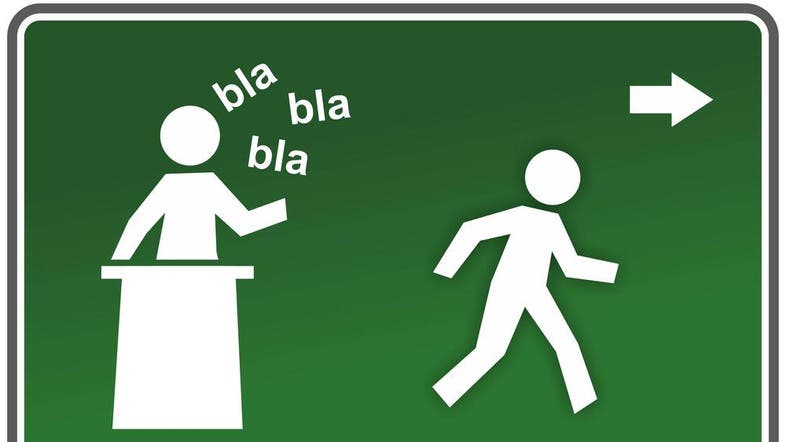
If you do decide to embrace this new lingo there are some crucial points to remember. Where BS is concerned the cardinal sins are:
Critics need to realise that specialist language isn’t just about naming and describing, it’s about credibility, about bonding and belonging, about brevity and freshness, as much as about bamboozling or bluster. Knowing how to deploy (I like that word) this vocabulary marks you out as a member of a team or a community sharing common professional aims. OK, if I see ‘deliverables’ or ‘ownership’ or hear ‘alignment’ one more time, I’ll probably scream – but come on, let’s get buy-in from all stakeholders, embed a culture of innovation and maximise linguistic functionality. Or to put it more brutally, if you don’t like the heat, stay out of the kitchen.
Twitter: @tonythorne007
Here are some links to articles referring to business jargon:
http://www.dailymail.co.uk/news/article-3377306/Survey-reveals-10-infuriating-business-phrases.html
http://www.inc.com/kimberly-weisul/the-very-worst-business-jargon-of-2015.html
http://realbusiness.co.uk/article/26350-50-office-jargon-phrases-we-hate

I have been writing, teaching and broadcasting about new language and linguistic and cultural change for three decades. I have compiled dictionaries and written cultural histories and biographies and founded The Slang and New Language Archive at King’s College London, a resource for scholars, the media and language enthusiasts which I still curate today.
I want to use this new site to publish updates in the form of comments, articles, podcasts and links, but also to share archived content from the past in the hope that it is still of interest (and in the knowledge that language-and-culture controversies don’t date as quickly as some people think).
I’m always collecting new terms, expressions and usages, but, unlike some linguists and many lexicographers I’m not interested only in the form and function of words. I want also to explore the emotional, psychological and social effects of language and the feelings and motives of those who use it.
Please do contact me to donate new words and ideas, to ask for information or to comment, criticise or suggest new areas to investigate. I’m also a consultant for trademarking, brand-names, the language of advertising and language-related legal matters.
Disclaimer
**PLEASE NOTE: THIS A PERSONAL MICROBLOG WEBSITE AND VIEWS EXPRESSED ARE MY OWN. IT IS A NOT-FOR-PROFIT ENTERPRISE AND I HAVE NOT PERMITTED ADVERTISING OR SPONSORSHIP. IT IS INTENDED AS AN EDUCATIONAL RESOURCE. WHEN I HAVE USED IMAGES OR QUOTED OTHER SOURCES IN WRITING, I HAVE CREDITED THESE WHEREVER POSSIBLE. I CANNOT AFFORD TO PAY FOR LICENSED MATERIAL AND HAVE TRIED TO INCLUDE ONLY TEXT AND IMAGES THAT ARE FREE TO ACCESS AND REPRODUCE. IF ANY PARTY OBJECTS TO MY USAGE OF MATERIAL, PLEASE CONTACT ME IMMEDIATELY AND I WILL DELETE THE MATERIAL IN QUESTION**


